How Battery Storage Grid Electricity Innovation from the US Could Reshape Nigeria’s Power Crisis
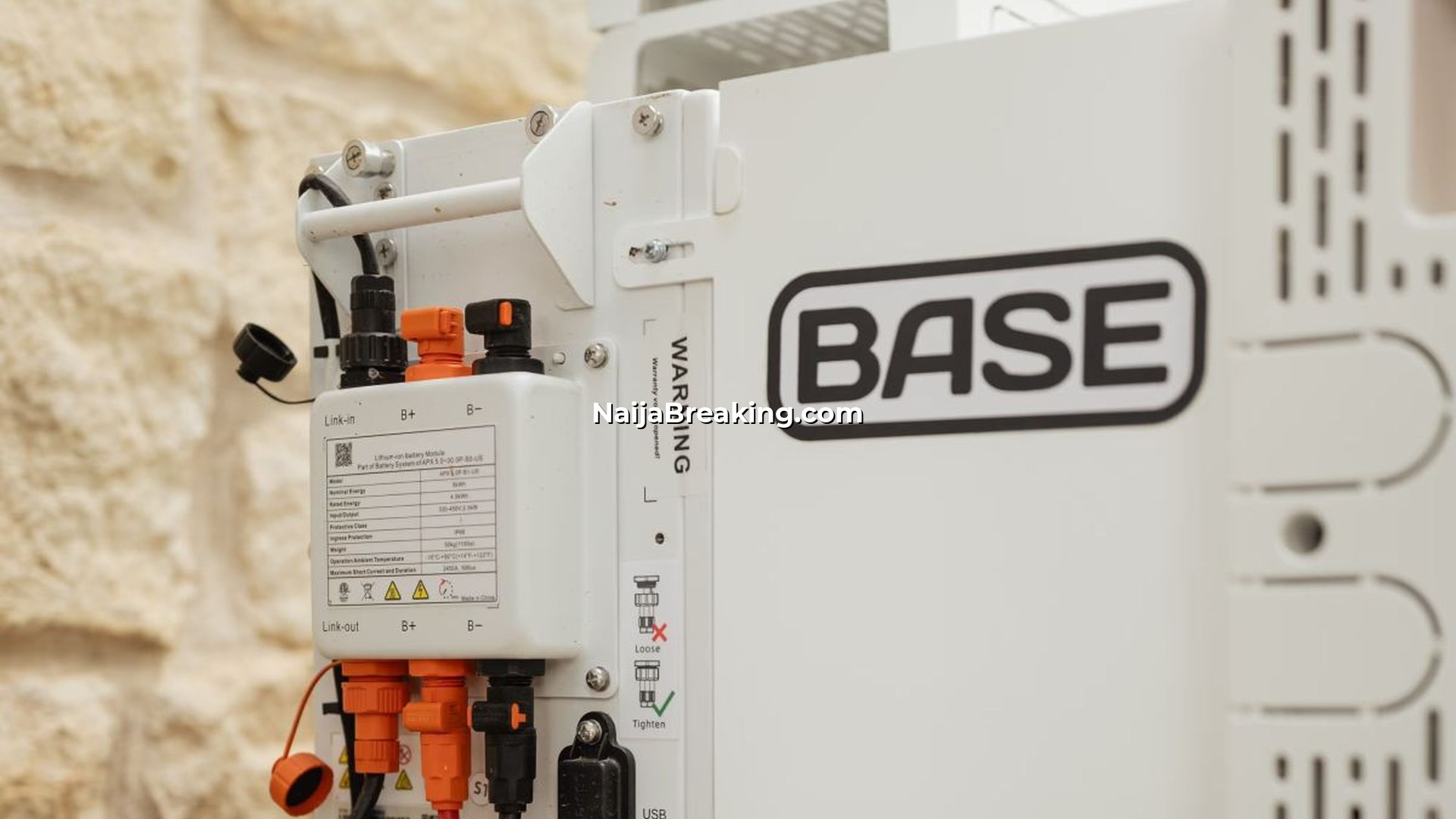
A Silicon Valley-backed energy storage startup is revolutionising how nations solve their electricity shortages, and Nigeria’s power sector is watching closely. Base Power, backed by venture capital giant Andreessen Horowitz (a16z), is deploying distributed battery storage grid electricity systems across US power grids, bypassing traditional infrastructure bottlenecks and offering grid operators cheaper electricity when they need it most. The innovation carries profound implications for Nigeria, where chronic power shortages—estimated at a 15 gigawatt daily deficit by the National Bureau of Statistics—have crippled economic growth, pushed millions into energy poverty, and forced businesses to spend millions on diesel generators. Understanding how battery storage grid electricity technology works in developed markets is essential for Nigeria’s energy planners, policymakers, and investors seeking to break free from decades of power sector failure. While Base Power currently operates exclusively in the United States, the technology and business model for battery storage grid electricity represent a blueprint that Nigeria’s fragmented power sector could adapt to address its deepening energy crisis without waiting for the decade-long capital projects that have repeatedly failed to materialise.
The Global Crisis in Battery Storage Grid Electricity Development
The global energy landscape is undergoing a fundamental transformation, driven by the urgent need for climate action, renewable energy integration, and grid modernization. Battery storage grid electricity has emerged as one of the most critical technologies enabling this transition. Globally, battery storage capacity additions reached record levels in 2023, with countries like Australia, China, and the United States investing heavily in battery storage grid electricity infrastructure to stabilize their grids and reduce reliance on fossil fuels. The International Energy Agency (IEA) projects that battery storage grid electricity capacity will need to triple by 2030 to meet climate targets and support the widespread adoption of renewable energy sources. This global momentum around battery storage grid electricity creates both opportunities and urgencies for developing nations like Nigeria that still struggle with fundamental electricity access.
The cost of lithium-ion batteries—the dominant technology for battery storage grid electricity systems—has dropped approximately 90% over the past decade, making battery storage grid electricity increasingly economically viable even for emerging markets. This cost trajectory represents a historic opportunity: for the first time, developing nations can leapfrog traditional grid infrastructure and deploy modern, efficient battery storage grid electricity systems without massive upfront capital investments in conventional power plants and transmission lines. Nigeria, despite being Africa’s largest economy and a major oil producer, has failed to capitalize on this opportunity, remaining trapped in a cycle of diesel generation, coal-fired plants operating below capacity, and grid instability that costs the nation an estimated ₦2.5 trillion annually in lost productivity and wasteful energy spending.
Nigeria’s Electricity Sector: A Crisis Deepens
Nigeria’s electricity sector has been in structural crisis for more than two decades, despite decades of reform efforts and billions in naira and foreign investment. The Electricity Power Sector Reform Act of 2005 aimed to liberalise the market, breaking up the monolithic National Electric Power Authority (NEPA, now the Transmission Company of Nigeria) into 11 distribution companies and encouraging private generation. Yet today, Nigeria generates only around 4,000–5,000 megawatts of electricity on average, serving a nation of over 220 million people where demand is estimated between 19,000 and 20,000 megawatts. The gap—Nigeria’s electricity deficit—remains among the worst in sub-Saharan Africa, forcing households and businesses to rely on expensive, polluting diesel generators that cost the economy an estimated ₦2.5 trillion annually in wasted fuel costs.
The scale of this crisis cannot be overstated. Nigeria’s electricity deficit represents not merely an inconvenience but a fundamental brake on economic development. Manufacturing facilities operate at reduced capacity or relocate to countries with reliable power. Healthcare facilities struggle to maintain cold chains for vaccines and medicines. Schools cannot provide adequate lighting for evening study. Small businesses—the backbone of Nigeria’s economy—cannot reliably operate refrigeration, production equipment, or basic office technology. The Central Bank of Nigeria has repeatedly cited power supply as one of the three most critical constraints on economic growth, alongside insecurity and inadequate infrastructure. When battery storage grid electricity solutions could potentially address this constraint within years rather than decades, Nigeria’s continued reliance on failed traditional approaches represents a catastrophic policy failure.
The root causes of Nigeria’s electricity crisis are painfully familiar: ageing transmission infrastructure, inadequate generation capacity, widespread power theft and technical losses (estimated at 35–40% across the grid), poor cost recovery, and political unwillingness to implement tariff increases that reflect true generation and distribution costs. Distribution companies, perpetually underfunded, struggle to maintain poles, transformers, and cables. Power plants operate below capacity, and financing for new generation projects has dried up as investors lose confidence in the sector’s fundamental viability. Meanwhile, renewable energy—solar and wind—could theoretically solve much of Nigeria’s challenge, but deployment remains hamstrung by grid integration challenges, lack of storage capacity for battery storage grid electricity systems, and regulatory uncertainty that discourages private investment in battery storage grid electricity infrastructure.
Understanding Base Power’s Battery Storage Grid Electricity Model
Base Power represents a new paradigm in how battery storage grid electricity systems can be deployed and monetized. Rather than waiting for grid operators to invest in centralized battery storage grid electricity facilities—a process that takes years and requires massive capital commitments—Base Power installs distributed batteries at strategic locations throughout existing power grids. These batteries charge during periods of low electricity demand and high renewable energy generation, then discharge during peak demand periods when electricity prices spike. This simple but elegant approach to battery storage grid electricity operations addresses multiple problems simultaneously: it stabilizes grid frequency, reduces the need for expensive peaking power plants, enables higher penetration of intermittent renewable energy, and generates revenue for investors by arbitraging electricity price differences.
The distributed approach to battery storage grid electricity that Base Power pioneered offers particular advantages over centralized battery storage grid electricity systems. Distributed battery storage grid electricity installations require less transmission infrastructure, reduce line losses, provide localized support during grid contingencies, and can be deployed incrementally as demand emerges rather than requiring massive upfront capital commitments. From a grid operator’s perspective, distributed battery storage grid electricity systems provide flexibility—they can add or reduce batteries as needs change, without committing to decades of repayment obligations on centralized facilities. From an investor’s perspective, distributed battery storage grid electricity systems offer recurring revenue streams through capacity payments, energy arbitrage, and grid services, creating bankable cash flows that justify private sector investment.
Base Power’s venture capital backing, notably from Andreessen Horowitz—one of the world’s most influential technology investors—signals something crucial about battery storage grid electricity’s future: major capital providers believe the distributed battery storage grid electricity model is viable at scale. The venture capital model typically funds technologies and business approaches that can scale rapidly, capture large markets, and generate substantial returns. That a tier-one venture capital firm chose to back a battery storage grid electricity company indicates confidence that this technology and business model represent the future of electricity systems globally.
How Battery Storage Grid Electricity Could Transform Nigeria’s Power Sector
Adapting Base Power’s battery storage grid electricity approach to Nigeria’s context would require significant regulatory and operational changes, but the potential benefits justify the effort. First, battery storage grid electricity deployment could begin immediately in Nigeria’s major urban centers—Lagos, Abuja, Kano, Port Harcourt—without waiting for generation or transmission upgrades. Distributed battery storage grid electricity systems could be installed at industrial parks, shopping centers, hospital clusters, and commercial districts, providing localized stability while grid operators work on longer-term generation additions. This would address the immediate crisis while longer-term solutions develop.
Second, battery storage grid electricity systems would dramatically improve the business case for renewable energy in Nigeria. Currently, solar and wind projects struggle to secure power purchase agreements because grid operators fear that renewable sources’ intermittency will destabilize the grid. Battery storage grid electricity solves this fundamental problem. With battery storage grid electricity co-located with or distributed across solar installations, renewable energy becomes dispatchable—grid operators can rely on it to deliver power on demand, not just when the sun shines or wind blows. This transformation would unlock billions in renewable energy investment currently stalled due to grid integration concerns.
Third, battery storage grid electricity deployment would reduce Nigeria’s catastrophic dependence on diesel generation. The ₦2.5 trillion annual cost of private diesel generation represents pure waste from a national perspective—fuel burned, engines wearing out, emissions degrading public health—with nothing to show for it but perpetuating the status quo. Battery storage grid electricity systems would eliminate this waste by enabling efficient, clean electricity supply. The cost savings alone would justify aggressive government support for battery storage grid electricity deployment.
Fourth, battery storage grid electricity systems would create new revenue streams for Nigeria’s cash-strapped distribution companies. Currently, discos struggle to recover costs because consumers receive unreliable electricity and refuse to pay. Battery storage grid electricity would enable reliable supply, justifying premium tariffs for high-quality power. Discos could also generate revenue by providing grid services through their battery storage grid electricity assets, creating additional income to sustain operations and fund system improvements.
Regulatory and Operational Challenges for Battery Storage Grid Electricity in Nigeria
Deploying battery storage grid electricity at scale in Nigeria faces significant hurdles. The current regulatory framework, managed by the Nigerian Electricity Regulatory Commission (NERC), does not clearly define how battery storage grid electricity systems should be compensated, whether they are generation assets or grid assets, or how their services should be valued. NERC must urgently develop technical standards, connection procedures, and tariff methodologies specifically for battery storage grid electricity systems. Without clear regulation, investors will not commit capital.
Grid operators—the Transmission Company of Nigeria and the various distribution companies—lack the technical expertise to manage battery storage grid electricity systems effectively. Training programs must be developed immediately to build operational capacity. Additionally, Nigeria’s current grid monitoring and control systems are antiquated; real-time management of distributed battery storage grid electricity assets will require modern supervisory control and data acquisition (SCADA) systems that most discos still lack.
Financing represents another critical barrier. While battery storage grid electricity systems are increasingly cost-effective, the upfront capital requirements remain substantial. Development finance institutions, international climate funds, and philanthropic organizations must prioritize battery storage grid electricity deployment in Nigeria through concessional financing that reduces the cost of capital for early-stage projects. The World Bank, African Development Bank, and bilateral development agencies should make battery storage grid electricity investment in Nigeria a strategic priority.
The Path Forward: Strategic Battery Storage Grid Electricity Deployment for Nigeria
Nigeria must immediately adopt a comprehensive national strategy for battery storage grid electricity deployment. This strategy should prioritize three initial phases: First, conduct rigorous technical and economic analysis of optimal battery storage grid electricity deployment locations across Nigeria’s grid, identifying sites that would yield maximum benefits for grid stability and renewable energy integration. Second, develop complete regulatory frameworks for battery storage grid electricity systems, including technical standards, connection procedures, and compensation mechanisms. Third, launch pilot battery storage grid electricity projects in Lagos and Abuja involving both government and private sector participation, generating real operational experience and demonstrating viability to potential investors.
Critically, Nigeria must leverage international climate finance for battery storage grid electricity deployment. The nation is eligible for substantial funding through the Green Climate Fund, bilateral climate finance arrangements, and other mechanisms created specifically to help developing nations transition to clean energy. Battery storage grid electricity projects that enable renewable energy deployment and reduce fossil fuel dependence should be priority candidates for this funding. Nigeria’s Ministry of Power should immediately begin preparing comprehensive battery storage grid electricity project proposals for submission to international climate finance mechanisms.
Private sector participation will ultimately drive battery storage grid electricity deployment at scale. Investors need clarity on: regulatory frameworks for battery storage grid electricity systems, revenue mechanisms for grid services, power purchase agreements that value battery storage grid electricity services, and property rights protection. The government should create battery storage grid electricity development zones with streamlined approvals and guaranteed tariffs to attract investment. International developers like Base Power should be actively courted through strategic partnerships and incentives to establish operations in Nigeria.
Conclusion: Battery Storage Grid Electricity as Nigeria’s Path to Energy Transformation
Base Power’s distributed battery storage grid electricity model offers Nigeria a proven blueprint for solving its electricity crisis without waiting for traditional infrastructure projects that have repeatedly failed. Battery storage grid electricity technology is mature, costs are falling rapidly, and global momentum is building. The question is not whether battery storage grid electricity will transform Nigeria’s power sector, but whether Nigeria’s leadership will seize this opportunity or continue down a path of failure and decline. The technology exists. The business models work. International capital is available. What Nigeria lacks is the political will and regulatory clarity to deploy battery storage grid electricity at the scale and speed required. This is not a technical problem—it is a governance challenge. The next twelve months will determine whether Nigeria becomes a leader in African battery storage grid electricity deployment or continues to fall further behind nations that recognized this opportunity and acted decisively. The costs of delay, measured in lost economic growth and foregone development, dwarf the investments required to accelerate battery storage grid electricity deployment. Nigeria’s future depends on making this choice correctly, and making it now.