
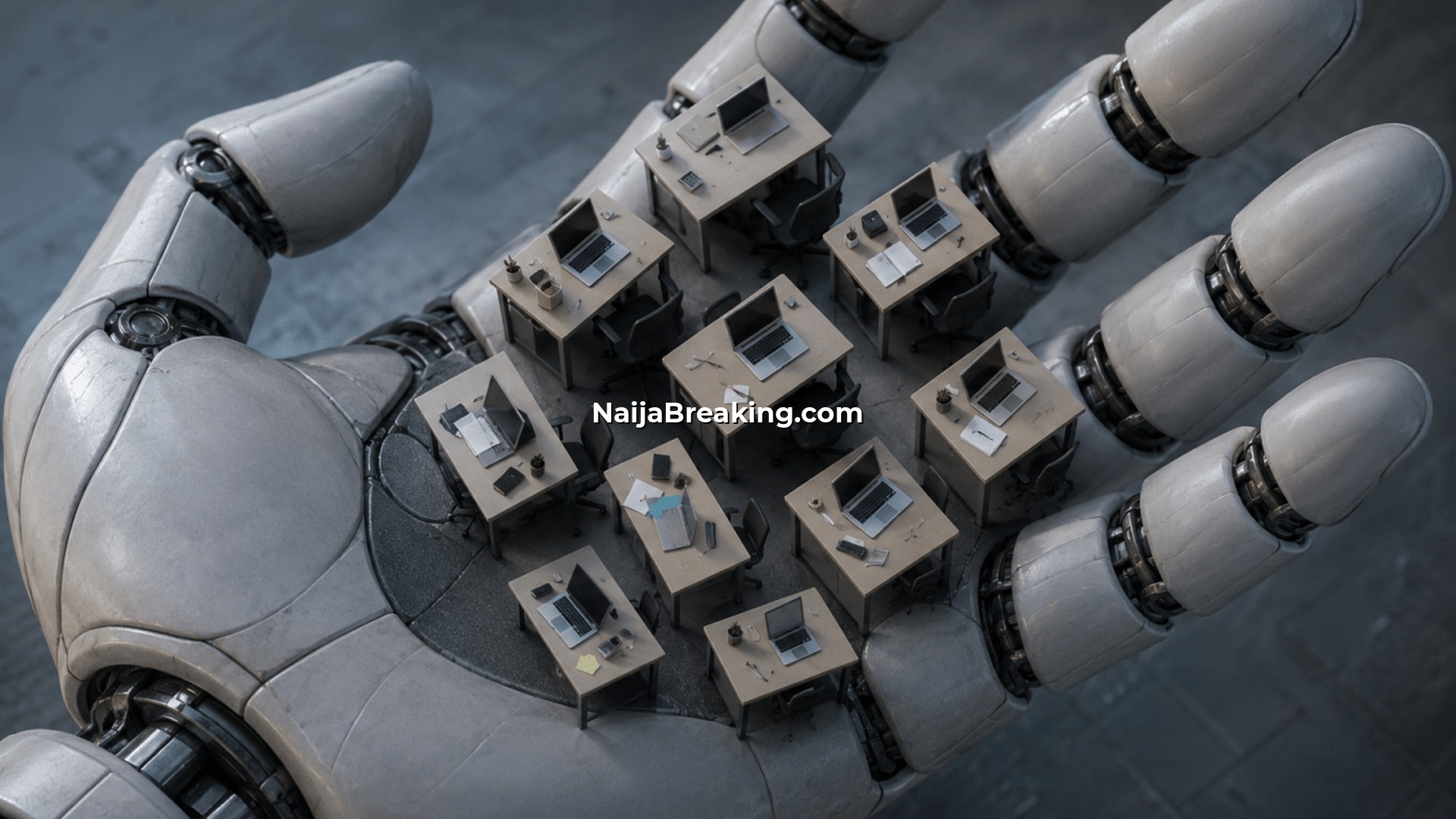
Tech Layoffs AI: How Global Tech Giants’ AI-Driven Employment Crisis Affects Nigeria’s Future
The global technology industry is experiencing an unprecedented transformation, with tech layoffs AI adoption now becoming the defining narrative across major corporations worldwide. In 2026 alone, companies from Oracle to Google have announced workforce reductions totalling tens of thousands of employees, all while explicitly citing artificial intelligence as the primary catalyst for these decisions. This phenomenon—tech layoffs driven by AI technologies—represents far more than routine corporate restructuring. It signals a fundamental reimagining of how technology companies operate, which roles they value, and where they’re willing to invest their resources. But beyond the headlines from Silicon Valley lies a critical question for Nigeria: as sub-Saharan Africa’s leading technology hub, how should our nation respond to this AI-driven employment disruption that is reshaping global tech labor markets?
For Nigerian tech professionals, entrepreneurs, venture capitalists, and policymakers, the pattern emerging from global tech layoffs in the AI era represents both a cautionary tale and an unprecedented opportunity. While multinational technology companies slash headcount in the name of AI efficiency and operational streamlining, Nigeria’s burgeoning tech ecosystem—home to over 700 active technology startups, a rapidly growing freelancer community, and a population of nearly 220 million people hungry for digital innovation—must chart a distinctly different course. Understanding what’s happening in Silicon Valley, Dublin, Singapore, and other global tech centers today could determine whether Nigeria becomes a victim of this technological disruption or emerges as a major beneficiary of the AI revolution. The question facing Nigeria is no longer whether artificial intelligence will reshape work across the globe; it’s whether Nigeria’s government, educational institutions, and private sector are adequately prepared for the massive transition that lies ahead.
The Global Context: Understanding the Tech Layoffs AI Phenomenon
To fully comprehend how tech layoffs AI is affecting the global workforce, we must first understand the remarkable hiring trajectory that preceded these cuts. The pandemic fundamentally altered technology industry hiring patterns in ways that few predicted and even fewer were prepared to manage. Between 2020 and 2022, during the height of lockdowns and digital transformation mandates, major technology companies engaged in what can only be described as an aggressive hiring frenzy. They recruited talent at unprecedented rates to meet what seemed like surging, unstoppable demand for digital services as the entire world shifted to remote work, online commerce, and digital-first operations.
Meta, Amazon, Twitter, Apple, Google, and dozens of other multinational firms expanded their workforces by 30, 40, even 50 percent in some divisions during this period. This hiring spree created a powerful illusion: the illusion of permanent, exponential growth that would continue indefinitely. Tech workers, many of them early-career professionals, believed they had entered a golden era of employment security, competitive compensation packages, and unlimited career advancement opportunities. For a period, it seemed like the technology sector would simply keep growing, keep hiring, and keep rewarding its workforce with salaries and benefits that were the envy of other industries.
By late 2023 and throughout 2024, however, the harsh reality became apparent: many of those pandemic-era hires had been fundamentally premature and unsustainable. Companies had expanded their workforces far faster than their actual revenue growth could support. The assumption that the unprecedented pandemic-driven surge in digital demand would continue indefinitely proved catastrophically wrong. When growth rates normalized and returned to more typical levels, the surplus workforce that had seemed essential just months earlier became suddenly unsustainable. What followed was a wave of layoffs that affected hundreds of thousands of workers across the global technology industry. Major companies conducted multiple rounds of layoffs, with some firms cutting 5, 10, or even 15 percent of their total workforce in single announcements.
However, 2026 has introduced a new and more complex narrative to this ongoing story of employment disruption. Where previous layoffs could be attributed to over-hiring and pandemic-era miscalculation, the current wave of tech layoffs AI restructuring is being explicitly framed differently. Companies are now naming artificial intelligence, machine learning automation, and advanced AI systems as the direct culprits behind workforce reductions. They’re not simply acknowledging pandemic-era overcorrection; they’re claiming that AI technologies have reached a level of sophistication where they can now perform tasks that previously required human workers. This represents a more fundamental threat to tech employment than temporary cyclical adjustments.
Examining the AI-Driven Employment Crisis Across Major Tech Companies
The scope and scale of tech layoffs AI cuts happening right now is staggering. Oracle has eliminated thousands of positions, with company leadership citing AI automation as a key factor in streamlining operations and reducing redundant roles. Google, one of the world’s largest and most profitable tech companies, has conducted multiple rounds of layoffs affecting tens of thousands of employees while simultaneously announcing massive investments in AI research and development. Microsoft, despite being a major beneficiary of the AI revolution through its partnership with OpenAI, has still eliminated thousands of positions. Amazon, despite maintaining overall growth, has cut significant portions of its workforce in various divisions.
What’s particularly striking about these tech layoffs AI announcements is the consistency of the messaging. Company executives don’t hide behind euphemisms or claim these are routine optimizations. Instead, they explicitly tell investors, employees, and the media that artificial intelligence capabilities have reached a point where they can replace human workers in certain roles. A senior executive might announce that “AI systems can now handle customer service inquiries more efficiently than human representatives” or “machine learning models can automate code review and testing processes that previously required large engineering teams.” This transparency, while appreciated from a factual standpoint, has sent shockwaves through the global tech workforce.
The irony is profound: the same companies that built the AI tools causing these layoffs are now using them to reduce their own workforces. The technology that these firms invested billions in developing is now being turned inward, used to eliminate positions, reduce headcount, and cut expenses. For tech workers globally, watching the companies that employ them use AI to eliminate jobs creates an existential anxiety that wasn’t present during previous cyclical employment disruptions.
Nigeria’s Tech Sector: Current Strengths and Vulnerabilities
In Nigeria’s context, the global wave of tech layoffs AI disruption arrives at a particularly critical moment in our nation’s development trajectory. Over the past decade, Nigeria has invested substantially in developing its technology infrastructure, with cities like Lagos establishing themselves as legitimate innovation hubs that rival some of the most important technology centers in East Africa and beyond. Initiatives like the Nigeria National Broadband Plan, massive investments in laying fibre optic cables across the country, the emergence of thriving tech incubators and accelerators, and government policies encouraging technology entrepreneurship have all contributed to positioning Nigeria as a genuine emerging technology leader in Africa.
Lagos, Nigeria’s commercial capital, has become home to some of Africa’s most valuable technology startups. Companies like Flutterwave, a fintech platform that enables cross-border payments; Interswitch, a leader in digital payments infrastructure; Paystack, which revolutionized online payments for African businesses; and numerous other innovative companies have demonstrated that Nigeria can produce world-class technology talent and build globally competitive products. The success of these companies has attracted venture capital investment from around the world, created thousands of tech jobs, and inspired a new generation of Nigerian entrepreneurs and software engineers.
However, Nigeria’s tech sector remains heavily dependent on international investment, with the majority of venture capital funding coming from foreign investors rather than domestic sources. Additionally, while Nigeria has developed strength in specific technology sectors—particularly fintech, e-commerce, and mobile technologies—our presence in cutting-edge AI development, machine learning research, and advanced technical infrastructure remains limited compared to global tech centers. This vulnerability becomes particularly acute when considering the global wave of tech layoffs AI that is currently reshaping the worldwide technology labor market.
How Tech Layoffs AI Could Impact Nigeria’s Tech Ecosystem
The global tech layoffs AI phenomenon could affect Nigeria’s technology sector in several complex and interconnected ways. First, there’s the potential for a brain drain in reverse. As multinational technology companies reduce their headcounts globally, some of the talented Nigerian engineers, product managers, and technology professionals working for these companies in diaspora might face redundancy. They may then return to Nigeria, bringing valuable experience, networks, and expertise with them. This could actually represent an opportunity for Nigeria’s domestic tech ecosystem if we’re prepared to absorb and productively employ this returning talent.
Conversely, the tech layoffs AI trend could make it harder for Nigeria’s startups to compete for talent. If major multinational tech companies that employ Nigerians are reducing headcount, this might actually strengthen Nigeria’s relative position in attracting and retaining top technology talent, as these professionals seek employment elsewhere. Nigerian startups and technology companies could find it easier to recruit experienced engineers and product professionals if global competition for this talent decreases.
However, there’s also a more concerning scenario. If tech layoffs AI trends lead to reduced venture capital investment globally, Nigeria’s startups could face a funding crunch. Venture capital firms that have been investing in African technology companies might reduce their allocations to emerging markets as they deal with portfolio companies affected by the employment disruptions happening at their major investments. This could slow Nigeria’s technology sector growth precisely at a moment when momentum is building.
Strategic Opportunities Emerging from the AI Employment Crisis
Despite the challenges posed by tech layoffs AI globally, Nigeria has genuine opportunities to position itself advantageously during this transition period. First, Nigeria can become a destination for artificial intelligence development and training. With a large, young, digitally native population, Nigeria could invest in AI education, machine learning training programs, and research centers that develop AI solutions specifically designed for African challenges. Companies and researchers forced to think about efficiency in the context of tech layoffs AI disruption might discover that Nigeria’s cost structure and talent pool offer advantages that Silicon Valley cannot match.
Second, Nigeria can focus on developing AI applications specifically designed for African markets. While multinational technology companies cut positions in general-purpose technology development, there’s enormous opportunity in creating AI solutions for agriculture, healthcare, financial inclusion, and education tailored to African contexts. Nigerian entrepreneurs and technologists are uniquely positioned to understand these problems and develop culturally appropriate, economically viable solutions.
Third, the tech layoffs AI crisis presents an opportunity for Nigeria to develop alternative models of technology work beyond traditional employment. Remote work, freelancing, AI-augmented productivity tools, and distributed team structures could allow Nigerian tech professionals to participate in the global technology economy even if traditional employment contracts become less common or more competitive. A generation of Nigerian software engineers and technology professionals could build careers not as employees of multinational corporations, but as independent contributors to global technology projects.
Policy Recommendations for Nigeria’s Government and Private Sector
Nigeria must act now to ensure that our nation benefits from the AI revolution rather than being disrupted by tech layoffs AI trends happening elsewhere in the world. First, government should prioritize investment in AI and machine learning education at secondary and tertiary levels. Universities should develop specialized AI degree programs, and coding bootcamps should be subsidized to ensure Nigeria develops a robust talent pipeline.
Second, Nigeria should create incentive structures that encourage multinational tech companies to establish AI research and development centers in Nigeria, not just service centers. Tax holidays, investment guarantees, and regulatory clarity could attract companies seeking to relocate certain technology functions away from expensive Silicon Valley markets.
Third, the Central Bank of Nigeria and the Securities and Exchange Commission should work to develop financing mechanisms specifically designed to support technology startups developing AI solutions. Venture capital investment in Nigeria remains below potential, and targeted government support could unlock significant capital.
Conclusion
The global phenomenon of tech layoffs AI represents perhaps the most significant employment disruption in technology industry history. For Nigeria, this moment is not one for pessimism but for strategic positioning. Our nation has the talent, the market, and the infrastructure to not merely survive this transition but to thrive during it. By investing in education, supporting entrepreneurs, and creating policies that attract technology investment, Nigeria can transform the challenge of tech layoffs AI globally into an opportunity for our own technology sector to flourish.