Samsung Galaxy Watch Ultra 2: Release Date, Specs, Price & What Nigeria Should Know
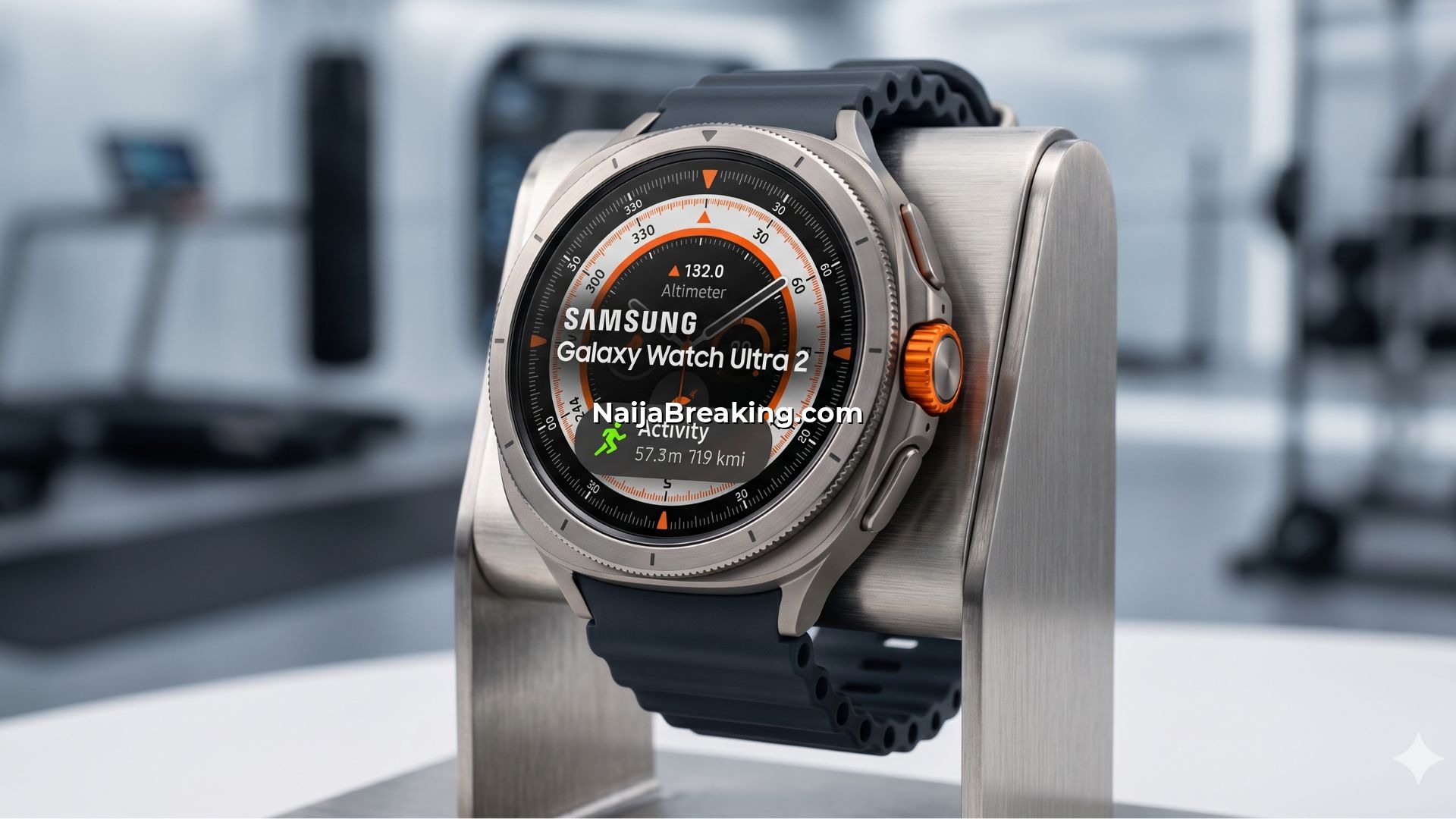
The Galaxy Watch Ultra 2 is coming, and early indicators suggest this will be one of the most significant upgrades Samsung’s premium smartwatch line has ever received. While Samsung has remained officially silent on the device’s existence, regulatory filings, chip manufacturer confirmations, and a comprehensive redesign of Samsung Health point to a major announcement in the coming months. For Nigerian consumers who have grown accustomed to purchasing premium tech devices through online retailers and physical shops across Lagos, Abuja, and other major cities, understanding what’s coming is crucial—especially when considering the naira exchange rate implications and potential pricing. This guide separates confirmed facts from speculation, helping you understand what to expect from the Galaxy Watch Ultra 2, when it might arrive, what it could cost in Nigeria, and how it compares to the current-generation Galaxy Watch Ultra.
Background
Samsung’s premium smartwatch strategy has evolved considerably since the original Galaxy Watch Ultra launched in 2023. The first Ultra model represented Samsung’s answer to Apple’s aggressive dominance in the high-end wearables market, a sector where Apple Watch had commanded significant premium pricing and user loyalty. Samsung recognised early that Nigerian and African consumers, increasingly affluent and tech-savvy, were willing to invest in quality smartwatches—but only if they offered genuine innovation and integration with Samsung’s broader ecosystem of devices.
The wearables market in Nigeria has grown substantially over the past three years, according to data from tech research firms tracking sub-Saharan African adoption rates. Professional workers in Lagos, Abuja, and Port Harcourt began viewing smartwatches not as luxury items but as productivity tools, especially following the post-pandemic shift to hybrid work. The Galaxy Watch Ultra, with its larger 47mm display, enhanced durability, and longer battery life compared to standard Galaxy Watch models, captured a specific demographic: young professionals, fitness enthusiasts, and tech-forward consumers willing to pay ₦250,000 to ₦350,000 (equivalent to $500-700 at typical exchange rates) for a device that promised premium features.
Behind the scenes, Samsung has been quietly preparing the next generation. In June 2026, Samsung announced a major overhaul to its Samsung Health app, explicitly stating the redesign was built “for the upcoming Galaxy Watch.” This update included new AI-driven health insights, better sleep tracking, nutrition monitoring, and mindfulness features. The timing of this announcement, combined with Qualcomm’s public confirmation that a new Snapdragon Wear Elite chip would power the next Galaxy Watch, signals that Samsung is preparing for a substantial product launch that will likely reshape expectations for premium smartwatches in Nigeria and across Africa.
Key Details
As of June 2026, Samsung has not officially announced the Galaxy Watch Ultra 2, though multiple confirmations from supply chain and component manufacturers have made the device’s existence virtually certain. According to TechCabal’s comprehensive reporting, several concrete pieces of evidence point to an imminent launch. First, Samsung’s Global Newsroom announced on June 4, 2026, that a major update to the Samsung Health app would roll out from June 8—an update explicitly designed for “the upcoming Galaxy Watch” without naming the specific model. This update introduced five key health monitoring categories: Sleep, Activity, Nutrition, Mindfulness, and Vitals, with AI-powered insights to help users understand their health patterns better.
Second, at Mobile World Congress 2026 in March, Qualcomm publicly confirmed that the next generation Galaxy Watch would utilise its newly developed Snapdragon Wear Elite chip. This is significant because the current Galaxy Watch Ultra uses Qualcomm’s Snapdragon Wear 5100+, and the jump to the Elite variant suggests meaningful performance improvements. Samsung’s In Kang Song, who heads the company’s technology division, provided on-record confirmation of this partnership, indicating that the new chip will deliver enhanced processing power, better power efficiency, and improved AI capabilities—critical factors for delivering the advanced health features Samsung is promoting through its refreshed Health app.
Third, regulatory filings from various markets have appeared, hinting at new wearable models from Samsung with updated specifications. While the filings don’t explicitly mention “Galaxy Watch Ultra 2,” the timing and device specifications align perfectly with expectations for a successor to the current Ultra model. Industry analysts tracking Samsung’s product roadmap suggest a launch window between August and October 2026, likely coinciding with Samsung’s traditional Galaxy Unpacked event. Pricing remains unconfirmed, but based on Samsung’s historical approach to generational upgrades, expectations range from maintaining current pricing to a slight increase of 5-10% to account for new features and manufacturing costs.
Impact and Analysis
The Galaxy Watch Ultra 2’s arrival will have ripple effects across Nigeria’s premium tech retail sector, which has grown increasingly sophisticated over the past five years. Retailers in Lagos’s Computer Village and upscale shopping centres across Abuja will need to update their inventory strategies, training staff on new features and positioning the device appropriately to affluent consumers. The pricing will be critical—if Samsung maintains current price points (approximately ₦250,000-₦320,000 in Nigerian retail), demand should remain strong among the professional class. However, if the naira weakens further against the dollar (a consistent concern for Nigerian importers), retail prices could spike by 15-20%, potentially pricing out mid-tier buyers and consolidating purchases within the ultra-premium segment.
The Snapdragon Wear Elite chip represents a genuine technical leap that could influence how consumers in Nigeria view smartwatch capabilities. Better processing power means smoother app performance, faster data synchronisation with smartphones, and more sophisticated health monitoring algorithms. For a market where many consumers use smartwatches primarily for fitness tracking, health monitoring, and notification management, these improvements are tangible rather than marginal. The advanced AI features promised through Samsung Health’s redesign—particularly sleep quality analysis and nutrition tracking—address pain points that Nigerian health-conscious professionals have identified in previous-generation devices.
What’s particularly noteworthy is Samsung’s strategy of releasing the health app update months before the hardware launch. This approach suggests the company is building ecosystem momentum and training users on new features so that when the Galaxy Watch Ultra 2 arrives, buyers will already be familiar with the interface and benefits. For Nigerian consumers accustomed to making careful purchasing decisions given economic pressures, this transparency and feature preview could strengthen consumer confidence and justify premium pricing when the device launches.
Expert Perspectives
Dr. Adekunle Olatunde, a senior technology analyst at Lagos-based TechIntel Africa, believes the Galaxy Watch Ultra 2 represents Samsung’s serious commitment to establishing wearables as a core business pillar in emerging markets like Nigeria. “The Snapdragon Wear Elite chip is not a minor upgrade,” he explains. “It’s a signal that Samsung is willing to invest significant engineering resources to compete with Apple and Garmin in the premium segment. For Nigerian consumers, this means the device won’t feel outdated in two years—a critical consideration given the cost of ownership when you factor in naira depreciation.”
However, Chioma Adeyemi, a consumer technology researcher at the Centre for Digital Innovation in Abuja, offers a cautionary perspective: “While the specs sound impressive, Nigerian consumers should question whether they actually need these advanced health features, or whether Samsung is simply creating features to justify premium pricing. The average Galaxy Watch user in Nigeria uses about 40% of available features. Samsung needs to ensure that the new health AI is intuitive enough for mainstream users, not just tech enthusiasts.” She also notes that battery life—a key differentiator for premium smartwatches—remains unclear, and this will be crucial for Nigerian buyers who may not have consistent access to charging opportunities while travelling or working in remote locations.
What This Means for Nigerians
For the typical Nigerian professional in their late twenties to early forties, the Galaxy Watch Ultra 2’s launch represents both opportunity and challenge. If you’re currently using a standard Galaxy Watch or an older flagship model, the Ultra 2 will offer genuine improvements in health monitoring precision, which has become increasingly important as Nigerians become more health-conscious. Blood pressure monitoring, ECG capabilities (if Samsung includes these), and advanced sleep analysis could provide valuable insights, particularly for professionals managing demanding work schedules and irregular sleep patterns common in Lagos’s fast-paced corporate environment.
However, the cost of entry remains substantial. At anticipated pricing of ₦280,000-₦350,000, the Galaxy Watch Ultra 2 represents a significant discretionary purchase for most Nigerians, equivalent to one month’s salary for many professionals or two months for middle-class earners. The question becomes: is the upgrade worth the investment? For current Galaxy Watch Ultra owners, the answer depends on whether you heavily use health features and whether you value the latest processing power. For those using older or non-Samsung smartwatches, the Ultra 2 could be transformative if its health features genuinely help you make better wellness decisions.
Additionally, Nigerian consumers should consider the total cost of ownership. Smartwatch bands, protective cases, and occasional repairs can add another ₦50,000-₦100,000 over the device’s lifetime. Warranty and after-sales service availability in Nigeria is improving but remains inconsistent outside major cities. Before investing, verify that your chosen retailer offers genuine warranty protection and has established service centres or relationships with authorised Samsung repair shops in your location.
Editor’s Take
At NaijaBreaking, we believe Samsung’s strategic silence on the Galaxy Watch Ultra 2—while simultaneously overhauling its health ecosystem and securing next-generation chip partnerships—reveals a company confident in its product roadmap but cautious about managing market expectations. What’s often overlooked in tech coverage is that Samsung’s approach to wearables in emerging markets like Nigeria is fundamentally different from its approach in developed markets. The company recognises that African consumers are price-sensitive, value longevity, and expect devices to integrate seamlessly with existing smartphone ecosystems. The Galaxy Watch Ultra 2, if priced judiciously, could become the definitive premium smartwatch for Nigerian professionals—but only if Samsung resists the temptation to inflate pricing simply because the device carries the “Ultra” designation. The real test will come when the device launches and Nigerians can compare it not just to the current Ultra model, but to what Apple, Garmin, and Chinese manufacturers are offering at similar price points.
What to Watch Next
Monitor three critical developments over the next four months. First, watch for Samsung’s official announcement—whether it comes through an Unpacked event, press release, or regional launch. This will confirm specifications, official pricing in Nigeria (if Samsung provides regional pricing), and release date. Second, track early reviews from reputable tech journalists, particularly battery life performance in real-world conditions and reliability of the new health features. Third, observe how retailers in Nigeria respond—are they pre-ordering stock aggressively, suggesting confidence in demand? Are prices stable or rising due to naira weakness?
Additionally, keep an eye on how Samsung Health’s redesigned app performs on current devices. If the app update struggles with stability or battery drain, it may signal performance issues that could affect the Ultra 2 at launch. The key question now is: will the Galaxy Watch Ultra 2’s premium features justify a price increase, or will Samsung keep pricing stable to defend market share against competitors targeting Nigerian consumers?
Conclusion
The Galaxy Watch Ultra 2 is shaping up to be a genuinely significant upgrade powered by Qualcomm’s latest processor and Samsung’s most ambitious health-monitoring ecosystem redesign. For Nigerian tech consumers, the device represents both the promise and challenge of the premium wearables market—exceptional features and build quality, but substantial financial commitment and ongoing questions about whether the device will receive consistent software support over its lifetime. The coming months will reveal crucial details about pricing, availability, and whether this device will become the smartwatch that finally convinces mainstream Nigerian professionals that premium wearables are worth the investment, or whether it remains a niche product for the ultra-affluent tech enthusiast.
What this story truly reveals is that Samsung takes the African market seriously enough to build devices specifically tailored to our needs—not simply repackaging products designed for Western consumers. That’s progress. But Nigerians must demand accountability: ensure that devices launching here receive the same software support lifecycle as global markets, that warranty services actually function, and that companies stop treating Africa as a dumping ground for older inventory. Share your thoughts in the comments below—what do you think this means for Nigeria’s future in the global tech ecosystem?