FIFA World Cup 2026 Consumer Promotion Nigeria: Rexona’s Prize Draw Winners Head to Canada as Unilever Rewards Loyal Consumers
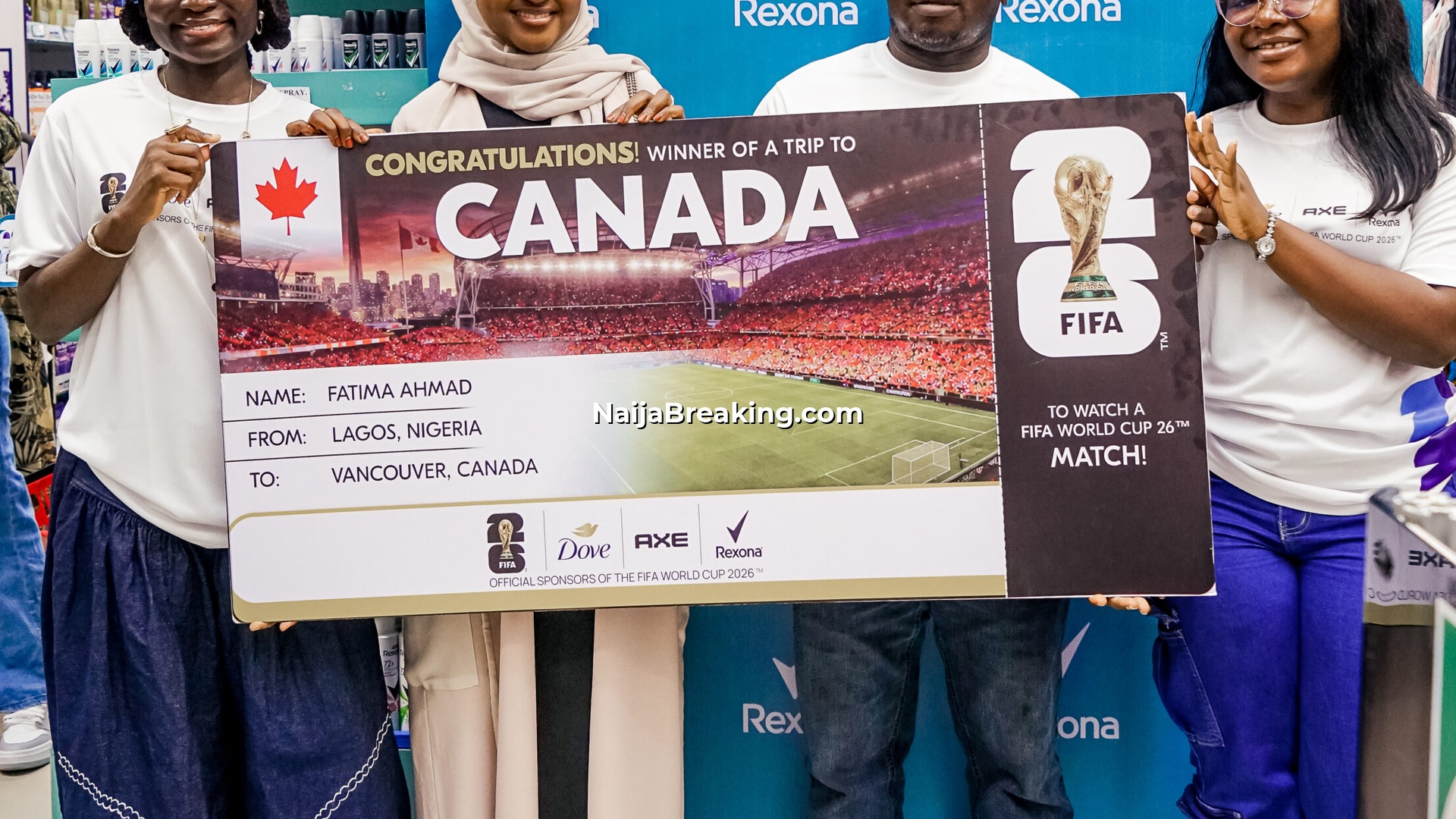
Unilever Nigeria Plc has officially crowned the winners of its Rexona FIFA World Cup 2026 consumer promotion in Nigeria, awarding lucky participants all-expenses-paid trips to watch matches live in Vancouver, Canada during the tournament. The FIFA World Cup 2026 consumer promotion Nigeria announcement marks a significant milestone in Nigeria’s fast-moving consumer goods (FMCG) sector, where brands are increasingly using major sporting events as leverage to deepen customer relationships and boost sales volumes in a highly competitive market. The FIFA World Cup 2026 consumer promotion has become a cornerstone strategy for Rexona and other major brands, reflecting a broader approach by multinational corporations operating in Nigeria to harness the country’s deep passion for football while rewarding consumer loyalty through experiential marketing—a trend that reveals both the sophistication of modern brand engagement in Nigeria and the purchasing power of the Nigerian middle class.
For many Nigerians, winning an all-expenses-paid trip to watch the FIFA World Cup 2026 live represents the realization of a lifelong dream. The prize package, fully sponsored by Rexona as part of their ambitious FIFA World Cup 2026 consumer promotion Nigeria campaign, includes return flight tickets from Lagos to Vancouver, luxury accommodation in prime Canadian locations, premium match tickets for group-stage and knockout matches, comprehensive travel insurance, daily meal allowances, and guided tour arrangements—a total value that would represent months or even years of savings for average Nigerian earners. This comprehensive FIFA World Cup 2026 consumer promotion reflects Rexona’s commitment to creating emotional connections with consumers while simultaneously driving product sales and market share in one of Africa’s most dynamic consumer markets. At a time when Nigerian consumers face inflationary pressures on household budgets and limited disposable income, such promotions offer both excitement and tangible rewards that extend far beyond the deodorant product itself, transforming everyday shopping decisions into potential life-changing opportunities.
Understanding the FIFA World Cup 2026 Consumer Promotion Strategy in Nigeria
Unilever Nigeria Plc’s decision to tie the Rexona brand to the FIFA World Cup 2026 sits within a much broader context of international sports sponsorship in Nigeria, where football remains the single most unifying cultural force across ethnic, regional, and socioeconomic lines. For decades, Nigeria has been home to passionate football fans whose allegiance to the sport is almost religious in intensity. The national team, the Super Eagles, commands national attention whenever it takes the pitch, and the FIFA World Cup itself represents the pinnacle of international sporting achievement—a tournament that Nigerians follow with extraordinary dedication despite the country’s own complex relationship with international football governance and participation.
The FMCG sector in Nigeria, dominated by multinational corporations like Unilever, Procter & Gamble (P&G), Nestlé, and Dangote Industries, has long recognised that consumer promotions tied to major sporting events can drive significant sales uplift while building brand affinity. The FIFA World Cup 2026 consumer promotion Nigeria initiative demonstrates how consumer brands have evolved their marketing strategies to move beyond traditional advertising toward experiential engagement. Over the past two decades, brands operating in Nigeria have increasingly invested in sports-related consumer promotions, recognizing that football creates an emotional landscape where consumers are more receptive to brand messages and more willing to engage with products at deeper levels.
The FIFA World Cup 2026 consumer promotion represents not merely a marketing tactic but a fundamental shift in how multinational corporations approach the Nigerian market. Rather than relying solely on price promotions or traditional media advertising, brands are now creating aspirational experiences that align with consumers’ deepest desires and cultural values. For Rexona, positioning the FIFA World Cup 2026 consumer promotion as a rewards mechanism for brand loyalty transforms what might otherwise be a commodity product—deodorant—into something with profound emotional and experiential value. This strategy recognizes that Nigerian consumers, despite facing economic challenges, possess a strong desire for experiences and recognition that transcend material consumption.
How the FIFA World Cup 2026 Consumer Promotion Nigeria Works: Mechanics and Requirements
The FIFA World Cup 2026 consumer promotion Nigeria operated through a clearly structured mechanism designed to maximize participation while ensuring fairness and regulatory compliance. Consumers who purchased Rexona deodorant products during the promotional period received printed codes on product packaging or receipts that could be registered on a dedicated online portal or through SMS to designated short codes. The FIFA World Cup 2026 consumer promotion Nigeria framework allowed participants to enter multiple times by making repeated purchases, thereby creating a direct correlation between product consumption and chances of winning the grand prize.
The mechanics of the FIFA World Cup 2026 consumer promotion reveal Unilever’s sophisticated understanding of Nigerian consumer behavior and purchasing patterns. Rather than requiring complex entry procedures that might deter participation, the promotion simplified the registration process, making it accessible even to consumers with limited digital literacy. The FIFA World Cup 2026 consumer promotion could be entered through multiple channels—both online and offline—recognizing that Nigeria’s digital penetration, while growing, has not yet reached universal levels. This omnichannel approach to the FIFA World Cup 2026 consumer promotion ensured that participants across different socioeconomic strata and geographic locations could access and engage with the campaign.
The promotional period for the FIFA World Cup 2026 consumer promotion Nigeria spanned several months, providing an extended window for consumer engagement and product trial. This extended timeline for the FIFA World Cup 2026 consumer promotion was strategic—it allowed Rexona to capture demand across multiple shopping cycles, during different seasons, and across various consumer purchase occasions. The FIFA World Cup 2026 consumer promotion encouraged consumers to maintain brand loyalty over an extended period rather than making one-time purchases, thereby creating sustained competitive advantage in the deodorant category.
Market Context: FMCG Promotions and Consumer Behavior in Nigeria
To fully understand the significance of the FIFA World Cup 2026 consumer promotion Nigeria, it is essential to examine the broader FMCG landscape in Nigeria and how consumer promotions function within this competitive environment. Nigeria’s FMCG sector generates approximately $30-35 billion in annual retail sales, making it one of Africa’s largest consumer markets. However, this market is characterized by intense competition, thin margins, and increasingly price-sensitive consumers who face significant economic constraints on disposable income.
Within this challenging landscape, the FIFA World Cup 2026 consumer promotion Nigeria represents a sophisticated strategy to differentiate Rexona from competitors while building emotional connections that transcend price-based competition. Traditional FMCG promotions in Nigeria—discounts, buy-one-get-one offers, and loyalty programs—have become commoditized and increasingly ineffective at driving brand differentiation. The FIFA World Cup 2026 consumer promotion Nigeria breaks this mold by offering something that money alone cannot easily purchase: an unforgettable experience and the opportunity to fulfill a lifelong dream of attending the world’s most prestigious sporting event.
Consumer research consistently demonstrates that Nigerian shoppers, particularly younger demographics and aspirational middle-class consumers, are increasingly willing to engage with brands that offer experiences and emotional rewards beyond the functional benefits of products. The FIFA World Cup 2026 consumer promotion Nigeria taps directly into this psychological and cultural reality. For many Nigerian consumers, the prospect of attending the FIFA World Cup represents not merely a sporting event but a mark of achievement, a status symbol, and a connection to global culture and international prestige. By associating the Rexona brand with this experience through the FIFA World Cup 2026 consumer promotion, Unilever has effectively elevated deodorant from a commodity to a vehicle for aspirational living.
The Winners and Their Journey: Life-Changing Experiences Through FIFA World Cup 2026 Consumer Promotion
The announcement of winners from the FIFA World Cup 2026 consumer promotion Nigeria generated significant media coverage and public interest across Nigeria’s print, broadcast, and digital media landscapes. Winners were selected through a transparent, independently verified random draw process that ensured fairness and credibility. The FIFA World Cup 2026 consumer promotion Nigeria winners came from diverse backgrounds—students, professionals, traders, and retirees—representing the broad appeal and accessibility of the campaign across different demographic segments.
For the FIFA World Cup 2026 consumer promotion winners, the prize represented far more than match tickets. The comprehensive prize package provided by Rexona’s FIFA World Cup 2026 consumer promotion included orientation sessions on Canadian culture and logistics, currency exchange support, travel documentation assistance, and concierge services during their stay in Vancouver. This holistic approach to the FIFA World Cup 2026 consumer promotion prize delivery demonstrated Unilever’s commitment to ensuring that winners had not merely tickets to matches but genuinely transformative travel experiences.
The stories of individual FIFA World Cup 2026 consumer promotion winners further illuminated the human impact of Unilever’s sponsorship initiative. Many winners had never traveled internationally before, making the FIFA World Cup 2026 consumer promotion a gateway to global experiences and personal growth. Some winners were young professionals who had long dreamed of attending a World Cup, viewing the FIFA World Cup 2026 consumer promotion as validation of their hard work and dedication. Others were parents who saw the FIFA World Cup 2026 consumer promotion as an opportunity to share an extraordinary experience with their children, creating family memories that would last lifetimes.
Brand Building and Market Impact of the FIFA World Cup 2026 Consumer Promotion Nigeria
From a marketing perspective, the FIFA World Cup 2026 consumer promotion Nigeria has generated tremendous brand value for Rexona far exceeding what could be achieved through traditional advertising expenditure. The campaign generated millions of impressions across earned media, as journalists and content creators covered the announcement of FIFA World Cup 2026 consumer promotion winners, the stories of ordinary Nigerians winning extraordinary prizes, and the broader implications for FMCG marketing strategy in Nigeria.
The FIFA World Cup 2026 consumer promotion has also enhanced Rexona’s brand perception as an aspirational, consumer-centric brand willing to invest in the dreams and aspirations of Nigerian consumers. In a market saturated with competing deodorant brands, this emotional differentiation created by the FIFA World Cup 2026 consumer promotion provides Rexona with meaningful competitive advantage. Consumers purchasing Rexona were not merely buying a functional product but participating in a narrative of possibility and aspiration embodied by the FIFA World Cup 2026 consumer promotion.
Sales data from retailers and market research firms indicated that the FIFA World Cup 2026 consumer promotion Nigeria drove significant volume increases in Rexona sales during the promotional period. The FIFA World Cup 2026 consumer promotion motivated trial among new users who wanted to participate in the draw, while also encouraging repeat purchases among existing Rexona consumers seeking to increase their winning odds. The FIFA World Cup 2026 consumer promotion thereby achieved dual objectives: acquiring new customers while deepening loyalty among existing ones.
Broader Implications for FMCG Marketing and Sports Sponsorship in Nigeria
The success of Rexona’s FIFA World Cup 2026 consumer promotion Nigeria has important implications for how other FMCG brands will approach marketing strategy in Nigeria and across Africa more broadly. The campaign demonstrates that experiential marketing tied to major sporting events can be highly effective in driving consumer engagement and brand loyalty, even in price-sensitive markets. The FIFA World Cup 2026 consumer promotion model may inspire other brands to develop similar campaigns tied to upcoming international sporting events such as the Africa Cup of Nations, Olympic Games, or Commonwealth Games.
Furthermore, the FIFA World Cup 2026 consumer promotion highlights the importance of understanding local cultural contexts and consumer aspirations when designing global marketing campaigns. While the FIFA World Cup is a global event, Rexona’s FIFA World Cup 2026 consumer promotion was tailored specifically to Nigerian consumer values, purchasing patterns, and media consumption habits. This localization of the FIFA World Cup 2026 consumer promotion was critical to its success and demonstrates best practices in how multinational corporations should approach African markets.
The FIFA World Cup 2026 consumer promotion also raises important questions about consumer protection, promotion transparency, and regulatory oversight. Unilever’s execution of the FIFA World Cup 2026 consumer promotion in compliance with Nigerian advertising standards and consumer protection regulations serves as a model for how multinational corporations should conduct promotional campaigns in markets with varying levels of regulatory infrastructure.
Conclusion: The Lasting Impact of the FIFA World Cup 2026 Consumer Promotion Nigeria
Rexona’s FIFA World Cup 2026 consumer promotion Nigeria represents more than a marketing campaign—it exemplifies how global brands can create meaningful connections with African consumers by aligning corporate interests with genuine consumer aspirations. The FIFA World Cup 2026 consumer promotion winners will carry memories of their experience for lifetimes, and Rexona will benefit from the positive brand associations and consumer loyalty generated by the FIFA World Cup 2026 consumer promotion long after the tournament concludes.
The FIFA World Cup 2026 consumer promotion demonstrates that in increasingly competitive FMCG markets, brands must move beyond functional product benefits toward creating experiences that resonate emotionally with consumers. By investing in the FIFA World Cup 2026 consumer promotion, Unilever has invested in the dreams of Nigerian consumers, positioning Rexona not as a commodity but as a brand committed to enabling aspirational living. As Nigeria continues to develop as a consumer market and global brands compete more intensely for market share, campaigns like the FIFA World Cup 2026 consumer promotion Nigeria will become increasingly important differentiators in the competitive landscape.