Android 17 Foldable Gaming Mode: What Nigeria’s Tech Market Needs to Know
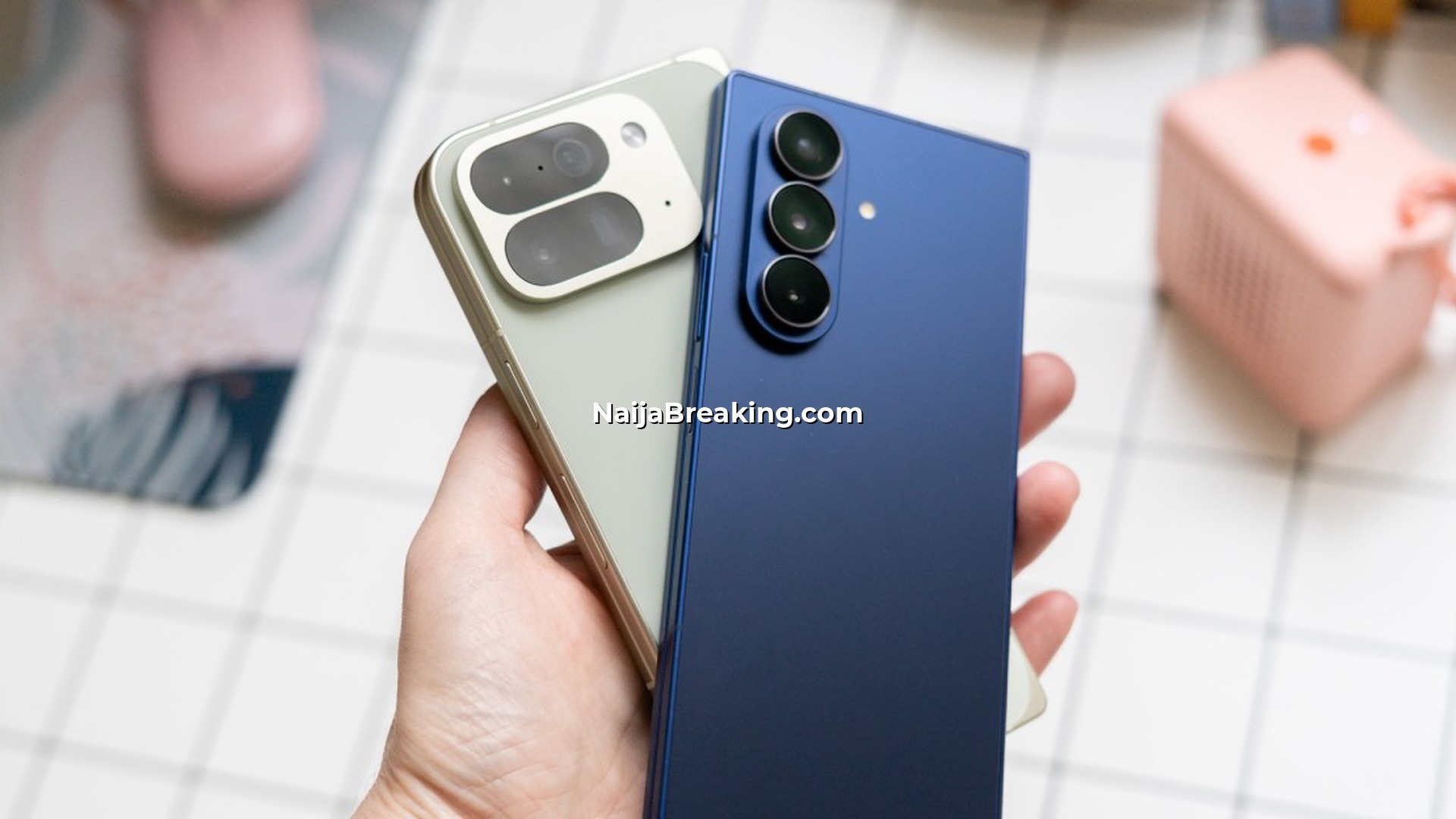
Google has announced a significant update to its mobile operating system that could reshape how Nigerians experience gaming on foldable smartphones: Android 17 foldable gaming mode will dedicate half of a device’s screen to a virtual gamepad with touch controls. This feature, set to launch in the coming months, represents a strategic pivot toward making foldable devices more practical for gaming—a critical market segment in Nigeria where mobile gaming has become the dominant entertainment medium for millions of young Nigerians. According to recent data, Nigeria’s gaming market grew by 18% year-on-year and is now valued at over $200 million, with mobile gaming accounting for approximately 75% of that figure. The Android 17 innovation arrives at a moment when foldable smartphones are beginning to penetrate Nigerian markets through imports and grey-market channels, yet affordability remains a barrier. Understanding what this gaming mode means for Nigerian consumers, tech retailers, and the broader digital entertainment ecosystem requires examining both the technical specifications and the economic realities on the ground.
Background
Foldable smartphone technology has evolved rapidly since Samsung’s Galaxy Z Fold series first entered global markets in 2019. Initially dismissed as an experimental luxury product, foldables have gradually gained traction among tech enthusiasts and mobile gamers worldwide. However, their journey in Nigeria has been markedly different from developed markets. While devices like the Samsung Galaxy Z Flip and Galaxy Z Fold series command hefty price tags in official channels—often ranging from ₦800,000 to ₦2 million—most Nigerian consumers encounter these devices through informal imports or second-hand markets. The penetration rate remains low, with fewer than 2% of smartphone users in Nigeria owning a foldable device, according to telecom industry analysts.
The mobile gaming sector in Nigeria, by contrast, has experienced explosive growth. From 2018 to 2023, the number of mobile gamers in Nigeria increased from 45 million to over 110 million, driven by affordable data plans from networks like MTN, Airtel, and Glo, coupled with the popularity of games like PUBG Mobile, Call of Duty Mobile, Genshin Impact, and local titles developed by studios in Lagos and Abuja. This gaming boom has created demand for devices optimized for gaming, yet most Nigerians still rely on standard rectangular smartphones where gaming interfaces can feel cramped. Gaming cafés have sprouted across major cities, where young Nigerians gather to play competitive titles on larger screens and gaming laptops—a phenomenon that reflects the gap between consumer demand for better gaming experiences and the reality of what their personal devices can deliver.
Into this context steps Android 17’s foldable gaming mode. Google’s move reflects a broader recognition that foldables need to solve real problems beyond novelty, and gaming is one of the most compelling use cases. For the Nigerian market, this development signals that global smartphone manufacturers are beginning to think seriously about use cases that matter to young African consumers. The timing is strategic: as foldable prices gradually decline through competition and scale, and as more Nigerians upgrade from basic smartphones to mid-range and premium devices, innovations like this gaming mode could accelerate adoption when foldables eventually become accessible to the broader market.
Key Details
According to The Verge, Android 17’s foldable gaming mode introduces a sophisticated virtual gamepad system that will occupy approximately half of a foldable device’s unfolded screen. The virtual controller emulates physical button presses at the system level and is designed to work with any game that supports physical controllers—a critical technical detail that ensures broad compatibility without requiring individual game developers to build custom support. Google’s Mishaal Rahman explained on Reddit that the virtual controller includes a comprehensive button layout: a D-pad, left and right virtual sticks, A, B, X, and Y buttons, L1, L2, L3, R1, R2, R3, and a start button. This layout mirrors the configuration of standard gaming controllers, ensuring that players familiar with console-style gaming will find the interface intuitive.
The implementation prioritizes user customization. Players can configure the gamepad in multiple ways: keeping virtual joysticks inline or staggered, scaling button sizes to personal preference, and toggling haptic feedback on or off for different tactile responses. Activation is seamless—simply unfolding the device before or after launching a compatible game automatically triggers the mode, eliminating the need for manual menu navigation. The virtual gamepad can be hidden when not needed, and if a user connects a physical Bluetooth controller, the virtual gamepad automatically disables itself. Rahman emphasized that “Android allows you to play a wide variety of games on the go,” but acknowledged the core challenge: while touch controls work well for many game genres, certain titles—particularly action games, competitive shooters, and complex strategy games—benefit significantly from physical button inputs. The traditional workaround has required carrying a separate Bluetooth controller or snap-on gamepad, introducing friction for mobile gamers who value portability.
This feature is specifically engineered to eliminate that friction point. By converting half of a foldable’s interior screen into a dedicated gaming zone, Android 17 transforms the device’s form factor from a limitation into an advantage. For a device like the Galaxy Z Fold series, which features a 7.6-inch interior screen when fully unfolded, the gaming mode would reserve approximately 3.8 inches as a virtual controller interface, leaving the other half for the game itself. This larger game display compared to standard smartphones represents a significant improvement for visual immersion, while the physical space allocated to controls matches what competitive gamers expect from dedicated handheld gaming devices like the Nintendo Switch or PlayStation Vita—devices that shaped gaming expectations for an entire generation of players now entering adulthood across Nigeria.
Impact and Analysis
Android 17’s foldable gaming mode represents a pivotal moment for how hardware and software converge in mobile gaming. On a technical level, the innovation solves what industry analysts call the “input method paradox”—the reality that mobile gaming has bifurcated into two incompatible camps: games optimized for touch controls (casual titles, puzzle games, simple strategy games) and games that demand physical buttons (console-quality shooters, complex RPGs, competitive multiplayer). By creating a system-level virtual controller that works across all games supporting physical inputs, Google has essentially bridged that divide without requiring game developers to create custom implementations. This is a crucial detail often overlooked: developers don’t need to rewrite code or build custom UI elements. The mode operates at the OS level, meaning any game already designed for Bluetooth controllers automatically gains foldable-optimized support.
For Nigeria’s gaming ecosystem, the implications are multi-layered. First, it accelerates the case for foldable adoption among the country’s 110+ million mobile gamers. Currently, foldables are luxury items with unclear practical advantages beyond aesthetics and social status. Android 17’s gaming mode provides a tangible, functional reason for gamers to consider upgrading. Second, it creates downstream opportunities for gaming cafés and competitive esports venues across Nigeria. If foldables become popular among serious mobile gamers, these establishments could invest in foldable devices as premium gaming stations, similar to how internet cafés evolved when broadband adoption accelerated. Third, it signals to local game developers—studios like Carry1st, a Lagos-based company that has raised millions in investment to develop games for African markets—that they should design games with controller support in mind, knowing that future users might access these titles through foldable devices with built-in virtual controls.
However, economic realities temper the enthusiasm. The average Nigerian smartphone user earns between ₦50,000 and ₦150,000 monthly and spends approximately ₦10,000–₦25,000 on mobile data and devices annually. A foldable smartphone costing ₦1 million represents 10–20 months of disposable income for many Nigerians. Even if foldable prices drop to ₦300,000–₦500,000—which would require substantial market penetration and manufacturing scale—they remain significantly more expensive than the ₦80,000–₦150,000 mid-range devices that currently dominate Nigeria’s smartphone market. This price gap means Android 17’s gaming mode will likely remain accessible primarily to affluent urban gamers for the next 2–3 years, even as the feature itself is universally available to any developer.
Expert Perspectives
Dr. Emeka Okafor, a Lagos-based technology economist specializing in African mobile markets, offers a pragmatic assessment: “Android 17’s foldable gaming mode is technically impressive, but its real impact on Nigeria will depend entirely on price trajectory. Today, foldables are conference-room aspirations for 99% of Nigerian gamers. What matters is whether manufacturers like Samsung and incoming competition from Chinese brands like Oppo and Huawei can scale production enough to bring prices within reach of Nigeria’s upper-middle class—roughly 15 million people—within the next three years. If they can, we’ll see rapid adoption in premium segments. If not, this remains a feature looking for a market that doesn’t yet exist at scale in Nigeria.”
Chioma Adeyemi, a senior research analyst at the Centre for Digital Innovation in Lagos, approaches the story from a different angle: “What’s underappreciated is the developer story. Google has essentially given Nigerian game studios like Carry1st and Loja Games permission to design console-quality games for mobile without worrying about fragmentation across input methods. Once this mode becomes standard on Android, you’ll see a shift in game design philosophy. Studios will invest more heavily in games that leverage physical controls because they know players on foldables will have them. That’s a win for quality gaming on the continent, even if adoption among casual players lags.” Both analysts agree on one critical point: this feature addresses a real pain point in mobile gaming, but its success in Nigeria depends on hardware accessibility, not software innovation alone.
What This Means for Nigerians
For the average Nigerian mobile gamer—the 25-year-old in Lagos who plays Call of Duty Mobile during commutes, or the university student in Abuja who streams gaming content on YouTube—Android 17’s foldable gaming mode likely means nothing tangible for the next 12–18 months. The feature is designed for devices they cannot yet afford and cannot purchase through normal retail channels in Nigeria. However, the announcement should influence purchasing decisions for Nigeria’s top 3% of earners (those spending ₦1.5 million+ annually on technology). If you’re considering buying a premium flagship smartphone and have even a passing interest in gaming, a foldable device with Android 17 suddenly becomes a more compelling option than it was previously. The virtual gamepad transforms a device marketed primarily on novelty into one with genuine functional advantages for interactive entertainment.
For small business owners running gaming cafés across Nigeria’s major cities, the announcement signals a direction worth monitoring. Gaming cafés—which cluster in areas like Lagos Island, Yaba, Abuja’s Central Business District, and Kano’s computer village—currently stock high-end gaming laptops and mid-range Android phones. If foldables become popular enough to justify shelf space, café owners will need to decide whether to stock them as premium stations. This would require capital investment (foldables are delicate and theft risks are higher), but the potential to charge premium hourly rates might justify the cost. For game developers and content creators in Nigeria, the implication is clearer: designing for controller input is no longer a niche consideration; it’s becoming mainstream. Studios should begin planning game prototypes that leverage both touch and button-based inputs, positioning themselves to capitalize on the foldable wave when it inevitably accelerates in Nigeria’s premium market segments.
For ordinary consumers without tech industry connections, Android 17’s foldable gaming mode serves as a reminder that technological innovation in consumer devices is increasingly driven by entertainment use cases rather than productivity. Ten years ago, smartphones were marketed as productivity tools. Today, gaming legitimately drives hardware decisions. This shift reflects broader societal changes in how young Nigerians spend time and money—entertainment now commands a larger share of discretionary spending than ever before—and how global manufacturers are responding to that reality by building hardware around gaming first and productivity second.
Editor’s Take
At NaijaBreaking, we believe Android 17’s foldable gaming mode reveals something important about how Nigerian consumers are often last in line for innovation benefits, despite being early and enthusiastic adopters of new technologies. This feature will be available globally in months, but meaningful access for Nigerian gamers likely requires 18–24 months of price adjustments and market development. Meanwhile, competing economies in Asia, Europe, and North America will have already built entire gaming ecosystems around the capability. What frustrates us most is that this isn’t inevitable; it reflects structural inequalities in global technology markets where price discrimination ensures African consumers pay the highest premiums relative to earnings. A foldable costing $1,000 in the US becomes ₦1.8 million in Nigeria—not because of local taxes or distribution costs, but because manufacturers know they can extract that margin from affluent buyers willing to pay. Android 17’s gaming mode is genuinely exciting innovation. But it’s a reminder that innovation alone isn’t enough; access and affordability must follow for the benefits to reach beyond elite markets.
What to Watch Next
Over the next 6–12 months, monitor three specific developments: First, watch for Samsung’s response to Android 17 through Galaxy Z Fold and Z Flip firmware updates. Will they add custom features that enhance the gaming mode, or will they let Google’s implementation stand? Second, track pricing announcements from Chinese manufacturers entering the foldable market. Oppo, Huawei, and Xiaomi are all developing foldable devices, and their pricing strategies will determine whether foldables ever reach Nigeria’s mass market. Third, observe how Nigerian game developers respond to the announcement. Do studios like Carry1st announce new games designed with foldable support in mind? This will signal whether the global developer community sees foldables as a serious gaming platform. The key question now is: will Android 17’s foldable gaming mode accelerate foldable adoption in Nigeria, or remain a feature waiting for hardware prices to fall by 40–50% before it truly matters to the market?
Conclusion
Android 17 foldable gaming mode represents genuine innovation in mobile gaming hardware-software integration, yet its immediate impact on Nigerian consumers will be limited by the immovable barrier of affordability. The feature elegantly solves a real problem—enabling console-quality gaming on portable devices—but that solution reaches only the wealthiest 3% of Nigerian smartphone users in the medium term. What this story reveals is the persistent gap between technological capability and market access in Africa, and how global innovation cycles often bypass local markets despite their size and enthusiasm for digital entertainment. Nigeria’s 110+ million mobile gamers deserve better, but change will require both software innovation (like Android 17’s mode) and structural shifts in how technology is priced and distributed across different global markets. Share your thoughts in the comments below—what do you think this means for Nigeria’s future in the global technology economy?