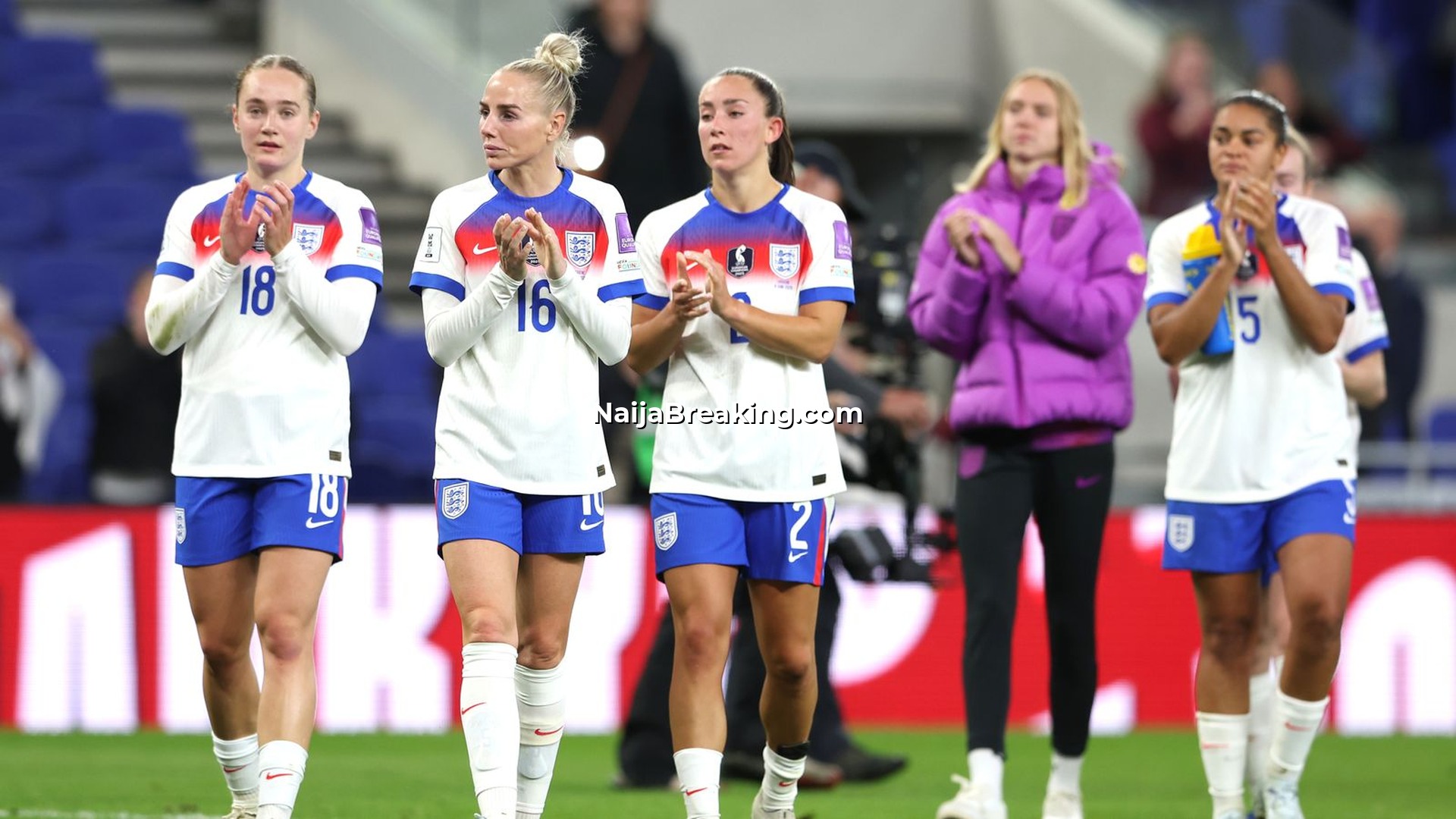
England Women World Cup Qualifying: How One Defeat to Spain Cost Automatic Qualification
The reigning European champions and one of the world’s elite women’s football teams now face an unexpected playoff battle to secure their place at next year’s Women’s World Cup in Brazil—a stunning turn of events that has left England’s camp questioning the fundamental structure of international football qualification. England Women World Cup qualifying campaign has delivered a masterclass in the brutal mathematics of tournament football, where 15 points from 18 possible and five victories prove insufficient when group composition and a single catastrophic result conspire against you. The Lionesses demolished Ukraine 3-0 in their final group match, a dominant display that underscored their quality and pedigree, yet it merely served as a footnote to the narrative already written by that devastating 4-0 defeat to Spain in Mallorca. Manager Sarina Wiegman, fresh from leading England to continental glory just months earlier, now finds herself publicly questioning whether the England Women World Cup qualifying format itself has become fundamentally broken when the defending continental champions cannot secure an automatic World Cup berth. This development carries implications far beyond English football, raising serious questions about UEFA’s qualification structure and whether the current system adequately reflects merit in an increasingly competitive women’s game where the gap between elite and rising nations continues to narrow.
The Context: England Women World Cup Qualifying Landscape
Women’s international football has undergone seismic transformation over the past decade, with investment, professionalization, and talent development creating a landscape where traditional powerhouses can no longer guarantee results through reputation alone. England’s trajectory under Sarina Wiegman epitomizes this evolution—she arrived in 2021 amid considerable scepticism, tasked with rebuilding a squad that had disappointed at the 2019 World Cup and the 2020 European Championship. Within 18 months, she delivered the Euro 2022 trophy, a watershed moment for women’s football in England that captured the nation’s imagination and inspired an unprecedented surge in youth participation and viewership across the country.
The victory seemed to cement England’s position as the continental elite, a team capable of competing with any opponent globally and establishing themselves as long-term contenders on the world stage. However, that success in England Women World Cup qualifying campaigns masked underlying vulnerabilities—particularly the lack of a dominant qualifying campaign against truly elite opposition. Unlike their male counterparts, who typically cruise through qualifying groups with relative ease, England’s women have increasingly found themselves tested by rising competitors like Spain, the Netherlands, and Germany, all of whom have dramatically invested in their women’s programmes. The 2023 World Cup qualifying campaign exposed these weaknesses brutally, forcing uncomfortable conversations about the team’s preparations and tactical flexibility.
Spain’s emergence as a genuine force in women’s football, powered by Barcelona and Real Madrid’s investment and success in the domestic league, fundamentally altered the competitive balance in European football. When the draw paired England with Spain in Group A3 for the England Women World Cup qualifying group stage, alongside Ukraine and other opponents, it immediately became apparent that this would be no routine qualification campaign. The group composition meant that the defending European champions would face their sternest test early in the qualifying process, and the results would prove to be consequential in determining the ultimate outcome of their World Cup bid.
The Catastrophic Defeat: Spain’s Dominant Performance
On a sweltering afternoon in Mallorca, Spain dismantled England with a display of technical excellence and tactical superiority that left Sarina Wiegman’s team looking bewildered and disjointed. The 4-0 scoreline barely reflected the gulf in performance that emerged between two of Europe’s finest women’s teams, as Spain’s fluid passing and movement repeatedly exposed England’s defensive frailties. This England Women World Cup qualifying loss would become the pivotal moment around which the entire campaign would ultimately revolve, the single result that transformed what should have been a routine qualification into an anxious, contested affair.
Spain’s Barcelona-influenced style of play—characterized by rapid combination passing, intelligent movement off the ball, and relentless positional pressure—overwhelmed an England midfield that struggled to impose control or rhythm on proceedings. The Spanish forwards operated with a crisp coordination that left England’s defenders constantly reactive rather than proactive, and the efficiency of Spain’s finishing meant that the dominant performance translated directly into a commanding scoreline. For England Women World Cup qualifying purposes, this defeat would prove to be absolutely catastrophic, as the two-point gap it created between England and Spain would ultimately determine which team finished first in the group and thus earned automatic qualification to the World Cup finals.
The tactical breakdown was particularly troubling for Wiegman because it suggested that England’s Euro 2022 triumph had perhaps masked some fundamental limitations in the team’s ability to adapt and control matches against the very best opposition. Spain’s midfield orchestration, orchestrated by experienced players accustomed to winning silverware at club level, consistently outplayed an England engine room that looked passive and second best. The full-backs struggled to cope with Spain’s width and intensity, while England’s forward players received insufficient service and spent the match frustrated and isolated. From an England Women World Cup qualifying perspective, this performance raised serious questions about whether the team’s preparation and analysis had been sufficiently rigorous heading into such a crucial fixture.
The Group Stage: Consistency Undermined by One Catastrophic Performance
Throughout the rest of the England Women World Cup qualifying campaign, the Lionesses demonstrated exactly why they remain among Europe’s elite. Five victories from their remaining matches showcased the quality and consistency that has become their hallmark under Wiegman’s stewardship. The performances against Ukraine, specifically the comprehensive 3-0 victory, demonstrated that the Spain defeat was anomalous rather than indicative of systemic problems with the team’s overall standard.
Victories against other opponents in the England Women World Cup qualifying group were typically decisive and commanding, with England’s superior individual quality and collective organization generally proving too much for second-tier opposition. The attacking flair that has become synonymous with this England team was frequently evident, with multiple players contributing goals throughout the group stage. Star players like Megan Rapinoe’s era equivalents in English football demonstrated their world-class credentials with consistent performances that attracted attention from top clubs across Europe. However, England Women World Cup qualifying results ultimately proved that accumulating points against inferior opposition, while necessary, was insufficient when facing the genuine elite teams in the group.
The mathematical cruelty became apparent as the final group standings took shape. England’s 15 points from six matches represented an average of 2.5 points per game—a return that would secure qualification in the vast majority of international qualifying campaigns. Yet Spain’s superior head-to-head record and their first-place finish meant that England finished second, relegating them to the playoff route that awaited. The England Women World Cup qualifying rules structure, it became clear, had created a situation where winning five matches and drawing against mediocre opposition proved insufficient against a superior team that won the group.
The Playoff Path: Unexpected Journey for the Continental Champions
The playoff format created for UEFA’s England Women World Cup qualifying campaign means that England, despite their status as defending European champions, must now navigate an additional knockout round to secure their place in Brazil. This represents an extraordinary indictment of either the qualifying structure itself or, alternatively, a genuine reflection of how competitive women’s international football has become at the elite level.
Sarina Wiegman has not been shy about her frustration with the England Women World Cup qualifying system. In post-match comments and subsequent interviews, she questioned whether having the continental champions required to compete in playoffs was genuinely consistent with the principle of rewarding merit and achievement. The manager’s perspective carries considerable weight—after all, England’s Euro 2022 victory should theoretically provide some advantage in the subsequent qualifying cycle, yet the format offers no such consideration.
The playoff opponents represent their own challenge, though England’s quality should theoretically be sufficient to progress. Nevertheless, the reality of the England Women World Cup qualifying situation is that a team widely regarded as among the world’s five or six best must now prove their credentials in an additional match against a ranked opponent. This creates unnecessary fatigue and additional risk of injury or upset, factors that neither England nor any other top-ranked team should realistically face when securing qualification to a World Cup.
Broader Implications for Women’s Football
The England Women World Cup qualifying outcome raises profound questions about the direction and structure of international women’s football. The sport has experienced unprecedented growth and professionalization over the past five years, with investment from major broadcasters, governing bodies, and sponsors transforming the landscape. Yet UEFA’s qualification structures have not necessarily evolved at the same pace as the actual quality and competitiveness of teams participating in these qualifying campaigns.
The fact that Spain could emerge as a genuine rival to England speaks to the positive developments within European women’s football. Investment in player development, coaching infrastructure, and domestic league professionalization has created an environment where multiple nations can compete at elite levels. However, the England Women World Cup qualifying situation demonstrates that qualification formats designed for an earlier era of women’s football, when dominance was more easily asserted, may no longer be fit for purpose.
Future iterations of England Women World Cup qualifying campaigns will need to account for this new competitive reality. The assumption that automatic qualification can be treated as a formality for top-ranked nations appears increasingly quaint as the quality of women’s international football continues its upward trajectory. Whether UEFA will modify their structures in response to these developments remains to be seen, but the England example provides compelling evidence that change may be necessary.
Conclusion
England Women World Cup qualifying has delivered a sobering lesson about the realities of modern women’s international football. Despite demonstrating obvious quality, consistency, and the credentials of defending European champions, England’s campaign has been derailed by a single catastrophic performance against superior opposition. The mathematics of the England Women World Cup qualifying group structure meant that this one defeat, combined with Spain’s superior finishing elsewhere, proved sufficient to relegate the Lionesses to playoff football. While England should progress through their playoff tie and ultimately appear at the World Cup in Brazil, the journey to that point has been more fraught than should reasonably be expected for a team of their stature. The broader implications for UEFA’s qualification structures and women’s football governance suggest that evolution is necessary to reflect the genuine competitiveness of the modern game.