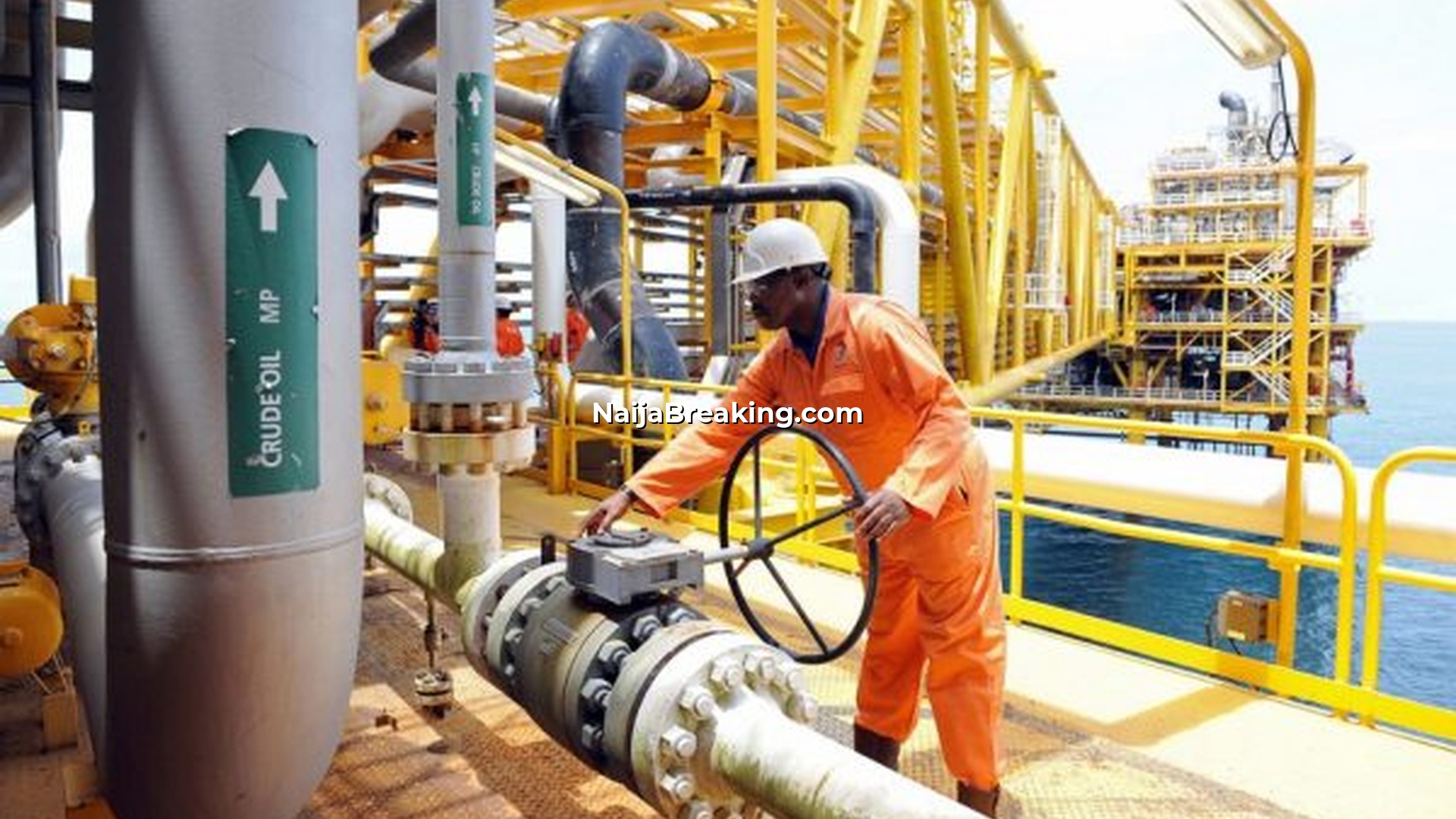
Nigeria Crude Oil Production: New Streams Add 12M Barrels but Production Targets Remain Elusive
Nigeria’s crude oil production has witnessed significant developments with the recent introduction of new crude oil streams that promise to enhance the nation’s energy output. The addition of Utapate and Cawthorne crude streams has collectively contributed over 12 million barrels to Nigeria crude oil production capacity, marking an important milestone for the African petroleum giant. However, the reality of Nigeria crude oil production remains more nuanced than headline figures suggest. Despite these positive developments, Nigeria crude oil production capacity continues to face severe constraints from infrastructure deterioration, security challenges, and operational inefficiencies that prevent the nation from reaching its ambitious production targets. This comprehensive analysis examines how Nigeria crude oil production is evolving, what these new streams mean for the national economy, and why achieving optimal production levels remains persistently challenging for the world’s leading African oil producer.
Nigeria’s dependence on crude oil exports cannot be overstated—approximately 90% of government revenue derives from petroleum exports, making Nigeria crude oil production directly correlated with the country’s ability to fund essential services including healthcare, education, infrastructure development, and social welfare programs. The recent additions to Nigeria crude oil production through new streams represent a response to years of declining output, but they simultaneously highlight the urgent need for comprehensive sector reforms and sustained investment. Understanding the trajectory of Nigeria crude oil production is essential for policymakers, investors, and stakeholders seeking to comprehend the nation’s economic prospects and long-term energy security strategy.
The Current State of Nigeria Crude Oil Production
Nigeria crude oil production has experienced considerable fluctuations over the past decade, with the sector struggling to maintain consistent output levels. According to data from the Nigerian Upstream Petroleum Regulatory Commission (NUPRC), Nigeria crude oil production currently hovers around 1.5 to 1.8 million barrels per day, significantly below the nation’s installed capacity and government targets. This represents a dramatic decline from the early 2010s when Nigeria crude oil production exceeded 2.2 million barrels daily, establishing the nation as Africa’s premier oil producer and a significant player in global petroleum markets.
The precipitous decline in Nigeria crude oil production stemmed from multiple concurrent challenges. Pipeline vandalism in the Niger Delta region, particularly between 2016 and 2020, cost the nation billions in lost revenue and forced numerous production shutdowns. Simultaneously, underinvestment in infrastructure maintenance and field development meant that aging equipment continued deteriorating without adequate replacement or refurbishment. The combination of these factors created a vicious cycle where declining Nigeria crude oil production revenues reduced government investment capacity, which in turn prevented necessary infrastructure upgrades and security improvements in oil-producing regions.
The Petroleum Industry Act (PIA) of 2021 fundamentally restructured how Nigeria crude oil production is governed and regulated. By establishing the Nigerian Upstream Petroleum Regulatory Commission and clarifying fiscal frameworks, the legislation aimed to attract fresh investment and encourage operators to develop marginal fields that had previously languished as commercially unviable. The act also streamlined licensing processes and reduced regulatory uncertainty, thereby improving the investment climate for Nigeria crude oil production ventures. These reforms created the conditions necessary for the introduction of new crude streams and the development of previously dormant production assets.
Understanding the New Crude Streams: Utapate and Cawthorne
The emergence of Utapate and Cawthorne represents a direct consequence of improved regulatory frameworks under the PIA, demonstrating how structural reforms can stimulate Nigeria crude oil production growth. Between January and May 2026, the Utapate crude grade produced 8.75 million barrels, while the newly introduced Cawthorne blend contributed 3.41 million barrels. These figures, though substantial in absolute terms, reveal important insights about Nigeria crude oil production dynamics and operational realities.
Utapate crude has emerged as the more productive of the two new streams, accounting for approximately 72% of the combined 12 million barrels added during the measured period. The Utapate field benefited from operational improvements and infrastructure investments that enabled production ramp-up following years of underutilization. The crude grade has attracted significant interest from international buyers, particularly refineries in Asia and Europe, because of its specific gravity and sulfur content characteristics that match certain refinery configurations. For Nigeria crude oil production operators, Utapate represents a crucial diversification opportunity away from the traditional Bonny Light and Qua Iboe crudes that have historically dominated export volumes.
Cawthorne, the secondary contributor, commenced production more recently and demonstrates the pipeline of new Nigeria crude oil production opportunities coming online through smaller-scale field developments. While contributing a smaller volume compared to Utapate, Cawthorne illustrates the principle that Nigeria crude oil production can be expanded through marginal field exploitation without requiring massive capital investments. The economic viability of developing smaller fields previously considered uneconomical reflects how the improved regulatory environment under the PIA has reduced barriers to entry for mid-sized production ventures.
Both streams serve as proof-of-concept for Nigeria crude oil production potential. They demonstrate that despite challenges, new production capacity can be brought online relatively quickly when regulatory frameworks align with investor incentives and operational conditions permit production. However, the fact that these additions total only 12 million barrels—roughly 40 days of national production at current rates—underscores the magnitude of challenge facing Nigeria crude oil production expansion efforts.
Production Targets and Reality: The Gap Analysis
The Nigerian government has repeatedly articulated ambitious targets for Nigeria crude oil production, with officials projecting increases to 2.5 million barrels per day or higher by 2026. These targets reflect aspirational goals based on theoretical capacity assessments and anticipated investment flows. However, the persistent gap between these projections and actual Nigeria crude oil production output reveals fundamental structural challenges that new crude streams alone cannot resolve.
Multiple factors explain why Nigeria crude oil production consistently underperforms government targets. Infrastructure age remains a critical constraint—many production facilities, pipelines, and export terminals date back 20 to 40 years and require substantial capital expenditure for modernization. Corrosion, equipment failures, and operational inefficiencies plague aging infrastructure, resulting in unplanned downtime that reduces aggregate Nigeria crude oil production output. Maintenance backlogs spanning years mean that many facilities operate below design capacity.
Security challenges in the Niger Delta continue impacting Nigeria crude oil production severely. Despite government security operations and investments in military capabilities, militant groups and crude oil theft networks persist in targeting pipelines and production facilities. Force majeure declarations—formal notices that circumstances beyond operator control prevent contract fulfillment—occur repeatedly when Nigeria crude oil production facilities face sabotage or security-related shutdowns. These disruptions create unpredictability that discourages long-term investment planning and creates gaps in Nigeria crude oil production revenue forecasts.
Regulatory compliance and permitting delays also hinder Nigeria crude oil production expansion. While the PIA improved the overall framework, field development projects still navigate complex approval processes, environmental assessments, and stakeholder engagement requirements that extend project timelines. These delays push back the timeline for new Nigeria crude oil production capacity coming online, meaning that even when regulatory conditions improve, the translation to actual production increases lags by several years.
Fiscal arrangements and profitability considerations directly impact Nigeria crude oil production investment decisions by petroleum operators. When oil prices decline or fiscal terms become less favorable, operators reduce capital allocation to development projects, resulting in slower Nigeria crude oil production capacity expansion. The 2020 oil price collapse triggered numerous project deferrals and budget reductions that cascading effects on Nigeria crude oil production continue felt today.
Economic Impact of Nigeria Crude Oil Production Changes
The 12 million barrels added through Utapate and Cawthorne streams generate meaningful but limited economic impact given Nigeria’s fiscal dependence on crude oil revenues. At average 2026 prices around $75-80 per barrel, these 12 million barrels translate to approximately $900-960 million in additional revenue—substantial sums by many standards but representing less than one month of incremental national oil revenue at projected production rates.
For Nigeria crude oil production’s macroeconomic contribution, the significance extends beyond these headline figures. Each percentage point increase in Nigeria crude oil production capacity strengthens the government’s fiscal position, supports naira currency stability, and improves debt servicing capacity. Given that Nigeria’s external debt obligations exceed $40 billion and domestic fiscal pressures remain intense, even modest increases in Nigeria crude oil production translate to meaningful improvements in government’s ability to fund operations and service debt obligations.
At the sectoral level, increased Nigeria crude oil production from new streams generates employment in production operations, logistics, and ancillary services. These jobs, while fewer in total number than the petroleum sector’s peak employment levels, provide stable income in regions dependent on oil activity. The downstream effects of increased Nigeria crude oil production extend to transportation services, equipment suppliers, and technical support providers throughout the energy sector ecosystem.
Export earnings from Nigeria crude oil production improvements strengthen foreign exchange reserves, providing crucial buffers against external shocks and supporting the Central Bank’s ability to defend naira stability. In an era of persistent imported inflation driven by currency depreciation, any enhancement to Nigeria crude oil production that increases foreign exchange inflows provides countervailing pressure against inflationary forces.
Challenges Preventing Production Target Achievement
Despite the encouraging addition of new crude streams, multiple interconnected challenges prevent Nigeria crude oil production from reaching government targets. These obstacles operate at technical, commercial, security, and policy levels, requiring multifaceted solutions beyond simple regulatory reforms.
Infrastructure rehabilitation costs present a formidable challenge to Nigeria crude oil production expansion. Comprehensive modernization of pipelines, production platforms, processing facilities, and export terminals would require capital investment in the tens of billions of dollars—sums that existing operators cannot individually finance while maintaining adequate returns. Public-private partnership models and government co-investment would be necessary to address infrastructure gaps preventing Nigeria crude oil production from reaching optimal levels. Currently, such comprehensive funding mechanisms remain absent, leaving infrastructure as a persistent bottleneck for Nigeria crude oil production growth.
The Niger Delta security situation continues directly impacting Nigeria crude oil production output through pipeline vandalism, facility sabotage, and theft. Militant groups and organized criminal networks targeting petroleum infrastructure have become increasingly sophisticated in their operations, sometimes coordinating attacks across multiple facilities simultaneously to maximize disruption to Nigeria crude oil production. Military counter-operations have achieved limited success in permanently securing production regions, suggesting that security challenges will continue constraining Nigeria crude oil production for the foreseeable future.
Crude oil theft, a phenomenon sometimes called “illegal bunkering,” represents a shadow economy that siphons millions of barrels from Nigeria crude oil production annually without generating government revenue. Estimated annual losses through theft range from 100,000 to 300,000 barrels daily, representing 5-15% of total Nigeria crude oil production. This leakage exists because organized networks have established infrastructure for siphoning, processing, and exporting crude, often in connivance with security personnel or local officials. Addressing crude oil theft requires sustained law enforcement attention and community engagement strategies that have proven difficult to maintain consistently.
Investment hesitancy among international oil companies reflects cautious sentiment regarding Nigeria crude oil production prospects. Despite the PIA’s improved framework, companies evaluate projects based on risk-adjusted returns, and Nigeria crude oil production ventures are perceived as carrying elevated political, security, and operational risks compared to comparable projects in other regions. This perception, whether objectively justified or not, results in lower capital allocation and slower project development timelines for Nigeria crude oil production expansion ventures.
Future Outlook for Nigeria Crude Oil Production
The trajectory of Nigeria crude oil production over the next five years will likely reflect ongoing tension between expansion opportunities and persistent constraints. The PIA has successfully created conditions for new production capacity to come online, as evidenced by Utapate and Cawthorne, and several additional marginal field projects remain in advanced development stages. These could potentially add another 200,000-400,000 barrels daily to Nigeria crude oil production if operational and security conditions permit. However, achieving the government’s aspirational targets of 2.5+ million barrels daily appears increasingly unlikely absent major changes in capital investment, security conditions, or operational efficiency.
Global energy transition dynamics also influence Nigeria crude oil production’s long-term prospects. As developed economies accelerate renewable energy adoption and reduce crude oil demand, the petroleum market faces structural headwinds that could depress prices and reduce incentives for capital investment in Nigeria crude oil production expansion. Simultaneously, emerging markets continue consuming petroleum at rising rates, providing offsetting demand growth. For Nigeria crude oil production specifically, the question becomes whether supply increases can find markets at prices sufficient to justify investment in face of multiple operational challenges.
Government policy evolution will critically determine Nigeria crude oil production’s trajectory. If authorities maintain the PIA’s improved regulatory framework while simultaneously addressing security challenges and infrastructure deficits, Nigeria crude oil production could potentially achieve modest growth toward 2 million barrels daily over the next three to five years. Conversely, if policy instability returns or security deteriorates further, Nigeria crude oil production could face renewed decline, jeopardizing the modest progress represented by new streams like Utapate and Cawthorne.
Conclusion: Measuring Progress Within Constraints
The addition of 12 million barrels from Utapate and Cawthorne crude streams represents genuine progress in Nigeria crude oil production, confirming that the PIA’s regulatory reforms are generating tangible results. These new streams demonstrate the principle that Nigeria crude oil production capacity can expand when conditions align to encourage investment and operational efficiency. However, these additions also highlight the magnitude of challenges preventing Nigeria crude oil production from reaching government targets, with security threats, infrastructure constraints, and investment hesitancy remaining as formidable obstacles.
For Nigeria crude oil production to achieve sustained expansion toward 2 million barrels daily, comprehensive approaches addressing security, infrastructure, and investment climate must accompany regulatory improvements. The story of Nigeria crude oil production ultimately reflects broader themes of resource management, institutional capacity, and development challenges facing Nigeria. Success in expanding Nigeria crude oil production requires not just new fields coming online but sustained commitment to addressing the deep structural issues that have constrained Nigeria crude oil production for over a decade. Until these challenges receive proportionate attention and resources, Nigeria crude oil production will likely continue performing below potential, constraining government revenue and limiting the sector’s contribution to national development objectives.