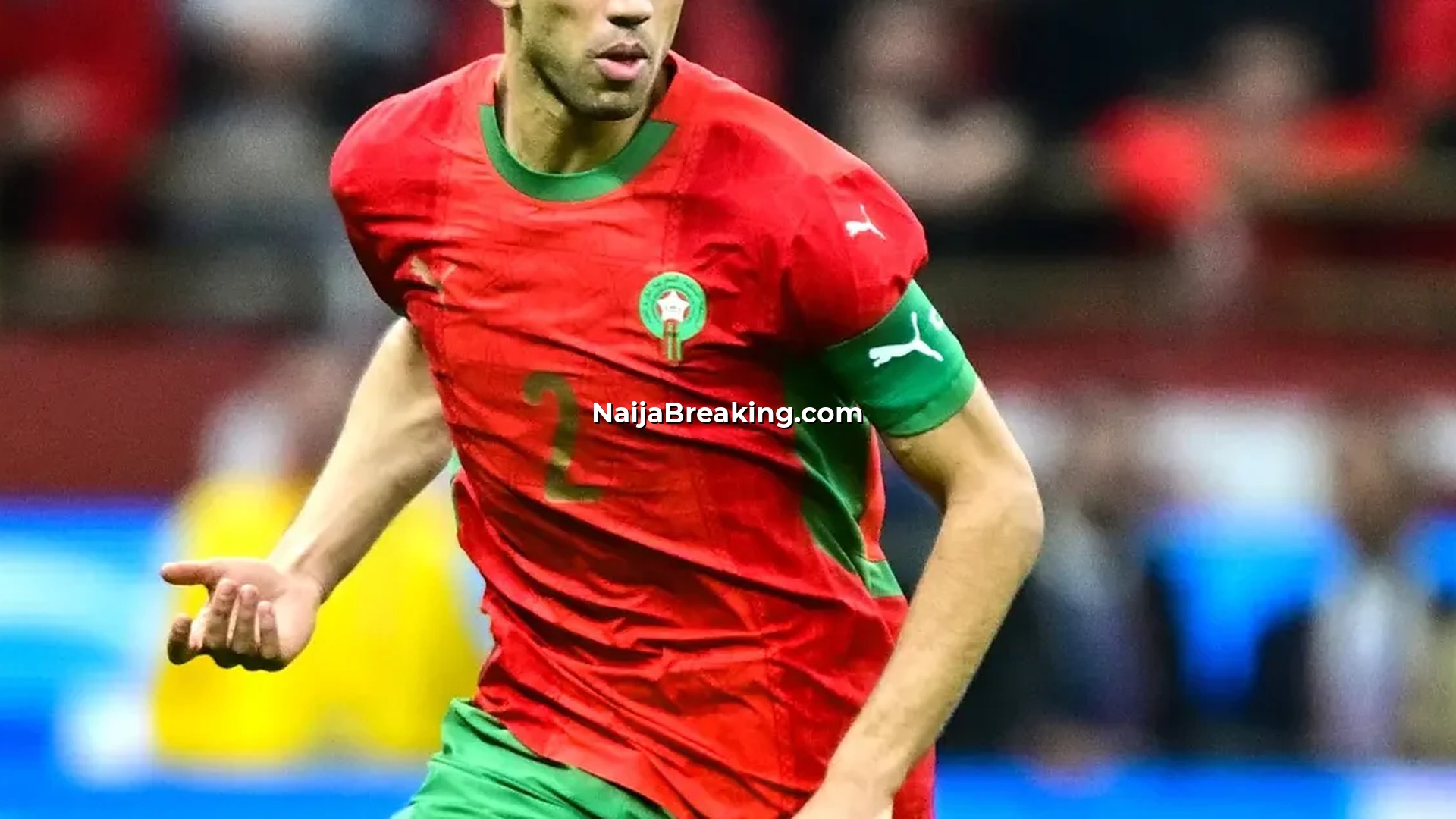
Morocco Brazil World Cup 2026: African Football’s Historic Moment and Nigeria’s Strategic Watch
The forthcoming Morocco Brazil World Cup 2026 encounter represents one of the most anticipated matches in contemporary African football history. As Morocco prepares to face five-time champions Brazil in a crucial FIFA World Cup 2026 Group C opener, the broader implications for African football and Nigeria’s own continental standing demand serious attention. This heavyweight clash between the Atlas Lions and the Seleção is far more than a single match—it is a statement about whether Africa’s football renaissance, sparked by Morocco’s historic semi-final run in Qatar 2022, can sustain itself on the world’s biggest stage. For Nigerian football fans and stakeholders, watching how Morocco navigates this test against Brazil’s formidable attacking threat, particularly the speed and skill of Vinicius Júnior, offers crucial lessons as Nigeria contemplates its own path to recovery after missing the 2022 World Cup entirely. The Morocco Brazil World Cup 2026 match, scheduled for MetLife Stadium in East Rutherford as part of the New York metropolitan area’s hosting duties, pits continental pride against established global dominance—a narrative that resonates deeply across West African football communities grappling with their own competitive decline and seeking a blueprint for resurgence.
Understanding the significance of the Morocco Brazil World Cup 2026 matchup requires a comprehensive examination of recent African football history, competitive trends, and the strategic implications for emerging football nations on the continent. This is not merely a sports story but a narrative about continental development, institutional excellence, and the pursuit of sustained competitive excellence in global football.
Morocco’s 2022 World Cup Legacy and African Football Renaissance
Morocco’s 2022 World Cup campaign remains one of African football’s most defining and transformative moments in the modern era. Becoming the first African nation ever to reach a World Cup semi-final was not merely a sporting achievement—it represented a watershed moment that fundamentally rewrote the continental narrative around what African teams could accomplish on the global stage. The Atlas Lions’ disciplined defending, tactical innovation under then-coach Walid Regragui, and extraordinary mental resilience captivated audiences not only across Morocco but throughout Nigeria, Senegal, Cameroon, Egypt, Ghana, and the broader African football community.
The psychological impact of Morocco’s Qatar 2022 performance cannot be overstated. Before this breakthrough, African representation at World Cup knockout stages had been sporadic, inconsistent, and often disappointingly short-lived. Nigeria’s own World Cup campaigns, once competitive and occasionally impressive—the Super Eagles reached the second round in both 1994 and 2014—had experienced a troubling stagnation. The failure to even qualify for the 2022 World Cup represented an all-time low for a nation that had previously established itself as a continental powerhouse and consistently competitive at the global level. Senegal had made noise at 2018, reaching the knockout rounds, but Morocco’s semi-final appearance elevated African football’s standing in unprecedented ways.
The contrast between Morocco’s upward trajectory and Nigeria’s sudden decline has created a complex and sometimes uncomfortable dynamic within African football discourse and institutional analysis. While Nigeria produced world-class talent in the 1990s and maintained reasonably competitive squads through the 2010s, the Super Eagles’ programme experienced a systematic structural decline. Multiple factors contributed to this deterioration: institutional corruption at the Nigeria Football Federation (NFF), grossly inadequate domestic league investment, poor player development infrastructure, repeated managerial instability, and a failure to implement consistent long-term strategic planning. Meanwhile, Morocco’s success emerged from precisely the opposite approach—consistent investment in youth development systems, a professionally managed domestic league structure, transparent institutional governance, and strategic long-term planning that transcended individual administrators.
For Nigerian analysts, football administrators, and federation officials, the 2026 World Cup represents a redemptive opportunity, but only if critical lessons from Morocco’s blueprint are genuinely absorbed and implemented. The question facing Nigerian football is whether the Super Eagles’ return to World Cup competition (they qualified for 2026) will mark the beginning of sustained resurgence or merely a temporary reprieve before further decline. The Morocco Brazil World Cup 2026 match provides a case study in excellence that Nigerian stakeholders must carefully examine.
Understanding the Morocco Brazil World Cup 2026 Matchup Dynamics
When analyzing the Morocco Brazil World Cup 2026 encounter, observers must consider multiple technical and strategic dimensions. Brazil enters the tournament as defending champions, five-time World Cup winners, and perpetually among the tournament favorites. However, the Seleção’s recent campaigns have shown increasing vulnerability against disciplined, defensively-organized opponents. France’s 2018 World Cup run and Argentina’s 2022 triumph both demonstrated that Brazil’s traditional attacking prowess, while formidable, could be neutralized through superior organization and tactical discipline.
Morocco’s approach in the Qatar tournament established a template: compact defensive organization, strategic pressing systems, and quick transitions to exploit opponent vulnerability. This defensive blueprint proved remarkably effective against technically superior sides, enabling the Atlas Lions to progress through difficult groups and knockout encounters. As the Morocco Brazil World Cup 2026 match approaches, observers expect the North African nation to employ similar principles—controlling tempo, limiting Brazil’s creative space, and seeking to frustrate the Seleção’s rhythm. Brazil, conversely, will likely deploy their traditional approach: high-tempo attacking football, aggressive wing play (particularly through Vinicius Júnior), and reliance on individual technical brilliance.
The specific threat posed by Vinicius Júnior deserves particular attention within the Morocco Brazil World Cup 2026 context. The Real Madrid star has emerged as one of global football’s premier attacking talents, combining pace, technical skill, defensive recovery capacity, and clutch performance in high-pressure situations. His potential destructive impact on the Morocco defensive structure represents the fundamental technical challenge facing the Atlas Lions’ tactical approach.
Regional Football Development Patterns and Comparative Analysis
The broader context of African football development reveals interesting patterns that illuminate why the Morocco Brazil World Cup 2026 encounter matters so profoundly for the continent’s future. The 2026 World Cup features unprecedented African representation—nine continental nations qualified, the highest number in tournament history. This expansion reflects growing competitive capacity across the continent but also masks significant disparity in institutional development and strategic planning.
North African nations, particularly Morocco, Egypt, and Tunisia, have invested systematically in professional domestic leagues and institutional transparency. West African football, traditionally Nigeria’s domain, has experienced relative decline despite possessing exceptional individual talent. The contrast between Morocco’s institutional approach and Nigeria’s fractious administration highlights why structural factors matter more than raw talent availability.
Senegal’s successful 2022 and 2024 Africa Cup of Nations campaigns demonstrated that emerging African nations could compete at the highest levels through systematic organization. Cameroon, historically competitive, has struggled with institutional corruption and coaching instability. Ghana, once a continental giant, has experienced periodic decline. These patterns suggest that success requires not only talented players but also stable institutions, transparent governance, adequate investment in youth development, and consistency in long-term planning.
Nigeria’s Strategic Position and World Cup 2026 Implications
Nigeria’s presence at the Morocco Brazil World Cup 2026 tournament represents genuine redemption after missing 2022. The Super Eagles’ qualification, achieved through African playoff victories, demonstrated that the talent pipeline remains viable. However, meaningful success requires more than qualification. Nigeria must analyze how Morocco, Senegal, and other rising continental powers have structured their programmes to achieve sustained competitive excellence.
The Super Eagles’ 2026 campaign objectives should extend beyond mere knockout stage progression. Instead, Nigeria must commit to the systematic reforms that Morocco pursued: strengthening domestic league professionalism, investing in youth development academies, implementing transparent institutional governance at the NFF, ensuring coaching stability, and developing player recruitment strategies that maximize talent utilization. Without these structural changes, Nigeria risks another cycle of disappointment.
Tactical Analysis: How Morocco Can Challenge Brazil
For the Morocco Brazil World Cup 2026 match specifically, tactical analysis suggests several approaches the Atlas Lions might employ. First, Morocco could implement aggressive pressing in Brazil’s defensive third during phase one of possession buildup, disrupting the Seleção’s rhythm before dangerous attacking transitions materialize. This approach requires exceptional fitness and disciplined positioning, but matches Morocco’s recent tactical evolution.
Second, Morocco might employ a relatively compact midfield block designed to limit space for Brazilian playmakers, particularly restricting Neymar’s creative influence and reducing opportunities for Vinicius Júnior to receive the ball in dangerous attacking positions. By congesting midfield areas and forcing Brazil into more direct approaches, Morocco could potentially neutralize the Seleção’s traditional strength: flowing, technically superior attacking football.
Third, transitional opportunities represent Morocco’s most promising avenue to create dangerous attacking situations. Brazil’s high attacking line, necessary for their pressing and possession approach, creates space for rapid counterattacks. Morocco’s pace options—particularly athletic forward players who can exploit defensive transitions—could prove decisive in generating scoring opportunities despite Brazil’s overall attacking superiority.
Tournament Context and Group C Competition
The Morocco Brazil World Cup 2026 Group C also includes other significant nations, creating additional complexity within the qualifying dynamic. Group stage competition demands not only victory over elite opponents but also efficient point accumulation against other competitors. Morocco’s pathway through Group C depends on both superior performance against Brazil and consistent victories against remaining group members. Historical precedent suggests that even strong African nations struggle to defeat European or South American champions in Group stages, making supplementary victories crucial for progression.
The 2026 World Cup format, expanded to 48 teams with modified group structures, presents different qualification dynamics compared to previous tournaments. Teams must now manage more complex mathematics regarding goal differential, head-to-head records, and points accumulation across multiple opponents. Morocco’s success will depend on both competitive quality and mathematical point management.
Conclusion: African Football’s Trajectory and Future Implications
The Morocco Brazil World Cup 2026 encounter encapsulates broader questions about African football’s competitive trajectory, institutional development, and future potential. Morocco’s continued advancement would validate the institutional and strategic approaches that enabled their 2022 breakthrough. Brazil remains a formidable obstacle, but modern tournament history demonstrates that no nation possesses invincibility. For Nigeria and other African football stakeholders, this Morocco Brazil World Cup 2026 match provides essential lessons about institutional excellence, systematic planning, and sustained competitive commitment that extend far beyond football’s narrow sphere into broader continental development narratives.