Hit-and-Run Accident Lagos-Ibadan Expressway: Nigeria’s Road Safety Crisis Exposed
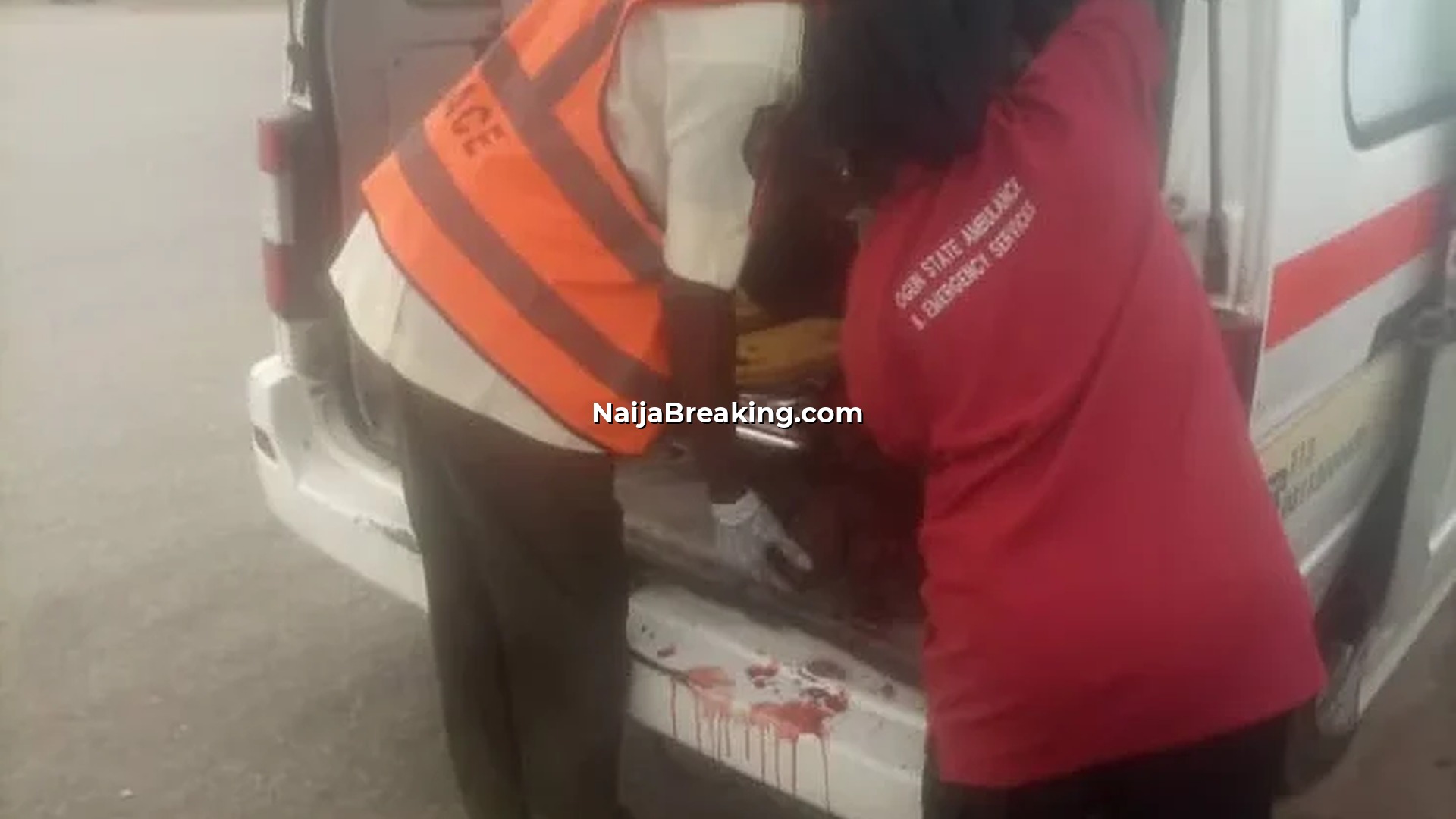
Two unidentified women lost their lives in a tragic hit-and-run accident Lagos-Ibadan expressway on Friday evening, yet another devastating reminder that Nigeria’s most critical highways remain zones of preventable tragedy. The incident, which occurred at approximately 6:31 pm at Car Park C in the outbound section of the expressway, has reignited urgent questions about road safety infrastructure, driver accountability, and the effectiveness of traffic enforcement agencies in protecting Nigerian citizens. This particular hit-and-run accident Lagos-Ibadan expressway case is especially troubling not merely because of the loss of two innocent lives, but what it reveals about systemic failures in vehicle regulation, pedestrian protection, and the enforcement mechanisms that are supposed to prevent such deaths. According to the Ogun State Traffic Compliance and Enforcement Agency (TRACE), the victims were attempting to cross the highway when they were struck by a vehicle that immediately fled the scene—a pattern that has become disturbingly familiar on Nigeria’s major corridors. As Nigerians increasingly rely on major expressways for commerce, travel, and daily movement, the recurring nature of fatal hit-and-run incident Lagos-Ibadan expressway demands immediate political attention and comprehensive policy intervention to address the underlying causes of these preventable tragedies.
Understanding the Hit-and-Run Accident Lagos-Ibadan Expressway Incident
The specific hit-and-run accident Lagos-Ibadan expressway that occurred on Friday represents a microcosm of larger transportation safety issues plaguing Nigeria’s highway system. The incident took place during evening rush hours when traffic volumes peak and pedestrian activity increases significantly. The two victims, whose identities remain unknown as of the last official report, were struck while attempting to navigate the expressway—a task that should not require individuals to risk their lives. The fact that the vehicle responsible for this hit-and-run accident Lagos-Ibadan expressway fled the scene without rendering assistance or reporting to authorities exemplifies the lack of accountability that pervades Nigeria’s road culture. Vehicle owners and drivers who commit hit-and-run offenses often escape justice due to inadequate surveillance infrastructure, insufficient investigative resources, and the challenges of vehicle identification in cases involving damaged or obscured license plates.
What distinguishes this particular hit-and-run accident Lagos-Ibadan expressway from countless others is not its severity but rather the questions it raises about systemic reform. The expressway, stretching 127 kilometres between Lagos and Ibadan, processes millions of vehicle movements annually. Within this volume of traffic, individual accidents—even fatal ones—can become statistical abstractions rather than catalysts for meaningful change. However, when examined collectively, the pattern of hit-and-run accidents Lagos-Ibadan expressway reveals a transportation system where driver behavior, institutional enforcement, and safety culture have all deteriorated to dangerous levels. The victims in this case were pedestrians, a particularly vulnerable road user category in Nigeria where pedestrian protection mechanisms remain largely absent from highway design and traffic enforcement strategies.
Nigeria’s Road Safety Crisis: Context and Scale
Nigeria’s road safety crisis represents one of the nation’s most silent but persistent public health emergencies, claiming an estimated 40,000 lives annually according to the World Health Organization, yet commanding barely a fraction of the political energy devoted to other national crises. To contextualize the severity: Nigeria’s annual road fatalities exceed deaths from malaria, tuberculosis, and several other diseases that receive substantially more international attention and domestic funding. The Lagos-Ibadan Expressway, as one of West Africa’s busiest transport corridors connecting Nigeria’s economic heartland to its southwestern commercial hub, has become particularly notorious for fatal accidents over the past decade. This critical infrastructure connects the Port of Lagos to Ibadan and beyond, literally serving as the spine of Lagos-Ogun commercial activity, yet its safety record has progressively deteriorated without corresponding political or infrastructure responses.
The hit-and-run accident Lagos-Ibadan expressway phenomenon specifically is a subset of broader traffic fatalities that deserves particular examination. Hit-and-run incidents differ from other accidents in significant ways: they typically involve drivers who deliberately flee the scene, suggesting either criminal intent, insurance fraud concerns, or knowledge of vehicle or licensing violations. Unlike accidents where emergency services arrive promptly to assist victims, hit-and-run cases frequently result in extended delays in medical intervention. The two women struck in this recent hit-and-run accident Lagos-Ibadan expressway incident may have survived with immediate medical attention—a possibility that underscores the compounding tragedy of fleeing the scene. Studies from jurisdictions with advanced road safety systems indicate that response time dramatically affects survival rates in vehicular accidents, particularly those involving multiple trauma injuries.
The Lagos-Ibadan Expressway: A Corridor of Danger
The Lagos-Ibadan Expressway holds unique status within Nigeria’s transportation network as simultaneously one of the most economically important and most dangerous highway corridors in the nation. Daily traffic volumes regularly exceed 100,000 vehicle movements, encompassing everything from motorcycles to articulated lorries carrying goods worth millions of naira. The expressway’s configuration—with varying lane widths, inadequate shoulder space, and pedestrian crossing points that lack proper infrastructure—creates inherent safety challenges. The hit-and-run accident Lagos-Ibadan expressway incident at Car Park C highlights one particularly problematic aspect: the existence of informal rest stops and commercial areas along the expressway where pedestrian activity intersects with high-speed traffic flows.
Historically, Nigeria’s approach to road safety has relied heavily on reactive rather than proactive measures. The establishment of TRACE in 2006 was meant to represent a paradigm shift toward professional traffic management and enforcement, moving away from the era of arbitrary police checkpoints and corruption-laden interactions between officers and motorists. However, nearly two decades later, the agency operates within an institutional framework plagued by insufficient funding, limited technological infrastructure, and challenges in coordinating with other enforcement bodies. The hit-and-run accident Lagos-Ibadan expressway incidents continue partly because investigating and prosecuting such cases requires resources that enforcement agencies simply do not possess. Vehicle tracking technology, forensic analysis capabilities, and inter-agency communication systems remain rudimentary compared to international standards.
Hit-and-Run Accountability: The Enforcement Gap
One of the most troubling aspects of the hit-and-run accident Lagos-Ibadan expressway is the virtual certainty that the responsible driver will never face prosecution. Statistics on hit-and-run case resolution rates in Nigeria are rarely published, but anecdotal evidence and case reviews suggest conviction rates remain extraordinarily low. The hit-and-run accident Lagos-Ibadan expressway that killed two women will likely join hundreds of other cases languishing in investigative limbo, with no identified suspect and minimal likelihood of closure. This institutional failure has profound consequences for road safety culture: drivers observe that fleeing an accident scene carries minimal practical risk compared to remaining and cooperating with authorities.
The enforcement gap manifests in multiple dimensions. First, initial scene investigation capabilities are often inadequate. Police and TRACE officers arriving at hit-and-run accident Lagos-Ibadan expressway sites frequently lack the training, equipment, and protocols necessary to collect forensic evidence—paint transfers, vehicle fragments, skid marks, and witness statements—that could identify responsible vehicles. Second, vehicle registration and licensing systems remain insufficiently integrated with enforcement databases. A hit-and-run accident Lagos-Ibadan expressway involving a vehicle with obscured or damaged registration plates may leave investigators with virtually no investigative leads. Third, inter-agency coordination between TRACE, Nigerian Police Force, and state-level authorities remains fragmented, with unclear jurisdiction and responsibility chains.
Pedestrian Safety and Highway Design Failures
The hit-and-run accident Lagos-Ibadan expressway that occurred at Car Park C raises fundamental questions about pedestrian safety infrastructure on Nigeria’s major expressways. Why are pedestrians attempting to cross a major expressway at informal commercial areas? The answer lies partly in Nigeria’s transportation culture, where expressways often function simultaneously as trunk highways and as local commercial corridors. Vendors, rest stop operators, and travelers create pedestrian activity that highway design has not adequately accommodated. The hit-and-run accident Lagos-Ibadan expressway victims were likely attempting to access services or cross to the opposite carriageway—both necessities within the current operational reality of the expressway.
International highway design standards emphasize grade-separated crossings (pedestrian bridges or underpasses) wherever significant pedestrian volumes intersect with high-speed traffic. Nigeria’s expressway system remains largely devoid of such infrastructure. The Lagos-Ibadan Expressway in particular lacks adequate pedestrian crossing facilities, creating situations where individuals must either risk dangerous crossings or take circuitous alternative routes. The hit-and-run accident Lagos-Ibadan expressway incident is thus partially attributable to design failures that preceded the actual collision. Improving pedestrian safety along the expressway would require installing protected crossing facilities at identified pedestrian activity nodes—an investment that would likely prevent future hit-and-run accidents Lagos-Ibadan expressway comparable in severity to this tragedy.
Driver Behavior and Road Culture
The decision of the driver involved in the hit-and-run accident Lagos-Ibadan expressway to flee rather than render assistance reflects broader deterioration in Nigerian road culture. Decades ago, accident victims in Nigeria could generally expect assistance from fellow motorists and passersby. Contemporary reality frequently involves indifference or fear—fear of legal consequences, insurance implications, or personal safety concerns. The hit-and-run accident Lagos-Ibadan expressway perpetrator demonstrated that this fear now overrides basic human compassion or legal obligation. This behavioral pattern, when multiplied across thousands of drivers on Nigeria’s roads, creates a transportation environment where hit-and-run accidents become normalized rather than exceptions requiring urgent response.
Driver training and licensing standards in Nigeria have deteriorated significantly. The Federal Road Safety Corps (FRSC) and state-level licensing authorities lack capacity to comprehensively evaluate driver competence, resulting in millions of Nigerian drivers operating vehicles without adequate training in defensive driving, hazard recognition, or emergency response protocols. A driver involved in a hit-and-run accident Lagos-Ibadan expressway might have had seconds to make decisions about how to respond—decisions that depend on training, judgment, and character. Current driver training systems in Nigeria emphasize procedural compliance over safety consciousness, leaving drivers unprepared for emergency situations.
Investigation and Justice System Challenges
Following a hit-and-run accident Lagos-Ibadan expressway, the responsibility for investigation falls to TRACE and the Nigerian Police Force. Both agencies face substantial constraints in hit-and-run case investigation. TRACE officers who arrive at the hit-and-run accident Lagos-Ibadan expressway scene may lack forensic training, photography equipment, and standardized protocols for evidence collection. The Nigerian Police Force Criminal Investigation Department, responsible for deeper investigation, operates with severe resource constraints and competing priorities. Hit-and-run cases, particularly those involving unidentified victims, often receive deprioritized attention compared to cases with influential complainants or obvious suspects.
The justice process, even when investigations succeed in identifying suspects, moves with extraordinary slowness. Cases involving the hit-and-run accident Lagos-Ibadan expressway could languish in courts for years, with trials repeatedly postponed due to witness unavailability, missing documentation, or judicial congestion. This systematic delay effectively eliminates deterrent value: potential offenders observe that hit-and-run accidents result in investigations that rarely conclude and prosecutions that rarely succeed.
Policy Recommendations and Path Forward
Addressing the recurrent pattern of hit-and-run accident Lagos-Ibadan expressway incidents requires multi-sectoral intervention. First, technological infrastructure must be enhanced: CCTV surveillance systems should be installed along the expressway, particularly at identified accident-prone sections and pedestrian activity areas. Second, hit-and-run specific legislation should be strengthened, with enhanced penalties and streamlined prosecution procedures. Third, TRACE and police should receive specific training and funding for hit-and-run investigation. Fourth, driver licensing standards must be elevated, with mandatory defensive driving training. Fifth, pedestrian safety infrastructure—pedestrian bridges, protected crossing areas—must be constructed at high-activity locations. Sixth, vehicle registration and insurance systems must be digitalized and integrated with enforcement databases.
The hit-and-run accident Lagos-Ibadan expressway that killed two women represents not merely a traffic incident but a policy failure affecting millions of Nigerians who depend on this expressway for livelihood and travel. Without comprehensive intervention, future hit-and-run accidents Lagos-Ibadan expressway incidents will continue, perpetuating Nigeria’s road safety crisis.