
Tinubu’s Warri Delineation Intervention Stalled: Ijaw, Urhobo Accuse Itsekiri of Obstruction
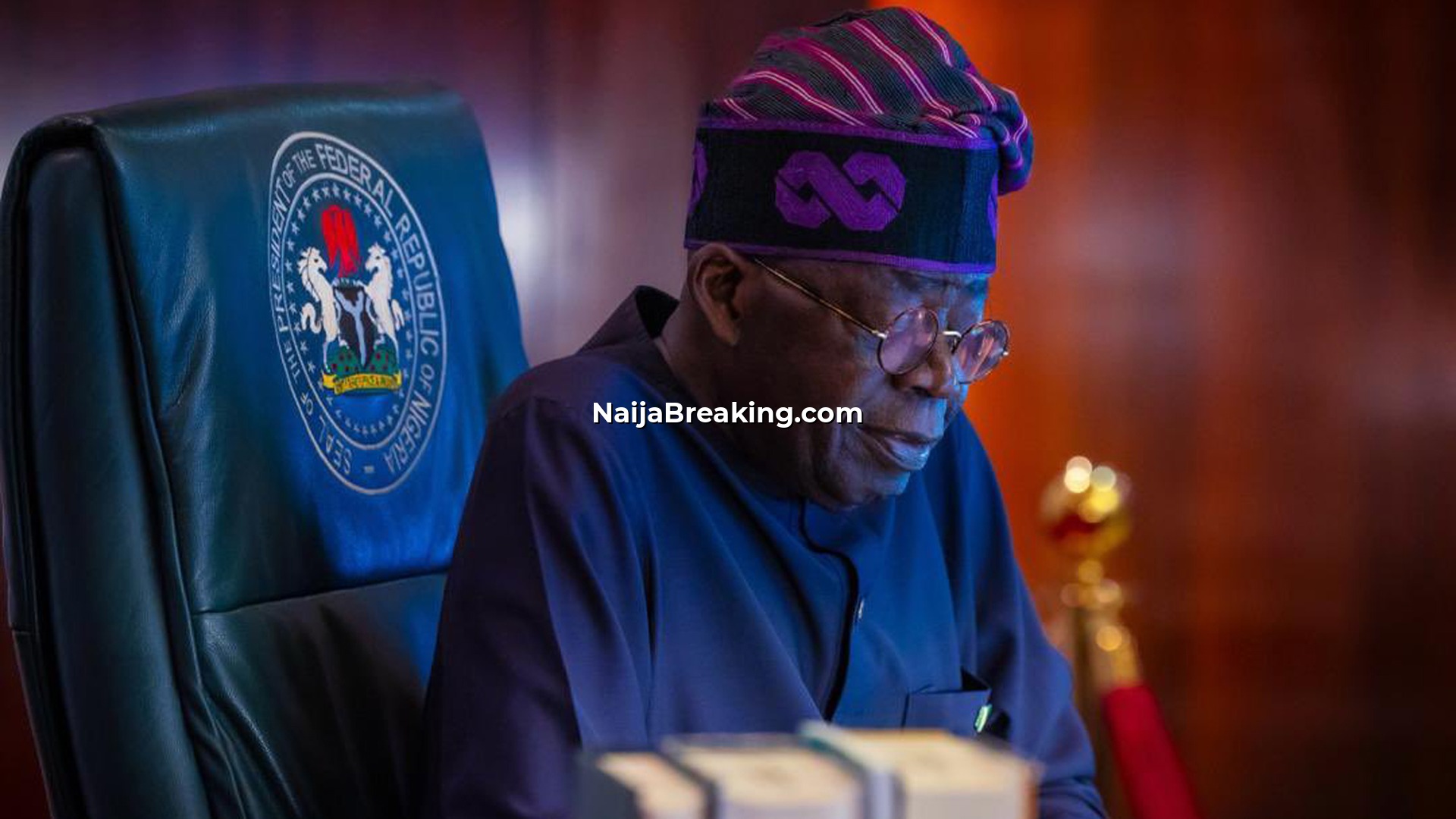
The Warri delineation crisis has taken a troubling turn as indigenous Ijaw and Urhobo leaders publicly accuse the Itsekiri ethnic nationality of deliberately undermining President Bola Tinubu’s high-level intervention to resolve the festering ward boundary dispute in the Warri Federal Constituency of Delta State. According to a joint media briefing, the groups claim that despite political modifications made to the INEC delineation report that favoured the Itsekiri, the ethnic group continues to resist implementation, threatening to derail electoral preparations and institutional trust. The allegation comes after a presidential summit in Abuja convened by Tinubu himself, attended by Delta State Governor Sherif Oborevwori, the National Security Adviser, and senior INEC officials—a rare display of federal urgency on a sub-national electoral matter. The Ijaw and Urhobo delegations now warn that further delays or alterations to the Supreme Court-ordered delineation report could trigger unspecified “consequences,” language that signals growing frustration with the pace of resolution. This escalation reveals deeper fractures in Nigeria’s electoral administration and the volatile intersection of ethnic identity politics with democratic processes in resource-rich Delta State, where control over legislative representation directly translates to access to constituency development funds and federal patronage networks. For Nigerian voters and institutions alike, the standoff raises uncomfortable questions about INEC’s independence and whether elite political actors can weaponise electoral processes to settle ethnic disputes.
Background
The Warri Federal Constituency ward delineation dispute is not a new phenomenon but rather the latest eruption of a decades-old territorial and political rivalry between three major ethnic groups competing for demographic and electoral advantage in one of Nigeria’s most economically valuable regions. Warri, straddling the Niger Delta and serving as a major commercial and industrial hub, has long been a flashpoint for resource competition and ethnic nationalism. The Ijaw, Nigeria’s fourth-largest ethnic group and the dominant population in the Niger Delta’s oil-producing areas, have historically claimed ancestral control of much of the Warri territory based on pre-colonial settlement patterns and oral history. The Urhobo, with their own substantial population base in the western parts of Delta State and traditional commercial networks, have contested these claims and pushed for electoral boundaries that reflect their demographic strength. The Itsekiri, traditionally a smaller ethnic group but historically merchant-class with significant early European contact, occupy strategic commercial positions in Warri and have leveraged political alliances to secure electoral influence disproportionate to their population size.
Previous attempts to resolve the delineation crisis through INEC-led boundary adjustments dating back to 2015 and 2019 have consistently triggered counter-claims and legal challenges, with each group accusing INEC of bias. The dispute took a major turn when the Supreme Court intervened, ordering INEC to conduct a fresh delineation based on updated census data and demographic realities. However, the Court’s intervention—rather than settling the matter—created new opportunities for political bargaining. Successive federal administrations, including the Buhari government and now the Tinubu administration, have treated the Warri constituency delineation as a sensitive political matter requiring direct presidential engagement, a signal that the dispute touches on broader alliance-building within the ruling All Progressives Congress (APC) and electoral calculations for the 2027 general elections.
The current crisis must also be understood within the context of Delta State’s political fragmentation. Unlike Lagos or Kano, where dominant ethnic groups provide some coherence to state politics, Delta remains deeply balkanised along ethnic lines, with electoral outcomes often determined by which coalition of groups mobilises most effectively. INEC’s institutional capacity to withstand pressure and maintain technical neutrality has been repeatedly tested in Delta politics, and this case is no exception. The fact that President Tinubu personally convened a high-level meeting involving the NSA and DSS signals that federal security and political establishments view the Warri matter as carrying implications beyond electoral administration—whether those implications involve future political alliances, security risks, or preservation of institutional credibility remains unclear from official statements.
Key Details
According to the Guardian report, Ijaw and Urhobo leaders convened a joint media briefing where they made three core allegations: first, that the Itsekiri are refusing to accept the INEC delineation report despite earlier political negotiations that modified it in their favour; second, that continued obstruction threatens the credibility of President Tinubu’s personal intervention; and third, that any further delays in uploading the report to INEC’s portal and commencing voter transfer operations will constitute a betrayal of federal government and INEC undertakings. The groups specifically called on INEC to “upload the report of the Registration Areas/Polling Units into its portal without further delay and commence a special registration and transfer of voters to the newly created Registration Areas and Polling Units in the Warri Federal Constituency.”
During the presidential summit held in Abuja—attended by President Tinubu, Governor Oborevwori, NSA Nuhu Ribadu, DSS Director-General Opertti Kamaluddin (or equivalent serving official), and an INEC representative—the President reportedly invoked the national anthem’s language of unity to urge the three ethnic groups toward compromise and accommodation. The President’s specific appeal to “see themselves as brothers and sisters, though language and tough may differ” suggests an attempt to reframe the dispute from ethnic competition to shared national citizenship. The presidential intervention came after the Supreme Court ordered INEC to conduct the delineation on 20 May 2026, following a long legal process challenging previous boundary definitions. The report subsequently presented by INEC appears to have included modifications that were understood, at least by Ijaw and Urhobo representatives, as balanced compromises addressing earlier grievances.
However, the Itsekiri’s continued resistance despite these modifications raises questions about what outcome would actually satisfy them. The alleged “truncation” or obstruction by Itsekiri leaders has not been detailed in specifics—whether it involves legal challenges, civil service obstruction, or political pressure remains unclear. What is clear is that implementation timelines are being threatened. Electoral preparation cycles operate on strict calendars: voter transfer systems must be completed weeks before registration periods, and polling unit configurations must be locked in before election officials can begin training programmes. The broader context is that Nigeria’s 2027 general elections are now within 24 months, and delays in any federal constituency’s electoral infrastructure create cascading problems across INEC’s national operations.
Impact and Analysis
The Warri delineation crisis, if unresolved, carries three critical impacts that extend beyond Delta State politics. First, it risks severely damaging INEC’s institutional credibility at a moment when Nigeria’s electoral independence is already under scrutiny both domestically and internationally. The global community, particularly Western democracies and multilateral observers, watches Nigerian elections for signals about democratic maturity. When an electoral dispute at the federal constituency level requires presidential intervention, it sends a message that electoral matters are subordinate to political negotiation rather than technical and legal frameworks. INEC’s supposed independence is called into question when its decisions can be reversed or modified through back-channel political pressure, even when motivated by compromise and peace-building. This institutional decay matters because the 2027 elections will determine Nigeria’s political direction for the next four years, and erosion of electoral credibility now will compound doubts about result integrity later.
Second, the dispute reveals how ethnic nationalism in Nigeria’s oil-producing regions can paralyse governance and development. The Warri Federal Constituency includes some of Nigeria’s most economically productive zones, yet political leaders are locked in demographic competition rather than focused on delivering constituents actual public goods—roads, power, healthcare, education. The psychological energy expended on ethnic boundary disputes is energy not directed toward addressing the Niger Delta’s infrastructure deficit or local economic diversification. Third, the unresolved delineation blocks electoral progress more broadly. Until Warri’s ward structure is finalised, party agents cannot begin grassroots mobilisation, independent candidates cannot register, and primary elections cannot be scheduled. The cascade effect means other federal constituencies and states face delayed timelines because INEC’s resources and attention become consumed by managing the Warri conflict. From a macroeconomic perspective, unresolved political disputes create uncertainty that deters investment and slows business planning, particularly in Delta State’s private sector.
The language of “consequences” used by Ijaw and Urhobo representatives is particularly concerning. In Nigerian political discourse, veiled warnings about consequences often precede confrontation—whether political, legal, or sometimes security-related. The public nature of the warning suggests that moderate voices within these groups may be losing ground to hardliners who view continued negotiation as weakness. This is a pattern observed in previous conflicts in the Niger Delta where incremental frustration with political processes has historically provided oxygen for militancy and civil unrest. Whether those risks are imminent or distant cannot be assessed from available information, but the trajectory is worrying.
Expert Perspectives
Dr. Chukwuma Okafor, a senior analyst at the Lagos Institute for Governance and Public Policy, offers a structural view of the impasse: “What we’re witnessing in Warri is not unique to that constituency, but it’s uniquely damaging because it involves federal-level actors. When INEC’s decisions become subject to presidential summits and ethnic negotiations, the institution loses the technical authority it needs to function. The real problem isn’t the delineation itself—boundary adjustments are normal in democracies—but the fact that they’re being treated as political prizes rather than technical matters. The Itsekiri’s continued resistance suggests they extracted maximum concessions already, and further compromise would signal weakness within their own community. That’s a dynamics problem.”
Folasade Adeniyi, a policy researcher specialising in electoral systems at the Centre for Democracy and Development in Abuja, adds a cautionary note on institutional resilience: “The timing is critical here. We’re 18-20 months from general elections, and Warri represents a test case for how INEC handles pressure. If this resolves through presidential intervention and negotiated concessions, other constituencies facing similar disputes will model their behaviour accordingly. You’ll see a cascading effect where every ethnic boundary question becomes escalated to the presidency. Conversely, if INEC can establish and enforce technical closure—’the report is final, implementation begins Tuesday’—that sends a different signal about institutional strength. What’s missing from this narrative is the voice of ordinary Warri voters who actually want their constituency delineated so political campaigns can begin.”
What This Means for Nigerians
For a business owner in Warri seeking to understand future political representation and constituency-level contract allocation, the delineation delay means planning horizons shrink. Constituency development funds (CDFs) flow through elected representatives, and businesses often depend on knowing which representative controls which geographic zone. Unresolved boundaries create legitimate business uncertainty. For a young Warri voter seeking to register and participate in primary elections, the delay means delayed political campaigns and compressed timelines for informed voter education. Some voters may miss registration deadlines entirely as windows shift. For a small-scale trader or artisan in a registration area facing potential boundary changes, the practical concern is straightforward: will their ward’s commercial tax collection, safety regulation, and infrastructure access change after delineation? These ground-level impacts are rarely discussed in national media but directly affect household economic security.
For Nigeria’s labour force more broadly, the Warri delineation crisis signals that ethnic competition remains a primary organising principle for resource distribution. Rather than competing on policy platforms or economic vision, political leaders in multi-ethnic zones compete on ethnic claims and boundary disputes. This discourages merit-based political competition and encourages ethnic mobilisation as a political strategy. Young Nigerians entering the job market in Delta State face political environments where economic opportunity is often filtered through ethnic networks and political patronage rather than skill or market demand. The Warri dispute normalises this dynamic. Additionally, the security implications are worth considering. When political disputes remain unresolved and public statements contain implicit threats of “consequences,” the operating environment for ordinary citizens becomes less predictable. Small businesses may reduce investment, consumer spending may become cautious, and informal security arrangements may proliferate. The Warri delineation crisis, seemingly a technical electoral matter, carries real implications for economic behaviour and household risk assessments across a major commercial centre.
Editor’s Take
At NaijaBreaking, we believe the Warri delineation crisis reveals a profound failure of Nigeria’s institutional autonomy. INEC is meant to be independent, yet here we have a federal constituency’s electoral infrastructure held hostage to political negotiation between ethnic groups, resolved only through presidential intervention. That this is treated as normal governance rather than a red flag suggests how normalised institutional weakness has become. What troubles us most is the absence of public accountability: no one explains what the Itsekiri want that they haven’t already received, no one quantifies the electoral delay, and no one discusses the security risks. The story breaks into public consciousness only when Ijaw and Urhobo leaders give a media briefing—but by then, the real decisions have already been made in private rooms. Nigeria’s democratic maturity will be measured not by how many elections occur, but by whether electoral institutions can function independently of political pressure. On current trajectory, we’re moving backward.
What to Watch Next
Three developments warrant close monitoring: First, whether INEC actually uploads the delineation report to its portal within two weeks and begins voter transfer operations, or whether delays continue beyond announced timelines—this signals whether INEC is genuinely independent or responding to political pressure. Second, whether any legal challenges are filed by Itsekiri representatives in higher courts; such challenges would reveal whether the dispute has moved from negotiation into adversarial legal territory, which typically hardens positions. Third, whether other ethnic groups in other Delta federal constituencies (Sapele-Okpe, Burutu-Ogbia, Isoko-Ika) begin raising similar delineation grievances, using Warri as a template for political leverage. Watch also for security-related incidents or rhetoric escalation in Warri’s community forums and social media—any uptick would suggest frustration is moving beyond elite political circles into grassroots sentiment. The key question now is: will INEC demonstrate institutional backbone, or will it continue treating electoral administration as a sphere of political negotiation?
Conclusion
The Warri delineation crisis epitomises a larger Nigerian dysfunction: when technical and legal institutions become subject to political pressure, they cease to function as institutions and become merely extensions of political competition. President Tinubu’s intervention, well-intentioned as it may be, actually undermines INEC’s authority by signalling that electoral decisions are negotiable at the presidential level. What this story reveals is that Nigeria’s electoral independence exists in name only when ethnic nationalism can paralyse implementation for months. The 2027 elections are coming, and the nation cannot afford cascading electoral delays triggered by unresolved constituency disputes. Institutions must be allowed to work, even—perhaps especially—when their decisions are unpopular. Share your thoughts in the comments below: what do you think this means for Nigeria’s electoral credibility?


