Lewis Hamilton Ferrari 2026: Building Championship Glory in F1’s New Era
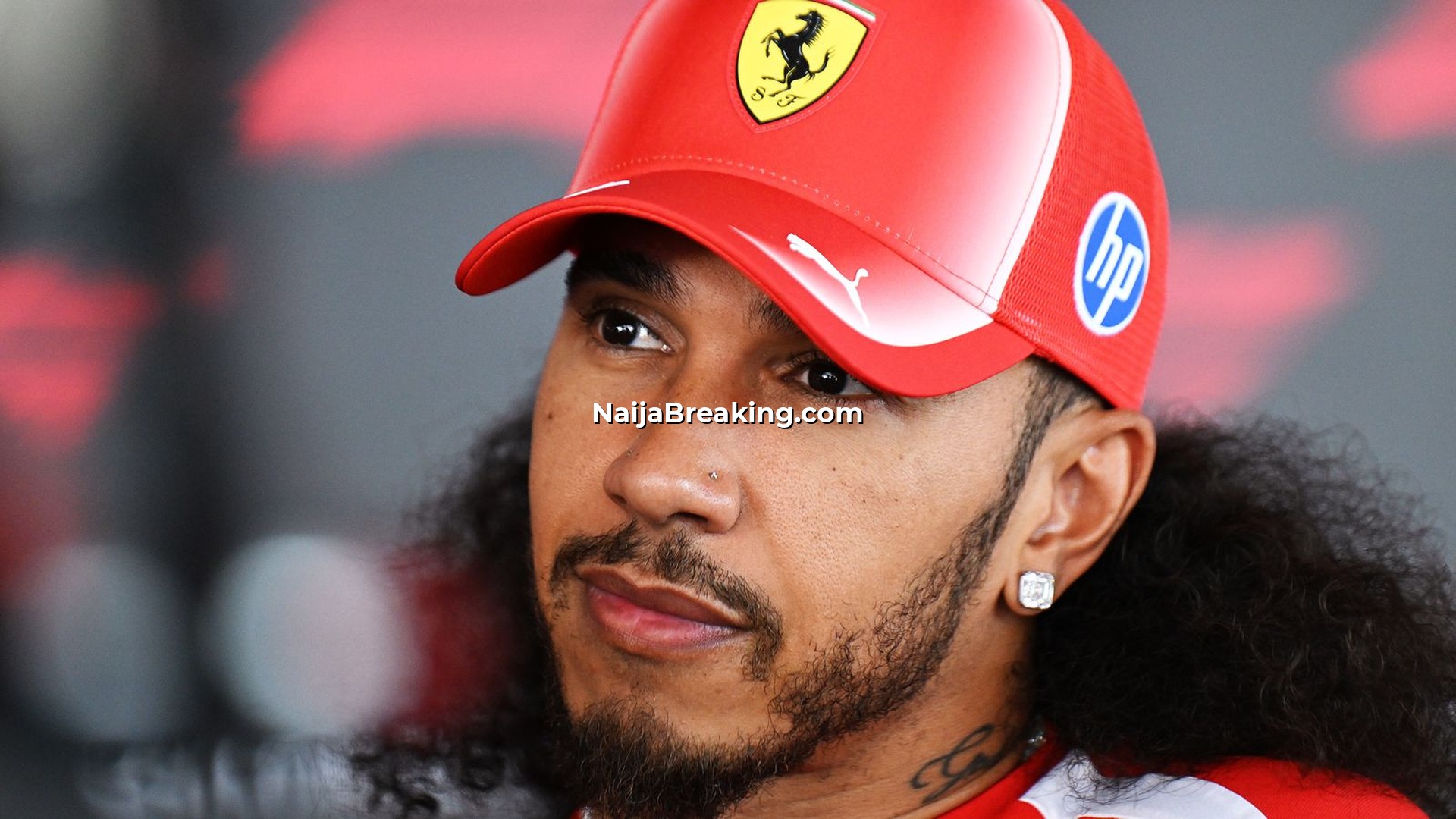
Lewis Hamilton’s transition to Ferrari represents one of the most significant developments in modern Formula 1 history, and as the Lewis Hamilton Ferrari 2026 season unfolds, the seven-time world champion has expressed remarkable optimism about the Scuderia’s championship prospects. Speaking candidly about his new team’s trajectory, Hamilton believes Ferrari can reach a “magical place” at the top of Formula 1 if the team continues building on its early 2026 improvements, signalling cautious yet genuine optimism about genuine championship contention later in the season. The Lewis Hamilton Ferrari 2026 campaign has already showcased the team’s rapid progress, with multiple podium finishes in the opening six races of the new regulatory era—a remarkable turnaround from Ferrari’s disappointing 2025 performance. Hamilton’s confidence, expressed during pre-race media duties ahead of the Spanish Grand Prix, reflects not just Ferrari’s accelerated engineering development but also a fundamental shift in the competitive dynamics of modern Formula 1. For Nigerian motorsports enthusiasts and casual F1 followers around the globe, Hamilton’s career trajectory—from his unprecedented dominance at Mercedes spanning 12 seasons to his fresh challenge at one of racing’s most storied and historically significant teams—represents a compelling narrative that extends far beyond garage strategy, pit-stop timing, and individual lap times. The deeper significance of his words lies in what they reveal about Ferrari’s engineering capabilities, the intensifying competitive battle of the 2026 season, and how even established seven-time champions must systematically rebuild credibility and internal trust when changing teams after more than a decade together. This comprehensive analysis explores the broader context of Hamilton’s optimism, what Ferrari’s rapid and sustained improvement tells us about modern F1 engineering dynamics, and why this championship battle matters profoundly for global motorsports audiences.
The Lewis Hamilton Ferrari 2026 Transition: Context and Significance
Lewis Hamilton’s transition to Ferrari, finalized in 2024 after an unprecedented 12 seasons with Mercedes, represented one of Formula 1’s most significant driver movements in recent history. The seven-time world champion arrived at the storied Maranello headquarters with the explicit and unwavering goal of winning a world championship with the Scuderia—an ambition that seemed genuinely distant after Ferrari’s deeply disappointing 2025 campaign, when the team finished third in the Constructors’ Championship standings and struggled consistently to compete at the highest level with Mercedes and McLaren. The 2025 season was technically the final year under the previous technical regulations that had governed Formula 1 since 2022, and Ferrari strategically used it as a crucial transitional period while directing significant engineering resources and focus toward developing the revolutionary 2026 machinery. This strategic choice, though undeniably costly in the immediate short term with reduced competitive performance, appears to have paid substantial dividends as the new ruleset took effect at the beginning of the 2026 season.
The Lewis Hamilton Ferrari 2026 season introduced sweeping regulatory changes throughout Formula 1, including completely new power unit specifications, revised aerodynamic philosophies, and intentional adjustments specifically designed to improve overtaking opportunities and competitive balance across the grid. Ferrari’s renowned engineering team, led by technical director Loïc Serra who strategically joined from Mercedes, invested aggressively in adapting comprehensively to these revolutionary new regulations. The team’s relatively quick improvement from the struggling 2025 campaign to the competitive 2026 season suggests that either Ferrari’s fundamental engineering approach was sound but heavily constrained by 2025 regulations, or that the team’s strategic planning for the new era was exceptionally well-executed and forward-thinking. Hamilton’s arrival also brought invaluable leadership experience, mental resilience, and detailed technical feedback from operating at the absolute pinnacle of motorsport—resources that complemented Ferrari’s engineering development perfectly.
Understanding Ferrari’s 2026 Performance Improvements
Ferrari’s early season performance in the Lewis Hamilton Ferrari 2026 campaign has surprised many observers who predicted a slower integration period for both the driver and the team. Instead, the Scuderia has accumulated multiple podium finishes within the opening six races, indicating that the team’s investment in the new regulatory framework is paying measurable dividends. This rapid improvement is particularly noteworthy given that Ferrari spent most of 2025 developing these new systems and philosophies rather than focusing on immediate competitive performance in that transitional year.
The 2026 power unit regulations introduced fundamental changes to the hybrid power systems that have governed Formula 1 since 2014. The new specifications include increased electrical power contributions, modified turbocharger configurations, and different fuel regulations that required complete redesigns from engine manufacturers. Ferrari’s power unit division, one of the most historically successful but recently underperforming operations within the Scuderia, had to essentially reinvent its approach from the ground up. The fact that the team achieved competitive power delivery relatively quickly suggests that either Ferrari’s engineers solved critical problems efficiently, or that the team’s previous power unit struggles were more about packaging and integration than fundamental engineering capability.
Beyond power units, the aerodynamic regulations for 2026 emphasized different design philosophies aimed at improving close racing and reducing the massive performance gaps that characterized recent seasons. These changes required Ferrari’s aerodynamicists and designers to completely reconsider the team’s approach to car architecture, cooling systems, and structural layouts. The rapid progress visible in the Lewis Hamilton Ferrari 2026 campaign suggests that Ferrari’s design philosophy aligned well with these new regulations—a significant advantage that some competitors might not enjoy as thoroughly.
Lewis Hamilton’s Role in Ferrari’s Championship Ambitions for 2026
Lewis Hamilton brings incomparable experience to the Lewis Hamilton Ferrari 2026 project. With seven world championships, a record 103 race victories, and countless pole positions to his name, Hamilton represents the most successful driver ever to join Ferrari since Michael Schumacher in 1996. However, unlike Schumacher’s arrival when Ferrari was already developing competitive machinery, Hamilton joins during a period of technical transition and rebuilding. This reality demands a different approach to his integration.
Hamilton’s primary contribution extends beyond his driving ability, though his skill in extracting maximum performance from the Ferrari machinery cannot be understated. His experience across multiple generations of technical regulations, various power unit configurations, and different team structures provides invaluable perspective that younger drivers simply cannot offer. When Ferrari’s engineers present new aerodynamic concepts or power unit configurations, Hamilton can immediately articulate how these changes interact with driver feel, tire management, and overall car balance—information that shapes subsequent development directions.
Furthermore, Hamilton’s track record of adapting to new regulations is genuinely exceptional. Throughout his Mercedes era, he successfully transitioned through the 2009 regulations reset, the 2014 hybrid turbo introduction, the 2017 aero package expansion, the 2022 ground effect concept, and now the 2026 changes at Ferrari. This consistent adaptability across such diverse regulatory periods suggests Hamilton possesses a learning capacity and mental flexibility that most drivers never develop. His presence at Ferrari during this crucial developmental phase provides stability and confidence—psychological factors that influence engineering productivity and morale.
The Competitive Landscape of the 2026 F1 Season
The Lewis Hamilton Ferrari 2026 season has emerged within an increasingly competitive Formula 1 environment where multiple teams possess the resources, engineering capability, and driver talent to mount genuine championship challenges. Gone are the days when single teams could dominate entire seasons through technical advantages alone. Instead, the current era features intense competition where regulatory stability, manufacturing precision, and driver consistency determine success far more than revolutionary technical innovations.
Mercedes, historically the dominant team of the previous decade, faces its own Lewis Hamilton Ferrari 2026 season challenges. The team must adapt its design philosophy significantly to match the new regulations, and without Hamilton’s presence, the team’s driver lineup must prove its competitive worth against established champions at other organizations. McLaren’s remarkable rise during 2023-2025 established the team as a genuine competitor capable of winning both driver and constructor championships. As McLaren transitions into the new regulatory era, their engineers must maintain the momentum they developed while adapting to fundamentally different technical requirements.
Red Bull, despite considerable success in recent years, faces significant uncertainty with the new regulations. The team’s design philosophy, developed around specific aerodynamic and power unit concepts, must be substantially reimagined for 2026. The competitive intensity suggests that no team enters the season with guaranteed superiority—a genuinely healthy situation for Formula 1 that benefits fans and elevates the competition across all organizations.
What Hamilton’s Optimism Reveals About Ferrari’s Engineering Direction
When Lewis Hamilton expresses belief that Ferrari can reach a “magical place” through continued development, his optimism carries substantial weight given his experience and credibility. Hamilton has never been an incurable optimist who speaks carelessly about team prospects; his public statements typically reflect genuine assessment based on technical evidence rather than hope or marketing narratives. His confidence in the Lewis Hamilton Ferrari 2026 project, therefore, suggests that Ferrari’s engineering direction is fundamentally sound and that the team’s development trajectory is encouraging.
This optimism also reflects Hamilton’s belief in Ferrari’s organizational capacity to execute complex engineering programs. Despite Ferrari’s recent disappointments, the team maintains exceptional engineering talent, manufacturing capabilities, and historical knowledge that cannot be easily replicated. When Hamilton references a “magical place,” he likely envisions a scenario where all organizational elements function cohesively—where power unit performance improves, aerodynamic efficiency increases, manufacturing tolerance tightens, and driver performance reaches peak levels simultaneously. Achieving this synchronized excellence requires organizational discipline, strategic clarity, and sustained focus.
The fact that Hamilton sees a realistic path to achieving this synchronized excellence, based on early season evidence, suggests Ferrari has made substantial progress on internal organization, departmental communication, and strategic planning. These factors, less visible to casual observers but absolutely critical to championship success, apparently show improvement in the Lewis Hamilton Ferrari 2026 campaign.
The Championship Timeline and Mid-Season Development Strategy
Hamilton’s reference to reaching the “magical place” by later in the season implies a mid-season development trajectory rather than expecting immediate excellence. This realistic assessment aligns with how modern Formula 1 operates. Teams cannot produce completely finished cars at season start; instead, they deliver baseline platforms that undergo continuous evolution through the season as engineers gather data, identify inefficiencies, and implement refinements. The Lewis Hamilton Ferrari 2026 season will follow this typical pattern, with the team’s competitive position likely improving substantially as development continues.
Ferrari’s strategy appears focused on establishing a competitive baseline early—hence the podium finishes in early races—while systematically improving through the season. This approach contrasts with previous Ferrari seasons when the team struggled early before achieving improvement late in the campaign. Early competitiveness this season suggests Ferrari’s fundamental 2026 concept is more aligned with actual competitive requirements than previous approaches.
The championship timeline matters significantly for Lewis Hamilton Ferrari 2026 prospects. With multiple races yet to be contested and enormous development potential remaining, the eventual championship winner remains genuinely uncertain. Hamilton’s optimism, grounded in visible early season progress, provides reasonable foundation for belief that Ferrari can sustain this development trajectory and ultimately challenge for the championship.
Implications for Formula 1’s Competitive Future
The Lewis Hamilton Ferrari 2026 campaign has implications extending beyond simply determining the 2026 world champion. Hamilton’s transition to Ferrari, combined with his demonstrated confidence in the team’s direction, signals to the entire Formula 1 paddock that Ferrari represents a genuine championship alternative to established powers like Mercedes. This psychological shift influences how top drivers evaluate their options when contract renewals approach or transfers become possible.
Additionally, Ferrari’s rapid improvement demonstrates that even prestigious organizations can implement comprehensive turnarounds within relatively short timeframes. The combination of strategic planning, talented engineers, and clear technical direction produces measurable results. For smaller teams observing Ferrari’s 2026 success, the message is straightforward: competitive excellence is achievable through focused effort, intelligent resource allocation, and organizational clarity.
The broader narrative of Lewis Hamilton Ferrari 2026 also reinforces Formula 1’s essential competitive vitality. When seven-time world champions change teams and quickly integrate into championship-contending operations, the sport demonstrates that driving excellence transcends specific team loyalties. Hamilton’s success at Ferrari validates that supreme talent adapts across different organizations, cultures, and technical approaches.
Looking Forward: The 2026 Championship Battle Intensifies
As the Lewis Hamilton Ferrari 2026 season progresses beyond these opening races, the championship battle will undoubtedly intensify. Competitors will close performance gaps through their own development programs, and the field will compress as the season advances. However, Ferrari’s early positioning and Hamilton’s demonstrated confidence suggest the team will maintain competitive relevance throughout the campaign.
The ultimate question is whether Ferrari can indeed reach the “magical place” Hamilton envisions—a state of complete organizational and technical excellence where all elements function synchronously at the highest level. Achieving such perfection remains extraordinarily difficult in Formula 1, but the Lewis Hamilton Ferrari 2026 campaign has provided genuine evidence that the possibility exists. For Formula 1 fans worldwide, including Nigerian audiences, watching this championship battle unfold represents the pinnacle of motorsport competition where legendary drivers, storied organizations, and revolutionary technical regulations converge to produce unforgettable sporting drama.