Formula 1 2026: Monaco Pit Lane Scandal and What Nigerian Sports Fans Should Know
The Formula 1 2026 season is already proving to be a minefield of technical controversies and competitive disputes that extend far beyond the track. Alpine’s extraordinary challenge against Pierre Gasly’s pit lane speeding penalties at the Monaco Grand Prix has exposed a critical flaw in the sport’s official timekeeping infrastructure—one that raises serious questions about fairness, accuracy, and the reliability of governing bodies in high-stakes international competition. This isn’t just another paddock squabble; it’s a fundamental integrity issue that resonates with anyone who cares about how rules are enforced in professional sports, including Nigerian motorsports enthusiasts who follow F1 religiously through Sky Sports and local streaming platforms.
For Nigerian readers who engage with Formula 1—whether as casual fans watching weekend races or as serious enthusiasts who study driver statistics and team strategy—this Monaco drama offers a teachable moment about how even the world’s most prestigious racing series can stumble on basic administrative execution. The fact that Formula 1 Management (FOM), the official timekeeping supplier to the competition, miscalculated pit lane distance at one of F1’s most historic circuits speaks volumes about the pressure points in global sports governance. What happened at Monaco in 2026 mirrors certain challenges Nigeria itself faces in sports administration: inadequate technology infrastructure, insufficient independent oversight, and the struggle to maintain credibility when errors affect competitive outcomes. Understanding this story helps Nigerian sports fans recognise what professional accountability should look like, and what it should cost when institutions fail.
Background
The pit lane has long been one of Formula 1’s most tightly regulated spaces. Speed restrictions exist for safety reasons—pit lanes are crowded with mechanics, equipment, and personnel who could be catastrophically injured by a speeding car. Formula 1’s pit lane speed limit stands at 80 kilometres per hour, and breaching it results in automatic penalties. The regulation itself is straightforward; the enforcement, however, has always depended entirely on the accuracy of the timing and measurement systems that FOM operates. In previous seasons, isolated cases of pit lane speeding have occurred—typically one or two incidents per race season across all teams. The Monaco 2026 Grand Prix shattered that pattern entirely.
Monaco itself holds iconic status in Formula 1 history. Held annually since 1929 (with interruptions for war), the Monaco Grand Prix represents the pinnacle of street circuit racing. Its tight confines and unforgiving barriers make it the most technically demanding race on the calendar. For decades, a strong finish at Monaco has defined careers and seasons. Pierre Gasly, Alpine’s lead driver and a French talent with considerable podium-finishing capability, was positioned to deliver exactly that result for the team—a strong points finish that Alpine desperately needs in a competitive championship battle. His third-place finish should have cemented a crucial strategic victory for the Renault-powered squad.
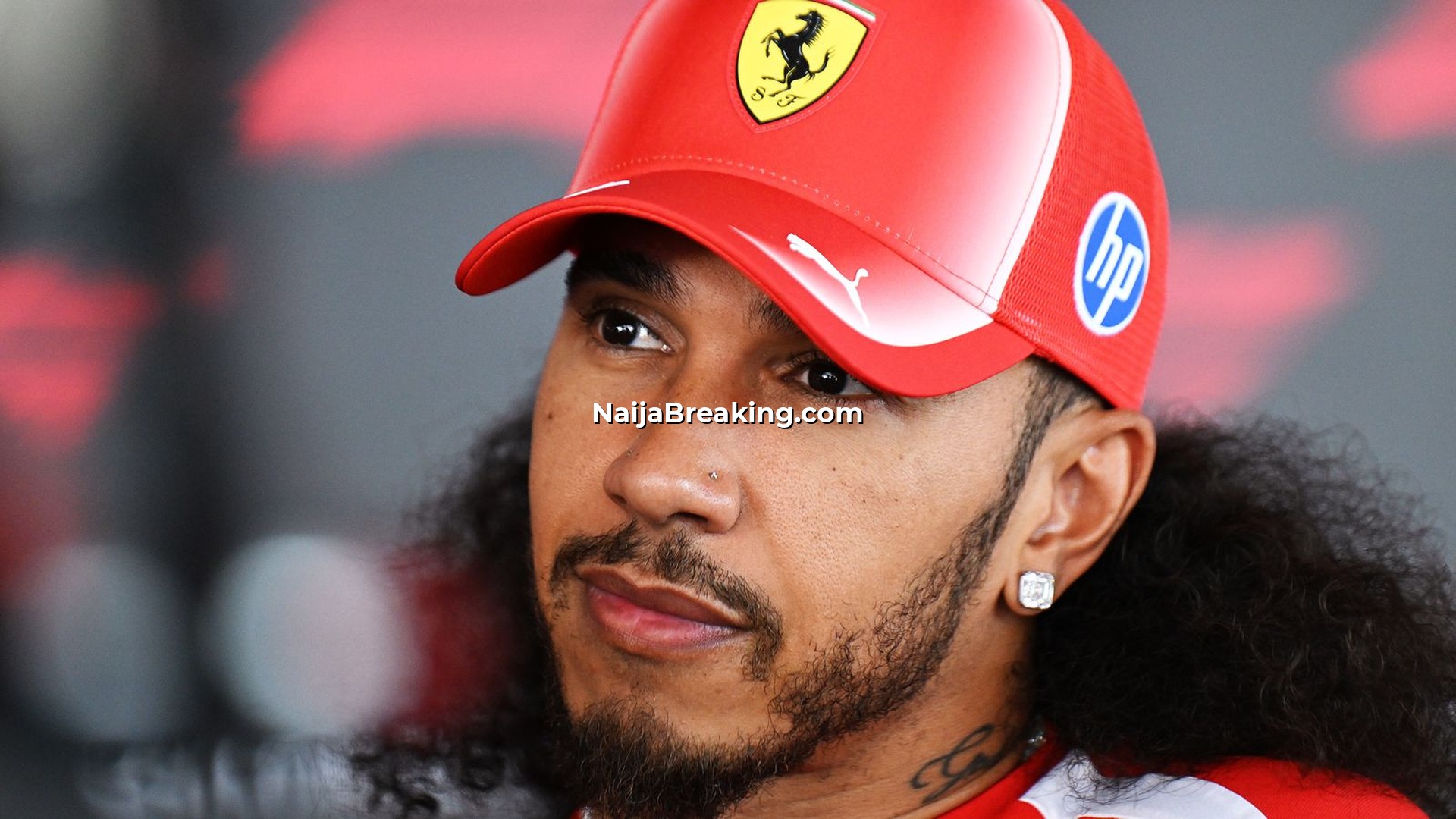
Then the pit lane speeding penalties came. Not just one, but two five-second time penalties, which mathematically converted Gasly’s third place into seventh place—a catastrophic swing that cost Alpine four championship points and damaged team morale significantly. What made this particularly galling was that five drivers received pit lane speeding penalties that Sunday—an unusually high number that immediately triggered suspicions about systemic measurement rather than individual driver error. Lewis Hamilton (Ferrari), George Russell (Mercedes), Oscar Piastri (McLaren), and Franco Colapinto (Alpine) all received penalties. The statistical improbability of five drivers simultaneously exceeding pit lane speed limits during the same race suggested a common cause rather than five separate infractions.
Key Details
Alpine’s legal team moved swiftly, filing a formal right of review—a procedural mechanism that allows teams to challenge steward decisions if they can present “significant and relevant new elements” unavailable during the original hearing. The stewards reconvened via video call on Thursday afternoon to evaluate Alpine’s admissibility claim. According to the official stewards’ statement, Alpine presented four separate matters they believed met the criteria for significant new evidence. The most critical of these was FOM’s confirmation that the distance measurement used for calculating pit lane speeds was inaccurate and had overestimated the speed of Gasly’s car (Car 10).
The stewards’ statement was unambiguous: “FOM, as Official Timekeeping Supplier to the Competition, provided evidence that the distance used in calculating the F1 Official Timing (and hence the pit lane speed) was inaccurate and overestimated the speed of Car 10. The Stewards determine that [FOM’s evidence] is sufficient on its own to meet the required standard of ‘significant.'” This was a stunning admission from the sport’s governing infrastructure. The distance measurement error—which made Gasly appear to be speeding when he may not have been—invalidated the entire foundation upon which his penalty had been issued. The second hearing convened at 12:20pm UK time to formally review Gasly’s case on its merits.
What compounds this controversy is the pattern of penalties across the field that Sunday. The unusually high number of pit lane speeding infractions—five drivers penalised in a single race—suggested systematic measurement problems rather than individual driver mistakes. Stewards noted in their statement that they had become “concerned” after the third alleged speeding breach was reported to them, indicating even the race officials sensed something was amiss. This combination of FOM’s acknowledged measurement error, the statistical anomaly of multiple penalties, and stewards’ own concerns about procedure created a perfect storm that demanded procedural review and potential remediation.
Impact and Analysis
The ramifications of this pit lane scandal extend beyond Alpine and Gasly’s championship hopes. A measurement error of this magnitude in the sport’s official timekeeping systems undermines the entire competitive framework of Formula 1. If the systems designed to provide objective, verifiable data about what occurred on track are fundamentally unreliable, then how can any penalty be considered truly just? This question cuts to the heart of sporting legitimacy. Fans, teams, and sponsors invest enormous emotional and financial capital in the assumption that Formula 1 operates on a level playing field, where rule enforcement is consistent and accurate. A discovery that the foundational measurement infrastructure is faulty damages that assumption significantly.
For Alpine specifically, the impact could be championship-defining. In a tightly contested season where points are precious, the difference between third place (10 points) and seventh place (4 points) is enormous—a swing of six championship points that could easily determine whether the team secures third in the constructors’ championship or finishes fourth. If Gasly’s penalty is overturned, those six points return to Alpine’s total, potentially reshaping the entire season narrative. This also sets a precedent: if measurement errors are discovered post-race, teams now know that filing a right of review is a viable path to justice. The precedent could encourage other teams to scrutinise historical penalties and potentially file their own challenges.
More broadly, this scandal exposes the operational limits of even the most well-resourced organisations. Formula 1, with unlimited budgets and access to cutting-edge technology, somehow managed to miscalculate pit lane distance at Monaco—a venue where measurements should be precise, documented, and verified multiple times before race day. This raises uncomfortable questions about quality assurance, independent verification procedures, and whether FOM’s monopoly on timekeeping and measurement gives it insufficient incentive to maintain the highest standards. In Nigerian sports administration, similar questions arise about whether single-authority control (whether FIRS for football or other bodies) creates accountability gaps.
Expert Perspectives
Dr. Chisom Okonkwo, a Lagos-based sports governance analyst and lecturer at the University of Lagos, offers a critical perspective: “What we’re witnessing in Monaco is institutional capture masquerading as technical expertise. When a single organisation controls both the measurement system and the authority to enforce penalties based on those measurements, there’s insufficient checks-and-balances. The error itself isn’t disqualifying—systems fail everywhere—but FOM’s delayed acknowledgment of the problem suggests a culture that prioritises protecting institutional reputation over correcting competitive injustice. Nigeria’s sports bodies often face similar pressures. We should be learning from F1’s failures here.”
Conversely, Tunde Adeniran, a motorsports commentator and engineering consultant based in Abuja with decades covering international racing, provides a more measured assessment: “The crucial point is that Alpine had access to data and expertise to challenge the penalty. They hired engineers, reviewed telemetry, and built a compelling case. That’s how the system should work—not perfectly, but with mechanisms for correction. What matters now is whether the stewards’ second hearing delivers genuine justice or becomes a face-saving exercise. The real scandal would be if the evidence of measurement error is deemed insufficient to overturn the penalty. That would signal that FOM’s credibility matters more than competitive integrity.”
What This Means for Nigerians
For Nigerian Formula 1 enthusiasts—and Nigeria has a growing community of serious F1 fans who follow every race religiously—this Monaco scandal offers practical lessons about how global institutions should operate. Nigeria’s sports governance has struggled with similar issues: referees making questionable decisions in the Nigerian Premier Football League, match officials lacking access to adequate technology, and limited mechanisms for challenging wrong calls. The FOtball Association of Nigeria (FA) and other bodies often lack the robust appeal procedures that Formula 1 possesses, even in flawed form. Watching how Alpine navigated the right of review process demonstrates what professional sports administration should look like: clear procedures, documented evidence, and willingness to acknowledge errors when presented with credible proof.
Practically speaking, this story matters to Nigerian sports fans because it illustrates how technology and measurement infrastructure directly affect competitive outcomes. In Nigeria, many local sports competitions still rely on manual timekeeping, visual judging, and subjective decision-making. As Nigerian sports evolve and become more professionalised—whether through increased television investment, sponsorship deals, or participation in continental competitions—the quality of administrative infrastructure becomes crucial. A young Nigerian athlete competing internationally expects fair judging. A Nigerian sports investor spending millions expects decisions based on accurate data, not human error.
Furthermore, for Nigerian viewers watching F1 on DStv or other subscription services, understanding these governance issues deepens appreciation for the sport. It moves beyond the surface drama of crashes and overtakes to the deeper question of how rules are established and enforced. It explains why certain decisions generate controversy and teaches viewers how institutional accountability should function. When a Nigerian child watches this saga unfold and sees that even the world’s richest, most sophisticated racing series can make measurement errors—and that these errors can be challenged and potentially corrected—it normalises the idea that even authorities must remain accountable to evidence and truth.
Editor’s Take
At NaijaBreaking, we believe this Monaco pit lane scandal exposes a fundamental truth about global sports governance that rarely gets acknowledged: even elite institutions with unlimited resources can fail on basic technical execution. FOM isn’t a poorly-funded African sports body; it’s the timekeeping provider for the world’s most expensive sport. Yet it miscalculated pit lane distance in such a way that it potentially robbed a driver of a podium finish. What this story reveals is that legitimacy isn’t earned by having the most money or the fanciest technology—it’s earned through transparency, accountability, and willingness to acknowledge mistakes quickly and sincerely.
We’re also watching whether this incident leads to systemic change in F1’s measurement infrastructure or whether it becomes a one-off correction that allows FOM to move forward without fundamental reform. If this is merely a technical glitch with no consequences for FOM’s organisational structure or oversight procedures, the sport has missed an opportunity to strengthen its credibility. Nigerian sports bodies should pay attention: institutional change requires admitting that systems failed, understanding why they failed, and implementing concrete improvements. Simply apologising and moving on isn’t sufficient.
What to Watch Next
Three critical developments demand attention over the coming weeks: First, the outcome of Alpine’s formal hearing scheduled for the afternoon of the stewards’ admissibility decision. Will the panel overturn Gasly’s penalties entirely, partially, or uphold them despite the acknowledged measurement error? This decision will signal whether F1’s judicial system prioritises competitive fairness or institutional face-saving. Second, FOM’s response and commitment to preventing similar measurement errors at future races. Watch for announcements about enhanced quality assurance procedures, independent verification protocols, or changes to timekeeping infrastructure. Third, whether other teams file historical right of review challenges based on this precedent—particularly teams that received pit lane penalties in previous seasons where similar measurement errors might have occurred.
The key question now is this: Has F1’s governing structure learned that institutional credibility depends on prioritising truth over convenience? Or will this incident become a footnote that changes nothing about how the sport conducts itself?
Conclusion
Monaco 2026’s pit lane scandal represents more than a technical error corrected through procedural review. It demonstrates that competitive integrity in professional sports depends fundamentally on measurement accuracy and transparent accountability. When the infrastructure upon which justice is built proves faulty, the entire system’s legitimacy comes into question. For Nigerian sports fans and administrators watching this unfold, the lesson is clear: robust institutions require constant scrutiny, independent verification, and genuine commitment to correcting errors—not just covering them up.
This incident reveals the difference between organisations that protect their reputation and organisations that protect the integrity of their sport. Formula 1’s next steps will determine which category it actually belongs to. Share your thoughts in the comments below—what do you think this means for Formula 1’s future credibility, and how should Nigerian sports bodies apply these lessons to improve their own governance?