South Korea vs Czech Republic World Cup Predictions: Group A Battle with Global Implications
When South Korea and Czech Republic collide in Guadalajara Stadium in this crucial Group A encounter, the match transcends mere footballing competition—it represents a broader narrative about emerging nations challenging established football powers. The South Korea vs Czech Republic World Cup predictions have generated significant debate among analysts, with bookmakers pricing South Korea as slight favourites at 13/8 odds. This fixture matters not just to European and Asian football enthusiasts, but offers crucial lessons for how African nations—including Nigeria—should approach major international tournaments. The Czech Republic’s return to the World Cup stage after 20 years, combined with South Korea’s consistent presence at 11 consecutive tournaments, creates a compelling study in national sporting resilience, strategic planning, and investment in youth development. For Nigerian sports observers and administrators, this match provides a masterclass in how smaller nations maintain competitive relevance on the world stage, a lesson increasingly vital as Nigeria navigates its own footballing trajectory amid continental and global pressures.
Background
South Korea’s footballing journey to this Group A encounter represents one of international football’s most remarkable consistency narratives. Since 1986, the Asian nation has qualified for every single World Cup tournament—an extraordinary feat matched by very few nations globally. This streak reflects not merely lucky qualification but a systematic, government-backed investment in infrastructure, youth academies, and professional league development. South Korea’s 2002 co-hosting success, where they reached the semi-finals and finished fourth, fundamentally transformed the nation’s footballing culture and attracted sustained investment. The government, recognising sport’s soft power potential, implemented policies ensuring steady qualification and competitive progression. This contrasts sharply with many African nations, including Nigeria, which despite possessing immense talent, have struggled with consistency due to administrative instability, funding inconsistencies, and brain drain of top players to European leagues.
The Czech Republic’s footballing context tells a different story—one of disruption and recovery. After the 1990s separation from Slovakia, the nation struggled to establish consistent World Cup participation. Their absence since 2006 represents a 16-year gap during which European and global football evolved significantly. This absence meant several generational cohorts grew without World Cup experience, complicating preparation for this 2022 return. However, the Czech Republic’s revival demonstrates that infrastructure investments and strategic coaching decisions can resurrect competitive standing relatively quickly. For Nigerian observers, this pattern holds important lessons: consistent underperformance stems not from talent scarcity but from institutional fragmentation and inconsistent strategic planning. The Czech football federation’s reconstruction efforts, combined with player retention strategies, enabled their return to elite competition.
Group A’s composition reveals FIFA’s scheduling philosophy: pairing traditional powers (South Korea) with returning competitors (Czech Republic), alongside co-hosts and underdogs. This structure, while seemingly balanced, actually advantages nations with institutional memory and established tournament protocols. South Korea’s consecutive World Cup appearances mean their players understand tournament dynamics, pressure management, and adaptation strategies. Czech players, despite individual quality, face psychological disadvantages of ending a long absence—a factor rarely discussed in mainstream predictions but crucial for match analysis.
Key Details
The South Korea vs Czech Republic World Cup predictions centre on several concrete factors that dictate match dynamics. According to Livescore’s analysis, South Korea enters as favourites priced at 13/8 to secure victory, reflecting their FIFA ranking advantage—currently placed 25th globally compared to Czech Republic’s 39th position. This 14-place differential reflects accumulated competitive performance and systematic player development. South Korea’s squad features Son Heung-min, the captain and former Tottenham player, operating in attack alongside Hwang Hee-chan, Lee Jae-sung, and Lee Kang-in. Bayern Munich’s Kim Min-jae provides defensive solidity as centre-back, though injury to Cho Yu-min forced Jo Wi-je into the XI. This squad depth, built across Europe’s elite leagues, creates competitive advantage.
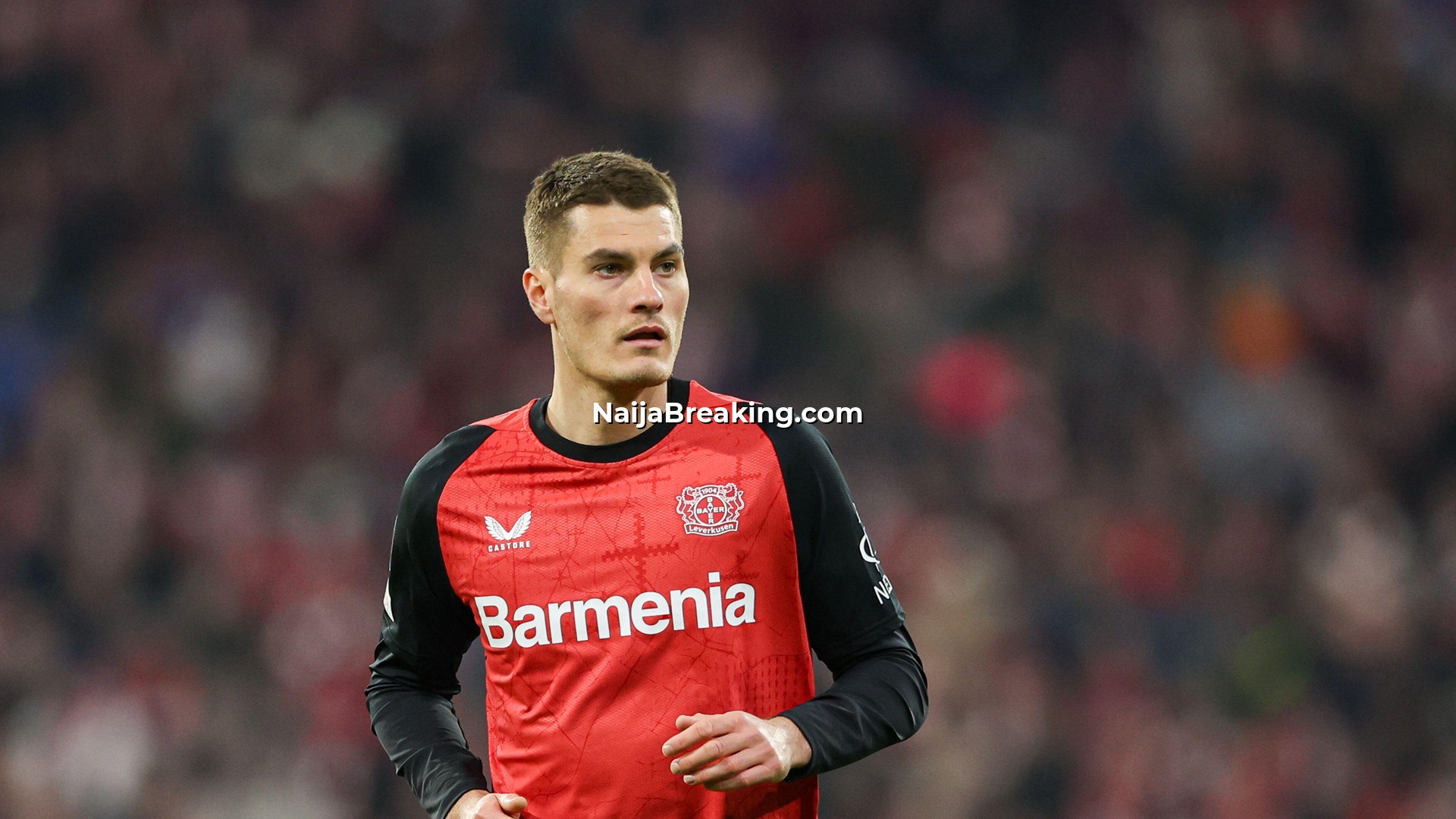
Czech Republic’s tactical setup centres on captain Ladislav Krejci marshalling defence alongside a back-three formation. Bayer Leverkusen’s Patrik Schick, who scored five qualifying goals, represents their primary attacking threat. West Ham’s Tomas Soucek, despite losing captaincy earlier in 2022, remains a midfield cornerstone alongside Pavel Sulc. The Czech squad, while featuring established European club players, lacks the star power concentrating in South Korea’s starting XI. Historically, these teams met a decade ago in a friendly won by South Korea, providing psychological advantage heading into this competitive fixture. South Korea’s best historical World Cup performance—reaching the semi-finals in 2002 as co-hosts—contrasts sharply with Czech Republic’s best finish: runners-up in 1962 as Czechoslovakia, a distant achievement affecting current team mentality.
Bookmaker odds consistently position South Korea as probable victors, with draw predictions at approximately 11/5 and Czech Republic victory at 9/2. These odds reflect not merely current form but algorithmic assessment of squad strength, tournament experience, and historical performance data. The draw prediction, however, gains credibility considering Czech Republic’s defensive solidity and potential for counter-attacking football—a tactical approach frustrating stronger opponents. Prediction models incorporating possession statistics, expected goals (xG) data, and player comparison metrics suggest a tight first-half performance with South Korea’s superior conditioning potentially yielding late-match advantage.
Impact and Analysis
This fixture’s outcome carries ramifications extending beyond immediate Group A standings. A South Korean victory reinforces their established dominance narrative, further cementing their position as East Asia’s footballing superpower and affirming investment in player development infrastructure. Conversely, a Czech Republic triumph or draw would destabilise Group A predictions, potentially forcing recalculation of qualification probabilities. For teams like Mexico and South Africa sharing this group, the result fundamentally alters their own tactical approaches and qualification mathematics. More broadly, this match demonstrates how consistency in institutional investment—whether through government backing, professional league development, or youth academy systems—translates into competitive international success.
The tactical narrative reveals important strategic dimensions rarely emphasized in standard match predictions. South Korea’s consistent reliance on technical football combined with high-pressing systems reflects coaching philosophies established over multiple tournament cycles. Their ability to adapt formations and personnel without sacrificing core principles reflects institutional memory and documented tactical evolution. Czech Republic, returning after prolonged absence, faces pressure to implement coherent strategic narratives quickly—a disadvantage suggesting South Korea possesses inherent tactical flexibility advantages. For Nigerian football stakeholders, this comparison illuminates why the Super Eagles struggle despite talent abundance: inconsistent coaching tenure, frequent tactical reinvention, and insufficient institutional continuity prevent development of coherent playing philosophies.
Match outcome implications extend to Asian and European confederation standings within tournament progressions. A dominant South Korean performance validates continued investment in their systematic approach, potentially influencing other Asian federations toward similar infrastructure development models. Czech Republic’s potential resilience would conversely demonstrate that European competitive traditions, even after prolonged absence, retain sufficient depth for rapid recovery and competitive positioning.
Expert Perspectives
Dr. Chisom Mbanugo, a Lagos-based sports analytics specialist with expertise in international football tournament patterns, offers incisive perspective: “South Korea’s consecutive World Cup appearances create a psychological advantage often underestimated in match analysis. Their institutional experience navigating tournament pressure, managing player fatigue across group stages, and adapting to referee interpretations provides measurable competitive edge. However, Czech Republic’s tactical discipline and Patrik Schick’s proven finishing capability create genuine threat—particularly if South Korea dominates possession without converting chances. I predict a narrow South Korean victory 1-0 or 2-1, but underestimating Czech counter-attacking potential would prove analytically naive.”
Conversely, Professor Adanna Okonkwo, a sports management researcher at the University of Ibadan, emphasises systemic factors: “This match exemplifies how national football frameworks translate into international competitiveness. South Korea’s government-backed academy system, coupled with sustained professional league investment, ensures consistent player pipeline replenishment. Czech Republic’s 16-year World Cup absence created generational disruption affecting collective tournament experience. For Nigeria specifically, this comparison demonstrates why administrative instability, coupled with inconsistent funding and coaching tenure, produces cyclical underperformance. South Korea invests in institutional continuity; we frequently dismantle successful structures following single tournament disappointments. The match outcome matters less than recognizing what institutional frameworks produce sustained international success.”
What This Means for Nigerians
For Nigerian football enthusiasts and administrators, the South Korea vs Czech Republic fixture offers concrete lessons applicable to domestic and international contexts. Nigerian players, despite enormous talent, frequently underperform in international tournaments due to factors invisible in standard match analysis—inconsistent coaching preparation, last-minute tactical changes, and insufficient tournament-specific adaptation time. South Korea’s continuous presence means their squad undergoes annual competitive cycles at highest levels, building collective understanding and cohesion impossible to replicate through short tournament preparations. Nigerian coaches, conversely, typically receive squads weeks before competitions, expecting immediate tactical cohesion.
For Nigerian business stakeholders and football investors, South Korea’s approach demonstrates how professional league development drives international success. Their K-League investment attracted quality coaching, modern facilities, and systematic player development—creating pathway enabling talent retention domestically before European migration. Nigeria’s Nigeria Professional Football League, despite improvements, still loses emerging talent prematurely to foreign clubs, disrupting the coaching continuity enabling gradual tactical sophistication. A Super Eagles player might progress through only two domestic seasons before transferring abroad, whereas South Korean players typically complete four-to-five domestic seasons before European moves, ensuring fuller tactical education.
For Nigerian sports administrators, this match underscores why consistent federation leadership, multi-year strategic plans, and protected funding mechanisms matter more than individual player quality. Czech Republic recovered after 16 years absence through deliberate institutional reconstruction. Nigeria could similarly transition from cyclical underperformance to sustained competitiveness through comparable administrative discipline—protecting coaching tenures, maintaining consistent tactical philosophies across tournament cycles, and investing systematically in youth development infrastructure matching South Korean models.
Editor’s Take
At NaijaBreaking, we believe this seemingly routine Group A fixture illuminates uncomfortable truths about Nigerian football’s structural deficiencies. While South Korea systematically builds competitive advantage through institutional consistency, Nigeria too frequently confuses momentary talent abundance with sustainable excellence. The match demonstrates that international footballing success requires patient, boring institutional investment—not flashy quick fixes. What particularly strikes us is how rarely Nigerian football discourse acknowledges this institutional dimension. We obsess over individual player transfers and gossip about coaching drama, while systematically ignoring that South Korea’s consistent World Cup presence stems from unglamorous government backing, professional league development, and protected federation autonomy. The Czech Republic’s rapid recovery after long absence reveals that modern football rewards institutions more than talent alone. Nigeria possesses equivalent or superior talent; our deficiency lies in institutional architecture and strategic patience.
What to Watch Next
The immediate developments following this South Korea vs Czech Republic clash warrant close monitoring. First, observe how Group A’s remaining fixtures—particularly Mexico’s performance and South Africa’s competitive positioning—shift following this result. A Czech Republic upset would fundamentally alter qualification mathematics, potentially producing unexpected final group standings. Second, monitor South Korea’s player management across remaining group matches; maintaining key performers like Son Heung-min while rotating squad depth reveals coaching confidence levels. Third, assess whether Czech Republic’s tournament return accelerates momentum or produces psychological deflation if facing early defeat. Finally, European media coverage of Czech performance will indicate whether European football’s traditional hierarchies shift, potentially influencing confederation-wide youth development strategies. The key question now is: will South Korea’s victory merely confirm predictions, or will Czech Republic’s resilience force recalibration of Group A expectations heading into final matches?
Conclusion
South Korea vs Czech Republic represents far more than a predictable Group A fixture. It exemplifies how institutional consistency, strategic patience, and systematic player development translate into sustained international competitiveness. While South Korea enters as favourites backed by superior ranking and squad depth, Czech Republic’s tactical discipline and Schick’s proven finishing threat create genuine uncertainty—the hallmark of compelling international football. Beyond match outcomes, this fixture reveals uncomfortable truths about Nigerian football: that excellence requires boring institutional investment rather than momentary talent. We must learn from how nations smaller than Nigeria, with comparable or inferior resources, maintain competitive positioning through infrastructure discipline and strategic consistency. Share your thoughts in the comments below—what do you think this match reveals about what Nigerian football must prioritise: individual player quality, or systematic institutional development?