Lagos Accident Building Collapse: Two Deaths Expose Nigeria’s Critical Safety Crisis
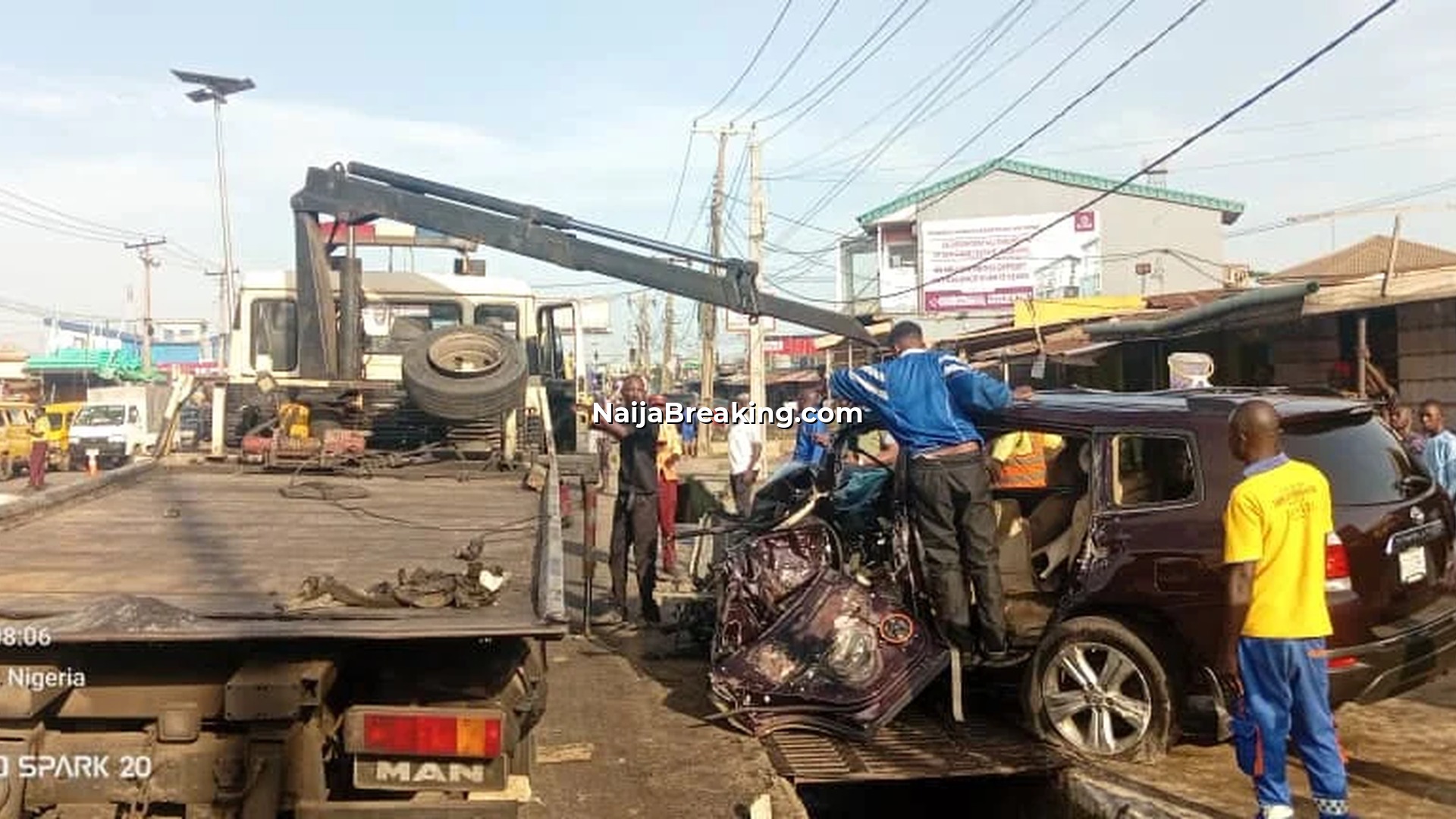
Two separate but equally preventable deaths across Lagos State within 24 hours have once again thrust Nigeria’s chronic infrastructure and safety failures into sharp focus. A Lagos accident building collapse in the upscale Lekki district and a truck crash along Old Abeokuta Road claimed two lives in incidents that underscore systemic problems in vehicle maintenance protocols, building regulation enforcement, and the broader capacity of Lagos State agencies to prevent disasters before they occur. The Lagos accident building collapse, in particular, represents a recurring nightmare for residents of premium residential areas who assume that their neighborhoods are subject to rigorous construction oversight and safety protocols. While the Lagos State Emergency Management Agency (LASEMA) responded swiftly to both incidents—demonstrating operational readiness—the fundamental question remains: why do such preventable accidents continue to claim Nigerian lives at this alarming rate? According to reports from credible news sources, one victim died following a head-on collision triggered by brake failure on a heavily trafficked commercial corridor, while another succumbed to injuries from the Lagos accident building collapse in a premium residential area supposedly subject to rigorous construction oversight. These incidents are not isolated anomalies—they reflect decades of deferred maintenance culture, weak enforcement of safety standards, and the absence of meaningful accountability for those responsible for public safety infrastructure across Nigeria’s most economically vital state.
Understanding the Lagos Accident Building Collapse Phenomenon
Lagos State has long existed at the intersection of rapid urbanization, commercial activity, and inadequate regulatory infrastructure—a tension that periodically explodes into tragedy. The recent Lagos accident building collapse represents the latest manifestation of a pattern that has plagued the state for generations. Over the past decade, Lagos has witnessed numerous high-profile building collapses, with each incident raising critical questions about the adequacy of regulatory frameworks and enforcement mechanisms. The catastrophic 2019 Ikoyi building disaster, which killed at least 45 people, served as a watershed moment that prompted investigations, policy rhetoric, and pledges of reform from state and federal authorities. Yet five years later, partial collapses continue to occur in premium neighbourhoods like Lekki Phase 1, suggesting that lessons learned from previous tragedies have failed to translate into systemic behavioural change within the construction industry or enforcement agencies.
The Lagos accident building collapse phenomenon is not merely a product of negligence by individual contractors or developers. Rather, it reflects a complex web of institutional failures, inadequate funding for regulatory agencies, corrupt practices that prioritize profit margins over structural integrity, and a general culture of non-compliance that permeates the construction sector. Building inspectors employed by the Lagos State Building Control Agency (LASBCA) are often understaffed, underpaid, and subjected to pressure from developers seeking expedited approvals. In many cases, developers bypass proper regulatory channels entirely, engaging in illegal construction that escapes any formal scrutiny. The Lagos accident building collapse at Lekki highlighted exactly these problems—investigations subsequently revealed that the building in question had proceeded without proper building permits and had violated numerous safety standards in its structural design and execution.
The implications of repeated Lagos accident building collapse incidents extend far beyond the immediate victims and their families. Each collapse erodes public confidence in the institutions responsible for protecting citizen safety. Property owners who have invested substantial resources in residential units face depreciation of their assets and psychological trauma from living in structures whose structural integrity suddenly becomes a matter of public concern. Insurance companies face mounting claims, and the broader real estate market experiences volatility whenever major Lagos accident building collapse incidents receive media attention. Furthermore, these tragedies disproportionately affect lower-income Nigerians who live in hastily constructed, poorly maintained structures that lack any meaningful oversight whatsoever. While the recent Lagos accident building collapse occurred in a premium neighborhood and thus received significant media coverage, thousands of substandard residential structures in Lagos continue to deteriorate unchecked, posing constant danger to their inhabitants.
Road Safety and the Truck Accident Component
Parallel to the Lagos accident building collapse crisis, Lagos State continues to struggle with an epidemic of preventable road accidents. The truck crash that occurred alongside the recent Lagos accident building collapse incident represents a tragically familiar pattern. Road accidents—particularly those involving commercial vehicles like articulated trucks—remain among the leading causes of death in Lagos and across Nigeria. The Federal Road Safety Corps (FRSC) has consistently identified brake failure as a leading mechanical cause of fatal accidents on Nigerian highways. Despite this documented pattern spanning decades, enforcement of vehicle maintenance standards remains sporadic at best. Most heavy-duty trucks operating on Lagos roads are subject to minimal pre-journey mechanical inspection, and penalties for traffic violations involving commercial vehicles are often negotiated rather than enforced, creating a perverse incentive structure that rewards non-compliance.
The economics of commercial trucking in Nigeria create powerful incentives for operators to defer maintenance costs. Truck owners operating on tight margins, often with significant debt obligations from vehicle purchases, view regular maintenance as an unnecessary expense rather than an investment in safety. A brake inspection might reveal expensive repairs that could bench a vehicle for weeks, disrupting income generation. Consequently, many operators opt to patch problems temporarily or ignore warning signs entirely. When brake failure occurs on a crowded road like Old Abeokuta during rush hour—as happened in the incident concurrent with the Lagos accident building collapse—the results are often catastrophic. The 2023 Lagos accident building collapse incident and its accompanying truck accident were thus linked not merely by coincidence or timing, but by a shared set of systemic failures in regulatory oversight and enforcement capacity.
The role of the FRSC in preventing such tragedies cannot be overlooked. While the agency has made efforts to improve road safety through campaigns and enforcement operations, its resources remain insufficient for the scale of the challenge. FRSC personnel stationed at checkpoints along major Lagos corridors often lack the training, equipment, or authority to conduct comprehensive vehicle safety inspections. A cursory check of tire condition and lights is insufficient to detect brake system degradation or other hidden mechanical defects. Furthermore, corruption within the enforcement ecosystem means that trucks operating with obvious mechanical defects can pass through checkpoints by offering small payments to officials. The truck involved in the accident concurrent with the recent Lagos accident building collapse incident reportedly had a documented history of brake problems, yet had continued operating without remediation, suggesting that enforcement failures contributed directly to the tragedy.
Regulatory Failures and Systemic Breakdown
The Lagos accident building collapse incidents and associated road accidents both point to deeper regulatory failures that pervade Lagos State’s institutional landscape. The Lagos State Building Control Agency (LASBCA), ostensibly responsible for ensuring structural safety, operates with inadequate resources and personnel. In 2023, investigations revealed that LASBCA had fewer than 50 qualified building inspectors responsible for overseeing construction activity across a metropolitan area of over 15 million people. This represents a ratio that makes meaningful oversight virtually impossible. Even if inspectors worked 24 hours daily, they could not meaningfully supervise the thousands of active construction projects occurring simultaneously across Lagos. This capacity gap creates a situation where developers and contractors operate with near-total impunity, knowing that the probability of regulatory oversight is negligible.
The consequences manifest themselves in periodic Lagos accident building collapse disasters. Buildings are constructed with substandard materials, inadequate foundations, structural designs that violate engineering principles, and poor quality control throughout the construction process. Developers cut corners to increase profit margins, and inspectors either lack the capacity to identify violations or accept bribes to overlook them. The recent Lagos accident building collapse in Lekki, for instance, involved a building whose foundation had been compromised by excavation work on an adjacent property. Proper structural analysis should have identified this risk and mandated remedial measures. Yet the building remained in use, housing residents unaware that they occupied a structure at risk of partial or total collapse. Only when the collapse actually occurred did the danger become apparent—a reactive rather than preventive approach that inevitably results in preventable loss of life.
Similarly, vehicle safety regulation in Nigeria suffers from parallel institutional weaknesses. The Vehicle Inspection Office (VIO) and FRSC, while theoretically responsible for ensuring that commercial vehicles meet safety standards, lack resources for comprehensive enforcement. The recent truck accident concurrent with the Lagos accident building collapse incident demonstrated this inadequacy clearly. The vehicle involved had accumulated multiple traffic violations, been involved in prior incidents, and had documented mechanical defects, yet continued operating because the regulatory system lacked mechanisms to remove such vehicles from circulation permanently. A truck owner facing penalties for brake failure, if prosecuted at all, might negotiate settlement of fines without actually repairing the underlying mechanical problem. The vehicle remains on the road, with the same defect, waiting for the next tragedy to occur.
Impact on Lagos Residents and Urban Development
The recurring Lagos accident building collapse incidents and associated road tragedies have profound implications for urban development patterns and resident behavior in Lagos. Property buyers increasingly demand that structural engineers conduct independent inspections before purchase, reflecting diminished confidence in government certification. Insurance premiums for residential properties rise in neighborhoods affected by collapses, imposing additional costs on property owners. Real estate development slows in areas with recent Lagos accident building collapse incidents, as investors fear further deterioration in property values. The psychological impact on residents cannot be overstated—families living in buildings proximate to a collapse site experience genuine fear that their own structures may fail. This anxiety is not irrational given the systemic failures that characterize regulatory oversight.
Urban development in Lagos is increasingly characterized by informal or semi-formal construction that deliberately evades government oversight. Developers who have learned that regulatory compliance increases costs without delivering meaningful safety benefits often opt to construct without permits, conduct inspections covertly to avoid creating documentary evidence, and settle any disputes with officials through unofficial payments. The effect is a proliferation of structures whose safety is entirely unknown and unknowable to residents. These buildings may be reasonably well-constructed, or they may pose extreme dangers—there is no way to determine without structural analysis, which typically occurs only after problems become apparent. The Lagos accident building collapse phenomenon thus incentivizes evasion of formal channels, creating a vicious cycle where regulatory failure undermines the very regulatory system designed to prevent tragedies.
Road Safety Context and Commercial Transport Challenges
The truck accident concurrent with the recent Lagos accident building collapse incident must be understood within the broader context of commercial transport challenges in Lagos. The state serves as Nigeria’s primary import-export hub, with thousands of commercial vehicles traversing its roads daily. These vehicles range from small minibuses to articulated trucks, many of which originate from other West African countries and may not meet Nigerian safety standards. The infrastructure supporting safe commercial transport—properly maintained roads with clear lane markings, functional traffic signals, rest areas for drivers, and adequately staffed enforcement mechanisms—is inadequate relative to traffic volume. Drivers operating under pressure to meet delivery schedules often exceed safe speeds, drive while fatigued, and neglect vehicle maintenance, knowing that enforcement is inconsistent at best.
The economics of commercial trucking in the West African region create further complications. Many trucks are extremely old vehicles that have been exported from developed countries after reaching the end of their economic life there. These vehicles, often dating from the 1990s or early 2000s, have been substantially repaired and refurbished, but their underlying structural integrity and safety systems may be compromised. Parts used in repairs are often counterfeit or of questionable origin, further degrading vehicle reliability. A Lagos accident building collapse may occur due to construction defects, but a truck accident often results from multiple compounding factors—driver fatigue, mechanical defects, poor road conditions, and excessive speed—any one of which might have been manageable alone but become catastrophic in combination.
Accountability Mechanisms and Enforcement Challenges
Perhaps the most frustrating aspect of recurring Lagos accident building collapse incidents and related tragedies is the apparent absence of meaningful accountability for those responsible. When investigations occur, they often identify negligence by contractors, developers, or building inspectors. Yet prosecutions are rare, and convictions even rarer. Developers accused of violating building codes may face fines that represent a small fraction of their profits from the project. Corrupt inspectors, if identified and prosecuted, may receive minimal sentences that do not serve as deterrents. The absence of serious consequences means that the incentive structure remains unchanged—developers and contractors continue calculating that the financial benefits of cutting corners substantially exceed the risks of regulatory penalties. Until accountability mechanisms become credible and consequences severe, the frequency of Lagos accident building collapse incidents is unlikely to diminish.
The situation is similar in commercial transport regulation. Truck operators involved in fatal accidents may face investigations by the FRSC, but prosecution typically results in modest fines and brief license suspensions. For an operator running a profitable business, such penalties are merely a cost of doing business, not sufficient motivation to invest in regular maintenance or enforce safety protocols. A comprehensive accountability system would impose penalties commensurate with the severity of negligence—substantial fines, vehicle impoundment, and imprisonment for operators with clear records of prior violations contributing to accidents. Yet current enforcement approaches remain insufficiently stringent to create such deterrence.
Path Forward: Preventing Future Lagos Accident Building Collapse Incidents
Addressing the Lagos accident building collapse crisis and related safety failures requires multifaceted interventions operating at different levels of the regulatory and institutional ecosystem. First, regulatory agencies must receive substantially increased funding to hire, train, and adequately compensate professional personnel capable of executing meaningful oversight. Building inspectors, vehicle safety inspectors, and enforcement officials must be paid salaries sufficient to attract qualified professionals and reduce susceptibility to corruption. Second, enforcement must become consistent and severe—violations must result in consequences substantial enough to outweigh the financial benefits of non-compliance. Developers who construct substandard buildings should face major fines, debarment from future projects, and imprisonment for responsible individuals. Vehicle operators involved in accidents due to maintenance failures should face permanent revocation of commercial licenses and substantial civil liability.
Third, transparency and public access to regulatory information must be enhanced. Building permits, inspection reports, and enforcement records should be publicly accessible online, allowing citizens and community groups to monitor compliance. Community oversight can supplement government inspection, with residents empowered to report apparent violations to enforcement agencies that must then investigate. Fourth, independent verification mechanisms should supplement government inspection. Structural engineers could be required to certify buildings as safe before occupancy, with clear legal liability if defects subsequently cause injury or death. Vehicle owners could be required to obtain independent safety certifications rather than relying solely on government inspection.
Finally, cultural change is essential. Construction professionals, vehicle operators, and government officials must internalize that safety is non-negotiable. This requires leadership, education, and consequences. When high-profile building collapses occur, rather than simply investigating and moving forward, the responsible individuals must face serious legal consequences that receive prominent publicity. When trucks involved in fatal accidents are found to have mechanical defects, responsible operators must be pursued vigorously, with outcomes publicized. Over time, as the consequences of non-compliance become clear and unavoidable, behavior will gradually shift toward greater compliance with safety standards. Until such systemic change occurs, the Lagos accident building collapse phenomenon will persist, claiming preventable casualties and eroding confidence in institutions responsible for public safety.