Nigeria Gas Flaring: Germany’s $1.5bn Initiative to Turn Waste Into Wealth
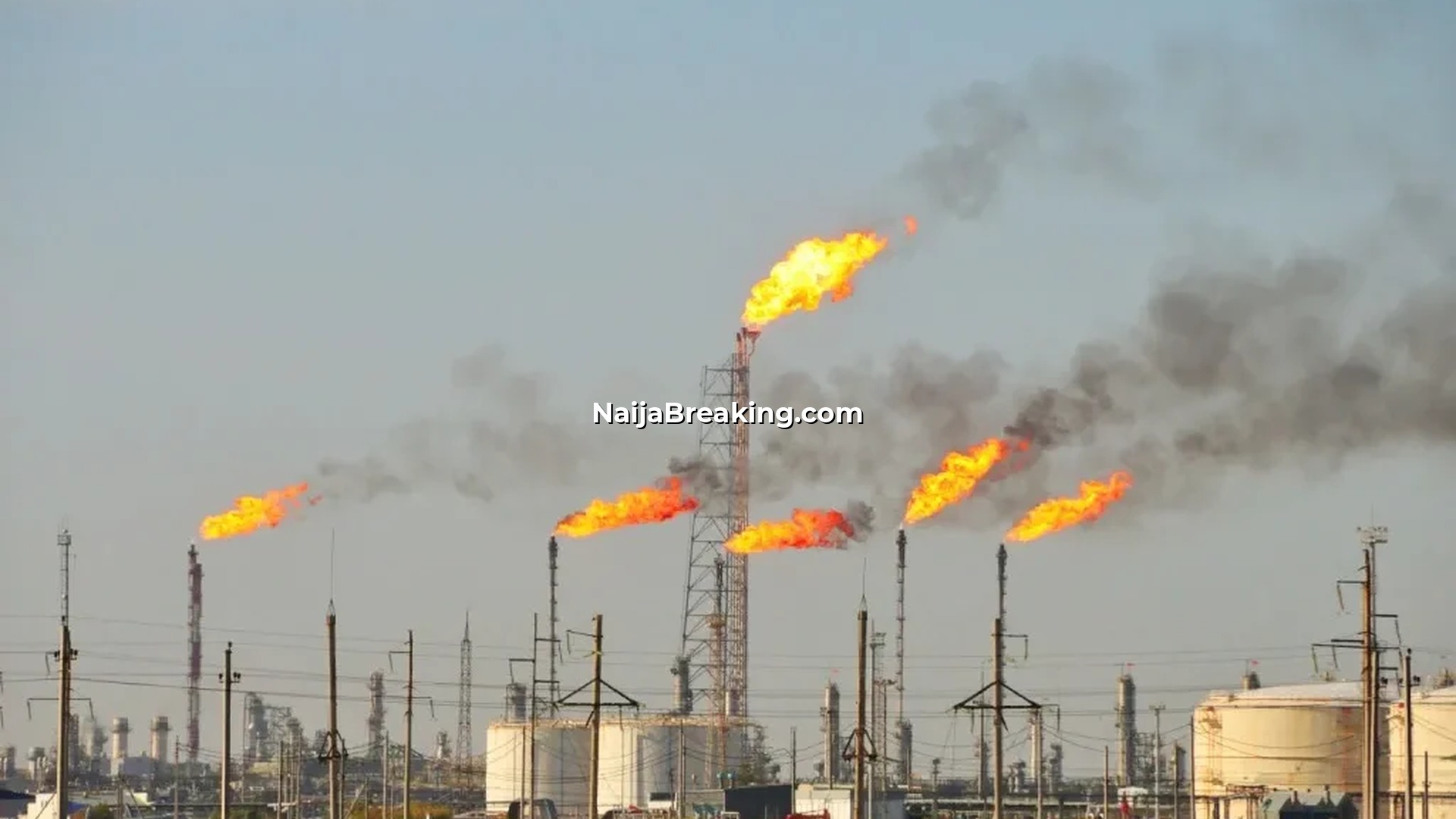
Nigeria loses an estimated $1.5 billion annually to gas flaring—one of the most preventable economic hemorrhages in African history. The challenge of Nigeria gas flaring has persisted for decades, representing both an environmental catastrophe and a missed economic opportunity. Yet on the sidelines of the Nigeria Oil and Gas Conference in Abuja, Germany has unveiled a new initiative aimed at converting this wasted natural resource into genuine economic value. The German Ambassador to Nigeria, Annett Günther, disclosed that the German Foreign Office has commissioned a comprehensive programme to explore how flared gas can be harnessed for domestic consumption, industrial use, and hydrogen production. This development arrives at a critical juncture for Nigeria’s economy, where every source of foreign exchange and revenue diversification matters as the country confronts both economic headwinds and the global energy transition. For Nigerians watching from Lagos offices to Abuja government corridors, the question is urgent: can international partnerships finally unlock the value sitting wastefully at the top of Nigeria’s oil wells? Understanding the scope and implications of Nigeria gas flaring requires examining both its historical context and the potential solutions emerging from global partnerships.
The Historical Context of Nigeria Gas Flaring: Understanding Decades of Waste
Gas flaring in Nigeria is not a new problem—it is a decades-old scandal that has defined the country’s relationship with its most abundant natural resource. When crude oil is extracted from Nigeria’s Niger Delta fields, associated natural gas emerges alongside it. For decades, oil companies found it cheaper to simply burn this gas at the wellhead than to invest in the infrastructure needed to capture, process, and transport it. The practice began in the 1950s and accelerated through the oil boom years, becoming so routine that successive Nigerian governments tolerated it as a cost of doing business. By the 1990s, Nigeria had become synonymous with Nigeria gas flaring—a symbol of mismanagement and wasted opportunity that international environmental groups regularly highlighted as a climate catastrophe.
The economics of gas flaring have historically favored the continuation of this wasteful practice. Oil companies operating in Nigeria’s Niger Delta region have long argued that the cost of installing, maintaining, and operating gas capture and processing infrastructure exceeded the market value of the captured gas, particularly when crude oil prices were volatile. This cost-benefit analysis, while commercially rational from a corporate perspective, imposed massive externalities on Nigeria’s economy and environment. The country’s treasury lost potential revenue that could have been reinvested in education, healthcare, and infrastructure. Meanwhile, the Niger Delta communities bore the environmental and health costs of continuous gas burning, which released methane, carbon dioxide, and other pollutants into the atmosphere, contributing significantly to climate change while also degrading local air quality.
The political and regulatory response to Nigeria gas flaring has been patchy and inconsistent. In 2018, Nigeria established the Gas Flaring Penalty and Fine Regulation, designed to penalise oil companies for continued flaring. The Nigerian National Petroleum Company Limited (NNPC), which operates alongside private operators like Shell, ExxonMobil, and Chevron, made rhetorical commitments to zero flaring but the targets have consistently been missed. The energy sector, governed by the Petroleum Industry Act (PIA) of 2021, theoretically tightened environmental standards, yet Nigeria gas flaring persisted at alarming rates. Between 2022 and 2024, Nigeria continued to rank among the world’s top gas-flaring nations, a reality that embarrassed policymakers but failed to trigger sufficient investment in capture infrastructure.
The persistent problem reflects a deeper structural challenge in how Nigeria gas flaring is approached. Oil companies operate on the margin of profitability in many fields, and the cost of installing and maintaining gas capture systems often exceeds the incentive to do so, especially when crude prices fluctuate. International pressure mounted as climate advocates pointed to Nigeria’s gas flaring as a major source of greenhouse gas emissions—equivalent to the emissions from millions of vehicles annually. Yet despite this pressure, the infrastructure gap remained. Nigeria’s refineries are limited, its gas distribution network underdeveloped, and the liquefied natural gas (LNG) export capacity, though significant, remained constrained by both technical limitations and investment constraints.
The Economic and Environmental Cost of Nigeria Gas Flaring
The quantifiable economic impact of Nigeria gas flaring extends far beyond the headline $1.5 billion annual loss. When economists and energy analysts calculate the true cost, they include not only the lost market value of the gas itself but also the foregone tax revenues for government, the lost opportunities for industrial development, and the environmental remediation costs that should theoretically be borne by polluters. Nigeria’s gas reserves are among the world’s largest, yet instead of being developed into a strategic economic asset, much of the associated gas from oil production is simply burned away.
From an environmental perspective, Nigeria gas flaring contributes approximately 17 million metric tons of carbon dioxide equivalent annually to the atmosphere. This makes Nigeria one of the world’s largest contributors to greenhouse gas emissions from gas flaring, a distinction the country would gladly relinquish. The practice releases not just carbon dioxide but also methane, which has a global warming potential far exceeding that of CO2 over short to medium timeframes. Methane released from Nigeria gas flaring contributes significantly to Nigeria’s overall climate footprint and complicates the country’s efforts to meet international climate commitments under the Paris Agreement. Communities in the Niger Delta, where most flaring occurs, experience localized air pollution that contributes to respiratory diseases, reduced agricultural productivity, and decreased quality of life.
The industrial and development costs of Nigeria gas flaring are equally significant. Natural gas could serve as a foundation for petrochemical industries, fertilizer production, power generation, and numerous other value-added manufacturing activities. Instead, by burning the gas, Nigeria essentially surrenders the opportunity to build downstream industries that could create jobs, transfer technology, and generate sustained export revenues. Countries like Qatar and Australia have built entire industrial complexes around natural gas, generating wealth that compounds over decades. Nigeria’s Nigeria gas flaring represents a failure to follow this developmental pathway.
Germany’s Initiative: A New Approach to Addressing Nigeria Gas Flaring
Against this backdrop of historical failure and persistent economic loss, Germany’s initiative represents a fresh international approach to solving Nigeria gas flaring. The German government’s programme, unveiled by Ambassador Annett Günther at the Nigeria Oil and Gas Conference, positions Germany not as a critic lecturing from the sidelines but as a technical partner willing to invest expertise and resources to help Nigeria transition away from flaring. The initiative encompasses several dimensions, including feasibility studies for gas capture infrastructure, technical assistance for gas processing technologies, and exploration of hydrogen production possibilities from captured gas.
The hydrogen component of Germany’s proposal is particularly significant for addressing Nigeria gas flaring in the context of global energy transition. Germany, facing its own energy security challenges and committed to decarbonization, has positioned green hydrogen as a strategic resource. The proposal envisions Nigeria capturing flared gas, processing it, and potentially converting it into hydrogen or hydrogen-based fuels that could be exported to energy-hungry European markets. For Nigeria, this opens a pathway where Nigeria gas flaring becomes not merely an environmental problem to be eliminated but a resource to be monetized in the emerging green economy. Rather than simply burning gas or leaving it in the ground, Nigeria could establish itself as a hydrogen exporter, creating a new revenue stream while simultaneously addressing climate concerns.
The German initiative also emphasizes domestic utilization of captured gas. Nigeria’s power sector remains hampered by energy shortages, with many businesses and households unable to access reliable electricity. Natural gas could significantly contribute to solving Nigeria’s electricity crisis—domestic gas-fired power plants could provide affordable, relatively clean energy that would support industrial development and improve quality of life. By framing Nigeria gas flaring as a solution to domestic energy poverty rather than merely an environmental problem, the German initiative appeals to broader Nigerian development objectives. This reframing is crucial for political support, as it positions gas capture as serving national interests rather than simply responding to international environmental pressure.
Technical Challenges and Infrastructure Requirements
While Germany’s initiative offers promise for reducing Nigeria gas flaring, significant technical and infrastructural challenges must be overcome. Gas capture infrastructure requires substantial capital investment—facilities to compress, treat, process, and transport gas must be built from scratch or significantly upgraded at existing oil fields. Many of Nigeria’s producing fields operate in remote locations in the Niger Delta, where infrastructure development is complicated by geography, security challenges, and community relations issues. Each of these factors increases the cost and complexity of implementing solutions to Nigeria gas flaring.
The technical requirements for processing associated gas vary depending on the intended end use. Gas destined for domestic power generation requires relatively straightforward processing, while gas intended for liquefaction and export demands more sophisticated and capital-intensive facilities. Hydrogen production from natural gas involves additional conversion steps and specialized technology. Germany’s technical assistance can help Nigeria navigate these options, but ultimately Nigerian institutions—including NNPC, the Nigerian National Petroleum Company Limited, and private operators—must build the capacity to execute these projects independently and sustainably. The challenge of Nigeria gas flaring will not be solved by external assistance alone; it requires developing local expertise and ensuring that infrastructure investment translates into operational improvements.
Transportation and distribution infrastructure presents another critical bottleneck in addressing Nigeria gas flaring. Nigeria’s gas infrastructure historically focused on exporting liquefied natural gas rather than developing domestic distribution networks. To utilize captured gas domestically, Nigeria would need to build or expand pipelines reaching power plants, industrial facilities, and potentially domestic consumers across the country. This requires not only capital investment but also regulatory frameworks ensuring fair access to pipelines and reasonable pricing of transported gas. Germany’s initiative can provide technical guidance on these infrastructure challenges, but implementation remains a Nigerian responsibility.
Policy Framework and Regulatory Environment
The success of any initiative to reduce Nigeria gas flaring depends critically on the policy and regulatory environment. Nigeria’s 2021 Petroleum Industry Act represented an attempt to strengthen environmental standards and incentivize gas utilization, but implementation has been uneven. Gas flaring penalties exist on paper but enforcement remains inconsistent, with some operators paying fines rather than investing in capture infrastructure. This regulatory weakness undermines any international initiative, as companies have little incentive to participate in voluntary or partnership-based gas capture programmes if they can continue flaring with manageable penalty costs.
Strengthening enforcement of existing Nigeria gas flaring regulations must accompany any technical initiative. Germany’s partnership could include assistance with regulatory development and enforcement capacity building, ensuring that penalties for continued flaring are sufficiently high to motivate behavioral change. Additionally, policies should provide incentives for gas utilization—tax breaks for companies investing in capture infrastructure, preferential pricing for domestic gas-fired power plants, or subsidies for hydrogen production could all help overcome the economic barriers that have historically perpetuated Nigeria gas flaring.
The regulatory environment must also clarify property rights and revenue sharing arrangements for captured gas. If the gas captured from flaring is treated differently from conventionally produced gas in terms of taxation, royalties, and distribution rights, this could incentivize investment in capture technologies. Germany’s initiative could help Nigeria design regulatory frameworks that align environmental objectives with economic incentives, creating conditions where reducing Nigeria gas flaring becomes commercially attractive rather than merely regulatory compliance.
Stakeholder Perspectives and Potential Obstacles
Implementation of Germany’s initiative to address Nigeria gas flaring will require coordination among diverse stakeholders with potentially divergent interests. Oil companies operating in Nigeria must weigh the costs and risks of investing in gas capture infrastructure against alternative uses of capital. Private operators like Shell and Chevron, facing shareholder pressure to transition away from fossil fuels, may be more amenable to gas utilization projects framed as part of energy transition strategies than to traditional gas development. NNPC, as a state-owned entity, faces pressure from government to maximize revenues while also pursuing environmental objectives. Balancing these sometimes-contradictory goals remains challenging.
Communities in the Niger Delta, who have borne the environmental costs of Nigeria gas flaring for decades, represent another critical stakeholder. Their support for any initiative is essential, yet historically their voices have been marginalized in oil and gas development decisions. Germany’s initiative should include explicit mechanisms for community participation and benefit-sharing. Local communities could be trained to fill technical and operational roles in gas capture facilities, while revenue from gas sales could be directed to community development projects. This approach would help ensure that solutions to Nigeria gas flaring deliver local benefits beyond merely reducing environmental damage.
International oil traders and energy markets represent another stakeholder dimension. If Nigeria successfully increases gas supply through reducing Nigeria gas flaring, this could affect global gas markets and the pricing power of other exporters. However, the scale of Nigerian gas exports relative to global supply suggests this impact would be manageable, and the development of hydrogen from Nigerian gas could open entirely new market segments.
Timeline and Expected Outcomes
Germany’s initiative represents a medium to long-term commitment to addressing Nigeria gas flaring. Feasibility studies and technical assessments will likely require 12-24 months, followed by pilot projects and demonstration facilities. Full-scale implementation of comprehensive solutions to Nigeria gas flaring would likely span a decade or more. This extended timeline reflects the reality that transforming energy infrastructure requires sustained political commitment, substantial capital investment, and careful technical planning.
If successful, the initiative could reduce Nigeria’s Nigeria gas flaring by 50-80% within 10-15 years, converting billions of dollars in wasted resources into productive economic assets. This would generate government revenue, create employment, improve air quality in the Niger Delta, and position Nigeria as a hydrogen exporter in the emerging green economy. The ripple effects would extend beyond energy, potentially catalyzing industrial development and strengthening Nigeria’s economic foundations.
Conclusion: Transforming Crisis Into Opportunity
Nigeria’s Nigeria gas flaring challenge has persisted because previous approaches treated it as an isolated environmental problem rather than an integrated economic opportunity. Germany’s initiative offers a different framework—one that positions the reduction of Nigeria gas flaring as a path toward energy security, industrial development, and climate action simultaneously. Whether this initiative succeeds depends on Nigeria’s commitment to strengthening regulations, building institutional capacity, and ensuring that the benefits of gas utilization are broadly shared across society. The technical solutions to Nigeria gas flaring have long existed; what has been lacking is the political will and coordinated effort to implement them. Germany’s partnership could provide the external catalyst and technical support needed to overcome the barriers that have perpetuated this wasteful practice. For Nigeria, seizing this opportunity represents a chance to finally convert decades of economic loss into genuine wealth creation.