NEMA, Kogi Strengthen Flood Preparedness Partnership Amid Rising Climate Risks
The National Emergency Management Agency (NEMA) is intensifying its flood preparedness partnership with Kogi State Government, signalling a renewed focus on disaster risk management at a time when Nigeria faces increasing vulnerability to climate-induced flooding. According to recent reports from the NEMA Abuja Operations Office, this collaborative effort comes as weather forecasts indicate heightened flooding risks during the ongoing rainy season. The move reflects growing recognition within Nigeria’s federal and state governments that disaster preparedness cannot be reactive—it must be proactive, coordinated, and rooted in community engagement. For Nigerians living in flood-prone areas, particularly in Kogi State, which straddles the Niger and Benue Rivers and faces recurring inundation, this partnership represents both a commitment and a test of institutional capacity. The question facing ordinary citizens, policymakers, and humanitarian agencies is whether these partnerships translate into tangible protection or remain bureaucratic gestures. Understanding the substance and limitations of this collaboration is critical for assessing Nigeria’s preparedness for climate-related disasters.
Background: Kogi’s Recurring Flood Crisis and Nigeria’s Disaster Management Evolution
Kogi State occupies a uniquely precarious geographical position in Nigeria’s landscape. Situated at the confluence of the Niger and Benue Rivers, the state has endured recurring devastating floods that displace thousands of residents, destroy livelihoods, and strain state resources annually. The 2022 rainy season alone saw floods displace over 250,000 people across Nigeria, with Kogi State accounting for a significant portion of that toll. This pattern has repeated itself nearly every year since 2012, when catastrophic floods inundated multiple states, killing dozens and displacing millions. Beyond the human cost, flooding in Kogi destroys agricultural land—critical to the state’s economy—submerges infrastructure, and disrupts supply chains that affect food security and commerce across the country. The economic impact is staggering: farmers lose crops and livestock, traders are cut off from markets, and government resources that could fund development are diverted to emergency response.
Nigeria’s institutional approach to disaster management has evolved considerably since the establishment of NEMA in 1999. Originally created as a coordinating body with limited operational capacity, NEMA has gradually expanded its mandate to include early warning systems, pre-positioning of relief materials, and coordination with state-level emergency agencies. However, this evolution has been uneven. While some states have established functional State Emergency Management Agencies (SEMAs), others remain significantly underfunded and understaffed. Kogi State’s SEMA, for instance, has historically struggled with budget constraints and capacity limitations that hamper its ability to implement comprehensive disaster risk reduction programmes independent of federal support. The National Disaster Management Framework, updated in recent years, emphasises community-based disaster risk reduction and multi-stakeholder collaboration—principles that the NEMA-Kogi partnership now seeks to operationalise.
The broader context includes Nigeria’s vulnerability to climate change, which climate scientists have linked to erratic rainfall patterns, intensified downpours, and prolonged dry spells. The Nigeria Meteorological Agency has repeatedly warned that climate variability will continue to drive flooding risks, particularly in river basin communities. Additionally, rapid urbanisation and inadequate urban planning in some areas have reduced natural water drainage, exacerbating flood risks. Against this backdrop, the NEMA-Kogi partnership represents an acknowledgment that managing Nigeria’s flood risk requires sustained institutional collaboration, adequate resourcing, and integration of traditional and modern early warning systems.
Key Details: Structure and Scope of the Partnership
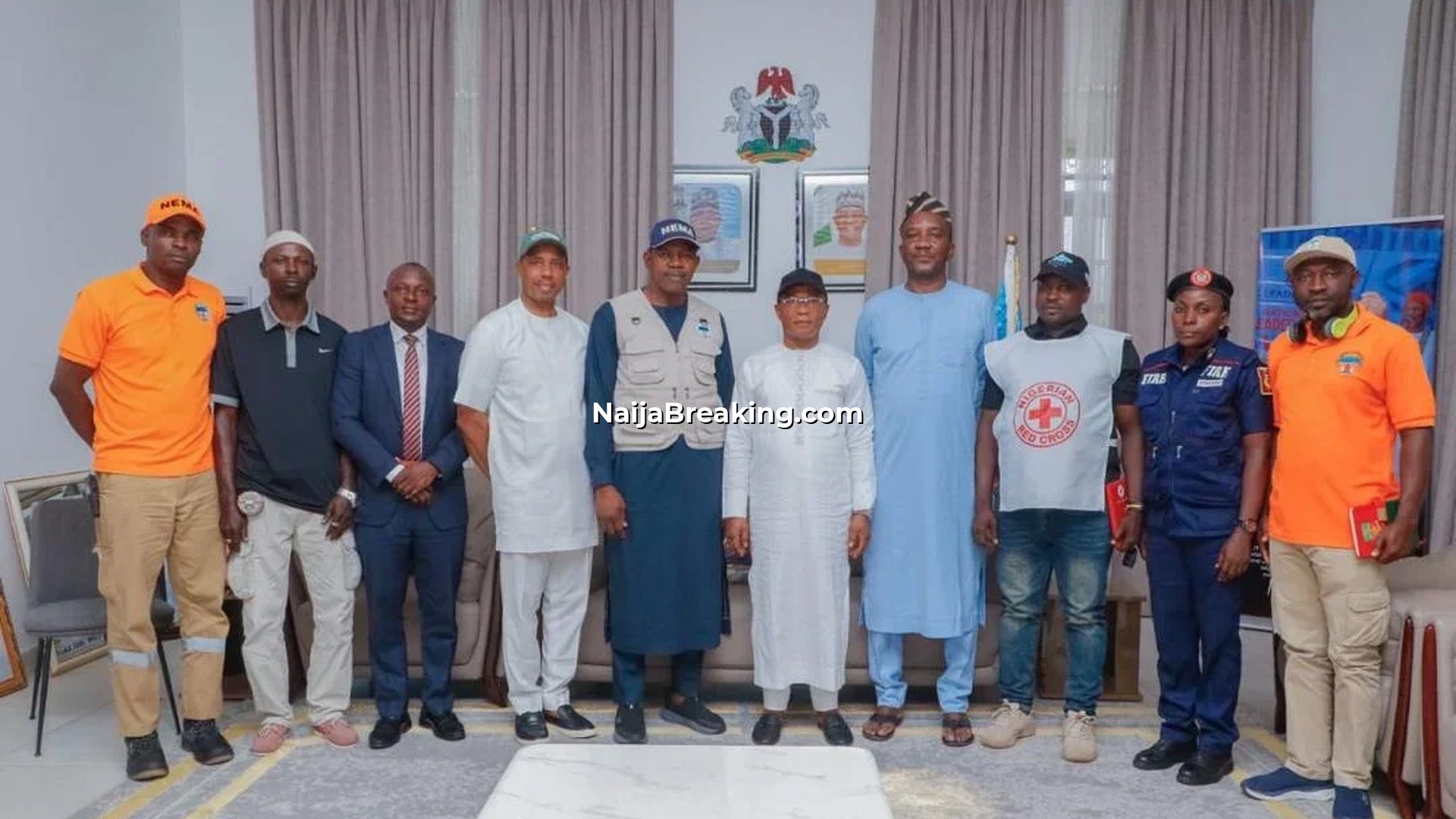
The renewed partnership between NEMA and Kogi State emerged from a courtesy visit by Zakari Abubakar, Head of NEMA’s Abuja Operations Office, to Deputy Governor Salifu Oyibo at the Kogi State Government House in Lokoja. According to the NEMA Abuja Operations Office statement, the meeting specifically focused on disaster preparedness strategies, emergency response coordination mechanisms, and flood risk reduction methodologies tailored to Kogi’s geographical realities. Abubakar outlined NEMA’s commitment to supporting the state through several concrete mechanisms: continuous public sensitisation campaigns, prompt dissemination of early warning information, pre-positioning of emergency response resources in vulnerable communities, and well-coordinated evacuation planning. These measures reflect international best practices in disaster management, adapted to Nigeria’s institutional and resource context.
The partnership emphasises multi-stakeholder coordination, bringing together government institutions, security agencies, humanitarian organisations, traditional institutions, media outlets, and local communities. This holistic approach addresses a significant gap identified in previous emergency responses: the lack of coordinated communication between federal and state agencies, and between government bodies and grassroots communities. Early warning information, for example, is often generated by the Nigerian Meteorological Agency and transmitted to NEMA, but reaching the last-mile community—the farmer in a remote Kogi village—requires coordination with local government areas, traditional rulers, community leaders, and local radio stations. The partnership framework explicitly recognises this layered communication challenge.
Deputy Governor Oyibo’s response acknowledged NEMA’s efforts under Director-General Zubaida Umar and highlighted Kogi State’s receipt of NEMA support through “flood preparedness campaigns, emergency response interventions, and capacity-building programmes.” While specific data on resource allocation was not disclosed in the statement, the Deputy Governor’s endorsement suggests that Kogi State views the partnership as substantive rather than ceremonial. The timing is significant: announcements of intensified flood preparedness typically precede the peak rainy season (August-October in most of Nigeria), allowing for practical implementation of early warning systems, pre-positioning of relief materials, and evacuation planning before the deluge arrives.
Impact and Analysis: Testing the Partnership’s Resilience and Real-World Effectiveness
The NEMA-Kogi partnership, while conceptually sound, faces substantial implementation challenges rooted in Nigeria’s broader governance realities. First, the success of flood early warning systems depends entirely on dissemination accuracy and community receptivity. Nigeria’s Nigeria Meteorological Agency generates weather forecasts, but translating these into actionable early warnings—telling a farmer specifically where and when to evacuate—requires grassroots information infrastructure that remains underdeveloped in many areas. Second, pre-positioning of emergency response resources (food, water, shelter materials, medical supplies) requires sustained funding. State budgets, particularly in resource-constrained states like Kogi, face competing demands. When floods occur, emergency funds are often insufficient, forcing NEMA to mobilise federal resources. This reactive posture undermines preparedness. Third, evacuation planning assumes functional coordination between state governments and local government areas (LGAs). Historically, administrative tensions and resource competition between state and local levels have hampered unified disaster response.
The partnership also reveals something critical about Nigeria’s disaster management strategy: it is heavily dependent on federal agency capacity. NEMA’s involvement signals that state-level institutions alone are insufficient—a reality that, while honest, raises questions about institutional autonomy and the long-term sustainability of state-level disaster management capabilities. Kogi State’s reliance on NEMA support, though pragmatic, may inadvertently discourage the state from building independent institutional capacity. A truly resilient disaster management system would strengthen state agencies to the point where they lead preparedness efforts, with NEMA providing technical support and coordination rather than operational leadership.
Expert Perspectives: Institutional Capacity, Climate Reality, and Implementation Gaps
Dr. Chidi Okonkwo, a Abuja-based disaster risk management specialist at the Institute for Development and Environmental Studies, argues that the NEMA-Kogi partnership represents necessary but insufficient action. “What we’re seeing is coordination at the strategic level—federal and state governments talking about preparedness. That’s important. But implementation remains the critical gap,” Okonkwo explains. “Early warning systems exist in Nigeria, but community-level reception and response mechanisms are weak. A farmer in a flood-prone area may not understand meteorological forecasts, and may not have resources to evacuate even if warned. The partnership needs to address these ground-level realities.” He emphasises that sustained funding and capacity-building of local government disaster management teams are essential to bridge the implementation gap.
Conversely, Funmi Adeyemi, a senior policy analyst at the Centre for Development Policy in Lagos, welcomes the partnership as a signal of institutional commitment. “Every time we see NEMA collaborating with states, it demonstrates that disaster management is being mainstreamed into governance conversations. Over time, these partnerships can drive institutional strengthening and resource allocation,” Adeyemi contends. However, she cautions that without measurable targets and accountability mechanisms, partnerships risk becoming symbolic exercises. “The partnership announcement should be followed by concrete commitments: X number of communities will receive early warning systems; Y resources will be pre-positioned; Z training programmes will be conducted for community disaster management volunteers. Without these specifics, we won’t know if the partnership is delivering results.”
What This Means for Nigerians: Ground-Level Realities of Flood Risk and Community Vulnerability
For the average Nigerian living in flood-prone areas—particularly in Kogi, Lagos, Delta, Rivers, and Bayelsa States—the NEMA-Kogi partnership translates into tangible but uncertain improvements. A farmer in Lokoja whose farmland floods every two to three years faces a direct question: will this partnership actually prevent losses next time the rains come? The answer depends on whether early warning systems reach him in time, whether he has resources or safe alternatives to relocate to, and whether government relief materials arrive after the flood subsides. Currently, these outcomes are inconsistent. Some communities receive advance warnings and organised evacuation; others discover floods have arrived only when water reaches their homes.
For small business owners—traders, transporters, manufacturers reliant on supply chains—floods disrupt commerce and income. A trader in Kogi whose goods are stranded during flood season loses inventory and income. The partnership’s focus on evacuation planning and relief materials is important, but it does not address the economic cost of lost livelihoods. However, if early warning systems enable businesses to relocate inventory before floods arrive, or if community disaster management training reduces the time to recover, the partnership could have indirect economic benefits. Students and workers in flood-affected areas also face disruption: schools and workplaces close, exams are postponed, wages are lost. The partnership’s emphasis on community-based preparedness—involving traditional institutions, local leaders, and community volunteers—could potentially reduce response time and improve recovery, ultimately minimising disruption to education and employment.
For women, children, and persons with disabilities in flood-prone communities, the partnership’s success is particularly critical. Evidence from past floods shows that these populations face disproportionate vulnerability: women often remain behind to protect household properties, children separated from parents during evacuation face trauma and trafficking risks, and disabled persons may lack mobility to reach evacuation points. A truly effective partnership would centre protection mechanisms for these vulnerable groups, including accessible evacuation routes, designated shelters meeting accessibility standards, and targeted communication strategies. Whether the NEMA-Kogi partnership explicitly addresses these dimensions remains unclear from available information.
Editor’s Take: Partnership Announcements and the Risk of Institutional Complacency
At NaijaBreaking, we recognise that institutional partnerships carry inherent risks alongside their benefits. When NEMA and Kogi State announce renewed collaboration on flood preparedness, it signals a commitment that deserves acknowledgment. However, Nigerian governance history shows that announcements often outpace implementation. What this story reveals is a pattern: federal agencies announce partnerships with states, media covers the announcement, and then implementation becomes patchy. The real question is not whether NEMA and Kogi State are talking—it’s whether they’re coordinating action with measurable outcomes. We believe Nigerian taxpayers and flood-affected communities deserve transparency about resource allocation, timeline, and accountability. If this partnership is genuine, it should produce verifiable results: reduced death tolls in subsequent floods, faster response times, improved early warning reach to remote communities. Without these metrics, partnerships risk becoming institutional cover for inadequate disaster preparedness.
What to Watch Next: Implementation Markers and Accountability Measures
Several developments will determine whether this partnership translates into meaningful protection for Nigerians in Kogi State. First, monitor the pre-positioning of emergency response materials: will NEMA and Kogi State publish inventories of food, water, shelter items, and medical supplies stationed in vulnerable communities? Second, track early warning dissemination mechanisms: do communities receive meteorological alerts through accessible channels (SMS, radio, community meetings) before flooding occurs? Third, observe state budget allocations to disaster management in the 2024 fiscal year: does Kogi State demonstrate commitment through increased funding to its SEMA and local disaster management committees? Fourth, watch for training and capacity-building programmes: are community volunteers and local government staff trained in disaster risk reduction? Fifth, assess evacuation plan development: are specific evacuation routes, assembly points, and shelter locations documented and communicated to communities? The key question now is: will media outlets follow up on this partnership announcement with investigative reporting on implementation, or will it be filed away as a completed news cycle?
Conclusion: Recognising Necessity While Demanding Accountability
The NEMA-Kogi partnership on flood preparedness represents a necessary institutional response to a recurring and intensifying challenge. Nigeria’s vulnerability to climate-driven flooding is real, and coordinated disaster management at federal and state levels is essential. However, necessity does not guarantee effectiveness. What this story reveals is both a commitment to disaster preparedness and an opportunity to test whether Nigerian institutions can move beyond announcements toward sustained implementation. The partnership’s success will be measured not in press releases, but in lives protected, livelihoods preserved, and communities empowered to manage their own disaster risk. Nigerians in flood-prone areas should welcome the partnership while remaining vigilant: pressure policymakers for transparency, demand accountability for resource use, and insist on community-centred disaster management strategies that put protection of ordinary people first.
Share your thoughts in the comments below—what do you think this partnership means for Nigeria’s future in managing climate-related disasters? Have you experienced flooding in your community, and what changes would make you feel safer?