Nigeria’s World Cup Absence Stings: CAF Chief Says Tournament Incomplete Without Super Eagles
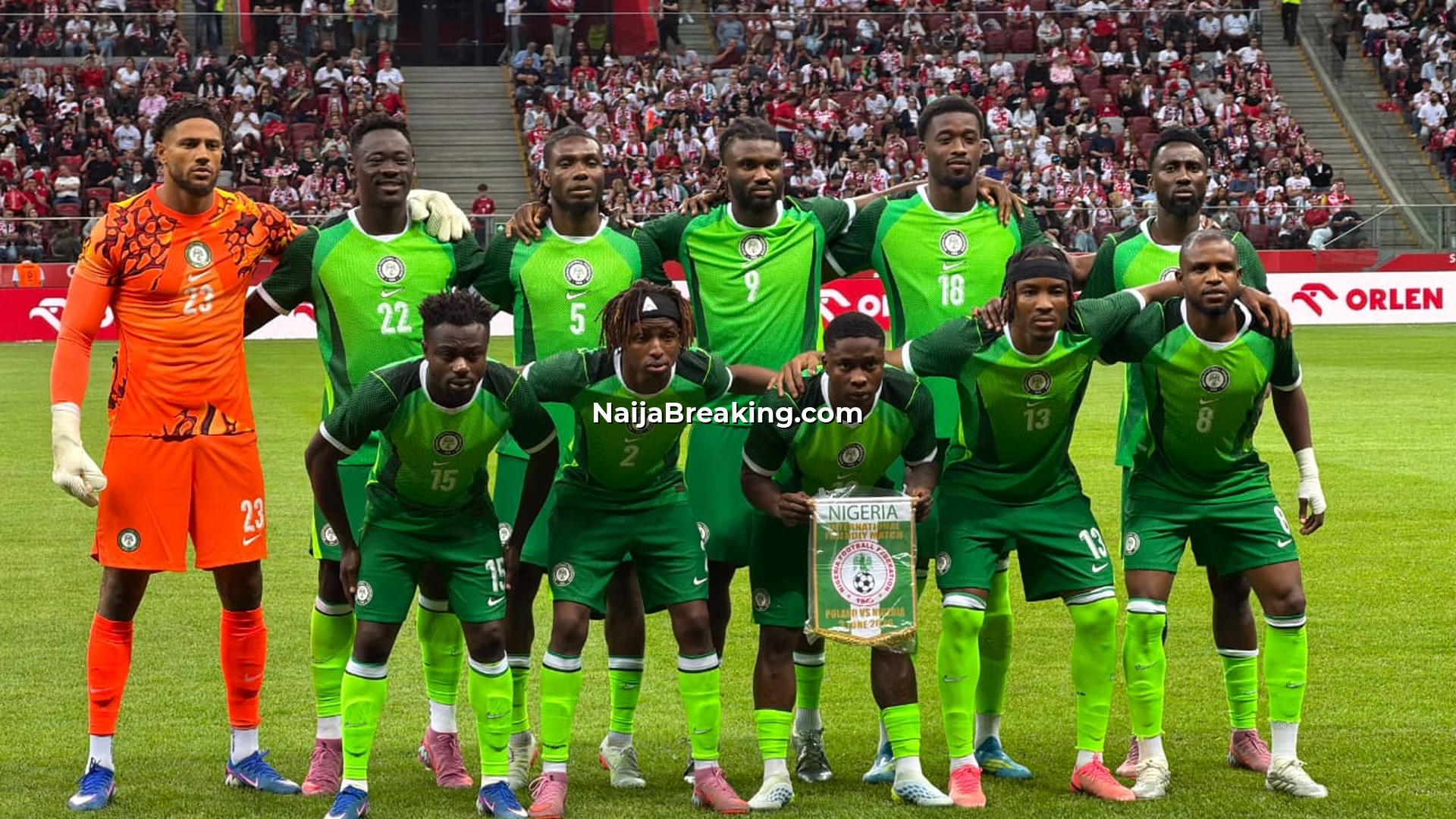
The statement from Confederation of African Football (CAF) President Patrice Motsepe carries weight that goes beyond diplomatic courtesy. When he insists that a World Cup without Nigeria is incomplete, he is voicing what millions of Nigerian football fans have felt since the Super Eagles’ catastrophic failure to qualify for the 2026 FIFA World Cup — a stunning reversal for a nation that has been a pillar of African football for four decades. Nigeria’s absence from the expanded 48-team tournament represents not just a missed opportunity for the country, but a symbolic gap in global football’s grandest stage. For Nigerians accustomed to seeing their national team compete on the world’s biggest platform, this failure stings deeply and raises uncomfortable questions about the direction of the nation’s football programme. At a time when Nigeria is struggling with economic headwinds, insecurity, and youth unemployment, the Super Eagles’ failure to qualify has become another symbol of institutional decline — a visible reminder that even our traditional sources of national pride are vulnerable to mismanagement and systemic dysfunction.
Background
Nigeria’s relationship with the FIFA World Cup has been one of African football’s most compelling narratives. The Super Eagles first qualified for the tournament in 1994 in the United States, launching themselves onto the global stage with a combination of talent, technical skill, and attacking flair that captivated audiences worldwide. That initial qualification marked the beginning of a golden era: Nigeria went on to reach the knockout stages in 1998 in France, 2002 in South Korea and Japan, and most memorably in 2014 in Brazil, where they reached the Round of 16 before falling to eventual champions France. Over these three decades, Nigerian players became globally recognised — from Sunday Oliseh and Nwankwo Kanu in the 1990s to Vincent Enyeama, Mikel Obi, Jay-Jay Okocha, and in more recent times, Ahmed Musa and Victor Moses. The Super Eagles have also won the Africa Cup of Nations three times (1980, 1994, 2013), cementing the nation’s status as a continental powerhouse.
However, the past decade has seen a gradual erosion of Nigeria’s football infrastructure and performance. The failure to qualify for the 2018 World Cup in Russia was a shock, but the team recovered to reach the 2019 Africa Cup of Nations final (losing to Algeria) and made the Round of 16 at the 2021 tournament. What makes the 2026 absence particularly damaging is that it comes amid a broader crisis in Nigerian football administration. The Nigeria Football Federation (NFF) has faced repeated governance scandals, financial mismanagement allegations, coaching instability (with multiple managers cycling through in short periods), and a troubling disconnect between the federation’s leadership and the actual development of grassroots football. The national league system remains underfunded and poorly organised, youth development programmes lack coherent structure, and club football in Nigeria has become increasingly neglected as a source of talent development.
The context of this failure also matters economically and socially. Nigeria’s youth unemployment rate hovers around 40%, and for many young Nigerians, football has traditionally been a pathway to economic mobility and social advancement. The Super Eagles’ consistent presence at World Cups had symbolised possibility and national achievement. Their absence now sends a demoralising message at a time when the country faces significant morale challenges. Additionally, Nigeria’s soft power — its ability to influence global perception through culture and sport — has been a critical asset. Football has been one of Nigeria’s most effective cultural exports alongside music and entertainment. A country without representation at the World Cup loses visibility on the global stage at precisely the moment when that visibility matters most for brand building and international influence.
Key Details
According to source reporting, CAF President Patrice Motsepe acknowledged the significance of Nigeria and Cameroon’s absence from the 2026 World Cup during recent reflections on Africa’s World Cup campaign. Motsepe stated explicitly: “A World Cup for me without Nigeria, Cameroon, and many others is incomplete because Nigerians and Cameroonians have all made us proud.” This statement underscores the continental importance placed on Nigeria’s participation. Cameroon, like Nigeria, failed to secure qualification for the expanded 26-team African allocation in the 2026 tournament, representing a collective loss for the continent’s football profile.
Both nations carry significant historical weight in African football history. Nigeria has won three Africa Cup of Nations titles (1980, 1994, and 2013) and has consistently been among Africa’s top five teams in FIFA rankings for most of the past two decades. Cameroon, meanwhile, made history in 1990 by becoming the first African nation to reach the World Cup quarter-finals, setting a benchmark that inspired the continent for decades. The dual absence of these two football powerhouses from a 48-team tournament is particularly striking — it means Africa will have lost representation from two of its most established and respected programmes. Motsepe’s statement reflected on both teams’ “rich history and consistent performances at previous World Cups,” acknowledging the legacy they have built and the global respect they have earned through their involvement in the tournament over multiple generations.
The CAF president’s comments come as part of a broader commitment to strengthen African football development. According to the source, Motsepe stressed that “CAF will intensify its efforts to strengthen football development across the continent through greater investment in youth football, coaching education, infrastructure and competitions.” This indicates a recognition that African football faces systemic challenges beyond individual team performance — the entire ecosystem requires investment and restructuring. The statement positions the confederation as committed to reversing the trend where major African nations are failing to qualify for the World Cup, though it leaves unanswered questions about how CAF will enforce such development programmes among its member federations, including Nigeria’s NFF.
Impact and Analysis
Nigeria’s failure to qualify for the 2026 World Cup represents a structural crisis in Nigerian football that cannot be attributed to bad luck or temporary form. This is an administrative and strategic failure. The NFF’s management of the qualifying campaign was chaotic, marked by poor squad selection, inadequate preparation, and a failure to build consistent team cohesion. The qualification campaign itself was marked by inconsistent results against opponents that Nigeria should have dominated — losses to teams like South Africa and Cape Verde in preliminary stages exposed fundamental weaknesses in the national team’s competitive readiness and the federation’s ability to prepare competitive sides.
The impact extends beyond sport. Football is one of Nigeria’s few remaining sources of international soft power and media attention. The absence of the Super Eagles from the 2026 World Cup means millions of Nigerians who would have gathered around televisions, in viewing centres across Lagos, Abuja, Kano, and Port Harcourt, will not have their national team to rally around. For diaspora Nigerians, World Cup participation is a moment of pride and connection to home. The economic impact is also measurable — tourism revenue associated with match-day activities, betting revenue that flows into the informal economy, and media rights fees that could support NFF operations are all reduced. More critically, the absence reinforces a narrative of decline that undermines Nigeria’s ability to attract foreign investment and project competence on the global stage at a time when such projection is desperately needed.
This failure also has psychological consequences for young Nigerian footballers. Elite young players are more likely to seek opportunities abroad or abandon football entirely if the national team appears to be in terminal decline. The motivation to pursue professional football as a career becomes weaker when the pinnacle of national representation — playing at a World Cup for Nigeria — seems increasingly unlikely. This talent drain accelerates precisely when Nigeria needs to be retaining and developing its best young players domestically or nurturing them through a coherent development system.
Expert Perspectives
Dr. Segun Adeniyi, a Lagos-based sports policy analyst and former consultant to the NFF, argues that Motsepe’s statement, while diplomatically appropriate, masks deeper governance failures within African football federations. “When CAF speaks about ‘investing in youth football and coaching education,’ it sounds progressive in theory, but the reality is that individual federations like Nigeria’s NFF lack the institutional capacity or political will to implement these programmes consistently,” Adeniyi explains. “The problem isn’t that Nigeria hasn’t heard about the need for youth development — it’s that funding never reaches grassroots level, coaching positions become patronage appointments, and there’s no accountability when programmes fail. CAF can make statements, but without forcing member federations to adopt transparent, merit-based systems, nothing changes.”
Conversely, Chioma Okafor, a sports management consultant based in Abuja who has worked with several African football federations, suggests that Motsepe’s commitment to intensified continental support could represent a genuine turning point if properly implemented. “Nigeria’s failure shouldn’t be seen only as an NFF failure — it’s a signal that the entire African football ecosystem is fragmented. CAF investing in infrastructure and coaching education across the continent, rather than leaving each federation to fend for itself, could help smaller nations build competitive depth, which indirectly benefits bigger nations like Nigeria by creating a stronger competitive environment,” Okafor notes. “The question is whether this becomes a concrete funding mechanism with oversight, or just another aspirational statement that gets lost in bureaucratic processes.”
What This Means for Nigerians
For the average Nigerian — the trader in Lekki, the student in Ibadan, the worker in Abuja — the Super Eagles’ absence from the World Cup means the loss of a rare moment of collective national pride and distraction from daily hardships. Football viewing is one of Nigeria’s most democratic cultural activities: it unites people across class lines, ethnic divisions, and regional boundaries. A World Cup campaign featuring Nigeria gives ordinary Nigerians something to talk about beyond inflation, fuel prices, and rising school fees. The psychological and social utility of national team success should not be underestimated in a country where economic anxiety is high and hope in institutions is low.
Economically, the impact filters down to those working in the informal football economy — vendors who sell food during match viewings, betting shop operators, transporters, and those in the entertainment and hospitality sectors who benefit from the economic activity surrounding international football tournaments. For the next four years until 2030, there will be no World Cup to anticipate, no Super Eagles to build excitement around, and no major tournament where Nigeria’s participation is guaranteed. Young footballers in secondary schools and youth academies lose the immediate inspiration and career pathway that the Super Eagles would represent. Parents considering whether their sons should pursue football professionally now see a less attractive career trajectory. The indirect costs accumulate: less talent development, less investment in football infrastructure by private sponsors seeking national team visibility, and less motivation for state governments to invest in sports facilities.
For Nigeria’s global brand, the absence is similarly damaging. International media coverage of the World Cup provides a platform for Nigerian visibility — when Nigerian players perform at the World Cup, it generates positive global media attention that extends beyond sports. The absence means Nigeria loses this amplification at a moment when the country’s international perception is fragile due to security challenges and economic difficulties. The World Cup represents an opportunity to reframe Nigeria’s narrative as a nation of talent, resilience, and global relevance.
Editor’s Take
At NaijaBreaking, we believe Motsepe’s statement, while warranted, represents a diplomatic courtesy that obscures a hard truth: Nigeria’s football failure is a management crisis disguised as a sports story. The NFF has become a symbol of everything wrong with Nigerian institutional governance — opaque decision-making, patronage-based appointments, financial mismanagement, and a disconnect between leadership and actual development objectives. What makes this particularly frustrating is that the solutions are known and documented. Other African nations have successfully rebuilt competitive programmes through transparent federations, merit-based coaching appointments, and sustained investment in youth development. Nigeria knows how to do this. We have done it before. The fact that we cannot do it now speaks to a broader institutional paralysis that infects even our most beloved national institutions. Motsepe’s vision for African football development will only succeed if federations like Nigeria’s are held accountable through concrete mechanisms, not just aspirational rhetoric.
What to Watch Next
The critical developments to monitor in the coming months are: (1) whether the NFF announces concrete changes to its governance structure and appoints a new technical committee with transparent, merit-based selection processes; (2) whether CAF actually establishes a monitoring mechanism to evaluate member federations’ progress on youth development and coaching education, or if this remains another unfunded initiative; (3) the state of Nigeria’s domestic league — if the Nigerian Professional Football League cannot produce competitive players, the national team cannot compete internationally; and (4) whether the government shows any political will to invest in sports infrastructure and remove the NFF leadership if performance targets are not met. The key question now is: will Nigeria’s football failure prompt genuine institutional reform, or will it remain a tragedy of administrative neglect repeated every four years?
Conclusion
Nigeria’s absence from the 2026 World Cup is not merely a sports disappointment — it is a governance failure with real consequences for national morale, economic activity, and global perception. Patrice Motsepe’s statement that the World Cup is incomplete without Nigeria is both flattering and sobering: flattering because it acknowledges Nigeria’s historical importance to African football, sobering because it underscores that we have squandered a position we spent four decades building. The path forward requires the NFF to undertake genuine structural reform, with transparent governance, merit-based appointments, and sustained investment in youth development. Without these changes, Nigeria risks becoming a footnote in African football history rather than a central chapter.
This story reveals something deeper about Nigeria’s direction: our inability to maintain excellence even in areas where we have a strong foundation. If we cannot keep the Super Eagles competitive, what does that say about our capacity to manage larger, more complex institutions? Share your thoughts in the comments below — what do you think this means for Nigeria’s future in football and beyond?