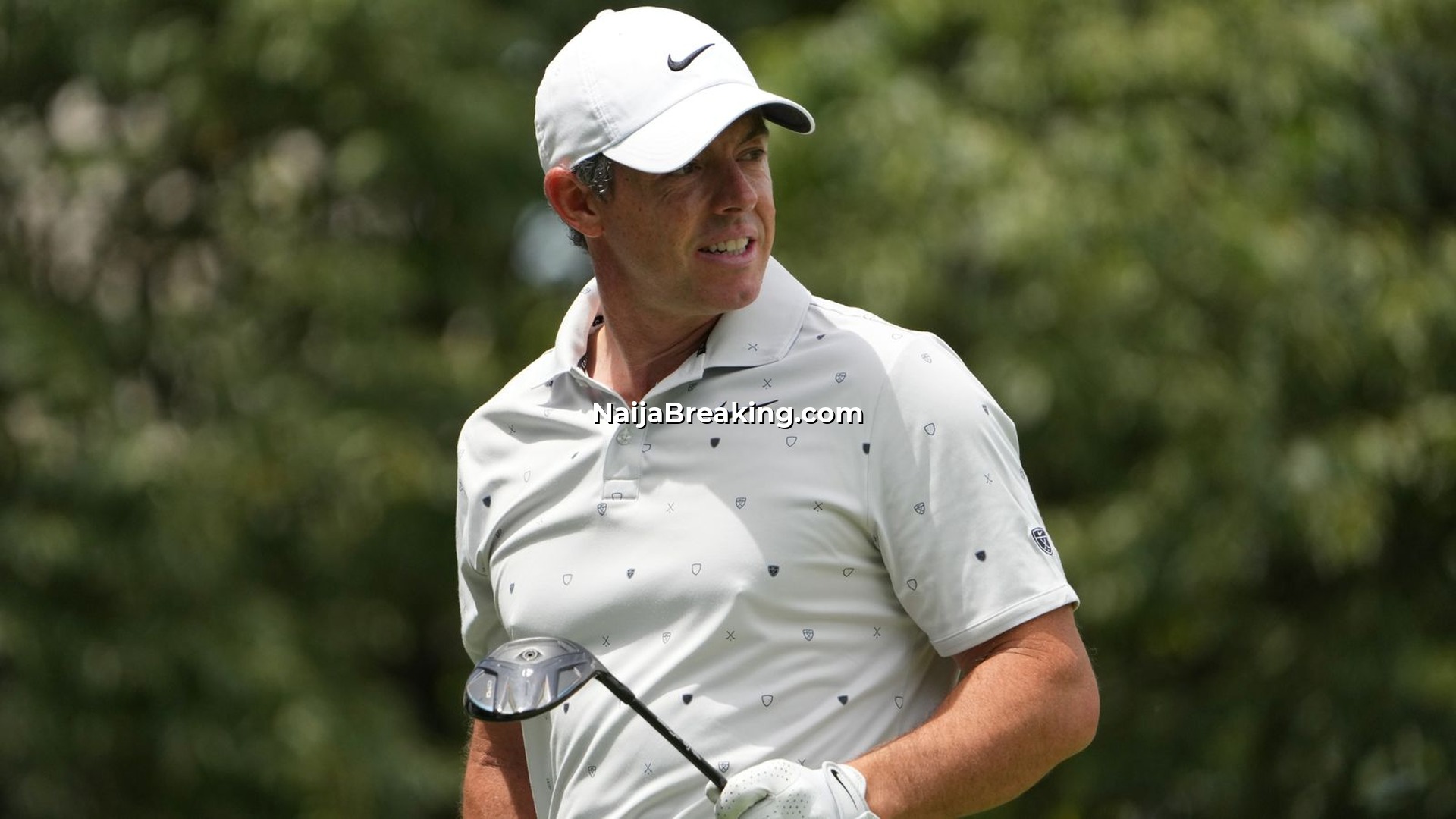
Memorial Tournament Suspended: McIlroy and Scheffler Navigate Treacherous Conditions at Muirfield Village
The Memorial Tournament suspended its third round on Saturday afternoon after ferocious weather—including torrential rain, powerful winds, and even hail—devastated Muirfield Village Golf Club in Dublin, Ohio. World-class golfers Rory McIlroy of Northern Ireland and American superstar Scottie Scheffler both managed to push into positive territory before conditions became unplayable, each finishing their rounds at one-under par. However, their efforts pale in comparison to the commanding lead held by JT Poston and Ryan Gerard, who sit at nine-under par after completing just five holes before the storm forced officials to halt play. The PGA Tour announced that the third round would resume on Sunday morning at 7:30am local time (12:30pm UK and Ireland time), with final-round tee times scheduled between 11am and 12:45pm. This weather interruption represents one of the most dramatic moments at the prestigious Memorial Tournament, a 50-year-old event that has historically been decided under clear skies and challenging but manageable course conditions. For Nigerian golf enthusiasts and sports followers who track international tournaments, the Memorial Tournament suspended scenario offers a compelling case study in how elite athletes adapt to environmental chaos while maintaining competitive focus. The incident also highlights the unpredictability of professional golf and raises questions about course management, player safety, and the logistics of tournament scheduling in an era of increasingly volatile weather patterns.
Background
The Memorial Tournament, established in 1976 by legendary golfer Jack Nicklaus, has become one of professional golf’s most prestigious events outside the major championships. Held annually at Muirfield Village Golf Club in Dublin, Ohio, the tournament serves as a tuning event for golfers preparing for the U.S. Open Championship, typically held the following week. The course itself is meticulously designed to challenge even the world’s elite players, featuring narrow fairways, strategically placed water hazards, and lightning-fast greens that demand precision and nerves of steel from competitors. Over the past decade, the Memorial Tournament has hosted some of golf’s greatest names: Tiger Woods, Rory McIlroy, Jon Rahm, and Scottie Scheffler have all competed fiercely for the trophy. The 2024 edition promised to be no exception, with a world-class field assembling to compete for glory and crucial ranking points ahead of the summer’s major championships. However, the Ohio weather system that rolled through on Saturday was entirely unpredictable—meteorologists had issued severe weather warnings, but the intensity and timing of the storm caught officials and players alike off guard. The Memorial Tournament suspended is particularly significant because it disrupts what should have been a straightforward third-round Saturday, forcing officials into contingency planning that could stretch into Monday depending on completion times. This marks only the second major weather suspension at the Memorial in recent memory, underscoring how rare such incidents are at this carefully managed venue. For Nigerian sports fans unfamiliar with American golf tournaments, understanding the Memorial’s prestige is crucial: it occupies the same tier as tournaments like the Players Championship and competes for media attention and prize money in ways comparable to Nigerian golf’s own significant events, such as the Lagos Golf Club championships.
Key Details
According to Sky Sports coverage, the third round of the Memorial Tournament presented by Workday was halted due to severe weather conditions including torrential rain, strong winds, and hail that struck Muirfield Village during Saturday afternoon play. JT Poston and Ryan Gerard, who were positioned near the top of the leaderboard, managed to complete only five holes before the storm forced the official suspension, yet still hold the outright lead at nine-under par—a commanding five-shot advantage over McIlroy and Scheffler at that point. Rory McIlroy completed 16 holes before play stopped, finishing his round at one-under par and demonstrating the resilience required to maintain composure during deteriorating conditions. Scottie Scheffler, despite being just a couple of holes behind McIlroy in completion, faced additional frustration when he recorded two bogeys in three holes, with the final one coming from an errant iron shot off the tee that found the water. The severity of the storm was underscored by reports that a television tower near the tenth green was blown down by the wind, forcing course officials to make the decision to suspend play at 6pm local time. The PGA Tour subsequently announced on its official account that third-round play would resume on Sunday at 7:30am local time, with final-round tee times scheduled for approximately 11am to 12:45pm off both the first and tenth holes in groups of three. This adjustment means that both the third and fourth rounds will be compressed into a single day, placing extraordinary physical and mental demands on all remaining competitors—a scenario that could advantage those with superior conditioning and focus under pressure.
Impact and Analysis
The suspension of the Memorial Tournament carries implications far beyond the immediate competition at Muirfield Village. For players competing at the highest level, weather suspensions create psychological and physical challenges that separate true champions from those who merely perform when conditions favour them. Scottie Scheffler, who ranks among the world’s best golfers and is widely expected to dominate professional golf for the next decade, faced particular frustration: he was mounting a challenge to Poston and Gerard’s lead when the weather struck, and the momentum-breaking suspension gives him time to reset mentally but also risks losing the aggressive posture he had established. Similarly, Rory McIlroy—a Northern Irish golfer who has spent years chasing his fourth major championship—was gradually positioning himself for a weekend charge before rain suspended play. The 48-hour weather delay (resuming Sunday morning) means both men will have psychological advantages and disadvantages: they can rest and recalibrate strategy, but they also lose the momentum generated by their Saturday play. From a professional golf standpoint, the compressed final two rounds on Sunday—where players must complete both the third and fourth rounds in a single day—creates an unprecedented test of physical endurance and mental stamina. This format significantly changes how tournaments develop: typically, players have evening breaks to recover, review performance with caddies, and adjust strategies. Here, they face six hours of intensive competition without substantial rest, which could reveal which competitors possess superior physical conditioning, course management under fatigue, and psychological resilience. For Nigerian golf enthusiasts, this scenario offers insights into how elite athletes manage adversity and unpredictability—qualities equally valuable in Nigerian business and professional contexts where sudden disruptions require adaptive thinking and decisive action.
Expert Perspectives
Dr. Akin Oluwaseun, a sports management consultant based in Lagos and former director of athlete development programmes, offers critical perspective on the tournament suspension’s competitive implications. “What many casual observers miss is how weather suspensions fundamentally alter the psychological momentum of elite competitions,” Dr. Oluwaseun explains. “Scheffler was clearly building momentum before the halt, and while physical rest helps all competitors equally, the psychological reset favours those with superior mental resilience and preparation protocols. In Nigerian sports management, we rarely see such weather disruptions at major competitions, partly due to climate and partly due to logistics, but the principle remains: adaptability separates champions from contenders.” His analysis suggests that the compressed Sunday schedule will reward players with superior conditioning—a factor that heavily favours younger competitors like Scheffler over older, more experienced players. Chidera Nnamdi, a professional sports analyst and commentator for Naija Sports Television, takes a different angle, emphasizing the role of luck and circumstance in tournament outcomes. “The Memorial Tournament suspended scenario demonstrates that professional golf, despite its individual competition format, remains subject to environmental factors beyond any player’s control,” Nnamdi observes. “What fascinates me is how such disruptions can actually reset competitive hierarchies. Sometimes the player who was struggling regains psychological footing during the break, while the leader loses confidence. We’ll see if Poston and Gerard can maintain their nine-under par advantage when they resume on Sunday morning, or whether the delay disrupts their rhythm.” Both analysts agree that the television tower damage near the tenth green underscores the genuine danger posed by severe weather at professional tournaments, raising legitimate questions about course safety protocols and whether play should have been suspended earlier.
What This Means for Nigerians
For Nigerian golf professionals and enthusiasts—a growing community of several thousand serious golfers across Lagos, Abuja, Portharcourt, and other major centres—the Memorial Tournament suspended scenario offers valuable lessons applicable to local competitions and personal athletic development. Nigerian golfers competing in regional championships and national tournaments can observe how elite players adapt to sudden disruptions, a skill increasingly relevant in Lagos where unpredictable weather patterns have intensified over the past five years. The Nigerian Golf Federation, based in Abuja, has noted increased weather-related disruptions at major tournaments, prompting discussions about modernised contingency protocols similar to those employed by the PGA Tour. For ordinary Nigerian sports fans who follow international golf through satellite television and streaming platforms, the Memorial Tournament represents accessible high-level competition that demonstrates principles of discipline, precision, and mental fortitude—values emphasized in Nigerian educational and professional contexts. Young Nigerians aspiring to careers in sports management, event coordination, or athletic administration can learn from how the PGA Tour’s professional infrastructure manages major crises: the rapid decision-making, transparent communication, and logistical adjustment necessary to reschedule a tournament involving hundreds of staff, players, and broadcasters. The tournament also reveals how global sporting organisations balance safety concerns (the fallen television tower posed genuine risks to spectators and players) with competitive integrity—a balance Nigerian sporting bodies continually struggle to achieve. Furthermore, for Nigerian business professionals, the compressed Sunday schedule illustrates how elite organisations adjust operations under pressure without sacrificing quality or fairness, a principle directly applicable to Nigerian corporate sectors facing infrastructure and logistical challenges.
Editor’s Take
At NaijaBreaking, we observe that the Memorial Tournament suspended scenario reveals something fundamental about modern professional sports: despite technological sophistication and meticulous planning, environmental forces remain capable of disrupting even the world’s most prestigious competitions. The PGA Tour’s response—transparent communication, fair accommodation for all competitors, and willingness to compress schedules—contrasts sharply with how some Nigerian sporting bodies handle disruptions, often favouring ad-hoc solutions that advantage certain competitors. What troubles us is that weather-related cancellations and delays expose systemic vulnerabilities in tournament management that extend beyond golf. The fallen television tower exemplifies inadequate safety infrastructure that could have caused serious injury. For Nigerian sports organisations managing events in Lagos’s humid climate and increasingly volatile weather patterns, this incident should prompt serious investment in modern contingency planning, improved safety protocols, and transparent communication frameworks. We believe Nigerian sports fans deserve the same professional standards visible at international tournaments—and that our local sporting bodies should study the PGA Tour’s crisis management as a model for elevating domestic competition standards.
What to Watch Next
Three critical developments merit close monitoring as the Memorial Tournament resumes: First, observe whether JT Poston and Ryan Gerard maintain their nine-under par lead and competitive focus after the weather interruption—psychological breakdowns during compressed schedules are common among frontrunners. Second, watch how Scottie Scheffler responds during the Sunday double-round; if he posts consecutive low scores, his trajectory toward major championship victories will accelerate, while any inconsistency could indicate vulnerability that competitors can exploit. Third, track whether the compressed schedule produces unusual scoring patterns—some golfers thrive under fatigue-induced simplification (fewer swing thoughts, more instinct), while others deteriorate dramatically. Additionally, monitor how television ratings perform for the compressed Sunday broadcast; the disruption could affect viewership and sponsorship revenue in ways that influence future PGA Tour scheduling decisions. Finally, follow reports on the television tower incident and any safety protocol adjustments announced by Muirfield Village—this could set precedent for how professional golf venues address infrastructure vulnerability in extreme weather. The key question now is: will compressed schedule compressed rounds produce a dramatic championship shift, or will established leaders’ advantages prove insurmountable even under extraordinary pressure?
Conclusion
The Memorial Tournament’s suspension due to severe weather at Muirfield Village represents more than a routine logistical disruption—it illustrates how elite competitions adapt to environmental chaos while maintaining competitive integrity and player safety. Rory McIlroy and Scottie Scheffler’s ability to advance despite deteriorating conditions, contrasted with the frontrunning Poston and Gerard’s limited play, creates an unpredictable scenario where Sunday’s compressed double-round could produce surprising outcomes. What this incident reveals is that professional sports, regardless of planning sophistication, remain subject to forces beyond human control—a reality equally applicable to Nigerian business, sports, and governance contexts where unexpected disruptions demand adaptive leadership. The PGA Tour’s transparent communication, fair accommodations, and willingness to adjust schedules without compromising competitive standards offer models that Nigerian sporting bodies should emulate as they develop increasingly professional infrastructure. Share your thoughts in the comments below—what do you think this means for Nigeria’s future in international sports competition, and how should our domestic sporting organisations enhance their crisis management capabilities?