Samsung Phones Android 17 Update: Complete Guide to Which Galaxy Devices Won’t Get the Update
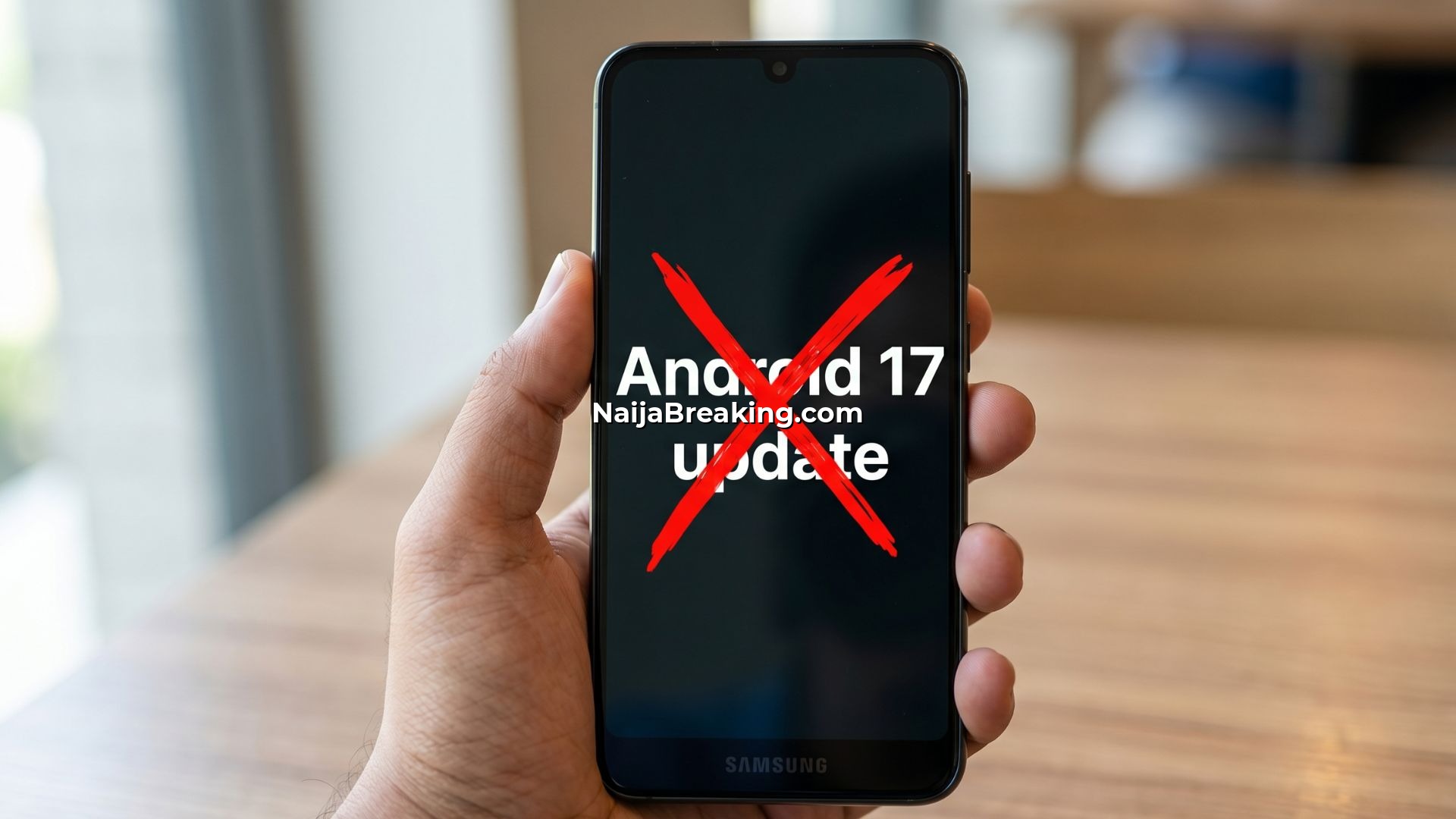
The highly anticipated Samsung phones Android 17 update is on the horizon, and it’s becoming increasingly clear that not all Samsung Galaxy devices will receive this major operating system upgrade. Many Samsung phones will be left behind as Google prepares to release Android 17, with Samsung following suit with its custom One UI 9 interface. For Nigerian users and global Samsung customers, understanding which Samsung phones Android 17 update will support has become a critical consideration when evaluating device longevity and technology investments. The question of whether your Samsung phone will receive the Android 17 update is no longer theoretical—it’s a practical concern affecting millions of device owners worldwide.
Android 17 is expected to arrive in June 2026, marking another milestone in Google’s rapid annual release cycle. Samsung, as the world’s largest Android smartphone manufacturer, will inevitably customize Google’s base Android 17 with its proprietary One UI 9 layer, bringing Samsung’s signature features, optimizations, and user interface enhancements to compatible devices. However, Samsung’s update policy has consistently drawn firm boundaries around which devices qualify for these major version upgrades. The Samsung phones Android 17 update eligibility criteria depend on several factors, including the device’s launch date, its initial Android version, and Samsung’s strategic decisions about support windows for various product categories.
Understanding Samsung’s Update Policy and the Android 17 Timeline
Samsung’s approach to software updates represents one of the technology industry’s most complex and sometimes confusing frameworks. The company has progressively extended its update commitments over the past several years, but Samsung phones Android 17 update support will still exclude massive swaths of the global installed base. This situation creates genuine frustration among consumers who invested substantial sums in devices that, from a hardware perspective, would be perfectly capable of running Android 17 smoothly and securely.
The evolution of Samsung’s update policy tells an important story about how the company has had to balance various competing interests: the desire to differentiate current flagship models, the need to maintain security across millions of deployed devices, pressure from shareholders to encourage device upgrades, and growing consumer expectations for longer software support windows. When Samsung phones Android 17 update decisions were being finalized at the company’s headquarters in South Korea, executives had to weigh these considerations carefully. Prior to 2020, many Galaxy devices received only two major Android updates before entering a maintenance-only phase. By 2020, Samsung announced it would extend support for some devices, and by 2023-2024, the company formalized its commitment to providing three to four years of major version updates for various device categories.
However, Samsung phones Android 17 update support will not universally extend to all currently active devices. The cutoff points reveal a pattern: devices launched before a certain threshold—typically 2022 for many S-series phones and even earlier for budget and mid-range models—will not qualify for the Android 17 upgrade. This creates a situation where millions of perfectly functional devices, some only four to five years old, will stagnate on older Android versions, potentially missing important security patches, new features, and performance optimizations that Android 17 will introduce.
Which Samsung Galaxy Phones Won’t Receive the Android 17 Update
The roster of Samsung phones Android 17 update will exclude is extensive and includes many models that remain widely used across Nigeria, Africa, and developing markets globally. Understanding which specific devices fall into this category helps users make informed decisions about whether to upgrade, invest in extended protection solutions, or simply accept the limitations of their current device.
The Samsung Galaxy S22 series, despite being released in early 2022, represents one of the most significant exclusions from the Samsung phones Android 17 update eligibility list. This is particularly notable because the S22, S22+, and S22 Ultra are flagship devices that cost between $800 and $1,200 at launch, yet Samsung has determined that they will not receive the major jump from Android 12 (at launch) through Android 13, 14, 15, and 16, but will stop before reaching Android 17. For Nigerian consumers who purchased these premium devices through official channels or authorized retailers, this represents a significant limitation on the device’s useful lifespan, despite the premium price paid.
The Samsung Galaxy A-series budget and mid-range phones comprise an enormous portion of devices in active use worldwide, particularly in price-sensitive markets like Nigeria. The Galaxy A33, A53, and A73 models—all extremely popular in Nigeria due to their reasonable pricing and respectable specifications—will not receive the Android 17 update according to current Samsung phones Android 17 update compatibility lists. These devices launched in 2022 but will see their major update cycle end at Android 13 or Android 14, meaning users will be stuck on increasingly outdated software for the remainder of the devices’ useful lives.
Samsung’s premium foldable devices, the Galaxy Z Fold 4 and Galaxy Z Flip 4, also fall into the excluded category for the Samsung phones Android 17 update. These cutting-edge devices, which cost upward of $1,500 for the Z Fold 4, were launched in 2022 and will not qualify for Android 17 support despite their advanced hardware capabilities and premium positioning. This exclusion has generated particular frustration among early foldable adopters who invested heavily in what they expected would be forward-compatible devices.
The Samsung M-series phones, which have achieved tremendous popularity across Africa and Nigeria specifically due to their exceptional value proposition, will also be excluded from Samsung phones Android 17 update support. Models like the Galaxy M33, M53, and M73 sold in enormous numbers to budget-conscious consumers across the African continent, yet these devices will not receive major version updates beyond a certain threshold.
The Specific Impact on Nigerian Samsung Users
Nigeria represents one of Africa’s largest and most dynamic smartphone markets, with a population exceeding 200 million people and steadily increasing mobile phone adoption rates. The implications of Samsung phones Android 17 update exclusions hit particularly hard in the Nigerian market for several interconnected reasons that deserve careful examination.
First, the average Nigerian smartphone user tends to retain devices for considerably longer than consumers in developed markets like the United States or Western Europe. Economic factors drive this behavior—a new flagship smartphone can cost as much as 300,000 to 500,000 Nigerian Naira, representing a significant investment that consumers expect to remain functional and relatively current for four to five years or more. When Samsung phones Android 17 update policies exclude devices only four years into their lifecycle, it creates a situation where millions of Nigerians suddenly face devices that are technologically stagnating while they still function adequately from a hardware perspective.
Security represents another critical concern, particularly in Nigeria where online fraud, mobile banking security, and digital transaction safety have become paramount. Many Nigerians use their smartphones for financial transactions, accessing online banking platforms, mobile money services like Paystack and Flutterwave, and other security-sensitive activities. When Samsung phones Android 17 update support ends for a device, the phone typically continues receiving security patches for a limited additional period, but the exclusion from major version upgrades means users miss out on the latest security architecture improvements, enhanced encryption protocols, and protection mechanisms that Android 17 will inevitably introduce. This creates a widening security gap between newer devices receiving regular updates and older Samsung phones lacking Android 17 update access.
Third, the software fragmentation created by Samsung phones Android 17 update exclusions affects the entire Nigerian technology ecosystem. Developers building applications for the Nigerian market must still support older Android versions for extended periods, slowing innovation and creating compatibility challenges. E-commerce platforms, banking applications, and government digital services must maintain support for older devices and outdated Android versions, increasing development costs and complexity.
What Happens After Android 16: The Android 17 Gap and Beyond
For users whose Samsung phones Android 17 update eligibility falls short, the reality of living with a device that stops receiving major version updates creates both immediate and long-term consequences worth understanding in detail. After Samsung and its users collectively reach the point where Samsung phones Android 17 update support ends, excluded devices will remain frozen on their final Android version—potentially Android 15 or Android 16 depending on the specific device—while the broader Android ecosystem continues evolving.
The transition from One UI 8.5 (based on Android 16) to One UI 9 (based on Android 17) will be particularly dramatic for users stuck on older devices, as each generation of Android and Samsung’s One UI typically introduces substantial improvements in performance, battery efficiency, user interface refinement, and feature capability. Devices unable to bridge this gap will experience an increasing divergence from the contemporary Android experience, making them feel progressively more outdated despite continued hardware functionality.
Security patch support typically continues for an additional period after major version updates cease, but the timeline varies significantly and is considerably shorter than the major update window. Once security patch support ends—which for many Samsung phones Android 17 update-excluded devices could occur within two to three years—the devices become genuinely vulnerable to emerging security threats. New zero-day exploits, malware variants, and attack vectors will emerge that devices on old Android versions cannot address.
The practical consequence for Nigerian users and others in developing markets is that devices without Samsung phones Android 17 update access face a defined endpoint, after which they become increasingly unsuitable for tasks requiring security, such as online banking, e-commerce transactions, and accessing sensitive accounts. This forced obsolescence—driven not by hardware degradation but by arbitrary software support cutoffs—represents a particular burden for price-sensitive consumers in Nigeria who cannot readily afford upgrade cycles.
The Broader Industry Context and Device Upgrade Cycles
Samsung’s Samsung phones Android 17 update decisions must be understood within the broader context of how the global technology industry approaches device support lifecycles and the economic incentives that drive those decisions. The smartphone industry generates substantial revenue from device sales, and extending software support for older devices theoretically reduces the incentive for users to upgrade to newer models. From Samsung’s perspective, limiting Samsung phones Android 17 update eligibility to more recent devices encourages users still operating older phones to consider upgrades, driving sales and market share.
However, this approach creates significant tension with growing consumer advocacy and regulatory pressure for more sustainable technology practices. Environmental considerations, economic justice concerns, and technology equity advocates increasingly argue that manufacturers should extend software support windows substantially to reduce electronic waste and ensure that device ownership remains economically rational for users in developing markets. The Samsung phones Android 17 update exclusion list represents an area where these competing pressures are manifestly visible.
Apple, Samsung’s primary competitor in the premium smartphone market, provides iOS updates for devices spanning a 5-6 year window from launch. Android 17 represents an opportunity for Samsung to reconsider its update policies and potentially extend Samsung phones Android 17 update eligibility more broadly than it has previously, signaling a shift toward greater device longevity. However, current indications suggest Samsung is unlikely to dramatically expand Samsung phones Android 17 update support compared to its Android 16 policies.
Strategies for Affected Samsung Device Owners
For Nigerian users and others whose devices will not receive the Samsung phones Android 17 update, several strategies can help mitigate the implications of technological stagnation. First, users can prioritize security by enabling automatic security updates when available, using reputable security applications, and maintaining vigilance about suspicious applications or downloads. While not a substitute for Android version updates, security patch applications can provide additional protection against emerging threats.
Second, users can consider purchasing a newer Samsung device sooner than they might otherwise have planned, particularly as Samsung’s flagship and mid-range models that will receive Android 17 updates begin arriving in Nigerian markets. The investment in a device that will receive updates for another three to four years provides substantially better long-term value than attempting to extend the useful life of a Samsung phones Android 17 update-excluded device.
Third, users might explore alternative devices from manufacturers with more generous update policies, though Samsung’s market position in Nigeria makes this a less attractive option for many consumers accustomed to Samsung’s ecosystem, services, and reliability reputation.
Conclusion: Navigating the Samsung Phones Android 17 Update Landscape
The Samsung phones Android 17 update eligibility decisions demonstrate how update policies profoundly affect device ownership economics, particularly in price-sensitive markets like Nigeria. While Samsung has improved its update support commitments compared to several years ago, the exclusion of millions of still-functional devices from Samsung phones Android 17 update access represents a significant limitation on device longevity and technological progress.
For Nigerian consumers evaluating their technology investments, understanding which devices qualify for the Samsung phones Android 17 update and planning accordingly represents an important aspect of responsible technology purchasing. As Android 17 approaches and Samsung’s update roadmap becomes clearer, users should verify their specific device’s eligibility and make informed decisions about whether to upgrade or prepare for technological stagnation.
The Samsung phones Android 17 update issue reflects broader industry-wide challenges regarding device sustainability, technological equity, and the tension between manufacturer incentives and consumer interests. As consumers increasingly demand accountability from technology companies regarding software support and device longevity, manufacturers like Samsung will face growing pressure to extend Samsung phones Android 17 update eligibility and provide more generous support windows across their product portfolios.