Messi’s Iceland Masterclass: What Argentina’s World Cup Preparation Strategy Reveals About Tournament Readiness
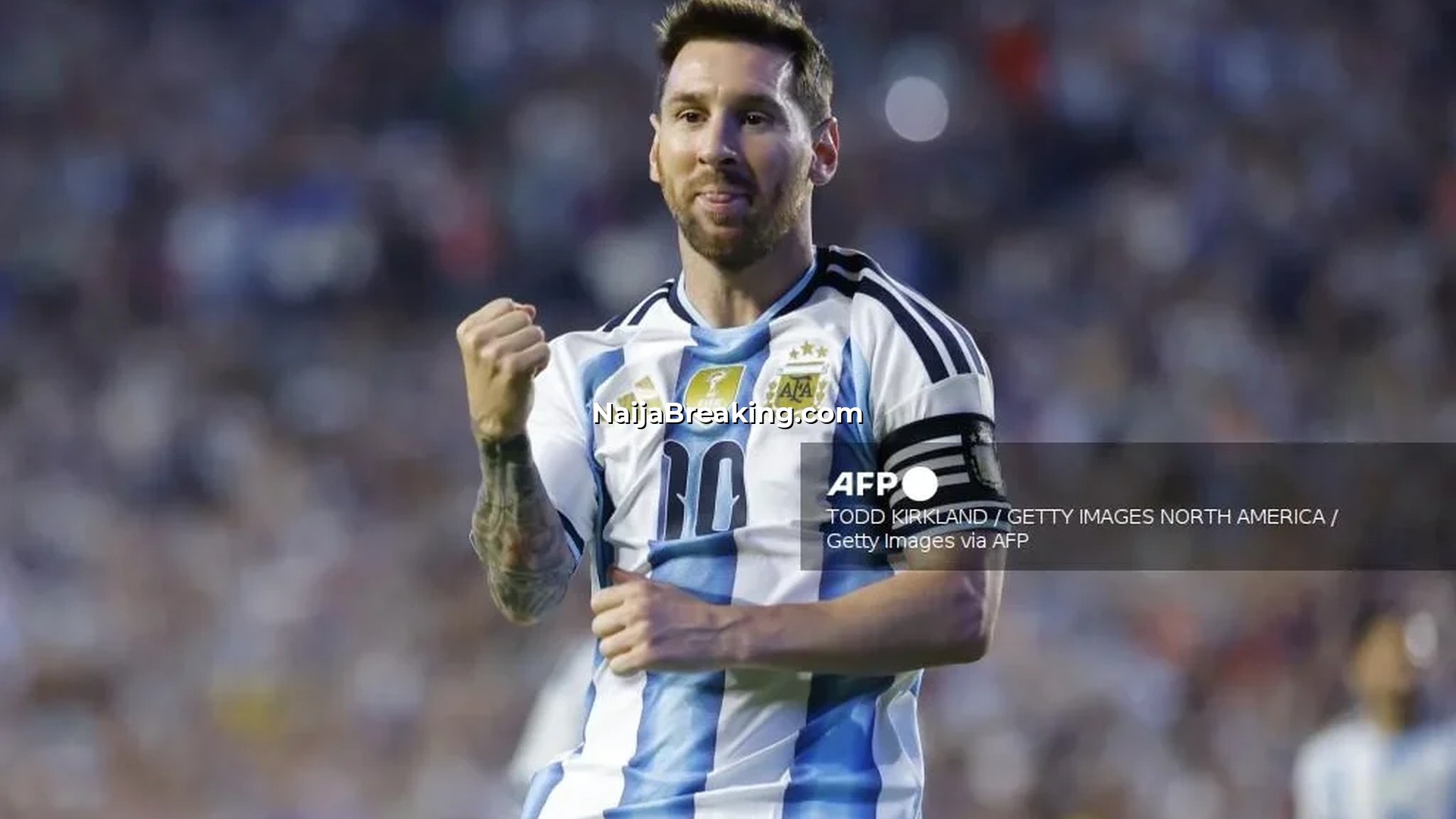
Lionel Messi’s swift return to competitive action in Argentina World Cup preparation campaign sends a powerful message about structured recovery protocols and squad depth management—lessons that should resonate deeply with Nigerian football administrators wrestling with similar challenges ahead of future continental and international tournaments. When the eight-time Ballon d’Or winner stepped onto the pitch against Iceland on June 9, 2026, in Auburn, Alabama, he wasn’t just scoring a goal; he was completing a carefully orchestrated fitness protocol that Argentina’s coach Lionel Scaloni had meticulously planned to ensure the defending champions arrive at their tournament with their star player operating at peak performance rather than risk. According to reporting from multiple sports journalism sources, the 3-0 victory over Iceland represented far more than a comfortable warm-up—it was a dress rehearsal for a team intent on proving that experience, tactical discipline, and intelligent player management could overcome the complacency that often accompanies defending a world title. For Nigerian sports stakeholders, watching how Argentina handles injury management, squad rotation, and psychological confidence-building in tournament preparation offers a masterclass in how elite football nations operate versus how Nigeria’s Super Eagles and domestic clubs have historically stumbled.
The significance of Argentina’s Argentina World Cup preparation strategy extends beyond individual match results or player performances. It represents a comprehensive framework that incorporates medical science, tactical flexibility, psychological conditioning, and long-term planning—elements that many developing football nations, including Nigeria, have struggled to implement consistently. When Messi returned against Iceland, it wasn’t a desperate gamble or a decision made under pressure; it was the culmination of weeks of precise rehabilitation, regular assessments by world-class medical staff, and confidence-building exercises designed to ensure the player felt physically and mentally ready for competitive action. This methodical approach stands in stark contrast to the reactive decision-making that has characterized Nigerian football administration for decades, where injury recovery timelines are often compressed, players are rushed back into action prematurely, and medical protocols remain inconsistent across clubs and national team setups.
Background: Understanding Argentina’s Tournament Preparation Philosophy
Argentina’s defensive World Cup campaign in 2022 established the nation as a template for how a squad can overcome odds through cohesion, disciplined football, and the kind of squad management that treats every player—not just superstars—as essential to tournament success. When they defeated France on penalties in Qatar, the narrative wasn’t simply about Messi finally claiming his elusive World Cup trophy; it was about a team that had been systematically built over years, with coach Lionel Scaloni carefully balancing experienced heads like Ángel Di María and Gonzalo Montiel with emerging talents like Alejandro Garnacho and Julián Álvarez. This continuity matters enormously when understanding why Argentina approaches 2026 differently than Nigeria approaches its own tournaments.
The foundation of Argentina’s success rests on a coaching philosophy that emphasizes consistency in selection, clear communication about playing philosophy, and respect for player development timelines. Scaloni has maintained his position since 2018, providing an unprecedented level of stability that has allowed him to understand each player’s strengths, weaknesses, psychological triggers, and physical capabilities at the deepest level. This institutional knowledge is invaluable when preparing for tournaments, as the coach understands not just what players can do in ideal circumstances, but how they perform under pressure, how they respond to criticism, and what tactical adjustments might bring out their best performances when it matters most. The Argentina World Cup preparation process therefore becomes not just about physical fitness or tactical rehearsal, but about building psychological resilience and collective confidence across an entire squad.
In contrast, Nigeria’s football administration has cycled through seven different coaches in the past decade, each bringing different philosophies, different trusted players, and different strategic frameworks—a reality that makes the kind of systematic development that Argentina enjoys virtually impossible. When a new coach arrives in Nigeria, the first months are consumed with establishing his preferred formations, identifying his trusted players, and implementing his vision. By the time any coherent team identity emerges, injuries occur, club commitments conflict with national team assignments, and the carefully constructed plans begin to unravel. This constant instability means that Nigerian players never develop the deep understanding with their coaches that Argentine players enjoy, and successive administrations never have the opportunity to build the kind of institutional memory that allows for intelligent tournament preparation.
The Injury Management Lesson: Argentina’s Medical Approach
When analyzing Argentina’s Argentina World Cup preparation strategy through the lens of Messi’s injury return, the medical management philosophy becomes immediately apparent. Argentina employs some of the world’s finest sports medicine professionals, nutritionists, and fitness specialists who work in concert with club medical teams to monitor player recovery, recommend training loads, and coordinate rehabilitation protocols. These aren’t merely people who treat injuries after they occur; they are proactive professionals who study training data, monitor fatigue levels, and make evidence-based recommendations about when players should rest versus when they can be pushed harder.
For Nigerian football clubs and the national team setup, this represents a significant gap. Many Super Eagles players are managed by club medical teams that operate with vastly different standards and philosophies. A player might be returning from injury at his European club under one set of protocols, only to arrive at the national team training camp where completely different medical philosophies and assessment standards apply. There is no centralized system for monitoring long-term player health, no comprehensive database of injury histories, and no consistent protocols for rehabilitation. This inconsistency has contributed to recurrent injuries among Nigerian players, premature ends to careers, and the loss of key players at critical tournament moments.
The lesson from Argentina’s approach is that Argentina World Cup preparation must include investment in world-class medical infrastructure, recruitment of elite sports medicine professionals, and establishment of clear protocols that all clubs must follow when dealing with national team players. Nigeria’s football administration should consider establishing a National Player Monitoring System that tracks injury history, rehabilitation timelines, and physical condition across all Super Eagles players, regardless of which club they play for. This would allow coaching staff and medical teams to make informed decisions about player availability, recovery timelines, and appropriate training loads leading into tournaments.
Squad Depth and Rotation: Building Confidence Through Strategic Selection
Argentina’s victory over Iceland wasn’t notable primarily for the scoreline, but for the opportunity it provided to assess squad depth and give playing time to players who might not feature regularly for their clubs. This is a critical component of intelligent Argentina World Cup preparation strategy that often gets overlooked by football administrations that view warm-up matches purely as final tests before competition begins. For Scaloni, each fixture in the buildup to the World Cup served multiple purposes: assessing tactical approaches, evaluating combinations between different players, monitoring fitness levels, and—crucially—building confidence across the entire squad.
When a player knows he will receive meaningful playing time in preparation matches, his preparation becomes more focused and purposeful. He understands that he might be called upon during the tournament if injuries occur or if tactical situations demand a particular skill set. This psychology of inclusion, where every squad member feels valued and capable of contributing, creates a more cohesive team environment. Nigerian national teams have often suffered from the opposite problem: players selected to the squad but given minimal playing time in friendlies, leading to resentment, disengagement, and a fragmented team environment. When players feel overlooked or undervalued despite being selected, their commitment to the collective cause diminishes, and internal conflicts begin to emerge.
Argentina’s rotation strategy in preparation matches also serves a tactical learning function. Different defensive partnerships can be tested, attacking combinations can be rehearsed, and the coaching staff can gather data about which players have the best chemistry with one another. For Nigerian football administrators, this suggests that warm-up matches should be treated as serious opportunities for tactical experimentation and squad building, not as perfunctory exercises to be completed before “real” competition begins. The quality of preparation directly correlates to performance during the actual tournament, and Argentina understands this fundamental principle deeply.
Psychological Preparation: The Intangible Element of Tournament Readiness
Perhaps the most underrated aspect of Argentina’s Argentina World Cup preparation approach concerns psychological and mental conditioning. Defending World Cup champions face unique psychological pressures. There is the weight of expectation, the challenge of avoiding complacency, the knowledge that every opponent will be motivated to prove themselves against the defending titleholders, and the internal pressure to prove that the previous success wasn’t a one-off achievement but part of a sustained excellence. Scaloni’s approach to managing these psychological pressures has been sophisticated and evidence-based.
The coach and his support staff work with sports psychologists to monitor player mental states, identify sources of stress, and develop coping mechanisms. They understand that psychological resilience cannot be developed quickly in the weeks before a tournament; it must be built systematically over months of careful management. By bringing players back to competition in controlled environments—such as the Iceland match in a neutral venue—the coaching staff can assess how players respond to pressure, how they handle being back in a competitive environment, and how the team functions as a psychological unit. These are the invisible factors that separate good teams from great ones, and they explain why Argentina has maintained such consistent excellence across different tournament cycles.
Nigeria’s national teams have historically struggled with psychological preparation, particularly in high-pressure situations where mental resilience becomes the deciding factor. The Super Eagles have been eliminated from tournaments due to lack of composure, poor decision-making under pressure, and fragile team unity. Without consistent coaching and without the kind of long-term psychological conditioning that Argentina provides, Nigerian players enter tournaments at a psychological disadvantage. Building psychological resilience requires years of consistent messaging, supportive environments, and careful management of player expectations—all things that are difficult to achieve when administrative instability means that coaching philosophies change every few years.
Strategic Communication and Media Management
Another critical element of Argentina’s Argentina World Cup preparation strategy involves strategic communication with the media and management of public narratives around team performance and player status. The Argentine Football Association and coaching staff maintain clear messages about team direction, player roles, and tournament objectives. This consistency in communication creates clarity for players, reduces confusion about selection decisions, and manages external pressure effectively. When the media and public understand the vision that the coaching staff is pursuing, they become less inclined to second-guess decisions or create unnecessary distractions.
In Nigeria, communication from football administrators is often inconsistent, contradictory, or absent entirely. Players don’t understand why certain decisions are made, the media fills information vacuums with speculation and criticism, and internal team dynamics suffer as a result. A more professional approach to communication—one that draws from the Argentine model—would involve regular updates from coaching staff about team progress, clear explanations of selection decisions, and consistent messaging about tournament objectives. This transparency would build trust between administration, coaching staff, and players, creating a more unified team environment.
What Nigeria Must Learn: Implementing Argentina’s Lessons
The lessons from Argentina’s Argentina World Cup preparation strategy for Nigeria are multifaceted and actionable. First, Nigeria’s Football Federation must commit to coaching stability, providing multi-year contracts that give coaches the security to develop long-term plans rather than focusing on immediate results. Second, investment in medical infrastructure and sports science must become a priority, with the establishment of centralized monitoring systems for all national team players. Third, the Nigeria Football Federation should establish clear protocols for squad rotation and player development that ensure every selected player receives meaningful preparation opportunities. Fourth, psychological support must be professionalized and institutionalized as a core component of tournament preparation, not as an afterthought.
Additionally, Nigerian football administrators should study the strategic communication approach used by Argentina, implementing transparent and consistent messaging about team direction. Finally, preparation matches must be treated seriously as opportunities for tactical learning and squad building, not as warm-up games where results are irrelevant. These systematic changes would not transform Nigerian football overnight, but they would create the foundation for more consistent tournament performance and more professional team management across all competition levels.
Conclusion: The Path Forward for Nigerian Football
Argentina’s Argentina World Cup preparation methodology represents a comprehensive approach to tournament readiness that integrates medical science, tactical planning, psychological conditioning, and administrative consistency. Messi’s return against Iceland was merely the visible manifestation of months of careful planning, professional management, and systematic preparation. For Nigeria, the challenge ahead involves adopting similar approaches while navigating the unique constraints of developing football administration and the resource limitations that African nations often face.
The good news is that many of Argentina’s lessons don’t require unlimited financial resources; they require commitment to systematic thinking, investment in quality administration, and patience with long-term planning. By studying how Argentina prepares for major tournaments and implementing lessons adapted to Nigeria’s context, the Super Eagles can gradually build the institutional framework necessary for consistent tournament success. This is the work that must happen in the years between tournaments, not in the weeks immediately before competition begins. Until Nigeria’s football administration embraces this philosophy of long-term systematic development, the gap between Nigeria and elite football nations will continue to widen.