
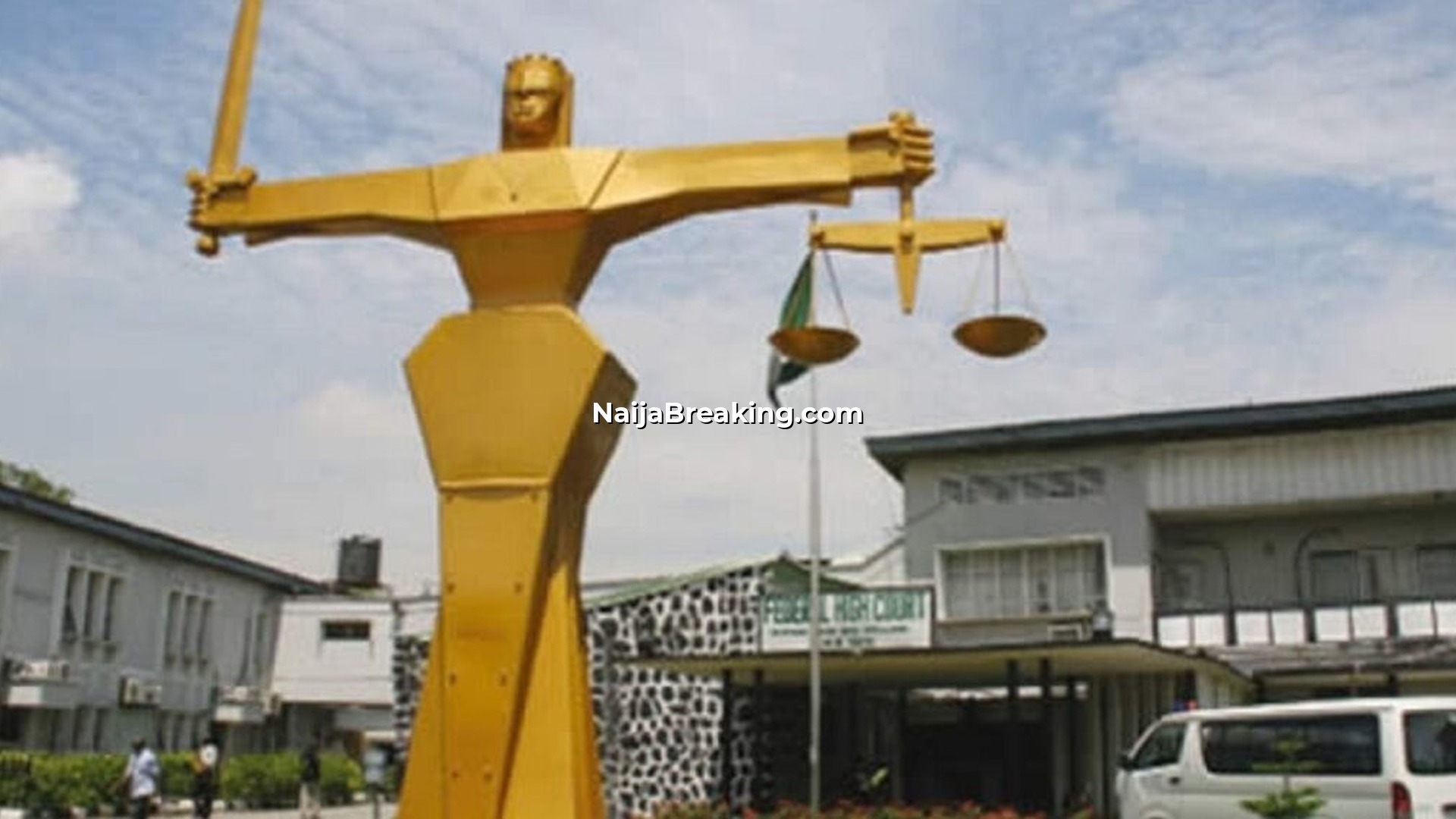
Federal High Court Nullifies INEC’s 2027 Election Primary Deadlines
In a landmark decision that could reshape Nigeria’s electoral landscape, the Federal High Court in Abuja has nullified the 2027 election timeline issued by the Independent National Electoral Commission (INEC), marking a significant victory for the Youth Party and raising critical questions about electoral governance in Africa’s largest democracy. The INEC 2027 election timeline nullified ruling, delivered by Justice Mohammed Umar, has effectively stripped INEC of its authority to impose restrictive deadlines on political parties for the conduct of primaries and pre-election activities, contrary to what many observers believed was settled law under Nigeria’s Electoral Act 2022. This judgment represents a watershed moment in Nigeria’s electoral administration, as it fundamentally challenges the commission’s regulatory powers and raises substantial uncertainty about the timing and coordination of activities leading up to the crucial 2027 presidential and parliamentary elections. The implications of this court decision are far-reaching, affecting not only the operational framework of political parties across Nigeria but also the broader institutional credibility of INEC itself, which has been entrusted with organising democratic processes for over 220 million Nigerians. Understanding this judgment requires examining the historical context of INEC’s authority, the specific contentions raised by the Youth Party, and what this precedent means for Nigeria’s democratic trajectory as the nation approaches one of its most consequential electoral contests.
Background
The relationship between INEC and Nigeria’s political parties has historically been characterised by tension over regulatory authority and the scope of discretionary powers granted to the electoral commission. Since the return to democratic governance in 1999, INEC has evolved from a relatively weak institution to one wielding considerable control over electoral processes, including the establishment of timetables, guidelines, and procedural requirements for all electoral activities. The Independent National Electoral Commission was established under the 1999 Constitution of the Federal Republic of Nigeria and subsequently strengthened through various legislative amendments, including the Electoral Act 2010 and its subsequent reforms. However, this gradual concentration of power in INEC’s hands has not been without controversy, particularly among smaller political parties that view the commission’s directives as overly prescriptive and occasionally disadvantageous to their organisational capabilities. The Youth Party, Nigeria’s relatively young but increasingly vocal political organisation, began questioning INEC’s authority following the 2023 general elections, during which various timing disputes emerged between the commission and political parties. In preparing for the 2027 elections, INEC issued a comprehensive Revised Timetable and Schedule of Activities designed to create predictability and orderliness in the electoral process across Nigeria’s 36 states and Federal Capital Territory, covering everything from party primary elections to final candidate nomination procedures. This timetable, while appreciated by larger parties with sophisticated administrative structures, created significant compliance challenges for emerging parties with limited resources and organisational capacity. The Youth Party’s decision to challenge these timeframes in court reflected growing frustration among Nigeria’s smaller political movements about what they perceived as institutional discrimination embedded within INEC’s electoral management framework.
Key Details
Justice Mohammed Umar’s judgment, as reported by Nairametrics, contained several critical findings that fundamentally altered INEC’s regulatory authority. The court determined that the Youth Party had successfully demonstrated that INEC lacked the statutory power to fix or prescribe the timeframe within which political parties must conduct their primaries for the nomination of candidates for the 2027 general elections. Justice Umar’s reasoning centred on Section 32 of the Electoral Act 2022, which prescribes specific periods for candidate nomination and withdrawal procedures that, the court found, INEC had exceeded through its revised timetable. The judgment specifically declared that INEC cannot lawfully abridge or limit the statutory periods provided under the Electoral Act in relation to the submission of personal particulars of candidates, withdrawal and substitution of candidates, and other pre-election activities that are the constitutional responsibility of political parties themselves. Most significantly, the court set aside portions of INEC’s Revised Timetable and Schedule of Activities for the 2027 General Elections that imposed timelines inconsistent with the Electoral Act 2022, effectively voiding months of planning and coordination work conducted by the electoral commission. Justice Umar also held that, having regard to Section 32 of the Electoral Act, INEC does not possess the statutory power to publish the final list of candidates for the 2027 general election before the 60-day minimum period prescribed by law, a position that directly contradicted INEC’s published timetable. The court granted orders nullifying the timeframes imposed by INEC in its revised schedule for the conduct of primary elections by political parties, as well as the timelines for the submission of personal particulars of candidates and campaigning for the elections, all of which were found to be inconsistent with the Electoral Act’s provisions. This judgment has left INEC in the unusual position of needing to either appeal the decision or substantially revise its operational framework to align with the court’s interpretation of electoral law.
Impact and Analysis
The nullification of INEC’s 2027 election timeline represents a significant institutional setback for Nigeria’s electoral management body, which has spent considerable resources and institutional capital developing what it believed was a legally sound and administratively efficient electoral calendar. From a business and institutional perspective, this judgment creates substantial uncertainty for multiple stakeholders in Nigeria’s political economy, including media organisations planning election coverage, advertising agencies preparing campaign materials, security services coordinating deployment strategies, and international observers arranging their presence during key electoral moments. The Financial Times and various international observers have noted that electoral predictability is essential for maintaining investor confidence in Nigerian institutions, and this court ruling injects exactly the kind of unpredictability that market actors find unsettling. Furthermore, the judgment effectively empowers political parties—particularly smaller ones—to independently determine their primary election timelines within the broad parameters set by the Electoral Act, a decentralisation of electoral management that could either democratise party governance or create administrative chaos depending on how parties respond. According to data from the Independent National Electoral Commission’s own records, Nigeria has 18 registered political parties, ranging from the two major parties with millions of members to emerging parties with organisational bases numbering in the thousands, meaning the impact of this judgment will vary significantly across party lines. The ruling has created a situation where the larger, better-resourced parties like the All Progressives Congress (APC) and People’s Democratic Party (PDP) will have greater flexibility in managing their primaries, while smaller parties may struggle to effectively coordinate activities across Nigeria’s complex electoral landscape. Economically, this decision could impose costs on INEC as it revisits logistical planning, potentially reducing efficiency gains that predictable scheduling would have provided.
Expert Perspectives
Electoral law experts and political commentators in Nigeria have offered divergent assessments of Justice Umar’s judgment, with opinions largely splitting between those who view it as a necessary corrective to INEC overreach and those who regard it as potentially undermining electoral management capacity. Professor Jibrin Ibrahim of the Centre for Democracy and Development (CDD), one of Nigeria’s foremost election observation organisations, has noted in various interviews that INEC’s regulatory expansionism has been a long-standing concern among civil society organisations monitoring Nigeria’s democratic progress. Constitutional law scholars have pointed out that the judgment actually restores what they argue was the original constitutional intent: that political parties should have autonomy over their internal processes, with INEC’s role confined to managing the general election itself rather than prescribing the detailed mechanics of candidate selection. However, election management professionals within INEC and other African electoral commissions have expressed concern that excessive flexibility in primary election timelines could create coordination problems, particularly in a country as geographically and administratively complex as Nigeria, where getting 18 political parties to simultaneously conduct credible primaries presents extraordinary logistical challenges. Dr. Mahmood Yakubu, INEC’s Chairman, has reportedly expressed concern about the judgment’s practical implications for the commission’s ability to maintain electoral integrity and coordination across Nigeria’s 774 local government areas. The Abuja Business School and various policy research institutes have noted that while the judgment may be legally sound, its practical implementation requires robust institutional cooperation between INEC and political parties, a relationship historically marked by suspicion and disagreement. Legal practitioners specialising in electoral law have suggested that the judgment essentially requires INEC to develop new regulatory mechanisms that respect party autonomy while still enabling the commission to fulfil its statutory obligations to conduct free, fair, and credible elections.
What This Means for Nigerians
For ordinary Nigerians preparing to participate in the 2027 elections, this court ruling introduces both opportunities and uncertainties into the electoral process they will experience as voters and citizens. The immediate practical consequence is that the 2027 election calendar, which many Nigerians had begun to internalise through INEC’s months of public communications and media campaigns, now stands in flux, requiring new announcements and revised public communications as INEC and political parties work out new arrangements. This ambiguity creates challenges for small business owners involved in the electoral supply chain—printing companies producing ballot papers and materials, security firms contracted for election security, and logistics operators managing the movement of electoral materials across Nigeria’s vast territory—all of whom require certainty for financial and operational planning. Nigerian workers and civil servants assigned to election duties, including the millions of ad-hoc staff contracted by INEC to serve as polling officers, polling unit assistants, and other election personnel, will likely face delayed clarity about their deployment schedules and compensation arrangements. For students and young Nigerians particularly engaged with the Youth Party’s legal challenge, this judgment represents a validation of smaller parties’ capacity to challenge institutional power through Nigeria’s courts, potentially energising political participation among demographics historically alienated from Nigeria’s two-party dominated system. However, the judgment also creates complexity for voters trying to track campaign activities, debate schedules, and candidate announcements, as these may now occur on a more fragmented timeline determined by individual party decisions rather than INEC’s coordinated schedule. Business enterprises that had planned product launches and marketing campaigns around the election cycle now face uncertainty about optimal timing, potentially affecting their revenue projections and business strategies. The judgment essentially places greater responsibility on individual Nigerians to stay informed through multiple information channels rather than relying on INEC’s central scheduling as a reference point, a development that may disadvantage less media-engaged citizens in rural communities and peripheral urban areas.
Conclusion and Outlook
Justice Mohammed Umar’s nullification of INEC’s 2027 election timeline represents a pivotal moment in Nigeria’s electoral history, one that will reverberate through the political system for years to come. The judgment has fundamentally repositioned the relationship between electoral administration and party governance, tilting the balance toward party autonomy and away from the centralised regulatory framework that INEC had been constructing since 1999. While legal commentators rightly praise the judgment for defending constitutional principles of party independence and limiting unbridled executive authority, the practical implications for Nigeria’s electoral integrity remain uncertain and contested. INEC will likely appeal this decision or seek legislative clarification of its regulatory powers, meaning that the final framework governing 2027 electoral activities may not be settled until well into 2026 or even closer to election day. Political parties, particularly smaller ones like the Youth Party that secured this landmark victory, must now rise to the occasion and demonstrate that they can effectively manage primary elections autonomously while still maintaining the standards of transparency and fairness that Nigerian voters rightfully expect. The coming months will test whether this judgment ultimately strengthens Nigerian democracy by distributing power more broadly among institutional and political actors, or whether it creates the administrative fragmentation and chaos that INEC officials have warned against. For Nigerians broadly, this development underscores both the strengths and vulnerabilities of Nigeria’s judiciary as a check on executive overreach, while also highlighting the institutional tensions that characterise Nigeria’s still-maturing democracy. As we look toward 2027, all stakeholders—INEC, political parties, civil society organisations, and voters—must work constructively to translate this court victory into improved democratic practice rather than organisational dysfunction. Share your thoughts in the comments below about how INEC should respond to this judgment and what you believe the 2027 elections should look like.


