African World Cup Teams Qualify Round of 16: Only Egypt and Morocco Advance as Eight Nations Eliminated
The 2026 FIFA World Cup has become a stark reminder of African football’s structural crisis, with only two African World Cup teams qualifying for the Round of 16 from the continent’s initial contingent of ten participants. This dramatic collapse, where eight African teams were eliminated in the group and Round of 32 stages, raises uncomfortable questions about resource allocation, coaching infrastructure, and the political will that underpins continental success in global sporting competitions. The fact that only two African World Cup teams qualify for this crucial knockout stage represents one of the most disappointing performances by the continent in modern tournament history. For Nigeria specifically, the near-total absence of African representation in the latter stages of this World Cup underscores a broader malaise affecting West African football that extends far beyond the pitch into governance, corruption, and misplaced priorities at the highest levels of sports administration. The narrative of how African World Cup teams qualify Round of 16 has become increasingly tragic, with each elimination highlighting systemic failures that have accumulated over decades. The disappointing showing where only Egyptian and Moroccan African World Cup teams qualify for advanced rounds encapsulates a story that has disappointed the 1.3 billion people across the continent who look to football as one of the few remaining symbols of pan-African pride and achievement.
What makes this outcome particularly significant for Nigerians and West African football enthusiasts is that the world’s most populous African nation—a country that has produced world-class talents like Jay-Jay Okocha, Kanu Nwankwo, and Ahmed Musa—failed to even qualify for the tournament. While Egypt and Morocco salvaged continental honour with Egypt’s dramatic penalty shootout victory over Australia and Morocco’s earlier triumph against the Netherlands, the wider picture reveals a football ecosystem in free fall across Africa. Out of nine African nations that reached the Round of 32 stage—with Algeria having been eliminated at the group stage—only two managed to progress, demonstrating that African World Cup teams qualify rarely for advancement beyond initial competition phases. This 22 per cent success rate is not merely a statistical disappointment; it is a political failure that reflects decades of underfunding, administrative corruption within football federations, and the brain drain of African talent to European leagues, where young players develop within superior infrastructure but rarely return to strengthen their national teams during critical tournament windows. The question of which African World Cup teams qualify becomes increasingly urgent as the continent grapples with its competitive irrelevance on the world stage.
Background: African Football’s Structural Decline and Nigeria’s Painful Irrelevance
To understand how African football arrived at this moment of continental humiliation, one must look backward at the decisions made—and unmade—across the past two decades by football administrators, national governments, and sports ministers who treated the beautiful game as a secondary concern compared to oil revenue management and political survival. Nigeria’s footballing pedigree is substantial: the Super Eagles won the Africa Cup of Nations three times (1980, 1994, 2013) and reached the World Cup quarterfinals in 1994 under Ernst Happel. However, the systematic decay began when the Nigerian Football Federation (NFF) descended into internal corruption, mismanagement of funds, and the abandonment of grassroots development programmes that once formed the backbone of the nation’s football dominance.
The story of how African World Cup teams qualify for major tournaments cannot be separated from the governance failures that plague sports administration across the continent. When Nigeria failed to qualify for the 2026 World Cup—a competition that will see only two African World Cup teams qualify for the Round of 16 from the continent—it represented the culmination of years of neglect. The Super Eagles, once feared across the world, now struggle to compete against nations with half Nigeria’s population and far fewer resources. This is not coincidental; it is the direct result of policy decisions made by government officials and football administrators who prioritised personal enrichment over institutional development. Youth academies that once produced Okocha, Obi Milutin, and Taribo West have been systematically starved of funding. Training facilities that competitors in Ghana, Cameroon, and Ivory Coast invested heavily in were left to crumble in Nigeria. The question of which African World Cup teams qualify is now asked with the assumption that Nigeria will not be among them, a reality that would have been unthinkable two decades ago.
The Complete Collapse: How Eight African Nations Were Eliminated
The 2026 World Cup Group and Round of 32 stages saw a cascade of eliminations that revealed the depth of African football’s crisis. Beyond Nigeria’s failure to even qualify, eight other African nations that did reach the tournament were knocked out before the Round of 16 could be determined. Cameroon, despite its footballing tradition and World Cup pedigree, fell at the group stage with a record that failed to inspire confidence. Senegal, the 2022 Africa Cup of Nations champions, could not translate continental success into World Cup performance. Ghana, once an African footballing powerhouse, suffered another disappointing campaign. South Africa’s absence from the tournament due to FIFA ranking failures added insult to injury, as the nation that hosted the 2010 World Cup found itself unable to even qualify. Ivory Coast, Gabon, Guinea, and Mali—nations that had harboured hopes of advancing—were all eliminated in early competition stages.
The reasons for these eliminations are manifold and interconnected. First, there is the issue of player development and retention. Many of Africa’s best talents are developed in European leagues, where the training standards and competitive intensity are unmatched. However, these players often arrive for national team duty fatigued from demanding domestic seasons, or they prioritise club commitments over international football. The lack of cohesion in national team preparation, combined with insufficient training camps and tactical work, means that African World Cup teams qualify rarely with the kind of preparation their European counterparts enjoy. Second, there is the financial disparity between African nations and their competitors from Europe, South America, and Asia. Nations like Germany, France, and Belgium can invest millions in coaching staff, medical support, and training facilities. African football federations struggle to secure even basic funding for these necessities.
Third, political interference in football administration has consistently undermined African teams. When government officials use sports ministry positions as patronage opportunities rather than professional appointments, the result is predictable: poor strategic planning, inadequate resource allocation, and managerial decisions based on politics rather than merit. Nigeria’s repeated coaching changes, often driven by political pressure rather than performance analysis, exemplify this problem. Fourth, the infrastructure gap remains vast. European academies have been developing young talent systematically for decades, creating a pipeline of technically proficient players who understand the game’s tactical nuances. African academies, where they exist, often lack the resources, expertise, and long-term commitment necessary to produce similarly prepared athletes. When African World Cup teams qualify for tournaments, they often do so with rosters that have undergone less rigorous preparation than their opponents.
Egypt and Morocco: The Continent’s Redemptive Narratives
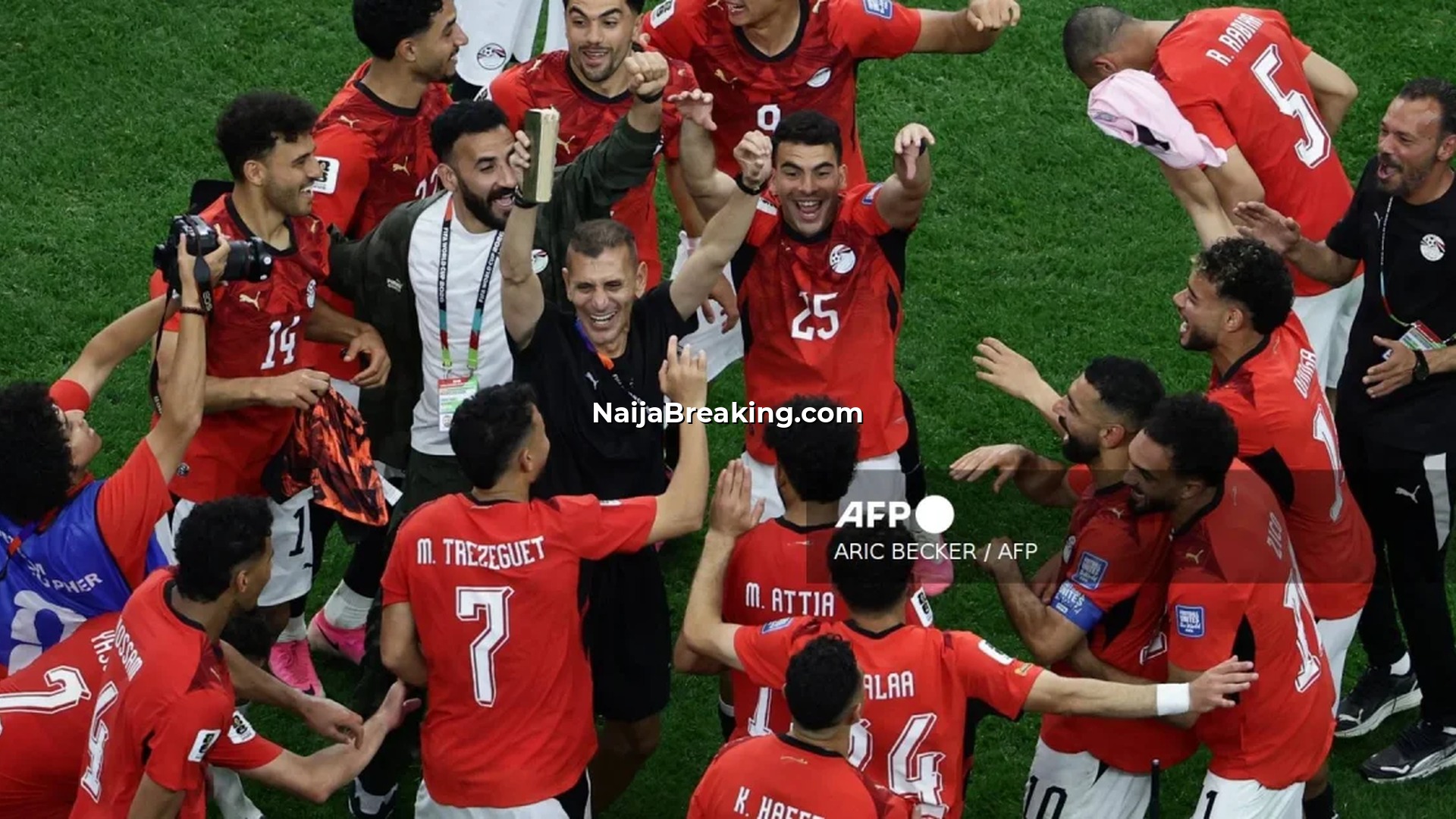
Amid the broader collapse of African football’s World Cup ambitions, Egypt and Morocco emerged as the only African World Cup teams to qualify for the Round of 16, salvaging some measure of continental pride. Egypt’s path to advancement exemplified both tactical acumen and psychological resilience. The Pharaohs, managed by a tactically astute coach who implemented a disciplined defensive system, managed to progress through a challenging group that included world powers like France and Uruguay. Their knockout victory against Australia in a penalty shootout was particularly dramatic, demonstrating the kind of mental fortitude that separates successful tournament teams from those that collapse under pressure. Egypt’s success in ensuring that at least two African World Cup teams qualify for the Round of 16 came through a combination of solid defending, efficient counter-attacking, and moments of individual brilliance from key players who plied their trade in top European leagues.
Morocco’s journey to qualification represented a different kind of success story. The Atlas Lions, having impressed at the 2022 World Cup in Qatar where they reached the semi-finals, carried that momentum forward by maintaining a core group of experienced players while integrating promising younger talent. Morocco’s African World Cup teams qualify narrative was built on consistency, with the same group of players understanding their roles within a clearly defined tactical framework. The team’s victory against the Netherlands demonstrated their capacity to compete with and defeat genuinely top-tier opposition. Manager Walid Regragui had, over time, established a coherent footballing identity and a robust selection process that prioritised reliability and understanding over sudden changes driven by political or media pressure.
These two successes are significant precisely because they contrast so starkly with the failures of other African nations. Both Egypt and Morocco have maintained more stable football administrations than their continental counterparts, appointed coaches on merit and allowed them sufficient time to implement their tactical vision, and invested in systematic player development even while managing the challenge of having their best talents spread across European leagues. The fact that only these two African World Cup teams qualify for the Round of 16 suggests that success is possible for African nations, but only when they commit to institutional stability, long-term planning, and meritocratic decision-making. This is an uncomfortable truth for nations like Nigeria that have abandoned such principles.
The Nigeria Factor: When Africa’s Biggest Football Nation Fails to Show
Nigeria’s absence from the 2026 World Cup is perhaps the most telling indictment of African football’s broader crisis. The Super Eagles have participated in every World Cup since 1994, making the continent of Africa’s largest economy missing this tournament a watershed moment. The failure to qualify, despite Nigeria’s vast population, natural talent resources, and footballing history, points to systemic problems that cannot be solved by individual coaching changes or temporary talent infusions. The Nigerian Football Federation has been marked by repeated cycles of mismanagement, with funds allocated for player development frequently disappearing into administrative overhead or outright corruption. Coaching appointments have been made on political grounds, with individuals lacking the necessary qualifications given charge of the national team. Youth development programmes, which once fed a steady stream of talented players into the professional game, have been dismantled or severely curtailed.
The irony is particularly bitter because Nigeria possesses all the ingredients for World Cup success: a population of over 200 million people from which world-class athletes can be identified, a domestic league that, while troubled, still produces valuable experience, and a diaspora of Nigerian players in top European clubs who could anchor a competitive national team if properly coordinated. Yet despite these advantages, Nigeria failed to qualify for the tournament that features only two African World Cup teams from the continent advancing to the Round of 16. This failure indicates that talent and resources alone are insufficient; institutional competence and political commitment are absolutely essential. The contrast between Nigeria’s potential and its actual performance serves as a cautionary tale for the entire continent about what happens when governance failures are allowed to accumulate unchecked.
Systemic Solutions: What African Football Needs to Recover
For African World Cup teams to qualify more consistently for advanced tournament stages, the continent must implement comprehensive reforms across multiple levels of football development. First, national football federations must insulate themselves from political interference by establishing independent governing boards with term limits, transparent financial reporting, and professional management structures. Coaches must be appointed based on demonstrated competence and given multi-year contracts that cannot be arbitrarily terminated for political reasons. Second, African nations must invest substantially in youth development academies that identify talent from grassroots level and provide systematic training, educational support, and pathways to professional football. These academies must be adequately funded and staffed by qualified coaches with international experience.
Third, African football must address the brain drain problem by creating conditions that make playing in domestic leagues and for national teams sufficiently attractive that young talent is not immediately pushed toward Europe. This requires improving domestic league quality, providing competitive salaries, and establishing clear pathways for young players to develop before moving abroad. Fourth, African nations must pool resources to establish regional training centres where national teams can prepare with world-class facilities and coaching staff, rather than each nation attempting to build these expensive infrastructure independently. Fifth, African football administrators must learn from successful continental football models, particularly that of South American nations like Argentina and Uruguay, which have maintained competitive national teams despite having smaller populations than major African nations. These countries succeed because they have stable, professional football administrations that prioritise long-term institutional development over short-term political gains.
Conclusion: The Path Forward for African World Cup Teams Qualify Ambitions
The 2026 World Cup has delivered a harsh lesson to African football: institutional decay leads to competitive failure, regardless of how much natural talent exists within a nation’s borders. Only two African World Cup teams qualifying for the Round of 16—Egypt and Morocco—represents both a nadir and a potential turning point. The continent must recognise that football success at the highest level requires systematic investment, political stability, professional administration, and long-term commitment. Nigeria, with its vast resources and talent pool, should serve as a warning to other African nations about what happens when these principles are abandoned in pursuit of political expediency. Cameroon, Ghana, Senegal, and others must learn from this moment and commit to the institutional reforms necessary to ensure that African World Cup teams qualify more frequently and advance further in future tournaments. The ambitions of 1.3 billion Africans depend on it. The narrative that only two African World Cup teams qualify for the Round of 16 can be rewritten, but only through decisive action, commitment to good governance, and a willingness to prioritise excellence over convenience. The window for this transformation is narrowing, but it remains open—if Africa’s football leaders have the courage to act.