Chieftaincy Title Controversy: Ooni Denies Baba Ijesha’s Royal Honour Claim in Major Traditional Dispute
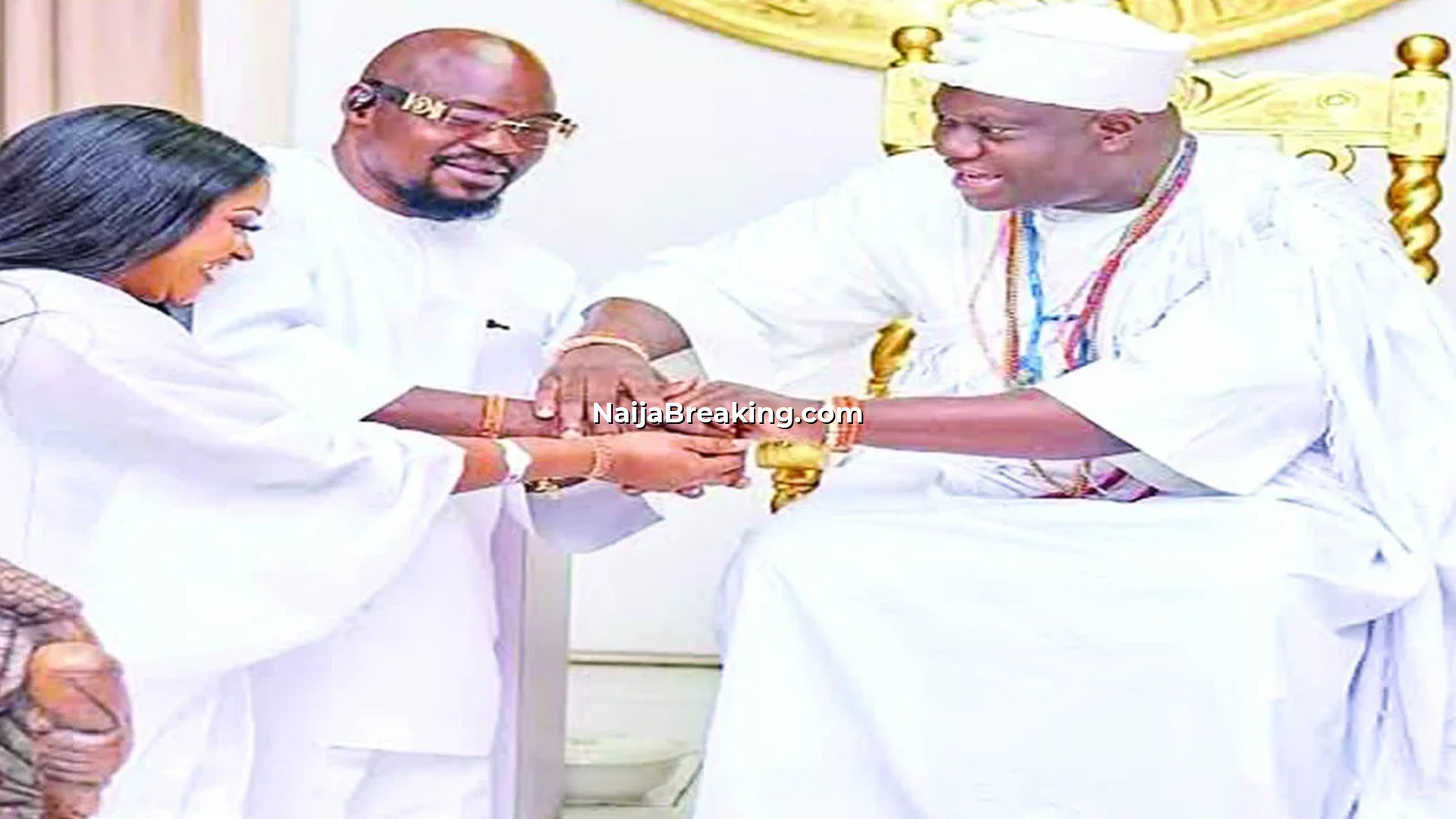
The palace of the Ooni of Ife has dismissed actor James Olarenwaju’s (popularly known as Baba Ijesha) claims that he received a chieftaincy title from the monarch, creating a public dispute that raises fundamental questions about how royal honours are conferred in Nigeria and the verification standards surrounding them. According to the Ooni’s official spokesperson, Moses Olafare, the palace can only confirm that Baba Ijesha received a vehicle as a gift following the birth of his son, but has “no awareness” of any formal chieftaincy title conferment. This denial directly contradicts the actor’s recent announcement on Facebook, where he publicly declared that Oba Adeyeye Ogunwusi had bestowed upon him the prestigious chieftaincy title “Baba Awada Konge Oduwa” in recognition of his fatherhood milestone. The chieftaincy title controversy involving Baba Ijesha highlights a growing concern in Nigerian society about the authenticity of traditional honour systems and whether celebrities are being granted legitimate royal recognitions or merely receiving material gifts marketed as cultural distinctions.
At a time when Nigeria is witnessing an explosion of social media-driven celebrity culture and rapid changes in how traditional institutions interact with public figures, this royal controversy demands serious scrutiny. The dispute between Baba Ijesha and the Ooni’s palace regarding the chieftaincy title also raises uncomfortable questions about institutional accountability: who authorises chieftaincy titles in the digital age? What verification mechanisms exist to prevent fraudulent claims? Why would a palace spokesperson publicly contradict a claim made by a celebrated actor unless there were serious concerns about legitimacy? Understanding this story requires examining not just the facts on the surface, but what the chieftaincy title denial reveals about the fragility of Nigeria’s traditional honour systems in the contemporary era. This incident involving Baba Ijesha and the Ooni demonstrates how the intersection of celebrity culture, social media, and traditional institutions can create significant credibility challenges for Nigeria’s royal establishment.
The Background of Chieftaincy Titles in Nigeria and Yoruba Culture
Chieftaincy titles in Nigeria are deeply rooted in Yoruba culture and represent one of Africa’s oldest systems of recognising service, patronage, and community contribution. For centuries, the institution of chieftaincy has been a cornerstone of Yoruba society, with its origins tracing back to pre-colonial kingdoms and empires. Traditionally, a chieftaincy title was earned through demonstrated commitment to a kingdom, significant financial patronage of community development projects, exceptional military service, or extraordinary service to the crown. In pre-colonial times, chieftaincy was a serious responsibility that came with governance duties, military obligations, and fiscal contributions to the kingdom’s treasury. These positions were not merely honorary distinctions but were genuine leadership roles that conferred real power and authority within the social hierarchy.
The structure of traditional Yoruba kingdoms was intricate and hierarchical, with multiple tiers of chieftaincy titles ranging from minor chiefs to paramount rulers. Each chieftaincy title came with specific responsibilities, ceremonial duties, and expectations of community leadership. Some chieftaincy title holders were responsible for dispute resolution, others for trade regulation, and still others for military defence. The Ooni of Ife, as one of Nigeria’s most revered monarchs, has the authority to confer certain chieftaincy titles within his domain, making the Ooni one of the most sought-after sources for traditional honour in Yoruba land. However, the legitimacy and authenticity of any chieftaincy title granted by the Ooni depend on formal documentation, ceremonial installation, and adherence to traditional protocols that have been refined over centuries.
In contemporary Nigeria, the concept of chieftaincy title has evolved significantly, though many traditional protocols remain intact. While modern chieftaincy titles may not carry the same governmental authority as their pre-colonial counterparts, they still hold substantial cultural, social, and economic value. A chieftaincy title from the Ooni is considered one of the most prestigious honours in Nigeria, capable of elevating a person’s social status dramatically. This is precisely why the dispute between Baba Ijesha and the Ooni regarding the alleged chieftaincy title is so significant—it touches on the credibility and authenticity of one of Nigeria’s most respected traditional institutions. The Ooni’s denial of granting a chieftaincy title to Baba Ijesha suggests that there are serious concerns about false claims of royal recognition circulating in Nigerian celebrity circles.
Who Is Baba Ijesha and Why Does His Claimed Chieftaincy Title Matter?
Baba Ijesha, whose real name is James Olarenwaju, is a celebrated Nigerian actor, comedian, and social commentator who has built a significant following through his satirical comedy sketches, social media presence, and film appearances. Known for his humorous commentary on Nigerian society and politics, Baba Ijesha has become one of the most recognizable faces in Nigeria’s entertainment industry. His influence extends beyond entertainment into social and political discourse, where he frequently offers commentary on contemporary issues affecting Nigerian citizens. The chieftaincy title claim that Baba Ijesha made would have been a crowning achievement in his career, symbolizing not just celebrity status but formal recognition from one of Nigeria’s most ancient and respected traditional institutions.
The announcement of the chieftaincy title came at a significant moment in Baba Ijesha’s life—the celebration of the birth of his son. In Yoruba culture, the birth of a male child is a momentous occasion often marked by celebrations and gifts from well-wishers and patrons. It is customary for prominent individuals to receive recognition and gifts during such milestones. The Ooni, being a generous and philanthropic traditional ruler, has historically been known for bestowing gifts and honours upon various public figures and celebrities who have contributed to Nigerian culture and society. However, what appears to have happened in this case is a conflation of material gift-giving (the vehicle) with the conferment of an actual chieftaincy title—a distinction that has significant implications for understanding how traditional honours function.
Baba Ijesha’s prominence in Nigerian popular culture made his claim of receiving a chieftaincy title from the Ooni particularly noteworthy. His millions of social media followers would have seen his announcement, potentially spreading the information widely and creating the impression that the Ooni had formally recognized him with a traditional honour. This widespread dissemination of information made it even more embarrassing when the palace contradicted him, as it not only questioned the veracity of Baba Ijesha’s claim but also raised doubts about the security of the Ooni’s institution and the authenticity of traditional honours more broadly. The impact of this chieftaincy title controversy extends beyond Baba Ijesha himself—it affects how Nigerians perceive the legitimacy of all chieftaincy title conferments.
The Ooni of Ife: Custodian of Yoruba Tradition and Royal Authority
The Ooni of Ife holds one of the most exalted positions in Yoruba traditional hierarchy. As the monarch of Ile-Ife, widely regarded as the spiritual home of the Yoruba people and the source of civilization in Yoruba cosmology, the Ooni is not merely a local ruler but a figure of immense cultural and spiritual significance. The current Ooni, Oba Adeyeye Ogunwusi, ascended to the throne in 2015 and has since become known for his efforts to promote Yoruba culture globally, engage with international diplomacy, and modernize traditional institutions while maintaining their essential character and protocols. The Ooni has also been known for his philanthropy and his openness to engaging with contemporary celebrities and public figures, making him an attractive source of chieftaincy title recognition for ambitious individuals.
However, the Ooni’s palace operates within established traditional protocols that cannot be circumvented or casually ignored. The conferment of a chieftaincy title by the Ooni is not a spontaneous decision made in a moment of generosity. Rather, it involves formal procedures, documentation, consultation with palace officials and kingmakers, and ceremonial installation processes that are designed to ensure the legitimacy and permanence of the honour. The chieftaincy title must be recorded in the palace archives, and the recipient must be formally presented to the community in ceremonial contexts. These protocols exist to prevent exactly the kind of confusion and controversy that arose between Baba Ijesha and the Ooni’s palace regarding the alleged chieftaincy title conferment.
The Ooni’s decision to have his spokesperson publicly deny the chieftaincy title claim made by Baba Ijesha represents a significant statement about institutional integrity. Rather than allowing a false claim of royal recognition to circulate unchallenged, the palace took the proactive step of issuing a clear correction. This response demonstrates that despite the modernization of the Ooni’s approach to governance and international engagement, the institution remains committed to maintaining the authenticity and credibility of traditional honours. The chieftaincy title issue between Baba Ijesha and the Ooni has therefore become a case study in how traditional institutions must defend their legitimacy in the digital age.
The Chieftaincy Title Denial and Questions About Verification
The palace’s statement clarifying that Baba Ijesha received a vehicle as a gift but was not granted a chieftaincy title raises critical questions about how such honours are verified and authenticated in contemporary Nigeria. In the pre-digital era, chieftaincy titles were primarily documented in palace records and validated through oral tradition and ceremonial recognition within the community. However, in an age where social media can amplify claims instantly to millions of people, traditional documentation methods have become vulnerable to misrepresentation. The chieftaincy title situation with Baba Ijesha illustrates how a celebrity with significant social media reach can make claims about royal honours that appear credible to the public but are entirely unsubstantiated by the palace.
One of the most troubling aspects of this controversy is that it reveals a gap between how modern celebrities understand the conferment of honours and how traditional institutions actually operate. When Baba Ijesha received a vehicle from the Ooni as a gift acknowledging the birth of his son, he may have interpreted this act of generosity as an implicit conferment of honour or status. However, the palace has explicitly stated that a gift is not equivalent to a chieftaincy title conferment. This distinction is crucial because it speaks to the different categories of recognition that traditional rulers can bestow. Generous gifts are expressions of goodwill and patronage, but they do not constitute formal admission into the hierarchy of chieftaincy—a process that requires much more elaborate ceremonial and administrative procedures.
The chieftaincy title denial also raises broader concerns about how other celebrities and public figures might be similarly misrepresenting honours they believe they have received from traditional rulers. If someone as prominent as Baba Ijesha could make such a claim, how many other individuals might be making similar false assertions? This question becomes especially important when one considers the role that chieftaincy titles play in Nigerian society—they are used in business, in social networking, and as credentials that lend authority to individuals’ claims about their status and influence. A chieftaincy title from the Ooni could theoretically provide advantages in business dealings, social standing, and negotiating power with other traditional institutions.
The Role of Social Media in Amplifying Chieftaincy Title Claims
Social media has fundamentally transformed how information spreads in Nigeria and globally. When Baba Ijesha posted his announcement about the chieftaincy title on Facebook, the claim immediately reached his considerable following and was likely shared, discussed, and commented upon extensively. By the time the Ooni’s palace issued its clarification denying the chieftaincy title conferment, the false information had already been disseminated widely and had taken on a life of its own in various networks and communities. This lag between false claim and institutional correction is a significant problem for traditional institutions trying to maintain the credibility of their honours in the digital age.
The chieftaincy title controversy involving Baba Ijesha demonstrates how social media can serve as a platform for spreading misinformation about traditional honours without any verification mechanism in place. Unlike official palace announcements or formal press releases, individual posts by celebrities can make claims that appear authoritative simply because they come from verified accounts with large followings. The public has no reliable way to distinguish between genuine chieftaincy title conferments and false claims made on social media. This creates a credibility crisis not just for Baba Ijesha but for the entire system of traditional honours in Nigeria.
Implications for Nigeria’s Traditional Honour System
The chieftaincy title dispute between Baba Ijesha and the Ooni has significant implications for how Nigeria’s traditional honour systems function in the contemporary era. First, it highlights the urgent need for traditional institutions to establish clear, transparent, and publicly accessible documentation of all chieftaincy title conferments. When a chieftaincy title is granted, this information should be recorded not just in palace archives but also communicated through official channels that can be verified by the public. Second, the incident demonstrates that traditional rulers and their palaces need to be more proactive in addressing false claims about honours attributed to them. Allowing such claims to circulate unchallenged erodes public confidence in the legitimacy of genuine chieftaincy titles.
Third, the chieftaincy title controversy raises questions about the commodification of traditional honours in contemporary Nigeria. When materials gifts like vehicles are presented alongside suggestions of honour and status elevation, it becomes difficult for the public to understand where generosity ends and formal recognition begins. Traditional institutions must be more deliberate about separating material patronage from the conferment of actual chieftaincy titles. Fourth, the incident underscores the need for enhanced media literacy among the Nigerian public—citizens should understand that social media posts by celebrities do not constitute official announcements from traditional institutions, and should exercise appropriate skepticism toward honour claims that have not been formally verified.
Lessons for Celebrities and Public Figures
For celebrities like Baba Ijesha, this chieftaincy title controversy offers important lessons about the responsible use of social media and the careful representation of honours and recognition. When a traditional ruler bestows a gift, it is appropriate to express gratitude publicly. However, claiming receipt of a formal chieftaincy title without explicit, documented confirmation from the palace is not advisable. The embarrassment and loss of credibility that resulted from the Ooni’s denial demonstrates the risks of making unverified claims about honours, regardless of one’s prominence or social media following. Future celebrity recipients of gifts from traditional rulers would be wise to seek formal confirmation and documentation before making public announcements.
The chieftaincy title incident also serves as a cautionary tale about the dangers of conflating material generosity with formal institutional recognition. When a traditional ruler gives a gift, the appropriate response is gratitude and respect, not the assumption that a chieftaincy title has been conferred. This understanding would prevent misunderstandings and preserve the integrity of both the celebrity and the traditional institution. Baba Ijesha’s experience demonstrates that even individuals with significant social influence and media presence can make mistakes in their interpretation of traditional protocols, and that the consequences of such mistakes can be quite public and damaging.
The Path Forward: Protecting the Integrity of Chieftaincy Titles
Moving forward, Nigeria’s traditional institutions must develop more robust systems for protecting the integrity of chieftaincy titles and other honours. This could involve establishing official registries of all chieftaincy title holders, creating certification documents that are difficult to forge, and developing protocols for public verification of claims. The Ooni and other major traditional rulers might consider establishing official social media accounts or designated spokespersons through whom all announcements about honours are made, reducing the possibility of false claims circulating through unofficial channels. Additionally, palace officials should be empowered and trained to respond quickly to false claims about honours, issuing corrections before misinformation becomes too widespread.
The chieftaincy title situation involving Baba Ijesha and the Ooni represents a pivotal moment for Nigeria’s traditional institutions. How they respond to such challenges will determine whether traditional honours remain meaningful and credible in the digital age, or whether they become degraded to the point of irrelevance. By implementing stronger verification systems, clearer communication protocols, and more proactive management of their public image, traditional institutions can ensure that chieftaincy titles continue to represent genuine achievement and recognition rather than disputed claims made on social media. The integrity of the chieftaincy title system is essential not just for individual rulers and recipients, but for the preservation of Yoruba culture and Nigerian traditional heritage itself.
Conclusion: A Wake-Up Call for Traditional Institutions
The chieftaincy title controversy between Baba Ijesha and the Ooni of Ife represents far more than a celebrity dispute over an honour. It is a wake-up call for Nigeria’s traditional institutions to engage more deliberately and strategically with the realities of contemporary media, celebrity culture, and digital communication. The chieftaincy title denial issued by the Ooni’s palace was appropriate and necessary, demonstrating institutional commitment to authenticity and credibility. However, it should also prompt deeper reflection about how traditional honour systems can be better protected and verified in an age when anyone with a social media account can make claims that reach millions of people instantaneously.
As Nigeria continues to evolve and modernize, its traditional institutions have an opportunity to demonstrate that they too can adapt and innovate while maintaining the essential character and protocols that have made chieftaincy titles meaningful for centuries. The chieftaincy title system remains important to Nigerian society and should be jealously guarded and protected. By learning from the Baba Ijesha incident and implementing stronger safeguards, the Ooni and other traditional rulers can ensure that chieftaincy titles remain symbols of genuine achievement and cultural recognition rather than disputed social media claims. The future credibility of Nigeria’s traditional honour systems depends on the actions taken in response to this and similar challenges.