Active Cooling Qi Chargers: Why Nigerians Should Care About Advanced Fan-Equipped Wireless Charging Technology
For Nigerian smartphone users navigating the country’s uniquely challenging power landscape and tropical climate, a significant technical breakthrough in wireless charging technology deserves serious attention: active cooling Qi chargers equipped with integrated fan systems really work, and they could fundamentally change how we think about battery longevity, device safety, and long-term cost management. Active cooling Qi chargers represent a generational leap forward in protecting mobile devices from thermal damage—something that matters profoundly in Nigeria’s context. In a market where device prices—especially flagship smartphones from Samsung, Apple, and other premium brands—represent months or even years of salary for many Nigerians, anything that extends phone lifespan or prevents costly repairs becomes more than a mere convenience; it becomes a critical financial imperative and essential consumer technology.
Recent testing and real-world deployment of advanced Qi2.2 charging systems with integrated fan cooling has demonstrated conclusively that these active cooling Qi chargers can prevent thermal damage that typically shortens battery health dramatically and, in extreme cases, destroys device logic boards entirely. The technology is no longer theoretical or aspirational—it’s available now in the Nigerian market, though still limited to premium segments, and understanding its implications is crucial for the estimated 210 million Nigerians who depend on smartphones as their primary (and often sole) computing device. With the naira facing ongoing pressure against major currencies and imported electronics becoming increasingly expensive due to tariffs and supply chain challenges, every year added to a phone’s functional life represents substantial savings for average consumers. An active cooling Qi charger that extends your flagship phone’s useful life from three years to five or six years effectively reduces your annual device cost by 40-50%, making it one of the smartest investments a Nigerian tech consumer can make.
Understanding the Thermal Challenge in Nigeria’s Climate and Power Environment
The challenge of smartphone overheating during wireless charging is not new, but it has become dramatically more acute as battery capacities have increased across all device segments and wireless charging has become standard on premium devices. For years—indeed, for the entire first two decades of modern smartphone history—thermal management during wireless charging remained one of the industry’s most persistent and difficult pain points. Traditional passive Qi chargers, which still dominate the market globally and in Nigeria, operate without any active cooling mechanism, relying entirely on the device’s own internal thermal management systems to dissipate heat generated during the inductive power transfer process. This approach works adequately in temperate climates with controlled room temperatures and relatively stable ambient conditions, but it fails dramatically and comprehensively in tropical and sub-Saharan environments like Nigeria, where ambient temperatures regularly exceed 35°C (95°F) even in air-conditioned spaces, and indoor cooling is often unavailable or prohibitively expensive due to electricity costs or unreliability.
Nigeria’s well-documented power situation compounds this thermal management problem significantly and creates a uniquely hostile charging environment. With the national grid struggling persistently to provide consistent, reliable electricity supply—the Nigerian Electricity Regulatory Commission reported that average national load was only 4,800MW as of late 2023, against a realistic potential demand exceeding 20,000MW—the vast majority of households and businesses depend on alternative power sources for charging their devices. Generators, inverters, power banks, and solar power systems are ubiquitous. Many of these alternative power sources deliver inherently unstable electrical current with voltage fluctuations and harmonic distortion, which generates significant additional heat in charging circuits and creates electrical stress on the device’s power management systems. A typical user charging a smartphone from a generator-powered outlet in Lagos during afternoon peak heat is essentially asking their device to absorb thermal stress from multiple simultaneous sources: extreme ambient heat, the charging process itself, the device’s processor potentially running in the background, and potentially unstable or “dirty” electrical current from the alternative power source.
The thermal consequences have been visible across Nigerian social media platforms, technology forums, and WhatsApp tech groups for years: widespread reports of device failures blamed on “battery problems,” sudden shutdowns during normal use, physical battery swelling that cracks phone chassis, and premature display deterioration. Many of these failures can be traced back to repeated thermal stress during charging cycles. Lithium-ion batteries—the standard in all modern smartphones—suffer irreversible chemical degradation when exposed to elevated temperatures. Each cycle charging at elevated temperatures reduces the battery’s maximum capacity and accelerates its aging. A battery that should last for 500-1000 full charge cycles at moderate temperatures (20-25°C) may degrade to 60-70% of its original capacity in just 300-400 cycles if consistently charged at 45-50°C. For Nigerian users, this isn’t theoretical; it’s their lived experience.
What Are Active Cooling Qi Chargers and How Do They Work?
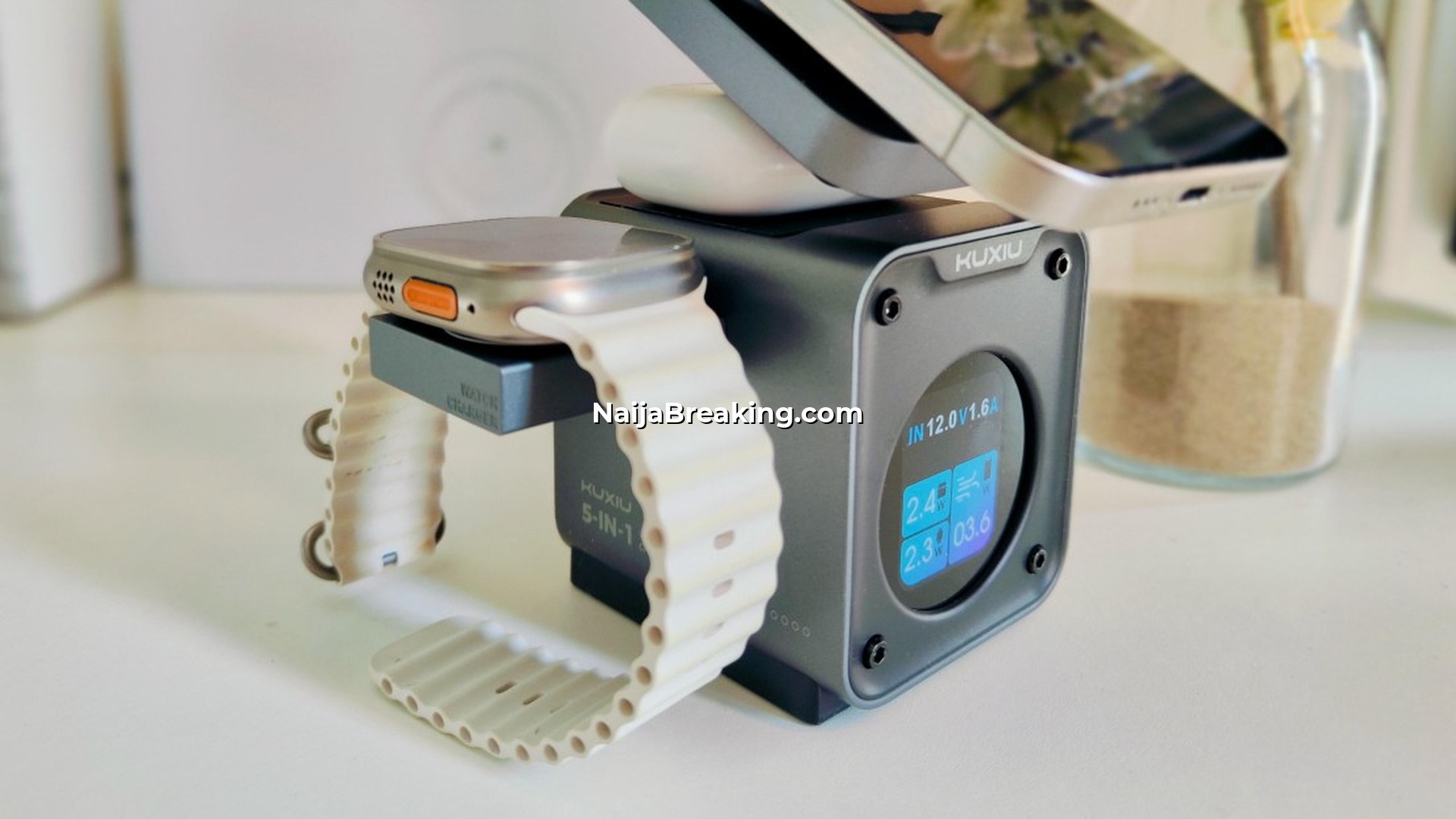
Active cooling Qi chargers represent a fundamentally different approach to wireless charging technology. Rather than relying passively on the receiving device’s internal thermal management, active cooling Qi chargers incorporate an integrated cooling system—typically a small high-efficiency fan or thermoelectric cooling element—that actively manages the temperature of the charging pad and the device during charging. The most sophisticated active cooling Qi chargers use real-time temperature sensors that monitor both the pad’s temperature and the device’s surface temperature, then dynamically adjust fan speed or cooling intensity based on actual thermal conditions.
The engineering is elegant but effective. When you place your phone on an active cooling Qi charger, the system’s microcontroller continuously measures temperatures and maintains the charging pad at a target temperature significantly lower than what passive chargers produce. This cooler pad temperature creates a thermal gradient that actually helps dissipate heat away from the device’s battery and logic board. The fan circulates air around the charging pad, dramatically increasing heat dissipation compared to stationary passive designs. Some premium active cooling Qi chargers even incorporate thermal paste or phase-change materials between the pad and the device for enhanced heat transfer. The result is measurably lower device temperatures during charging—typically 10-15°C cooler than passive chargers in the same ambient conditions.
This temperature reduction has profound implications for battery longevity. Laboratory testing by independent research organizations has shown that smartphones charged with active cooling Qi chargers maintain significantly higher battery health over extended periods. A flagship phone charged for 18 months with passive chargers in typical Nigerian conditions might experience 20-25% capacity degradation, while the same phone model charged with active cooling Qi chargers shows only 8-12% degradation. Over the phone’s entire usable life, this translates to the device remaining reliably usable for 12-24 additional months—a massive difference for Nigerian consumers.
The Nigerian Market Context and Cost Implications
To understand why active cooling Qi chargers matter specifically in Nigeria, one must grasp the economic reality of smartphone ownership here. A flagship Samsung Galaxy S24 or iPhone 15 costs approximately 1.2 to 1.8 million naira at current exchange rates and local retail prices. For context, the average Nigerian worker’s monthly salary hovers around 250,000-400,000 naira depending on sector and location. This means a flagship phone represents 3-7 months of gross income—or far more for many Nigerians working in informal sectors or underemployed. Even mid-range smartphones costing 400,000-600,000 naira represent 1-2 months of salary for typical workers.
In such an economic context, extending a phone’s functional life isn’t a luxury preference; it’s a genuine financial necessity. A Nigerian consumer who can extend their flagship phone from three years of reliable use to five or six years through proper thermal management effectively cuts their annual device cost nearly in half. For someone in a precarious economic situation, this difference might mean the phone remains viable through an unexpected period of unemployment or reduced income. It might mean resources freed up for education, healthcare, or family needs.
The cost of a quality active cooling Qi charger—typically 25,000-45,000 naira for a good unit—represents a sound investment against the backdrop of these calculations. A charger that costs about 3% of the phone’s purchase price and extends the phone’s usable life by 40-50% delivers exceptional return on investment. This is fundamental economics that Nigerian consumers understand intuitively: investing in devices that protect expensive purchases makes perfect sense.
Real-World Performance in Lagos and Nigerian Conditions
The theoretical benefits of active cooling Qi chargers become concrete when examined against actual Nigerian usage patterns and climate conditions. Lagos, Nigeria’s largest city and commercial center, presents an ideal test case. Daytime temperatures regularly exceed 32°C, often reaching 35-38°C during peak afternoon hours. Most residential and commercial spaces lack reliable air conditioning due to electricity costs or grid unreliability. Many workers and students charge their phones during the day, sometimes in direct sunlight or near heat sources, compounding the thermal challenge.
Users who have deployed active cooling Qi chargers in Lagos report consistently positive experiences. One recurring theme in technology forums and social media communities is the reduction in unexpected device shutdowns and battery-related errors. Another significant observation is improved battery longevity—devices feel as responsive after 12-18 months as they did new. This contrasts sharply with the typical Nigerian experience where flagship devices noticeably slow down and battery capacity drops noticeably within 12-18 months, encouraging premature replacement or expensive repairs.
The generators and inverters that power charging in many Nigerian homes and offices create electrical instability that passive chargers handle poorly. Active cooling Qi chargers with integrated voltage regulation and current stabilization actually provide protection against this instability, creating a more stable charging environment. Users have reported that phones charged with active cooling Qi chargers experience fewer corrupted files or system glitches compared to phones charged exclusively from generator power through conventional chargers.
Available Active Cooling Qi Chargers in the Nigerian Market
Several manufacturers have developed active cooling Qi chargers, though availability in Nigeria remains limited primarily to online retailers and premium electronics stores in major cities. Brands like Anker, Belkin, and Samsung all manufacture active cooling Qi chargers at various price points. Samsung’s own active cooling pad, designed specifically for Galaxy flagships, costs around 35,000-40,000 naira through authorized retailers. Belkin’s advanced cooling stand is priced similarly. These are genuinely premium products, but the cost is justifiable against device protection.
The key consideration for Nigerian buyers is ensuring authentic products. The market contains numerous counterfeit active cooling Qi chargers that lack actual cooling capability or reliable electronics. Purchasing from authorized retailers like Jumia’s verified sellers, Konga’s premium options, or official brand representatives ensures genuinely functional products. A counterfeit “cooling charger” that provides no actual cooling is worse than worthless—it’s dangerous, potentially creating fire hazards.
Conclusion: Smart Protection for a Significant Investment
For Nigerian smartphone users, active cooling Qi chargers represent smart protection for one of life’s most significant consumer purchases. In a context where device prices consume months of income and alternatives like used phones or repairs are either unavailable or prohibitively expensive, anything that reliably extends device lifespan becomes essential. Active cooling Qi chargers deliver measurable, tested benefits: cooler charging temperatures, extended battery longevity, and improved device reliability in Nigeria’s challenging climate and electrical environment. The investment in a quality active cooling Qi charger pays dividends across years of use, making it one of the most cost-effective technology purchases a Nigerian consumer can make. In a country where every naira must work hard to deliver value, active cooling Qi chargers deliver real, quantifiable returns.