Infinix HOT 70 Series: How Colour-Changing Phones Are Reshaping Nigerian Consumer Tech
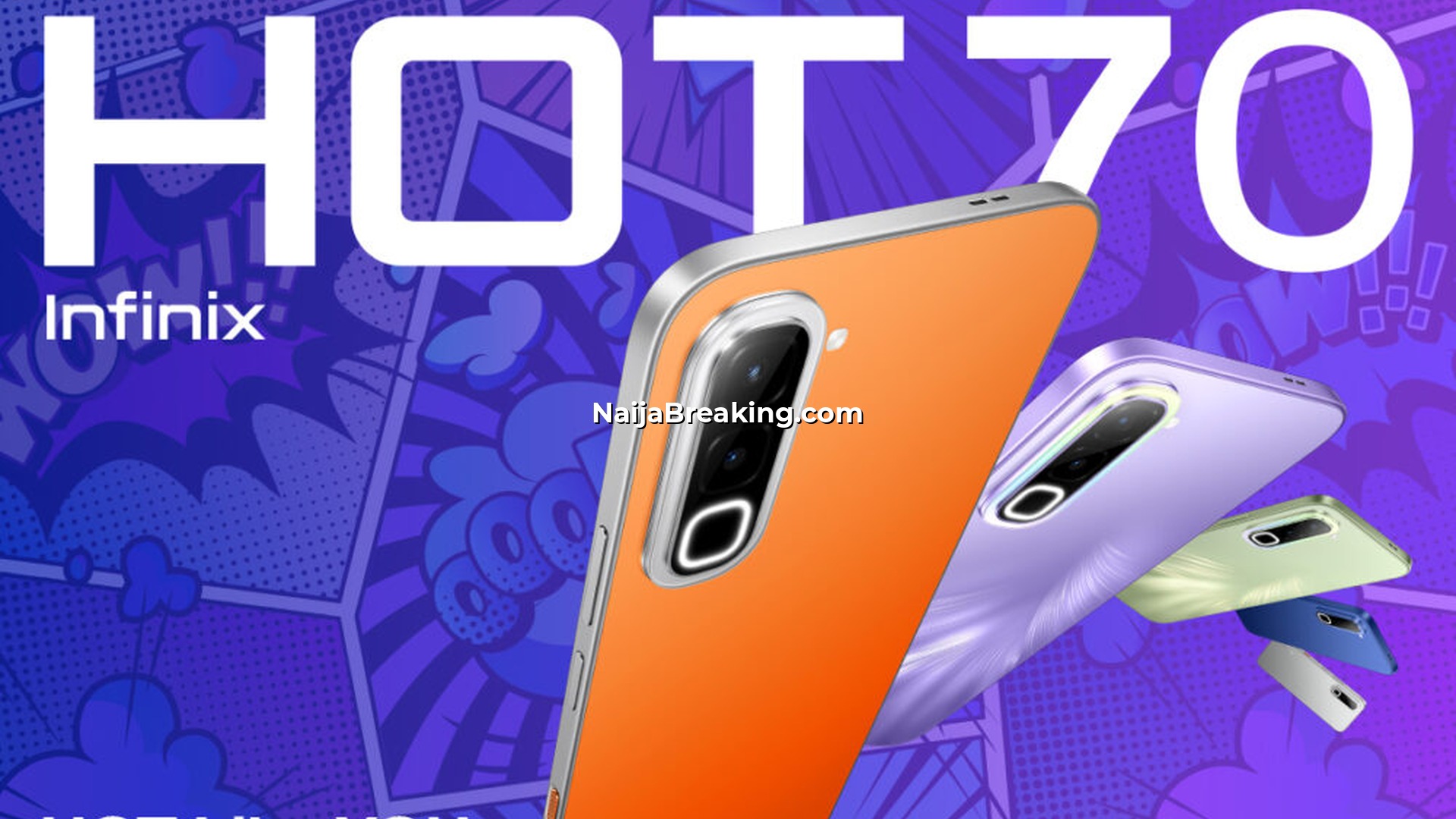
In a market saturated with identical-looking black, silver, and gold devices, Infinix HOT 70 Series arrives with a fundamentally different premise: your smartphone should evolve with you. The latest flagship from the Chinese-Nigerian tech brand introduces the Infinix HOT 70 Series with a revolutionary approach to smartphone aesthetics—colour that changes with temperature, mood, and environment. For Nigeria’s increasingly style-conscious tech consumers, many of whom view their devices as fashion statements as much as functional tools, this launch signals a significant shift in how African brands are thinking about product design.
But this isn’t just about colour. The Infinix HOT 70 Series represents a deeper conversation about self-expression, identity politics in the digital age, and how Nigerian consumers—particularly Gen Z and millennial professionals—are demanding more from their technology. In a country where personal style carries cultural weight, where social media presence is intertwined with real-world status, and where young people are increasingly creating digital content for global audiences, a smartphone that literally transforms throughout the day taps into something more than novelty. It taps into aspiration, individuality, and the desire to stand out in a homogenised global tech ecosystem.
According to recent data from the Nigerian Bureau of Statistics, smartphone penetration in Nigeria has reached 48% of the population, with device upgrades accelerating among urban professionals aged 18-35. Within this demographic, aesthetic appeal ranks as the third most important purchasing factor after price and battery life—a shift that traditional tech brands have largely overlooked. The Infinix HOT 70 Series, with its Dynamic Shine Design philosophy centred on the groundbreaking Thermo Orange colourway, is betting that this emerging consumer preference represents a market opportunity worth pursuing. The question, however, is whether this innovation translates to real market traction in a price-sensitive Nigerian market where affordability still dominates purchasing decisions.
Background
To understand the significance of the Infinix HOT 70 Series launch, one must appreciate the evolution of smartphone culture in Nigeria over the past decade. Ten years ago, the market was dominated by Samsung, Apple, and BlackBerry devices. These were status symbols—owning an iPhone meant something specific about your economic position. However, the rise of Chinese manufacturers like Infinix, Tecno, and Xiaomi fundamentally democratised smartphone access in Nigeria. By 2018-2020, these brands had captured approximately 60% of the sub-$200 smartphone market in West Africa, making capable devices accessible to working-class Nigerians and students who previously couldn’t afford premium devices.
Infinix, in particular, emerged as a brand deeply attuned to African consumer preferences. Rather than simply repackaging global products, the company invested in understanding local needs—longer battery life for irregular power supply, larger screens for entertainment and content creation, and increasingly, design that reflected personal identity. This localization strategy paid dividends: by 2023, Infinix had captured approximately 15% of Nigeria’s smartphone market, making it one of the top five brands in the country. The company’s success wasn’t built on undercutting competitors on price alone, but on creating products that resonated with African lifestyles and aspirations.
The broader context matters too. Nigeria has experienced a creative digital economy boom over the past five years. The country is now home to thriving communities of content creators, musicians, comedians, and digital entrepreneurs who use their phones as primary income-generating tools. For these users, their device isn’t just a communication tool—it’s part of their personal brand. This creative class, estimated at over 2 million active creators in Nigeria, represents exactly the demographic Infinix is targeting with the HOT 70 Series. The company is essentially betting that the next phase of smartphone competition in Africa won’t be won solely on specifications, but on how well devices enable personal expression and support the creative ambitions of their users.
Key Details
The Infinix HOT 70 Series represents the culmination of Infinix’s “Dynamic Shine Design” philosophy, introduced as a brand-wide commitment to merging functionality with personal aesthetic expression. According to the product launch information, the centrepiece of this initiative is the Thermo Orange colourway, powered by Dual-Way Thermo Sensing Skin technology—a feature that has no direct competitor in the current smartphone market.
Here’s how it works: the device’s back cover responds dynamically to environmental temperature fluctuations. In cooler temperatures, the device displays a deep, saturated orange hue. As ambient temperature increases—whether from intense sunlight, room heating, or even the phone’s own thermal output during intensive use—the colour gradually transitions to lighter, brighter orange tones. This isn’t a gimmick; Infinix engineered this using thermochromic materials integrated into the phone’s rear panel, creating a device that literally never looks exactly the same twice. For a content creator filming TikTok videos throughout Lagos traffic, the phone’s appearance shifts subtly throughout the day, creating naturally varied aesthetics across different content pieces.
Beyond Thermo Orange, the HOT 70 Series launches with additional colourway options designed around the Dynamic Shine Design philosophy. The series also introduces enhanced camera capabilities specifically optimised for content creation—a recognition that many Nigerian users purchase premium phones precisely to support their digital content ambitions. The camera system includes improved night mode performance (crucial for content creators working in Nigeria’s variable lighting conditions), enhanced stabilisation for video, and colour grading software developed in partnership with content creation communities.
From a technical specification standpoint, the HOT 70 Series targets the mid-premium segment, positioning itself against devices in the ₦150,000-₦250,000 range. This pricing strategy is deliberate—it places the device above entry-level smartphones but below flagship territory, targeting the sweet spot where Nigerian professionals have sufficient disposable income to prioritise design and creative capability alongside performance.
Impact and Analysis
The launch of the Infinix HOT 70 Series signals a fundamental maturation of the African smartphone market. For too long, the narrative around African tech consumption has centred on affordability and basic functionality. This product launch challenges that narrative by arguing that African consumers are ready to pay premium prices for design innovation and personal expression—not despite their economic context, but because of it. In emerging markets where consumers often skip certain lifestyle categories due to cost, smartphone aesthetics carry outsized cultural weight because they’re visible daily, integrated into social media presence, and integral to digital identity.
However, the launch also reveals potential blind spots in Infinix’s strategy. While the Thermo Orange feature is genuinely innovative, its practical value remains uncertain. Does a colour-changing phone actually improve user experience, or does it primarily serve as a talking point? Nigerian consumers are notoriously pragmatic—they’ll appreciate innovation, but only if it doesn’t compromise core functionality or battery life. The thermochromic technology could theoretically impact battery performance through increased heat dissipation, though Infinix hasn’t publicly detailed these specifications. Additionally, the colour-changing feature depends on environmental temperature variance, which in Lagos’s tropical climate (typically 25-32°C) may result in less dramatic visual shifts than in temperate markets.
From a market competition perspective, this launch positions Infinix as a brand willing to take aesthetic risks that Samsung and Apple largely avoid. It’s a shrewd differentiation strategy in a market where Tecno and Infinix battle intensely for the same consumer base. By introducing a feature that can’t be easily copied without significant R&D investment, Infinix creates a temporary competitive moat—exactly what emerging markets need to establish premium brand positioning.
Expert Perspectives
Dr. Chioma Okafor, a Lagos-based technology analyst and senior researcher at the Institute for Digital Innovation Africa, sees the HOT 70 Series as evidence of a broader shift in how technology companies approach African markets. “What Infinix is doing here is treating African consumers as trendsetters rather than price-conscious afterthoughts,” she explains. “The HOT 70 Series assumes that young Nigerians care deeply about how they present themselves digitally and physically. That’s not a Western assumption being applied to Africa—that’s a genuine insight about who buys smartphones in Lagos, Accra, and Nairobi.”
However, Tunde Adejumo, a consumer electronics analyst with Abuja-based research firm TechMarket Insights, offers a more cautionary perspective. “Innovation for innovation’s sake can be a trap for emerging market brands,” he notes. “Infinix needs to ensure that the Thermo Orange feature doesn’t become a novelty that distracts from core performance issues that still plague affordable flagships—thermal management, battery longevity, and software stability. Nigerian consumers will forgive aesthetic experimentation, but they won’t forgive a phone that dies by afternoon.” This tension between innovation and reliability represents the central challenge facing Infinix’s product strategy moving forward.
Both analysts agree on one point: the HOT 70 Series launch reflects a maturing acknowledgement that the Nigerian smartphone market is no longer primarily driven by price competition, but by lifestyle alignment and personal branding capabilities.
What This Means for Nigerians
For the average Nigerian smartphone user in Lagos or Abuja, the Infinix HOT 70 Series launch has concrete, immediate implications. First, it signals that premium smartphone features once exclusive to iPhone and Samsung flagship devices are now within reach of the middle-income consumer. The ₦150,000-₦250,000 price point places the HOT 70 Series roughly equivalent to a month’s salary for skilled professionals, teachers, and small business owners—a significant investment, but one increasingly normalised in urban Nigeria.
Second, the launch validates something Nigerian content creators have long understood: their phones are professional tools deserving of professional-grade investment. A YouTube content creator in Port Harcourt can now purchase a device specifically engineered for video creation, with colour-changing aesthetics that naturally produce varied visual content across uploads. This democratises content production capabilities previously requiring expensive secondary cameras and stabilisation equipment. For the estimated 2 million active digital creators in Nigeria, this represents genuine utility, not just aesthetic novelty.
Third, the HOT 70 Series launch highlights a growing willingness among Nigerian consumers to experiment with non-Western tech brands in the premium segment. Apple and Samsung remain status symbols, but increasingly, Nigerian professionals view these devices as expensive conventions rather than necessities. A young lawyer or consultant wearing Infinix’s Thermo Orange phone to a professional meeting no longer signals lower status—it signals awareness of emerging technology and personal style independence. This shift has profound implications for how technology is marketed and consumed in Nigeria moving forward.
For students and younger consumers without significant disposable income, the launch also signals that affordable smartphone options will eventually trickle down from premium to budget segments—a positive cycle that’s benefited African consumers repeatedly over the past decade. Innovation today becomes affordability tomorrow.
Editor’s Take
At NaijaBreaking, we believe the Infinix HOT 70 Series launch deserves attention not because the Thermo Orange feature will revolutionise smartphone technology globally, but because it reveals something important about how Nigerian brands are learning to compete in the premium market. For too long, African tech companies—and frankly, African consumers themselves—have internalised the assumption that innovation happens in Silicon Valley and flows downward to African markets.
The HOT 70 Series challenges this narrative by arguing that innovation can originate from understanding African lifestyles and aspirations. Yes, the thermochromic technology was developed in a lab, likely drawing on international expertise. But the decision to build a product around personal expression and content creation reflects genuine insight into how Nigerians use technology in 2026. What this story reveals is that the future of African tech isn’t about catching up to global standards—it’s about creating products that outflank global competitors by being better attuned to local realities. That’s genuinely exciting, and it deserves celebration alongside healthy scepticism about whether the innovation translates to real-world value for consumers.
What to Watch Next
Three specific developments will determine whether the HOT 70 Series becomes a genuine market success or an innovative curiosity. First, monitor real-world user reviews and thermal performance data once devices reach customers. Will the Thermo Orange feature perform reliably in Lagos’s tropical climate? Will the thermochromic materials degrade after months of use? Second, watch how Tecno and Samsung respond competitively—if either launches colour-changing devices within 12 months, it validates Infinix’s insight about market demand but weakens the brand’s differentiation advantage. Third, track whether improved content creation features actually translate to sales among digital creators, or whether the product remains primarily aspirational.
The key question now is: will Nigerians embrace premium innovation that prioritises aesthetic expression and creative capability over raw processing power? The answer will shape whether Infinix can successfully transition from a “budget-conscious value brand” to a “premium lifestyle technology company” in African markets—a transition that would have significant implications for how all technology companies approach African consumers going forward.
Conclusion
The Infinix HOT 70 Series launch represents more than a new smartphone; it’s a statement about how African technology brands are learning to compete globally by innovating locally. By centring product development around personal expression, content creation, and aesthetic identity—insights specific to urban Nigerian culture—Infinix demonstrates that premium markets in Africa aren’t simply smaller versions of Western markets. They’re distinct ecosystems with distinct aspirations.
What this launch reveals about Nigeria’s direction is encouraging: young professionals increasingly view their technology choices as extensions of personal identity rather than mere functional purchases. They’re willing to experiment with non-Western brands. They’re building creative careers on platforms that didn’t exist a decade ago. And they expect technology companies to acknowledge and serve these realities. Whether the Thermo Orange proves to be transformative innovation or clever marketing, the HOT 70 Series signals that serious innovation in African tech is accelerating—and Nigerian consumers deserve products built specifically for their lives, not retrofitted from global templates. Share your thoughts in the comments below—what do you think this means for Nigeria’s future in the technology sector?