Michael Olise World Cup 2026: France’s Breakout Star and What It Reveals About Global Football Talent Development
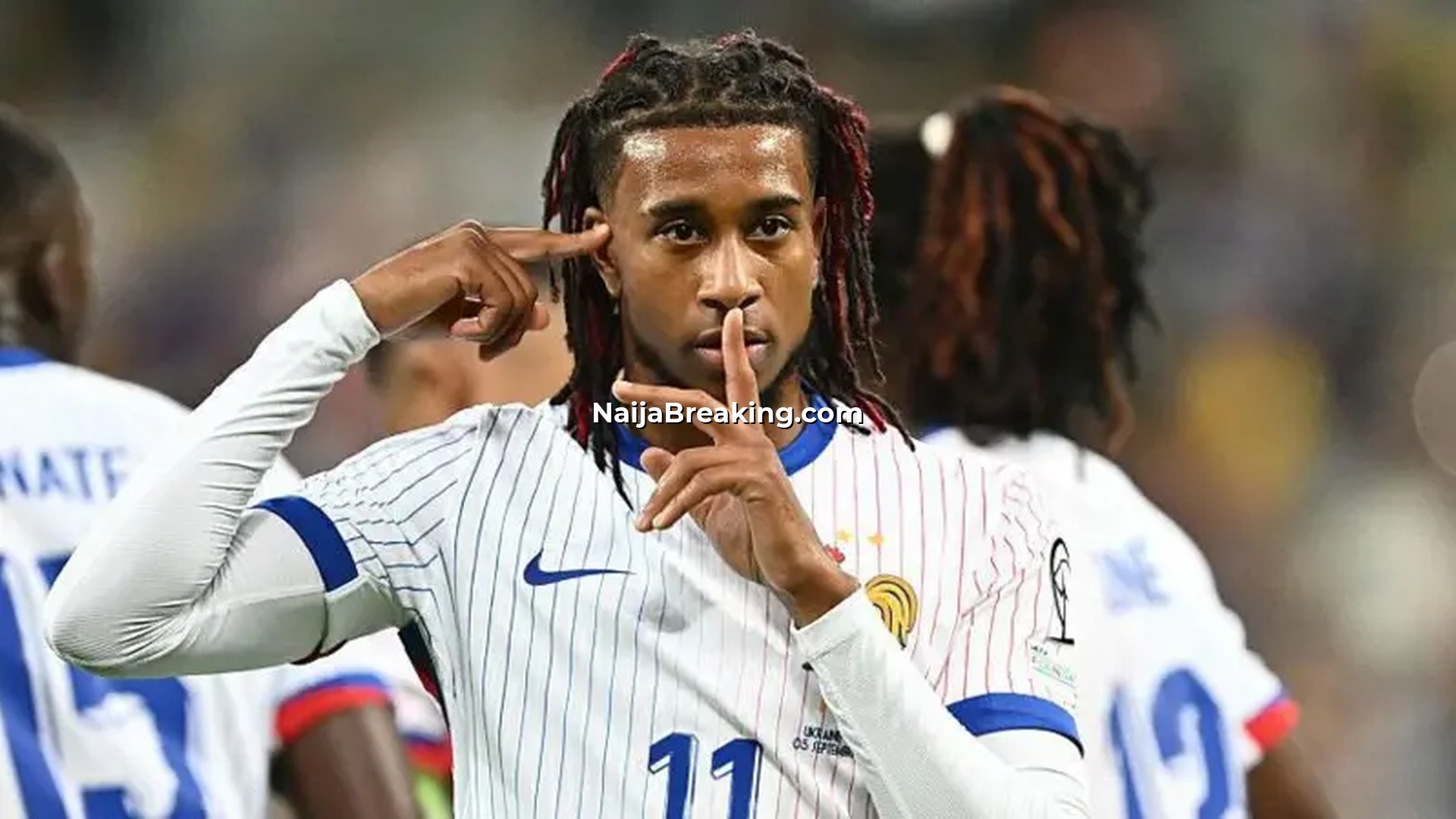
Michael Olise is being tipped to become France’s breakout star at the 2026 FIFA World Cup, according to former France defender Gaël Clichy, and this forecast reveals far more than just football gossip. The Bayern Munich winger’s emergence as one of Europe’s most exciting attacking talents raises critical questions about how nations identify, develop, and deploy young talent on the world’s biggest sporting stage—a question Nigeria should be paying close attention to. Michael Olise World Cup 2026 participation represents a pivotal moment not just for French football, but for understanding the systematic pathways that transform promising young players into international superstars. Olise’s trajectory from Crystal Palace prospect to Champions League regular reflects a methodical approach to player development that stands in sharp contrast to how talent identification and nurturing works in Nigeria’s professional football ecosystem. The story of Michael Olise and the 2026 World Cup is ultimately a story about infrastructure, investment, and the deliberate construction of excellence in modern football.
At just 24 years old, Olise arrives at his first World Cup with genuine momentum and international experience that positions him as a potential game-changer for France in 2026. He has made 16 appearances for the French national team and impressed observers throughout the 2024 Paris Olympics, where he played under assistant coach Clichy during France’s Under-23 campaign that yielded a silver medal. Clichy’s comparison of Olise’s potential to Kylian Mbappé’s breakout 2018 World Cup performance in Russia suggests the winger is ready for a transformative tournament experience. When considering Michael Olise World Cup 2026 prospects specifically, it’s important to understand that his development has been shaped by European football’s most rigorous standards. For Nigerian observers, Olise’s story is instructive—it demonstrates how structured investment in young players, combined with European club exposure, creates the conditions for international stardom. The question for Nigeria’s own football authorities and clubs is whether similar frameworks exist at home, and if not, why our talent development pipeline remains so fragile despite the abundance of gifted young footballers across the country. Understanding Michael Olise World Cup 2026 potential requires examining the entire ecosystem that produced him.
Who Is Michael Olise? Building a World Cup Star
To fully appreciate the significance of Michael Olise and the 2026 World Cup connection, we must first understand who Olise is as a player and how he developed into a genuine international prospect. Born in 1999, Olise combines technical excellence with physical presence—a rare combination in modern wingers. Standing 5’10” (178cm), he compensates for modest height with intelligent positioning, exceptional dribbling ability, and a lethal left foot that can produce both assists and goals from wide areas. His career trajectory has been unconventional in some respects; he was actually born in France but represented England at youth level before ultimately committing to France’s senior setup, a switch that demonstrates the complex nature of modern international football allegiances.
Olise’s professional journey began at Reading’s academy, where he developed the fundamental technical skills that would later catch the attention of elite European clubs. His breakthrough came at Crystal Palace, where under manager Patrick Vieira, he blossomed into one of the Premier League’s most consistent attacking threats during the 2023-24 season. His performances in England’s top flight attracted the interest of Bayern Munich, one of world football’s biggest clubs, which signed him in the summer of 2024. This transfer to Bavaria represents a watershed moment in Olise’s career and directly influences expectations for Michael Olise World Cup 2026. Playing for Bayern Munich means competing at the highest level of club football and developing against elite opponents on a weekly basis. The German club’s pedigree, history of developing young talent, and participation in the Champions League provide the perfect environment for a player preparing for World Cup football in 2026.
What makes Olise particularly interesting from a development perspective is that his rise has been relatively meteoric compared to some of his French contemporaries. While players like Eduardo Camavinga began their careers at elite clubs, Olise had to earn his credentials at mid-tier Premier League sides before attracting top-level attention. This journey makes his emergence all the more remarkable and suggests that with sustained exposure to elite football, his potential could expand exponentially. As we consider Michael Olise World Cup 2026 projections, this recent trajectory becomes crucial context—he is a player still in an upward trajectory, still adapting to new leagues and higher levels of competition, which means his peak performance could well coincide with the 2026 tournament in North America.
The Michael Olise World Cup 2026 Forecast: What Gaël Clichy Sees
Gaël Clichy’s endorsement of Michael Olise as a potential breakout star for the 2026 World Cup carries particular weight given Clichy’s extensive experience at the highest levels of international and club football. Clichy represented France for over a decade, earning 41 caps for his country and winning the 2018 World Cup as a squad member. His observations about Michael Olise World Cup 2026 prospects come from someone who has experienced multiple World Cup campaigns and understands intimately what separates good international players from genuine tournament breakout stars. Clichy’s comparison of Olise’s trajectory to Kylian Mbappé’s 2018 emergence is particularly instructive because it highlights specific qualities that translate to World Cup success: explosive pace, technical brilliance under pressure, the ability to create space in congested defensive situations, and mental resilience in high-stakes matches.
The 2018 World Cup in Russia proved transformative for Mbappé—the teenager delivered decisive performances in knockout stages and captured global imagination with his athleticism and composure. Clichy appears to believe that Olise possesses similar qualities that could make the Michael Olise World Cup 2026 experience similarly transformative. This comparison suggests that Olise’s combination of physical attributes, technical excellence, and tactical intelligence positions him to thrive in tournament football, where defensive intensifies and matches become compressed, high-stakes affairs. In knockout football, creativity and the ability to produce something special in single matches become paramount. These are areas where Olise has demonstrated genuine excellence at club level, and there’s every reason to believe these qualities will translate to the World Cup stage in 2026.
From a French national team perspective, having a player of Olise’s caliber provides coach Didier Deschamps with attacking flexibility and options that France has sometimes lacked in recent campaigns. France’s 2022 World Cup final appearance was built on defensive solidity and the genius of Mbappé, but as players age and circumstances change, teams must evolve their tactical approaches. Michael Olise World Cup 2026 inclusion in France’s squad could provide the creative spark and dynamic attacking threat that complements whatever front-line configuration France ultimately settles upon. For the tournament in North America, France will be among the favorites, and a player like Olise—young, improving, and entering his prime years—represents exactly the kind of evolving talent that can take defending ambitions to the next level.
Background: The Evolution of International Football Talent Development
Michael Olise’s rise to prominence cannot be separated from broader shifts in how European clubs and national football associations approach youth development and player pathway construction. The professionalization of talent scouting, the expansion of academies, and the deliberate pathway from youth competitions to senior international football have become the template for success in modern football. France, in particular, has refined this system over decades—the country’s academy structure, investment in youth competitions, and coordinated approach between club development and national team planning has consistently produced world-class talent. From Thierry Henry to Zinedine Zidane to current superstars like Mbappé and Eduardo Camavinga, France has mastered the art of identifying promise early and providing the infrastructure for that promise to flourish.
The French Football Federation’s investment in youth academies, coaching education, and systematic talent identification represents a deliberate national strategy. Young players are identified early, placed in structured development programs, and carefully monitored as they progress through various competitive levels. This approach creates redundancy—if one player doesn’t develop as expected, others are waiting in the pipeline. The Michael Olise World Cup 2026 story fits precisely into this system; Olise was identified as a talent of potential, placed in competitive environments at Reading and then Crystal Palace, and eventually elevated to elite club and international football. At each stage, his progress was monitored and his development supported through exposure to better competition and more rigorous coaching.
In Nigeria, the narrative has been strikingly different and considerably more fragmented. While the country has produced exceptional footballers—from Jay-Jay Okocha to Nwankwo Kanu to contemporary stars like Victor Osimhen—this success has often occurred despite systemic limitations rather than because of coordinated national planning. Nigeria’s talent development has frequently depended on individual club initiatives, personal relationships, and the determination of families rather than cohesive national frameworks. The Nigerian Football Federation has attempted to establish development pathways through various youth competitions and academies, but these efforts have often lacked sustained funding, consistent coaching standards, and long-term strategic vision. Where France identifies a young talent and provides systematic support through multiple developmental stages, Nigeria has often seen talented young players drop out of professional football entirely due to lack of opportunity, inadequate financial support, or the absence of clear pathways to elite competition.
Comparative Analysis: European Development Systems Versus Nigerian Approaches
The difference between how Michael Olise World Cup 2026 preparation has been facilitated and how Nigerian young talent is typically developed reveals fundamental structural disparities in football infrastructure. In Europe, particularly in France, academies are well-funded, coaching staff are professionally qualified and continuously educated, and players are exposed to competitive football from early ages. Young French players typically experience multiple levels of competitive football—academy competitions, regional leagues, youth national teams, and eventually club football—all before reaching senior international football. Each level provides learning, development, and exposure to progressively higher standards of competition.
The pathway for a player like Michael Olise involves consistent investment and professional development at every stage. Even when he was at Reading or Crystal Palace—not among Europe’s elite clubs—Olise had access to professional coaching, sports science support, nutritionists, and medical facilities that are standard in European professional football. Compare this to Nigeria, where many talented young players develop in conditions with minimal professional support structures. Facilities are often inadequate, coaching can be inconsistent, and the gap between youth football and professional football can be enormous.
Furthermore, European leagues provide constant competitive exposure that accelerates development. Michael Olise progressed through the Premier League, one of world football’s most demanding environments, against top-level defenders on a weekly basis. This exposure accelerated his development and eventually attracted Bayern Munich’s attention. In Nigeria, even talented players at top clubs often lack the consistent high-quality opposition that forces them to improve constantly. The gap in competition standards between Nigerian leagues and European top flights means that Nigerian players typically require additional adaptation time when they eventually move to Europe, time that players like Olise never need because they’ve been developing in elite environments from relatively early in their careers.
The Role of Club Football in World Cup Success
Understanding Michael Olise World Cup 2026 potential requires appreciating how modern club football prepares players for international tournament success. Unlike previous generations, contemporary World Cup stars are almost universally products of elite club environments. The Michael Olise World Cup 2026 narrative begins at Bayern Munich, where he is being trained, coached, and tested against Europe’s best defenders on a weekly basis. Club football provides the technical refinement, tactical intelligence, and psychological resilience that tournaments demand.
Bayern Munich’s training environment, coaching staff expertise, and Champions League participation ensure that Olise is developing in conditions that directly prepare him for World Cup football. He faces elite defensive pressure regularly, learns to execute complex tactical systems, and develops the mental strength required for high-stakes matches. When World Cup 2026 arrives, Olise will not be making a major adjustment from his regular club football environment—he will simply be translating skills developed in elite club competition to the international stage.
For Nigerian players, this pathway has historically been more complicated. Players who remain in the Nigerian league, however talented, often lack the constant high-level exposure that accelerates development. Those who move to Europe must first adapt to new leagues, new tactical systems, and different playing standards before they’re truly ready to excel at international tournaments. This adaptation period costs time that European players like Olise never waste, positioning them to peak earlier and perform more consistently at World Cup level.
What Michael Olise World Cup 2026 Success Could Mean for French Football
If Michael Olise World Cup 2026 emerges as a genuine breakout star—as Gaël Clichy predicts—it will have significant implications for how France approaches the tournament and its prospects for success. France enters World Cup 2026 as defending champions (having won in 2018) and runners-up from 2022. The team has an aging core with players like Olivier Giroud and Raphaël Varane potentially transitioning out of the international game. Michael Olise World Cup 2026 emergence would represent exactly the kind of young, dynamic talent that could bridge generational transitions and provide France with attacking options beyond its established stars.
A breakout Michael Olise World Cup 2026 tournament could also reshape how Didier Deschamps approaches France’s attacking play. Rather than relying primarily on Kylian Mbappé for attacking creativity and thrust, Olise could provide complementary attacking options that force opposing defenses to make difficult tactical decisions. This multiplicity of attacking threats is typically what separates tournament favorites from other strong competitors—depth in quality across multiple positions and roles.
Additionally, Michael Olise World Cup 2026 success would vindicate France’s broader talent development philosophy. The fact that France can develop players of Olise’s caliber in parallel with stars like Mbappé and Camavinga demonstrates the depth of the country’s football infrastructure. It suggests that France’s production line for world-class talent remains genuinely elite, which has significant implications for the country’s World Cup prospects across multiple tournaments into the future.
Lessons Nigeria Must Learn from the Michael Olise World Cup 2026 Story
For Nigerian football stakeholders, the Michael Olise World Cup 2026 narrative provides crucial lessons about what’s required to develop players capable of genuinely competing at the highest international level. First and foremost, infrastructure matters profoundly. The clubs, academies, coaching standards, and facilities that develop players like Olise are not luxuries—they are foundational requirements for producing world-class talent. Nigeria must invest in upgrading its academy infrastructure across the country, ensuring that talented young players have access to professional-standard facilities, qualified coaches, and sports science support from early ages.
Second, systematic player pathways must be established and maintained consistently. Rather than ad hoc approaches to player development, Nigeria needs coordinated national plans that identify talent early, place them in appropriate developmental environments, monitor progress regularly, and provide support at each stage of their development journey. The Nigerian Football Federation should work with professional clubs to establish formal development pathways that guarantee talented young players receive appropriate exposure to increasingly challenging competition.
Third, international exposure matters enormously. Many of Nigeria’s most successful recent players—Victor Osimhen, Samuel Chukwueze, Wilfred Ndidi—developed their talents primarily in European leagues where they faced elite opposition regularly. Nigeria should actively facilitate young players’ moves to competitive European environments while they’re still developing, recognizing that elite-level club competition provides development benefits that domestic football simply cannot match. Players who develop in Europe and then represent Nigeria internationally arrive with technical and tactical sophistication that players who’ve developed only in Nigeria often lack.
Fourth, Nigeria must recognize that football development is a long-term investment requiring sustained commitment and resources. France’s success with players like Michael Olise isn’t accidental—it reflects decades of investment in infrastructure, coaching education, youth competition structures, and national team planning. Nigeria has made starts in establishing similar systems, but these efforts must be dramatically expanded and sustained even when results aren’t immediately visible. The talent is available in Nigeria; what’s often missing is the systematic infrastructure to develop that talent to its maximum potential.
Conclusion: Michael Olise World Cup 2026 and the Future of Global Football Development
Michael Olise World Cup 2026 emergence as a potential breakout star represents far more than just another international football story. It embodies the systematic, infrastructure-dependent approach to player development that characterizes elite football nations like France. From his early development at Reading through his Premier League breakthrough at Crystal Palace to his current status at Bayern Munich, Olise has progressed through precisely the kind of carefully scaffolded development pathway that produces world-class talent. Gaël Clichy’s prediction that Michael Olise will be France’s breakout star at the 2026 World Cup likely understates rather than overstates the winger’s genuine potential; playing for one of world football’s biggest clubs, competing at the highest levels of both club and international football, and approaching his peak years at precisely the right moment, Olise is positioned to deliver genuinely spectacular performances when World Cup 2026 arrives in North America.
For Nigeria and other emerging football nations, the Michael Olise World Cup 2026 story offers both inspiration and instruction. The inspiration comes from seeing a player of African descent—Olise’s father is Nigerian—thriving in elite European football and heading into what could be a defining international tournament. The instruction comes from understanding that such success doesn’t happen accidentally; it results from consistent investment in infrastructure, coaching excellence, and systematic player development. As Nigeria looks toward maximizing its own talent at upcoming World Cups, the lessons from Michael Olise’s development pathway deserve serious consideration and emulation. The players are available; what’s required now is the systematic commitment to developing them into the kind of world-class competitors that tournaments like the 2026 World Cup demand and reward.