
Accuvice AI Compliance Platform Transforms Data Protection for African Businesses
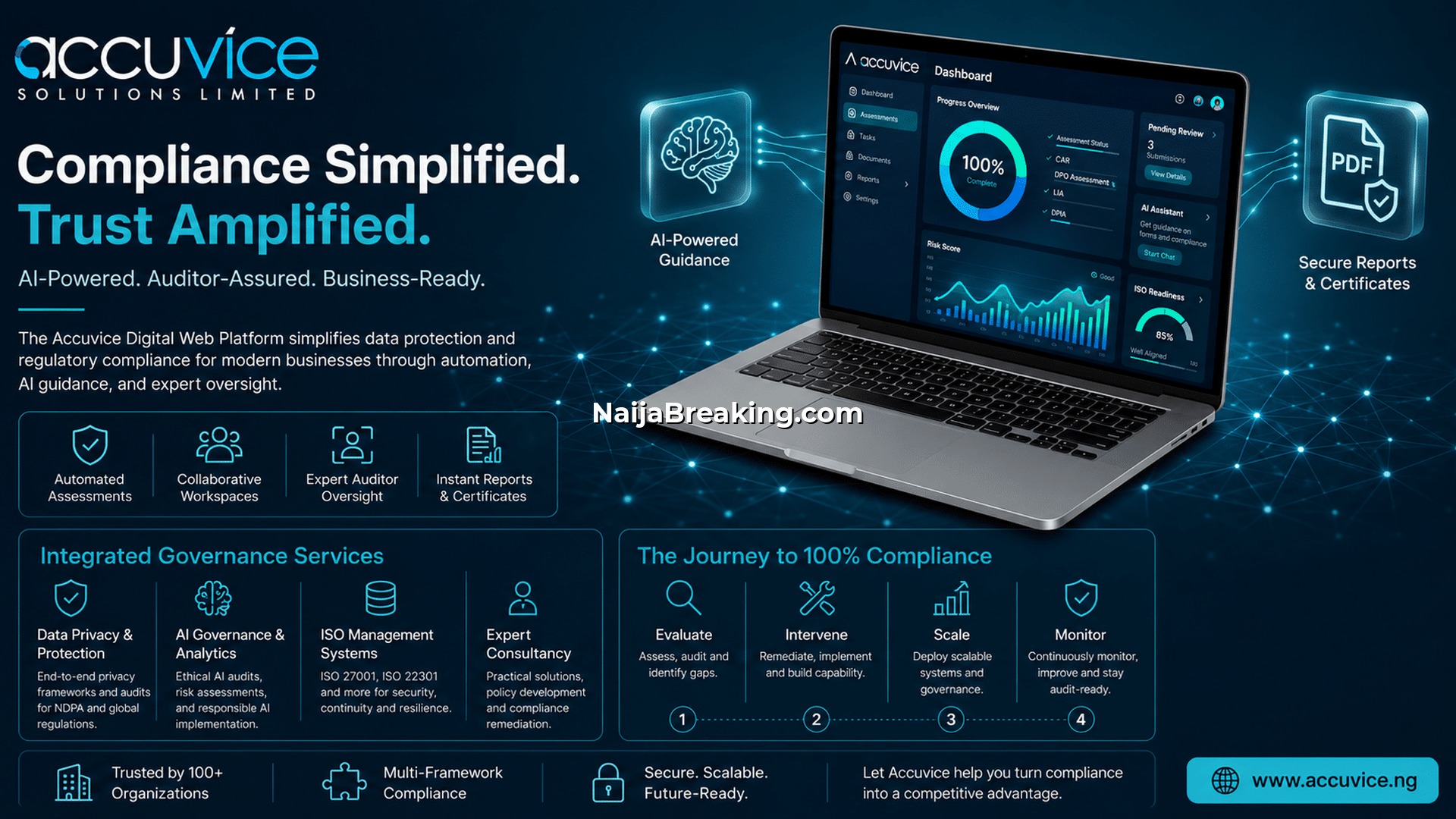
The African technology landscape is witnessing a transformative shift as businesses grapple with increasingly complex regulatory frameworks and data protection requirements across multiple jurisdictions. In response to this challenge, Accuvice Solutions Limited has unveiled its groundbreaking AI-powered compliance web platform, designed specifically to address the compliance pain points facing enterprises across Africa and beyond. The AI compliance platform represents a significant technological advancement in how organisations approach data protection assessments, audit management, and regulatory reporting—critical functions that have historically consumed vast resources and left many organisations vulnerable to compliance failures. Kamoru Emmanuel Umoru, the visionary founder of Accuvice, recognised that the traditional approach to compliance—characterised by scattered spreadsheets, email correspondence, and manual documentation—no longer serves the needs of modern, digitally-forward businesses operating across multiple regulatory environments. According to industry analysts, approximately 73% of African businesses lack adequate compliance infrastructure, creating substantial risks for data breaches and regulatory penalties. This new platform arrives at a pivotal moment when Nigerian organisations, particularly those in financial services, telecommunications, and e-commerce sectors, are under mounting pressure to meet stringent data protection standards from regulators including the National Information Technology Development Agency (NITDA) and the Central Bank of Nigeria (CBN). The Accuvice platform leverages artificial intelligence to automate audits, streamline assessments, and generate comprehensive compliance reports, fundamentally changing how businesses manage their regulatory obligations in an increasingly scrutinised digital economy.
Background
The regulatory environment for businesses across Africa has undergone dramatic transformation over the past five years, with data protection and cybersecurity becoming paramount concerns for governments, financial institutions, and consumers alike. Nigeria’s Digital Rights and Freedoms Bill, currently progressing through legislative channels, alongside the existing provisions under NITDA’s regulations and the CBN’s cybersecurity frameworks, has created a complex compliance landscape that demands sophisticated management approaches. Many African businesses, particularly small and medium-sized enterprises (SMEs), have struggled to keep pace with these evolving requirements, lacking the financial resources and technical expertise to establish comprehensive compliance programmes. The traditional approach to managing compliance has proven inefficient and error-prone; organisations typically rely on fragmented systems where compliance data lives in disconnected spreadsheets, email archives, and physical documentation files. This fragmentation creates multiple critical vulnerabilities: increased human error in reporting, difficulty maintaining audit trails, challenges in demonstrating compliance to regulators, and significant time wastage across finance, legal, and operations teams.
The explosion of data-driven business models in Nigeria has intensified the urgency of robust compliance mechanisms. Companies operating in fintech, which has experienced exponential growth with platforms like Flutterwave, Paystack, and numerous others processing billions of naira in transactions, face particularly stringent compliance demands from both domestic and international regulatory bodies. Similarly, telecommunications giants and digital platforms collecting extensive customer data have become focal points for regulatory scrutiny. The Central Bank of Nigeria reported in 2023 that cybersecurity incidents involving regulated financial institutions increased by 47% year-on-year, underscoring the critical need for organisations to demonstrate robust data protection frameworks. International investors and global business partners increasingly require their African counterparts to provide evidence of regulatory compliance and data protection measures as preconditions for partnerships and transactions. This external pressure, combined with domestic regulatory requirements, has created urgent demand for solutions that can streamline compliance management while providing the comprehensive documentation and audit trails necessary to satisfy both local and international stakeholders.
Against this backdrop, numerous compliance technology solutions have emerged globally, but most were designed for Western markets and regulatory frameworks, requiring expensive customisation for African contexts. This gap in the market created the opportunity for innovative African technology entrepreneurs to develop solutions specifically calibrated to address the unique regulatory challenges faced by businesses operating across African jurisdictions. The emergence of Accuvice represents precisely this type of locally-informed, globally-capable solution designed to serve organisations that must navigate the intricate intersection of African regulatory requirements with increasingly stringent international standards for data protection and business conduct.
Key Details
Accuvice’s AI-powered compliance platform operates as a comprehensive digital ecosystem designed to eliminate the inefficiencies inherent in manual compliance management processes. According to information detailed at Techpoint Africa’s coverage of the launch, the platform incorporates multiple integrated modules that address the entire compliance lifecycle, from initial gap assessments through ongoing monitoring and reporting. The core functionality includes automated audit capabilities that leverage artificial intelligence to assess organisational processes against regulatory frameworks, identification of compliance gaps, and intelligent recommendations for remediation. The platform’s assessment module enables organisations to conduct comprehensive regulatory evaluations across multiple frameworks simultaneously, a critical advantage for enterprises operating in multiple jurisdictions or serving international clients with varying compliance requirements.
Founder Kamoru Emmanuel Umoru designed the platform with specific attention to the operational realities of African businesses, incorporating features that acknowledge limited IT infrastructure in many organisations while maintaining enterprise-grade security and reliability. The reporting functionality automatically generates comprehensive compliance documentation, eliminating the time-consuming manual process of collating data from disparate sources and producing regulatory filings. This automation is particularly valuable for organisations preparing for audits by external bodies, seeking certification under international standards like ISO 27001 for information security, or demonstrating compliance to regulators like NITDA or sector-specific authorities. The platform maintains detailed audit trails documenting all compliance activities, assessment results, remediation efforts, and sign-offs, providing organisations with the comprehensive documentation necessary to defend their compliance posture during regulatory investigations or disputes. The artificial intelligence component learns from organisational data, industry benchmarks, and regulatory developments, continuously improving the accuracy and relevance of compliance recommendations.
The platform’s architecture emphasises accessibility and user-friendliness, recognising that compliance professionals across African organisations often juggle multiple responsibilities without dedicated compliance technology expertise. The web-based interface requires no complex software installations or extensive technical training, enabling organisations to deploy the solution rapidly across their operations. Integration capabilities allow the platform to connect with existing enterprise systems, ensuring that compliance assessments draw on current operational data rather than relying on manual data input that inevitably becomes outdated. The security infrastructure protecting the platform itself meets international standards, with encryption, multi-factor authentication, and regular security audits ensuring that sensitive compliance information remains protected from unauthorised access or breaches—a critical consideration given the confidential nature of compliance documentation.
Impact and Analysis
The introduction of Accuvice’s AI compliance platform represents a significant advancement with implications extending far beyond the immediate organisations that adopt it. By substantially reducing the time, cost, and expertise required to maintain regulatory compliance, the platform effectively lowers barriers to entry for businesses of all sizes to achieve and demonstrate compliance with critical regulations. Statistics from the African Union indicate that regulatory compliance costs consume an average of 2.7% of annual operating budgets for African businesses, disproportionately impacting SMEs that lack dedicated compliance departments. By automating compliance workflows and reducing manual effort, Accuvice can potentially reduce this burden by up to 40%, freeing capital for businesses to invest in growth, innovation, or improved customer service. This cost reduction is particularly significant for Nigerian fintech companies and digital platforms that typically operate with lean administrative structures and limited compliance resources.
The platform’s emphasis on continuous monitoring and real-time compliance assessment addresses a critical vulnerability in traditional compliance approaches: regulatory requirements change constantly, yet many organisations update their compliance documentation only during formal audit cycles, creating prolonged periods where their compliance posture may not reflect current regulatory standards. By maintaining continuous assessment and automatically flagging changes in regulatory requirements, Accuvice helps organisations stay current with evolving standards, reducing the risk of inadvertent non-compliance arising from regulatory developments the organisation’s leadership simply did not know had occurred. The data analytics capabilities embedded within the platform provide organisations with insights into compliance performance trends, identifying patterns in compliance failures or risk areas that warrant additional management attention. For industries like financial services where regulatory bodies conduct periodic compliance assessments and supervisory reviews, demonstrating not merely compliance but continuous improvement in compliance practices strengthens organisations’ reputations with regulators and can result in better regulatory treatment.
The broader economic implications centre on improved business confidence and reduced friction in cross-border African commerce. When businesses can rapidly and reliably demonstrate compliance with regulatory requirements in multiple African jurisdictions, barriers to regional trade and investment diminish, supporting the African Continental Free Trade Area (AfCFTA) agenda of deeper African economic integration. Nigerian businesses seeking to expand operations into other African markets currently face uncertainties regarding compliance with local regulatory frameworks; tools like Accuvice that can be configured for multiple regulatory contexts reduce these uncertainties, facilitating business expansion and deeper African economic integration.
Expert Perspectives
Industry experts tracking technology adoption in African financial services and regulatory technology (RegTech) sectors view Accuvice’s launch as a significant development that acknowledges Africa’s regulatory maturity while recognising the continent’s technological capabilities. Dr. Folarin Alade, a Lagos-based fintech compliance consultant, has noted that “the emergence of homegrown African compliance solutions represents a critical inflection point in how the continent approaches regulatory technology. Solutions developed by African teams inherently understand the regulatory context and operational constraints facing African businesses, enabling more sophisticated and practical solutions than generic international platforms.” This sentiment reflects broader recognition within the African technology ecosystem that solving African problems requires African technological innovation informed by deep contextual understanding.
Regulatory bodies themselves have begun acknowledging the critical role that compliance technology plays in enabling broader compliance across the business community. The Central Bank of Nigeria, in various supervisory publications, has encouraged financial institutions to leverage technology in strengthening their compliance and risk management frameworks. The NITDA similarly recognises that technology-enabled solutions can improve data protection compliance across the digital economy. These regulatory acknowledgements create a supportive environment for solutions like Accuvice that demonstrate how technology can actually strengthen regulatory compliance rather than facilitate circumvention. The platform’s emphasis on maintaining auditable records and providing regulators with access to compliance documentation aligns with regulatory priorities and suggests that adoption of such solutions could ultimately improve the regulatory relationship between organisations and their oversight bodies.
What This Means for Nigerians
For Nigerian businesses, particularly those in highly regulated sectors like finance, telecommunications, and e-commerce, Accuvice’s AI compliance platform represents a transformative tool that can substantially improve operational efficiency while reducing compliance-related risks and costs. Small and medium-sized Nigerian fintech companies that have experienced explosive growth over the past five years—processing billions of naira daily—face particular pressure to demonstrate robust compliance frameworks to customers, partners, and regulators. The availability of an affordable, accessible compliance platform specifically designed for African regulatory contexts enables these high-growth businesses to build compliance foundations that might previously have been accessible only to larger, better-resourced organisations. For Nigerian e-commerce platforms like Jumia, Konga, and smaller marketplace operators, compliance with NITDA’s data protection requirements and state-level privacy regulations becomes more manageable with automated assessment and reporting capabilities.
The platform holds direct implications for employment and skill development within Nigeria’s technology sector. As organisations adopt compliance automation platforms, new roles emerge for compliance technology specialists, compliance analytics professionals, and audit technology managers—career paths that can command significant compensation within the professional services market. The existence of local African compliance technology platforms creates opportunities for Nigerian professionals to develop expertise in emerging regulatory technology fields without requiring relocation to international financial centres. For Nigerian businesses seeking to participate in international trade and investment, particularly under the AfCFTA framework, the ability to demonstrate compliance with multiple regulatory frameworks through a single integrated platform reduces the time and expense traditionally required for cross-border business development.
Consumer protection benefits emerge from improved compliance as well. When Nigerian financial services providers, e-commerce platforms, and telecommunications companies maintain more robust compliance frameworks for data protection and consumer protection regulations, end consumers benefit from greater security of their personal data and more reliable dispute resolution mechanisms. The NITDA’s focus on promoting data protection across the Nigerian digital economy finds practical advancement through tools that make compliance accessible to even small operators. For individual Nigerians concerned about how their personal data is collected, stored, and used by digital platforms and financial services providers, platforms like Accuvice that improve compliance infrastructure contribute to a digital economy with stronger privacy protections and more reliable data handling practices.
Conclusion and Outlook
Accuvice Solutions Limited’s launch of its AI-powered compliance platform marks an important milestone in African technology’s maturation and its capacity to address complex enterprise challenges through locally-informed innovation. The platform demonstrates that African entrepreneurs and technologists can develop world-class solutions to problems deeply rooted in African regulatory and business contexts, creating tools that serve both local markets and international enterprises operating across African jurisdictions. As regulatory requirements continue to evolve and intensify across Africa—driven by heightened data protection concerns, financial stability imperatives, and consumer protection priorities—the demand for efficient, effective compliance management solutions will only increase. Accuvice arrives at a moment when this demand is acute and when the technology to address it has finally matured to the point of practical deployment.
The platform’s success will likely inspire further investment in African RegTech innovation, creating a vibrant ecosystem of compliance technology solutions tailored to African contexts. We can anticipate additional platforms emerging to address specific regulatory domains or particular industries, building on the foundation that Accuvice has established. For Kamoru Emmanuel Umoru and his team, the challenge ahead involves scaling the platform globally while maintaining the contextual sophistication that makes it effective in African markets. The potential market—thousands of African businesses across multiple sectors seeking to improve compliance management—remains largely untapped, suggesting substantial growth opportunities ahead. As Accuvice establishes itself and demonstrates measurable value to early adopter organisations, we can expect accelerating adoption across African enterprises seeking to strengthen their regulatory posture while reducing the operational burden of compliance management.
What are your experiences with regulatory compliance in your organisation? Have you considered adopting compliance technology solutions? Share your thoughts in the comments below.