
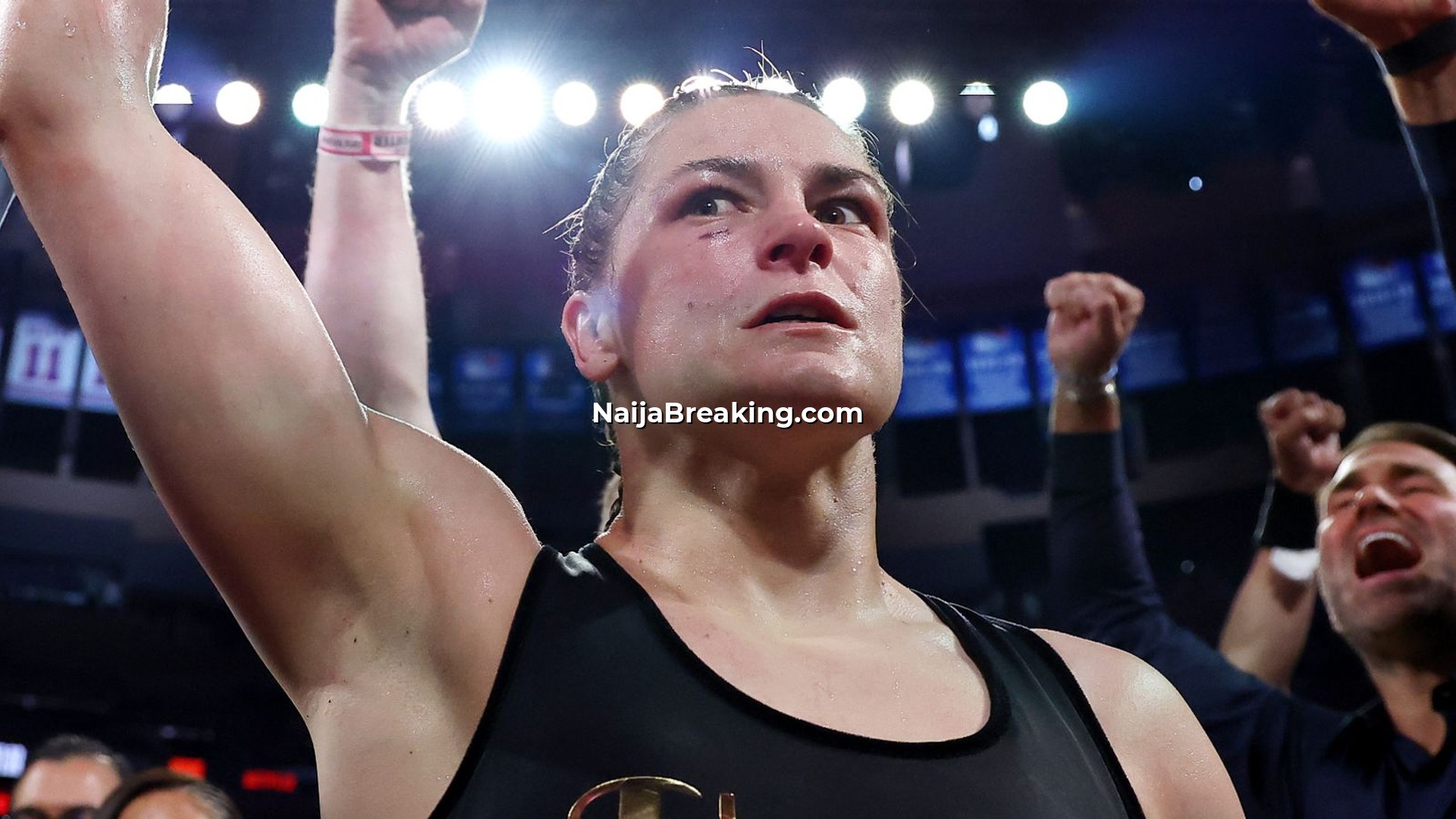
Katie Taylor’s Historic Farewell: The Undisputed Champion Bows Out Against Flora Pili
Katie Taylor’s farewell fight has been officially confirmed, with unbeaten French challenger Flora Pili set to face the Irish boxing legend in what promises to be one of the most significant women’s boxing matches of 2026. The Katie Taylor farewell fight announcement, scheduled for Friday, signals the end of one of boxing’s greatest career arcs—a journey that has transcended sport and inspired athletes across Africa, including Nigeria. At 39 years old, Taylor will attempt to add yet another historic achievement to her legendary resume by unifying the remaining super lightweight titles at Croke Park in Dublin, her home city. This isn’t merely another boxing match; it represents a symbolic moment for women’s sport globally and carries lessons for how Nigeria can build champions of international caliber. The WBC’s confirmation of Pili as the mandatory challenger demonstrates the regulatory framework now governing women’s boxing at the highest level—a stark contrast to the ad-hoc nature of female boxing promotion just two decades ago.
Background
Katie Taylor’s career represents a watershed moment in women’s boxing history, one that Nigerian sports enthusiasts should study closely as the nation seeks to develop world-class female athletes. When Taylor turned professional in 2016 after an amateur career that saw her win multiple world championships, women’s boxing was still struggling for mainstream recognition and equitable pay. The landscape was dominated by male fighters commanding multimillion-dollar purses while women’s bouts were relegated to preliminary cards and minimal media coverage. Taylor’s relentless pursuit of undisputed titles—a feat she has achieved twice before in her career—forced promoters, broadcasters, and sanctioning bodies to take women’s boxing seriously. In Nigeria, where female athletes still battle for sponsorship and media attention, Taylor’s career trajectory offers a blueprint: excellence, consistency, and refusal to accept second-class treatment eventually command respect and resources.
The rise of Taylor coincided with a broader shift in women’s sports globally. Boxing’s four major sanctioning bodies—the WBC, WBA, IBF, and WBO—created separate women’s championship belts, a move that seemed progressive but also created the complex title unification scenario we see today. Taylor’s decision to pursue undisputed status across multiple weight classes demonstrated strategic ambition rarely seen in the sport. Her previous farewell-like announcements, followed by her return to the ring, also reveal the psychological toll of competitive sport at the elite level and the difficulty of truly walking away from a career that has defined one’s identity. For Nigerian athletes, particularly women in traditionally male-dominated sports like football and boxing, Taylor’s career teaches the importance of building unassailable credentials that force institutional change.
Croke Park, the venue expected to host this final chapter, carries symbolic weight in Irish culture and sports history. The stadium’s willingness to host a women’s boxing event at such a prestigious venue demonstrates how one athlete’s excellence can reshape institutional attitudes. This is crucial context for Nigeria, where national stadiums have historically prioritized football and athletics while other sports struggle for equal access and investment. Taylor’s farewell fight at Croke Park represents what becomes possible when an individual athlete achieves such dominance that refusing her demands becomes economically and reputationally untenable.
Key Details
The WBC’s confirmation of Flora Pili as Taylor’s opponent was announced ahead of Friday’s formal declaration, signalling the sanctioning body’s endorsement of what appears to be a carefully orchestrated final chapter. Pili, at 28 years old, brings an impressive unbeaten record of 12-0 to the contest, making her one of the few fighters globally capable of challenging Taylor’s technical mastery. The French challenger holds the mandatory position for Taylor’s IBF super lightweight title and ranks as the top-ranked contender for the vacant WBC belt—a title Taylor previously held before vacating it in 2025 to take a strategic break from boxing.
Taylor’s current title holdings are formidable: she holds the IBF, WBA, and WBO belts at 140 pounds (super lightweight), making her the undisputed champion in that weight class. According to boxing data aggregators, Taylor has compiled a professional record of 23-0 with 6 knockouts, a testament to her technical skill and ring intelligence rather than raw power. The successful unification against Pili would position Taylor to claim undisputed status for the third time in her career—a feat achieved by only a handful of male boxers in history. Promoter Eddie Hearn’s comments to Sky Sports reveal the scale of logistical complexity involved: “Croke Park is not done yet. But there is unbelievable momentum, as I said before, from the government, from Croke Park, from Katie Taylor, but more importantly, the people of Ireland. Everybody’s just got this will-not-be-denied approach to making this happen.” The involvement of the Irish government in facilitating a women’s sports event at this magnitude underscores the cultural and economic significance Taylor has achieved.
The announcement mechanism itself—with the WBC releasing information before the official Friday declaration—demonstrates how modern boxing operates as a carefully choreographed media spectacle. The sanctioning bodies, promoters, broadcast partners, and athletes coordinate timing to maximize publicity and viewership. For Nigerian sports journalism and sports administration, this professional approach to athlete announcements offers lessons in building anticipation and media literacy around sports events. Additionally, the fact that Sandy Ryan, the current WBC champion at super lightweight, is pregnant and has been placed on “Champion in Recess” status shows how modern sports bodies are adapting to protect athletes’ reproductive choices and long-term wellbeing—a progressive policy that Nigerian sports federations have yet to fully implement.
Impact and Analysis
Taylor’s farewell fight carries implications far beyond a single boxing match. At the most fundamental level, it represents the culmination of a career that fundamentally altered the economics and prestige of women’s boxing. When Taylor turned professional a decade ago, the average purse for women’s boxing matches was less than 5% of what male fighters earned for comparable bouts. By 2026, while disparity remains, women boxers at Taylor’s level command seven-figure purses and prime-time broadcast slots. This economic transformation didn’t occur through charity or progressive sentiment alone—it resulted from one athlete’s excellence becoming too significant to ignore. For Nigeria, where female athletes in boxing, weightlifting, and other traditionally undervalued sports struggle for investment, Taylor’s career demonstrates that excellence creates leverage.
The Croke Park venue itself signals how individual achievement reshapes institutional priorities. Major stadiums typically reserve premium dates and facilities for football matches and traditional revenue-generating events. Croke Park’s apparent willingness to host a women’s boxing match as a marquee event reflects the economic opportunity Taylor represents: a legendary athlete’s farewell generates global interest and justifies premium ticket pricing and broadcast fees. This contrasts sharply with how Nigerian sports institutions approach women’s events, often scheduling them at inconvenient times or in secondary venues. Taylor’s precedent suggests that women’s sports in Nigeria could command better resources and visibility if promoted with similar strategic intention. Additionally, Taylor’s technical mastery and longevity challenge persistent myths about women’s athletic capability. Her three-time undisputed status, achieved across multiple weight classes, places her in exclusive historical company and forces reconsideration of baseless claims about female athletes’ durability and skill ceiling.
The economic ripple effects of this fight will extend beyond boxing. Hotel bookings in Dublin during the fight week will spike, restaurants and transportation services will benefit, and broadcast rights will generate substantial revenue for sports networks. This multiplier effect demonstrates why investing in elite female athletes benefits entire ecosystems. Nigerian sports bodies should observe how Croke Park’s decision to host this event positions the stadium as a forward-thinking institution aligned with global trends, enhancing its brand value and attracting future marquee events.
Expert Perspectives
Dr. Seun Oladapo, a Lagos-based sports economist and professor at the University of Lagos, notes that Taylor’s farewell fight exemplifies how individual excellence creates market conditions for gender equity: “When a female athlete becomes commercially indispensable, as Katie Taylor has, the entire ecosystem shifts. Broadcasters want her fights, sponsors compete for association with her, and venues make space for her events. Nigeria’s female athletes in boxing, weightlifting, and other sports could achieve similar leverage if we invested in developing them systematically from youth level upward. What we’re seeing with Taylor is that women’s sports aren’t inherently less marketable—they’re less invested in by sports administrators who default to traditional patterns.”
Chioma Adeyemi, a senior sports analyst at the Centre for Sports and Development in Abuja, emphasizes the psychological and cultural dimensions of Taylor’s farewell: “Taylor’s ability to control her narrative—choosing when to fight, where to fight, whom to fight—represents an autonomy that female athletes in Nigeria rarely achieve. She’s fought at the highest level while maintaining agency over her career. This is crucial because it shows that women’s athletic excellence doesn’t require sacrificing decision-making power to male-dominated promotion structures. Nigerian female boxers and other athletes should study how Taylor negotiated these terms and demand similar autonomy in their own careers. Her farewell fight on her terms, in her hometown, at a prestigious venue, sets a template for how elite women athletes should be empowered.”
What This Means for Nigerians
For ordinary Nigerians passionate about sports, Katie Taylor’s farewell fight matters as a reminder of what elite-level achievement looks like and what women are genuinely capable of at the highest competitive levels. Young female athletes in Lagos, Abuja, Kano, and other Nigerian cities watching this fight will see a woman competing for world titles, unifying prestigious belts, and controlling her narrative in ways rarely visible in Nigerian sports coverage. The broadcast of this fight—whether on SuperSport, DSTV, or streaming platforms available in Nigeria—will be educational. Viewers will witness technical boxing at its finest: Taylor’s footwork, her distance management, her ability to control fights through ring intelligence rather than raw power. For young boxers in Nigeria’s informal boxing gyms in Surulere, Lagos, or Zaria, Kaduna State, this is the standard to aspire toward.
The economic lessons are equally important. Taylor’s career demonstrates that excellence in niche sports can generate substantial income and global recognition. Nigeria’s boxing talent pool is significant, but without systemic development pathways, international promotion, and media coverage, that talent remains undercapitalized. If Nigeria could identify and develop female boxers with even a fraction of Taylor’s discipline and technical skill, the economic returns—both individual and national—would be substantial. Additionally, corporate Nigeria should observe how brands align with Taylor’s legacy: she has sponsorship deals with major corporations, endorsement opportunities, and broadcasting partnerships. This represents a market opportunity for Nigerian companies seeking to build brand credibility through association with excellence.
For parents and educators, Taylor’s career offers evidence against the notion that women’s sports are frivolous or less serious than men’s. A 39-year-old female boxer commanding global attention and major venue access challenges stereotypes that circulate within Nigerian families and educational institutions. The pressure for girls to abandon athletic pursuits in favor of traditionally “respectable” careers diminishes when examples like Taylor’s become visible and celebrated.
Editor’s Take
At NaijaBreaking, we believe Katie Taylor’s farewell fight represents a watershed moment for how global sports are evolving—and an indictment of how far behind Nigeria remains in developing and supporting elite female athletes. What this story reveals is that excellence, properly resourced and promoted, transcends gender and creates its own gravity in the marketplace. Taylor didn’t achieve her status through tokenism or affirmative action; she achieved it through relentless technical mastery and strategic career management. The fact that major institutions—Croke Park, the WBC, broadcast networks, government bodies—are reorganizing themselves to accommodate her final fight demonstrates something Nigerian sports bodies need to internalize: excellence demands accommodation. Nigeria produces enormous athletic talent across boxing, weightlifting, volleyball, and other sports, yet we systematically underinvest in female athletes and then act surprised when they don’t reach international prominence. Taylor’s farewell is aspirational—and it should be triggering urgent self-examination in Nigeria’s sports administration.
What to Watch Next
First, monitor the official Friday announcement for confirmed date and location details. While Croke Park appears inevitable, logistical challenges could emerge—security arrangements, regulatory approvals, and broadcast partnerships all require finalization. Second, observe Flora Pili’s public statements and media activity in the coming weeks. Pili’s narrative and charisma will determine how compelling this final fight becomes to mainstream audiences outside hardcore boxing fans. Third, track ticket sales velocity and pricing data; this will reveal whether Croke Park can command premium rates for a women’s boxing event and whether global audiences justify the economic investment. Fourth, monitor media rights negotiations and which broadcasters secure rights for different regions—including Nigeria. Finally, watch for institutional responses from Nigerian sports bodies. Will this high-profile women’s sporting event at a major international venue prompt any strategic review of how Nigeria’s National Sports Commission invests in female athlete development? The key question now is: Will Nigeria’s sports leadership recognize in Taylor’s farewell the template for developing world-class female athletes, or will this moment pass as another foreign achievement unconnected to local policy and investment decisions?
Conclusion
Katie Taylor’s farewell fight against Flora Pili represents more than the conclusion of an individual boxing career—it symbolizes the arrival of women’s boxing as a legitimate, commercially viable, globally significant sport. Taylor’s journey from amateur champion to undisputed world titlist across multiple weight classes, achieved while maintaining control over her career decisions and venues, sets a new standard for what elite women athletes can demand and achieve. For Nigeria, the lesson is clear: invest systematically in identifying, developing, and promoting female athletes with the same intensity and resources applied to male counterparts, and Nigeria will produce world-class competitors commanding global platforms. The Croke Park venue, the title unification opportunity, the government involvement, and the media intensity surrounding this announcement demonstrate what becomes possible when one athlete’s excellence makes her impossible to ignore. Share your thoughts in the comments below—what do you think this means for Nigeria’s future in developing world-class women athletes, and how should our sports institutions respond to examples like Taylor’s?


