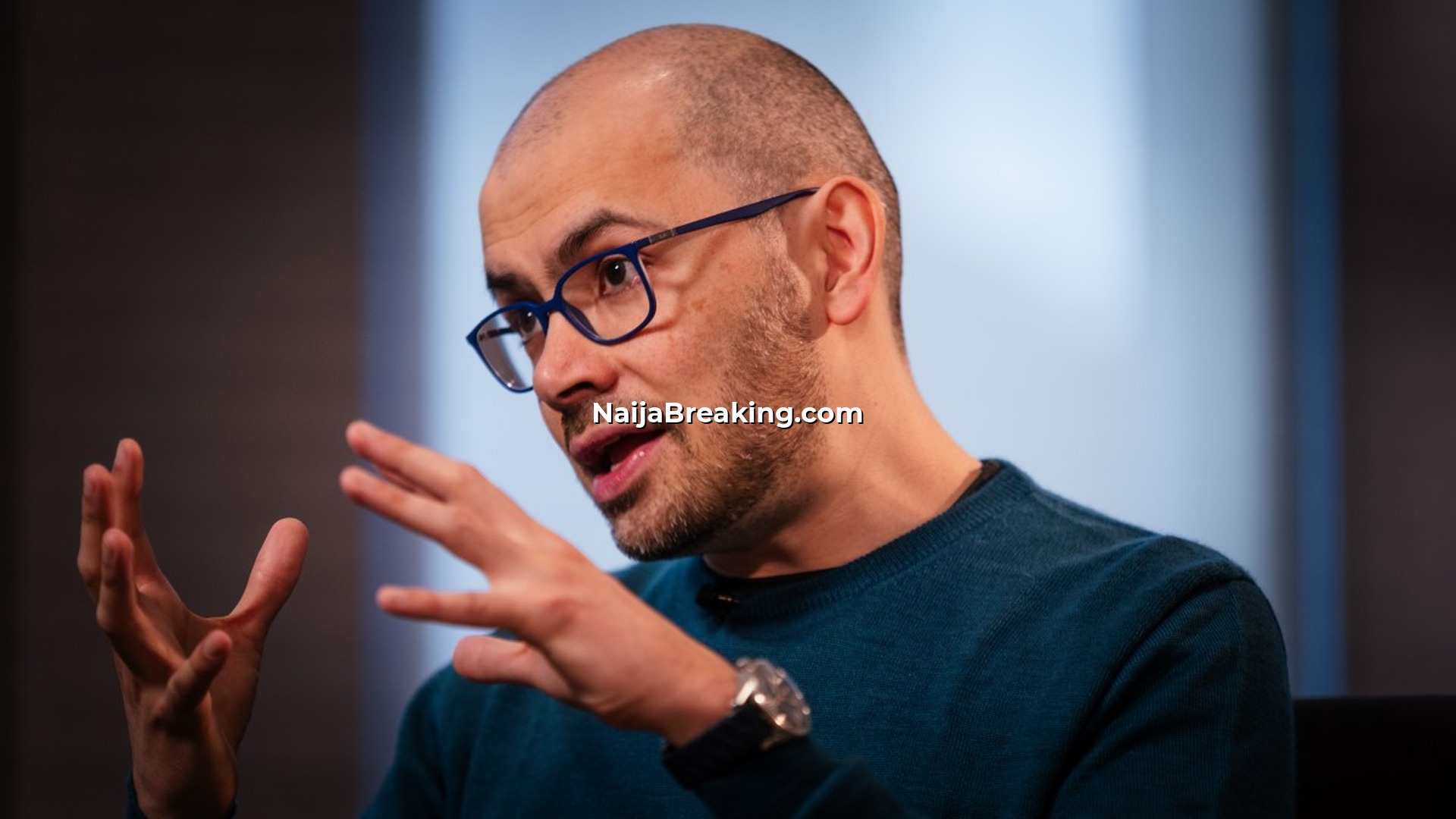
The African Funding Paradox: Why Raising $50,000 Is Harder Than $10 Million
One of the most counterintuitive realities facing Nigerian entrepreneurs and African businesses today is that raising capital Africa startups follows an inverted logic: securing $10 million in institutional funding can be remarkably easier than convincing an investor to write a cheque for $50,000. This paradox has quietly become one of the most damaging structural problems in Africa’s entrepreneurial ecosystem, and it threatens to widen the gap between those who can access institutional capital and those left behind in the informal economy. According to Francis Nasionba, founder of Nairobi-based investment advisory firm Raising Capital, this phenomenon represents a fundamental breakdown in how investment capital flows across the continent—one that has profound implications for the millions of small business owners across Nigeria, Kenya, Ghana, and beyond who are trying to scale their operations without relying on government support or informal lending networks.
The paradox exposes a gap in Africa’s funding infrastructure that has largely gone unexamined by policymakers and development institutions. For Nigerian business owners seeking to expand from a single location to two, hire additional staff, or digitise their operations, this $50,000 to $500,000 funding range represents a critical bottleneck. The capital available through family networks, bank loans, and grant programmes can cover amounts below $50,000, while large institutional investors—venture capital firms, private equity funds, and development finance institutions—typically focus on investment sizes of $1 million and above. This leaves hundreds of thousands of small and medium enterprises (SMEs) across Nigeria stranded in what Nasionba calls “the valley of death” in African fundraising, unable to access the growth capital they need to compete globally or even scale regionally.
Background
To understand how Africa arrived at this capital allocation crisis, we must trace the evolution of the continent’s investment ecosystem over the past two decades. For most of Nigeria’s independent history, formal venture capital barely existed. The capital markets were dominated by government allocation, multinational corporations, and informal lending through family and community networks. The CBN (Central Bank of Nigeria) maintained strict regulations on foreign investment and capital flows, which meant that Nigerian entrepreneurs had virtually no access to international venture funding.
This changed dramatically in the early 2010s. A combination of factors—rising global interest in “frontier markets,” the explosion of African mobile technology (M-Pesa in Kenya, Jumia in Nigeria), and the rise of Silicon Valley’s appetite for emerging market expansion—transformed Africa’s perception internationally. Suddenly, global venture capital firms established offices in Lagos, Nairobi, and Accra. Major development finance institutions like the IFC (International Finance Corporation) and the African Development Bank created dedicated African venture funds. Impact investors, with mandates to fund “Africa’s next generation,” flooded the continent with capital.
However, this capital came with institutional constraints built in from the start. International venture capital, by design, targets companies with high growth potential and significant market scalability—the kind of ventures that can return $100 million or more within seven to ten years. This business model requires checking large cheques (typically $500,000 minimum and often $1 million-plus) because the cost of due diligence, monitoring, and portfolio management makes small investments economically inefficient. Meanwhile, the traditional sources of capital for small businesses—bank loans, government grants, informal lending—either dried up (banks became more risk-averse), became bureaucratically inaccessible (government grants require connections and paperwork many entrepreneurs cannot navigate), or became unaffordable (informal lenders charge 50-100% annual interest).
This institutional mismatch coincided with Nigeria’s economic challenges: the Naira crashed from N197 to the dollar in 2015 to over N1,600 by 2024, inflation surged to double digits, and the traditional formal banking sector retracted from lending to small businesses. The CBN’s monetary policy focus on controlling inflation meant credit became expensive and restricted. For the average Nigerian entrepreneur seeking $100,000 to open a second location or upgrade equipment, options vanished entirely. They were too small for venture capital, too risky for traditional banks, and too visible to informal lenders (who prefer to remain hidden). The result: hundreds of thousands of businesses that could generate employment and wealth simply stalled in growth.
Key Details
According to research from Voices & Visions podcast and TechCabal, Francis Nasionba presents a startling observation about Africa’s capital allocation landscape: “The valley of death in fundraising in Africa is anyone raising between a million dollars and $3 million.” This zone—larger than what family offices or crowdfunding can reasonably provide, but smaller than what institutional venture funds target—has become almost impossible to navigate for the typical African entrepreneur.
Nasionba’s firm, which sits at the intersection of entrepreneurs seeking capital and investors seeking opportunities, documents a clear pattern. Below $50,000, entrepreneurs have diverse options: family members willing to back a trusted relative, small grants from development NGOs, personal savings, or bank microloans (though these come at punishing interest rates—often 20-35% annually in Nigeria). Once amounts exceed $50,000, particularly moving toward $100,000 to $500,000, the options collapse. Traditional banks require collateral (which most entrepreneurs lack) and proof of established revenue (which growing businesses cannot demonstrate). Venture capital firms simply will not look at deals of this size—the administrative cost of reviewing a $100,000 investment is nearly identical to reviewing a $1 million one, making small cheques economically irrational for institutional investors.
The data tells a sobering story. According to the NBS (National Bureau of Statistics), Nigeria has approximately 41 million micro and small enterprises. The FMC (Federal Ministry of Commerce) estimates that less than 10% of these have ever accessed formal institutional capital. The vast majority operate in what economists call the “missing middle”—too large to rely purely on informal networks, too small to attract institutional attention. Meanwhile, Nigeria’s venture capital sector has grown substantially: as of 2023, Nigeria attracted over $450 million in venture funding (according to Partech Africa reports), but the vast majority of this went to 50-100 startups focused on fintech, e-commerce, and SaaS platforms. The $50 billion worth of untapped growth in Nigeria’s SME sector remains almost entirely unfunded through formal channels, forcing entrepreneurs to either stagnate or turn to loan sharks offering 60-100% interest rates.
Impact and Analysis
This capital allocation failure has cascading economic consequences that extend far beyond individual entrepreneurs. When businesses cannot access growth capital, they cannot hire additional employees. When they cannot hire, young Nigerians remain unemployed or underemployed. According to the National Bureau of Statistics, Nigeria’s unemployment rate stands at over 33%, and youth unemployment exceeds 45%. A significant portion of this joblessness would evaporate if SMEs could access growth capital in the $100,000 to $500,000 range—capital that could be deployed to open new branches, acquire equipment, or train and hire staff.
The secondary effect is regional inequality. Capital in Africa, like capital everywhere, flows toward density and institutional capacity. Lagos and Abuja, where international investors maintain offices and have relationships with local networks, capture a disproportionate share of available funding. Small cities like Ilorin, Calabar, or Kano see virtually no institutional investment. This concentrates wealth and opportunity in Nigeria’s already-privileged coastal regions, widening the north-south development gap and fueling migration from smaller cities to overcrowded megacities. An entrepreneur with an excellent manufacturing business in Kano will find it nearly impossible to access formal capital to expand, while a mediocre fintech startup in Lagos (even one losing money) can raise millions.
A third consequence is innovation stagnation. The businesses most likely to innovate at the grassroots level—manufacturing firms improving production processes, agricultural businesses introducing new techniques, local tech companies serving rural markets—are precisely the ones squeezed out of the capital market. Venture capital gravitates toward venture-style opportunities: high-growth, high-risk, potentially high-return startups with founders who fit the profile venture investors know. This creates a bias toward young, urban, English-speaking entrepreneurs solving problems for other young, urban, English-speaking people. The deeper innovation gaps—how to improve agricultural productivity in Nigeria’s north, how to manufacture locally to reduce import dependence, how to serve underserved markets profitably—remain unaddressed because the capital structures incentivise different outcomes.
Expert Perspectives
Dr. Emeka Okafor, lead economist at the Lagos Institute for Economic Studies, argues that the capital allocation paradox reflects a fundamental failure of institutional design across Africa. “What we’re witnessing is not a natural market outcome,” Okafor explains. “It’s the result of how international venture capital was transplanted onto African soil without modification. When a New York-based venture fund opens an office in Lagos, it brings its minimum cheque size, its growth targets, and its exit strategy. But those models were designed for mature, high-density markets with established exit pathways—M&A markets, IPO markets, secondary markets. Africa has none of these. So the capital gets deployed in ways that maximize returns for investors but create structural exclusion for local entrepreneurs.”
In contrast, Zainab Adeyemi, a senior microfinance specialist at the Central Bank of Nigeria’s Development Finance Department, suggests the problem also reflects the retreat of traditional banking from SME lending. “Ten years ago, Nigerian banks were more willing to make loans in the $50,000 to $500,000 range to businesses with demonstrated revenue. The interest rates were high—20-25% annually—but at least the capital was available. Today, with inflation, rising cost of capital, and CBN’s focus on price stability, banks have simply exited this segment. They find it more profitable to lend to government or hold treasuries. This vacuum created an opportunity for alternative capital sources, but those sources—venture capital, impact investors—operate on a completely different logic than traditional banking. The result is a structural gap that no existing institution is motivated to fill.”
What This Means for Nigerians
For the typical Nigerian entrepreneur, the funding paradox translates into a blunt reality: growth requires luck, family wealth, or access to an underground lending market. Consider Chioma, a textile producer in Lagos who has built a successful one-woman operation producing high-quality fabrics for local markets. She earns approximately ₦2 million monthly ($1,300 at current rates) and wants to hire three employees to expand production and serve corporate clients. She needs approximately $50,000 for equipment and working capital—an utterly reasonable ask that would likely triple her revenue within two years.
Chioma’s options are devastating. She cannot approach a bank; most require business registration, tax returns, and collateral (property or stock), and even then, interest rates start at 18% annually. Venture capital firms will not speak with her; her business does not fit their profile and the cheque is too small. She has no rich family to tap. So she turns to an informal lender who offers $50,000 at 60% annual interest—meaning she must repay $80,000 over one year. This interest burden effectively prevents her from expanding; the cash flow gains from expansion are consumed entirely by loan repayment, leaving nothing for reinvestment or employee wages.
Multiplied across Nigeria’s millions of small business owners, this scenario represents massive untapped economic potential. The World Bank estimates that if Nigeria’s SME sector could access capital at reasonable rates (10-15% annually instead of 50%+), GDP growth would accelerate by 2-3 percentage points annually. That translates to millions of additional jobs and trillions in additional Naira output. For the average Nigerian, the funding gap means fewer jobs, slower wage growth, higher consumer prices (because competitive pressure from small businesses declining), and reduced opportunity for social mobility. A teenager whose parent cannot access growth capital to expand their small business has fewer employment prospects, fewer role models of successful self-employment, and less belief in their own economic future.
Editor’s Take
At NaijaBreaking, we believe the capital allocation paradox facing African entrepreneurs represents a policy failure as significant as any monetary or fiscal challenge the continent faces—yet it receives a fraction of the attention. Development institutions, the CBN, and international investors have focused extensively on expanding venture capital and attracting foreign institutional money to Africa. This has created visible success stories: a handful of unicorns, dramatic funding rounds, and impressive venture portfolios. But it has left the overwhelming majority of African entrepreneurs more trapped than they were fifteen years ago. What this story reveals is that simply importing Western venture capital models to Africa, without building the institutional infrastructure to serve small and medium enterprises, was always going to be insufficient. Nigeria’s future prosperity depends on scaling thousands of successful small businesses, not anointing dozens of venture-backed startups. Until policymakers, banks, and investors recognize this, the capital allocation paradox will remain—and the vast majority of Nigerian economic potential will remain on the table.
What to Watch Next
Three developments will determine whether Africa can address the capital allocation paradox. First, monitor whether the CBN and commercial banks will introduce dedicated SME lending products with rate caps and simplified requirements. The Anchor Borrowers Programme and other targeted initiatives have shown this is possible, but they remain underfunded and bureaucratically complex. Second, watch whether development finance institutions like the Africa Development Bank will create explicit “missing middle” funding vehicles—dedicated capital pools of $50,000 to $500,000 targeting verified small business owners. Some initial pilots exist, but they need to scale dramatically. Third, observe whether fintech platforms (Flutterwave, Moneylion, etc.) will move aggressively into SME lending, using alternative credit data and technology to assess risk in ways traditional banks cannot.
The key question now is: will Africa’s private sector innovation in fintech finally address the capital gap that formal finance has abandoned? Or will the missing middle remain missing for another decade?
Conclusion
The paradox that $50,000 is harder to raise than $10 million is not a curiosity—it is a structural indictment of how capital flows in modern Africa. It reveals an institutional mismatch between the types of capital Africa attracts and the types of businesses African economies need to grow. For Nigeria specifically, where 90% of the workforce depends on small businesses for income, this mismatch threatens the country’s ability to create jobs, reduce inequality, and compete globally. Addressing it requires not just more venture capital or more banks, but a deliberate redesign of how capital is allocated to reflect African realities. Share your thoughts in the comments below—what do you think this means for Nigeria’s future?