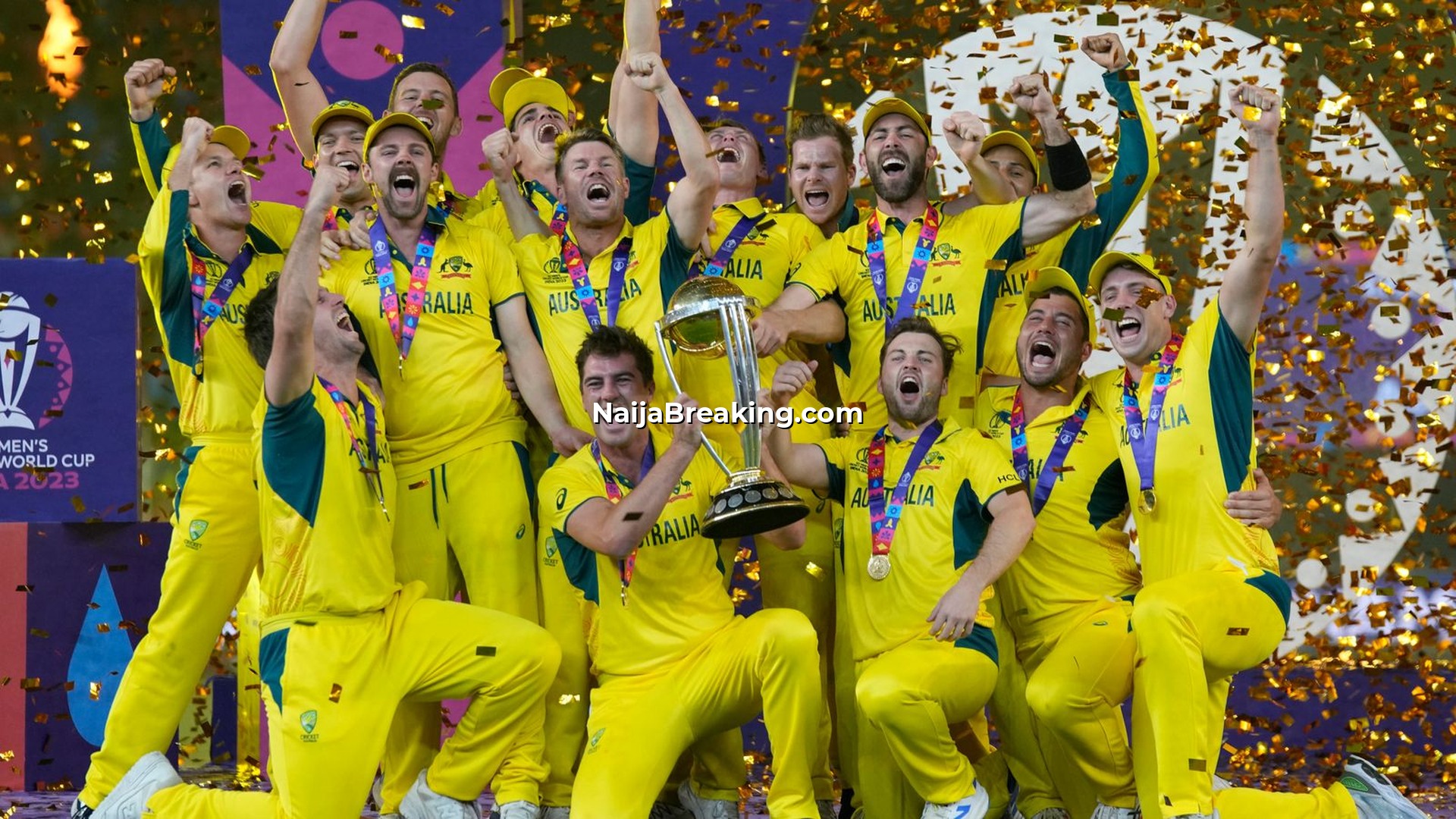
ICC Cricket World Cup format overhaul: 12-team 2027 tournament signals shift in global cricket strategy
Cricket’s international governing body has announced substantial structural changes to its flagship World Cup tournaments, with the 2027 Cricket World Cup format reshaping how teams compete for glory. The International Cricket Council (ICC) has approved a new blueprint for the 50-over and T20 World Cups that fundamentally alters the pathway for emerging cricket nations to reach the main tournament stages. This World Cup cricket format 2027 restructuring, announced following the ICC’s annual board meetings in Edinburgh, represents one of the most significant tournament overhauls in recent cricket history, designed to inject what officials describe as “competitiveness and consequence” into global cricket’s most prestigious competitions. For Nigerian sports enthusiasts and aspiring cricket development programmes across West Africa, understanding these structural changes is crucial—they signal both opportunities and challenges for nations hoping to establish themselves on the international cricket stage. The new format will debut at the 2027 Cricket World Cup, co-hosted by South Africa, Namibia, and Zimbabwe in October-November 2027, marking a watershed moment for how the sport structures its elite competitions.
Background
Cricket tournament structuring has evolved significantly over the past two decades, driven by the ICC’s attempts to balance commercial interests, competitive integrity, and inclusivity for emerging nations. The 50-over World Cup format has traditionally cycled through various structures—from simple round-robin tournaments to group phases with knockout stages. The 2019 World Cup featured 10 teams in a round-robin group, while the 2023 edition expanded to 12 teams in two groups of six, a format that created scheduling challenges and raised questions about the relevance of certain fixtures. This historical context is important for understanding why the ICC felt compelled to revisit the tournament architecture entirely.
The shift towards more “consequential” cricket reflects broader changes in how international sports governing bodies view tournament design. The ICC has faced consistent pressure from major cricket nations demanding more matches between competitive equals, particularly India and Pakistan, whose fixtures consistently generate extraordinary global viewership and broadcasting revenue. Simultaneously, the ICC has attempted to maintain its development philosophy of providing emerging cricket nations with opportunities to compete at the highest level—a tension that has defined ICC decision-making for over a decade.
For context within Nigeria’s sporting landscape, cricket remains significantly underdeveloped compared to football, yet the sport has experienced modest grassroots growth in states like Lagos and Abuja over the past five years. The Nigeria Cricket Federation (NCF) has been attempting to elevate the sport’s profile domestically, though competing for international attention against dominant football culture presents persistent challenges. The 2027 tournament structure changes may create new pathways or barriers for Nigerian cricket development, depending on how the nation’s cricket programme adapts to the new competitive realities.
Key Details
The ICC’s announcement, detailed in Sky Sports’s coverage, reveals a three-stage tournament structure for the 2027 ODI World Cup. While the tournament will maintain its planned 14-team participation, the bottom three-ranked sides must first compete in a “Super Series” round, with only the winner advancing to the main tournament phase. This creates a new qualifying hurdle for the weakest teams, whereas previously all 14 teams would have participated in initial group stages regardless of ranking.
The 12-team main group phase represents a reduction from the 14-team format, with teams divided into two groups of six. From each group, the top three teams automatically qualify, along with the best-placed fourth-ranked team across both groups, creating four teams for the new “Super 7” stage. The Super 7 round features seven teams in a round-robin format, with the top four teams progressing to the semi-finals. This structure fundamentally changes how many matches each team plays and how the tournament distributes competitiveness across its stages.
The ICC’s official statement emphasised that the structure “has been designed to strengthen the competitive narrative across every stage of the event, with matches from Round 1 and Round 2 carrying higher consequence.” A critical detail buried in the announcement is that the expanded Super 7 phase—featuring seven teams instead of the traditional four semi-finalists—allows 21 round-robin matches where previously only four quarter-final matches would determine semi-finalist qualification. This mathematical change dramatically increases the “consequence” of regular-phase matches, as no single victory or defeat determines tournament elimination until the Super 7 stage. The T20 World Cup has received similar structural announcements, though specific details are expected at later ICC board meetings, signalling that Twenty20 tournament reform will follow similar consequence-driven principles.
Impact and Analysis
The 2027 World Cup format restructuring reveals a fundamental philosophical shift within ICC strategy: prioritising “consequential” cricket between competitive equals over inclusive participation pathways. This represents a subtle but significant departure from the inclusive development model that has guided ICC expansion policies since the mid-2000s. By creating a preliminary “Super Series” round where the three lowest-ranked teams battle for a single spot, the ICC is essentially stating that not all 14 teams deserve equal access to the main tournament—a message that carries implications for how emerging nations invest in cricket development.
The economic impact of this restructuring will be substantial, particularly for broadcasting and tournament hosts. The Super 7 stage, featuring seven competitive teams, theoretically generates higher-quality matches with greater audience appeal than traditional group stages where mismatched teams create one-sided contests. However, this logic assumes that the tournament’s competitive hierarchy remains stable—a dangerous assumption in T20 cricket, where upsets occur frequently. For developing cricket nations outside the established elite, this format signals that the ICC values dramatic, high-stakes cricket between major nations over the developmental benefits of cricket exposure for smaller nations.
The potential for increased India-Pakistan matchups, explicitly mentioned in the source material as a consequence of the new structure, underscores how commercial considerations influence tournament design. While these fixtures generate unparalleled broadcasting revenue (estimates suggest each India-Pakistan cricket match generates 15-20 million viewers globally), they come at the cost of reducing meaningful fixtures for other national teams. The opportunity cost is significant: limited tournament slots mean fewer opportunities for nations like Nigeria, Zimbabwe, Afghanistan, or Namibia to build international cricket momentum through World Cup exposure.
Expert Perspectives
Dr. Kolapo Ogunbote, a Lagos-based sports economist at the University of Lagos Business School, argues that the ICC’s format changes reflect global trends prioritising revenue maximisation over inclusive development. “The Super Series preliminary round effectively creates a two-tiered World Cup system,” Ogunbote explains. “Nations ranking outside the established cricket elite now face additional hurdles to participate in the main tournament, which discourages investment in cricket infrastructure in developing nations. From an economic development perspective, this contradicts the ICC’s stated commitment to globalising cricket participation.” His analysis suggests that emerging cricket nations must now prove their competitive credentials simply to access the main tournament stage, raising barriers to entry rather than lowering them.
Conversely, Adeyemi Adekunle, a senior analyst at the Centre for African Sports Management based in Abuja, contends that the new structure will ultimately benefit ambitious emerging nations through enhanced competitive rigour. “The Super 7 stage creates more matches between genuinely competitive teams, improving the overall quality of cricket on display,” Adekunle states. “This approach mirrors successful models in football, where Champions League group stages feature teams of comparable strength. For Nigeria or other African cricket nations aspiring to World Cup relevance, competing in a more tightly contested tournament environment actually provides better development outcomes than participating in mismatched fixtures where learning opportunities are minimal. The ICC is making a calculated bet that quality cricket produces better global engagement than inclusive participation.”
What This Means for Nigerians
For Nigeria’s cricket development ecosystem—encompassing players, coaches, administrators, and the emerging fan base—the ICC’s 2027 format changes present both obstacles and opportunities that will shape the sport’s trajectory across West Africa. Currently, Nigeria’s cricket team operates with limited international exposure compared to football counterparts, competing in regional African tournaments but lacking consistent World Cup participation. The new preliminary “Super Series” stage, where teams ranked outside the top 12 globally must compete for World Cup access, directly affects Nigeria’s pathway to tournament participation.
Practically speaking, Nigerian cricketers will face more stringent pre-tournament qualifying requirements, suggesting that domestic cricket infrastructure investment becomes even more critical for competitive success. The Nigeria Cricket Federation will need enhanced funding to develop elite training facilities, hire foreign coaching expertise, and provide match exposure for promising players—expenses that become harder to justify if World Cup participation becomes less accessible. For young Nigerians dreaming of international cricket careers, the expanded Super Series qualification rounds mean additional competitive tournaments they must navigate before reaching the main stage, creating longer pathways to ultimate achievement.
The format also influences how broadcasting rights and sports sponsorship funds flow within Nigeria’s cricket ecosystem. Fewer Nigerian fixtures in prestigious World Cup tournaments mean reduced broadcast opportunities, which translates into limited commercial sponsorship revenue for the Nigeria Cricket Federation and reduced media attention for domestic cricket development. A footballer’s child might see Nigerians competing in World Cup football matches regularly; equivalent cricket exposure becomes more sporadic and uncertain, affecting how young Nigerians perceive cricket’s competitive viability as a career pathway. This structural disadvantage could widen the gap between football’s institutional development and cricket’s marginal sporting status in Nigeria.
Editor’s Take
At NaijaBreaking, we recognise that the ICC’s tournament restructuring exposes a persistent tension within international sports governance: the competing demands of commercial viability and inclusive development. The ICC’s decision to prioritise “consequential” cricket between elite teams essentially sacrifices development opportunities for emerging nations to maximise revenue from blockbuster fixtures. This represents a legitimate strategic choice, but it should be articulated honestly rather than dressed in development rhetoric. What troubles us is the pretence that this restructuring somehow benefits emerging cricket nations—it demonstrably does not. For Nigeria specifically, the new format signals that international cricket bodies view African nations as developing markets rather than equal participants in cricket’s global ecosystem. This mentality perpetuates structural inequalities that have historically marginalised African cricket, despite the continent’s significant talent pool and growing enthusiasm for the sport.
What to Watch Next
Three critical developments will determine how this format restructuring impacts Nigeria and African cricket broadly. First, monitor the ICC’s announcement regarding T20 World Cup format changes, expected at upcoming board meetings. If the ICC applies similar “Super Series” preliminary stages to T20 tournaments, it would further restrict African team participation in cricket’s shortest and fastest-growing format—a concerning outcome given T20’s emerging popularity across Nigeria. Second, watch the Nigeria Cricket Federation’s strategic response. Will NCF leadership challenge the ICC’s structure through African cricket organisations, or will they accept the new reality and focus on improving Nigeria’s global ranking to avoid preliminary qualifying rounds? This response will indicate whether Nigerian sports administrators view this as a negotiable position or fait accompli. Third, track which emerging nations lobby collectively against the ICC’s new structure at the next general assembly meeting. Coalition-building among African, Caribbean, and Asian cricket nations could potentially force the ICC to revisit format decisions before 2027 implementation.
Conclusion
The ICC’s 2027 World Cup format restructuring represents a watershed moment in international cricket governance, revealing that commercial considerations now substantially outweigh inclusive development objectives. The 12-team main group phase, preceded by a qualifying “Super Series,” creates a two-tiered tournament system that elevates competitive intensity for elite teams while raising barriers for emerging nations. For Nigeria, this restructuring demands strategic responses from cricket administrators and heightened investment in player development infrastructure if the nation hopes to maintain World Cup access and build momentum within a competitive global context.
This story ultimately reveals how global sports bodies make decisions that ripple across developing nations without meaningful consultation from emerging cricket markets. Nigeria’s cricket future depends not on ICC structural changes, but on whether domestic leadership chooses to compete meaningfully within whatever framework international governance bodies establish. The ICC has set the rules; how Nigeria responds will determine whether cricket finally builds sustainable momentum as a secondary sport within the nation’s sporting culture, or remains perpetually marginalised behind football’s overwhelming dominance.
Share your thoughts in the comments below—what do you think this means for Nigeria’s future in international cricket?