AI Standards Body Regulation: DeepMind CEO’s Proposal and What Nigeria Must Know About Global Tech Governance
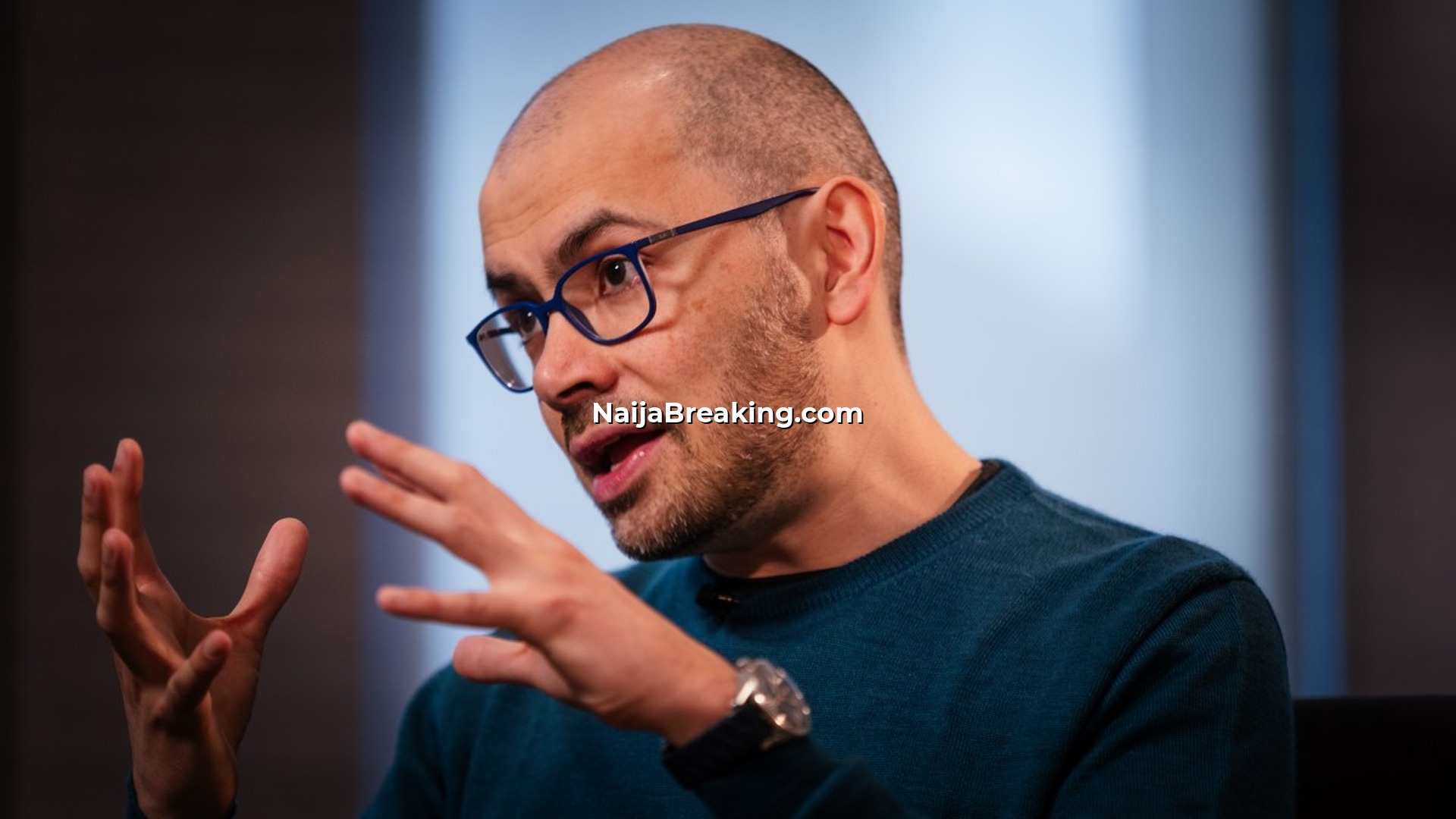
Google DeepMind CEO Demis Hassabis has ignited a crucial conversation about how frontier artificial intelligence models should be regulated, proposing the creation of an independent AI standards body regulation framework modelled after the Financial Industry Regulatory Authority (FINRA). This groundbreaking proposal for AI standards body regulation arrives at a pivotal moment when questions about artificial intelligence governance are reshaping tech policy globally—and Nigeria cannot afford to remain on the sidelines of this critical debate. As one of Africa’s largest tech hubs with a rapidly growing AI research community and over 200 million internet users, Nigeria’s relationship with how the world structures AI standards body regulation will fundamentally determine whether Nigerian businesses, startups, and workers benefit from this transformative technology or fall further behind in the global digital economy. The proposal to establish an independent standards body for evaluating frontier AI models before their release represents a fundamental shift in how the technology industry might police itself, moving away from opaque government reviews toward structured, industry-backed but technically expert oversight that could reshape the entire technology landscape.
Understanding the implications of AI standards body regulation is not merely an academic exercise for Nigeria—it is an existential question for the nation’s technological future. As artificial intelligence systems become increasingly sophisticated and powerful, the mechanisms through which they are evaluated, approved, and deployed will have cascading effects across every sector of the Nigerian economy, from healthcare and education to finance and agriculture. The emergence of proper AI standards body regulation mechanisms could either create opportunities for Nigerian innovators to participate in a transparent, globally-recognized framework, or it could lock them out of essential decision-making processes that will shape the technology they depend upon.
The Growing Need for AI Standards Body Regulation
The push for comprehensive AI standards body regulation did not emerge overnight, but rather developed gradually as concerns about the safety, fairness, and societal impact of large language models have mounted over the past three years. As companies like OpenAI, Anthropic, Google, and Meta released increasingly powerful systems capable of generating human-like text, writing code, creating artistic content, and performing complex reasoning tasks, stakeholders worldwide began questioning whether existing regulatory frameworks could adequately address the unique challenges posed by frontier AI systems.
Initial efforts to oversee these releases proved chaotic and deeply inadequate. The U.S. government’s ad hoc reviews of Anthropic’s models and OpenAI’s systems came under substantial fire for lacking sufficient technical expertise, transparency, and consistency, leaving critics questioning whether decision-makers truly understood the systems they were approving for public use. These regulatory gaps revealed a troubling reality: governments, unprepared for the rapid pace of AI development, were making critical decisions without the expertise necessary to evaluate the actual capabilities and risks of frontier models. This is precisely why Hassabis’s proposal for AI standards body regulation is gaining traction—it suggests that technical experts from the AI community itself might be better positioned to evaluate these systems than bureaucrats working within traditional government structures.
The absence of clear, globally-recognized AI standards body regulation has created a regulatory Wild West where companies make decisions based on internal considerations rather than external accountability. Different jurisdictions have begun implementing contradictory requirements, creating confusion for international developers and businesses. Some countries demand transparency in model documentation; others prioritize speed to market. Some focus heavily on bias mitigation; others emphasize energy efficiency or computational safety. Without a unified AI standards body regulation framework, the global AI ecosystem risks fragmenting into incompatible regional approaches that will make it nearly impossible for smaller nations like Nigeria to participate meaningfully.
Nigeria’s Current AI Governance Landscape
Nigeria’s own relationship with AI standards body regulation and AI governance more broadly has been largely reactive rather than proactive and forward-thinking. While the National Information Technology Development Agency (NITDA) has issued guidelines and the government has spoken eloquently about positioning Nigeria as a continental tech leader, the country lacks a comprehensive, forward-looking AI standards body regulation policy framework that could guide both innovation and risk mitigation. This regulatory vacuum has forced Nigerian companies to operate in an uncertain environment where compliance requirements remain unclear and standards are often determined by foreign jurisdictions.
Meanwhile, Nigerian tech entrepreneurs, artificial intelligence researchers, and digital innovators have become increasingly vocal about the necessity for sensible AI standards body regulation that encourages innovation without sacrificing safety or accountability. The voices of Nigerian developers and researchers remain conspicuously absent from major global discussions about how AI standards body regulation should be structured. This exclusion is problematic not only because it denies Nigeria a seat at the table where crucial decisions are being made, but also because it means that any regulatory frameworks developed without input from African stakeholders may not adequately address the specific needs, capacities, and circumstances of the continent.
The absence of clear national standards has meant that Nigerian companies and research institutions have often adopted whatever practices are dominant in the United States or Europe, leaving little room for locally contextualised approaches to AI standards body regulation that might better suit Nigeria’s particular economic, social, and technological circumstances. This dynamic has effectively ceded regulatory authority to foreign powers, a concerning precedent as AI becomes increasingly central to economic competitiveness and social development.
Nigeria’s tech sector, despite its vibrancy and creativity, remains vulnerable to disruption by shifts in global AI governance frameworks over which it has limited influence. Nigerian fintech companies, for instance, rely heavily on AI systems for fraud detection and credit assessment, yet have minimal input into how these systems are evaluated internationally. Nigerian agricultural technology startups are developing AI applications for crop optimization and pest management, but operate within regulatory uncertainty about what standards their models must meet. Without Nigeria’s meaningful participation in shaping AI standards body regulation globally, these businesses risk finding their solutions incompatible with emerging international standards or excluded from certain markets.
Understanding Hassabis’s AI Standards Body Regulation Proposal
Demis Hassabis’s proposal for establishing an independent AI standards body regulation mechanism represents one of the most serious and technically-grounded approaches to frontier AI governance yet articulated by a major technology leader. The proposal draws inspiration from FINRA, the Financial Industry Regulatory Authority, which serves as a self-regulatory organization for the financial sector in the United States. Just as FINRA establishes rules for broker-dealers and conducts examinations to ensure compliance, an AI standards body would theoretically establish criteria for evaluating frontier models, conduct rigorous technical assessments before release, and enforce compliance with established standards.
The appeal of this AI standards body regulation model lies in its potential to combine technical expertise with institutional accountability in ways that neither pure government regulation nor pure industry self-regulation might achieve alone. An independent AI standards body regulation structure could theoretically insulate decision-making from political pressures while remaining responsive to evolving technical understanding. It could establish transparent criteria for evaluation that all developers must meet, creating a level playing field where smaller companies and international players have clearer pathways to compliance.
However, Hassabis’s AI standards body regulation proposal also raises significant questions that Nigeria and other developing nations must consider carefully. Who would sit on the board of such a body? Would it be dominated by representatives from wealthy Western technology companies and governments? How would developing nations’ perspectives be incorporated? Would an AI standards body regulation mechanism necessarily increase costs for developing frontier AI systems, potentially further concentrating AI development in wealthy nations? These questions matter tremendously for Nigeria’s future technological autonomy and capacity to compete in the global AI economy.
International Regulatory Fragmentation and the Case for Unified AI Standards Body Regulation
Currently, the international regulatory landscape for AI remains fractured and inconsistent, with different jurisdictions pursuing dramatically different approaches to AI standards body regulation. The European Union’s AI Act, for instance, takes a prescriptive, risk-based approach that categorizes AI systems by their potential for harm and imposes different regulatory requirements accordingly. This comprehensive legislative approach aims to protect citizens from high-risk AI applications but critics argue it may stifle innovation and impose excessive compliance burdens.
By contrast, the United States has favored a lighter-touch, sector-specific approach to AI standards body regulation where oversight varies depending on the application domain. Healthcare AI faces different requirements than financial AI, which faces different requirements than AI in criminal justice. This flexibility encourages rapid innovation but raises concerns about inconsistent protection of public interests and potential gaps in oversight where regulatory boundaries are unclear.
Most developing nations, including Nigeria, have struggled to articulate coherent positions on AI standards body regulation, either lacking the technical expertise to understand the nuances of frontier AI systems or lacking the political leverage to influence international standard-setting processes. Nigeria’s absence from these conversations represents a strategic vulnerability that compounds over time as international AI standards body regulation frameworks become established without Nigerian input.
Hassabis’s proposal for a unified AI standards body regulation mechanism attempts to bridge these fragmented approaches by suggesting a middle ground between pure government regulation and unfettered industry self-regulation. A globally-recognized AI standards body regulation framework could theoretically create consistency across jurisdictions, reduce compliance costs for developers operating internationally, and establish transparent, technically-sound criteria for evaluating frontier models. For Nigeria, participating in such a framework could provide access to global best practices in AI governance while creating opportunities to shape standards that reflect African contexts and priorities.
Implications for Nigeria’s Tech Sector and Digital Economy
The establishment of formal AI standards body regulation mechanisms will have profound implications for Nigeria’s technology sector and broader digital economy. Nigerian artificial intelligence startups and research institutions would need to understand and comply with whatever standards emerge from this process. This creates both opportunities and challenges. On the opportunity side, clear AI standards body regulation standards could provide Nigerian developers with transparent guidance about what is expected of them, reducing uncertainty and enabling more confident investment in AI research and development. On the challenge side, rigorous AI standards body regulation requirements might impose compliance costs that are easier for well-resourced Western companies to absorb than for smaller Nigerian firms operating with limited budgets.
Nigeria’s role in shaping this emerging AI standards body regulation landscape is critical. Nigerian policymakers, technologists, and business leaders should be actively advocating for participation in international discussions about how AI standards body regulation should be structured. Nigeria should push for representation in any AI standards body regulation governance structures that emerge, ensuring that African perspectives and priorities are considered. Nigeria should also invest in building domestic technical capacity to understand and implement AI standards body regulation frameworks, rather than passively accepting whatever standards are imposed from outside.
Furthermore, Nigeria should consider developing its own AI standards body regulation mechanisms that complement global frameworks while addressing local needs. Such domestic standards could address how AI systems are developed and deployed within Nigeria while maintaining compatibility with international AI standards body regulation frameworks. This dual approach would position Nigeria as both a participant in global AI governance and a responsible steward of AI innovation within its own borders.
Building Nigeria’s Capacity for AI Standards Body Regulation Participation
For Nigeria to meaningfully participate in shaping AI standards body regulation globally, the nation must invest substantially in building domestic technical and institutional capacity. This requires developing expertise in evaluating frontier AI systems, understanding the capabilities and limitations of large language models, and understanding how to assess AI safety, fairness, and societal impact. Nigeria’s universities, research institutions, and technology companies should collaborate to build this expertise base, creating pools of talent that can participate in international AI standards body regulation discussions credibly and effectively.
Additionally, Nigeria should formalize its own approach to AI standards body regulation within existing institutions or by creating new ones designed specifically for this purpose. NITDA could be strengthened and given explicit mandates related to AI standards body regulation. Alternatively, Nigeria could charter an independent AI standards body regulation organization modeled on Hassabis’s proposal but adapted to Nigerian and West African contexts. Such an organization could work with regional partners in Ghana, Kenya, South Africa, and other African nations to develop African perspectives on AI standards body regulation and represent African interests in global governance forums.
Conclusion
Demis Hassabis’s proposal for establishing an independent AI standards body regulation framework represents a significant development in the ongoing evolution of AI governance. For Nigeria, understanding this proposal and participating actively in the emerging global conversation about AI standards body regulation is essential to the nation’s technological future. Nigeria cannot afford to remain passive as AI standards body regulation frameworks are established without its input. Instead, the nation must invest in understanding these governance mechanisms, building capacity to participate in international discussions, and developing complementary domestic approaches to AI standards body regulation that serve Nigerian interests while contributing to global AI safety and responsibility. The decisions being made now about how AI standards body regulation will be structured will reverberate through the coming decades, shaping whether Nigeria thrives as an AI innovator or struggles as a mere consumer of technologies designed elsewhere. The time to engage with these questions is now.