
US Military Base Borno: Ndume’s Proposal, Foreign Intervention, and Nigeria’s Counter-Insurgency Debate
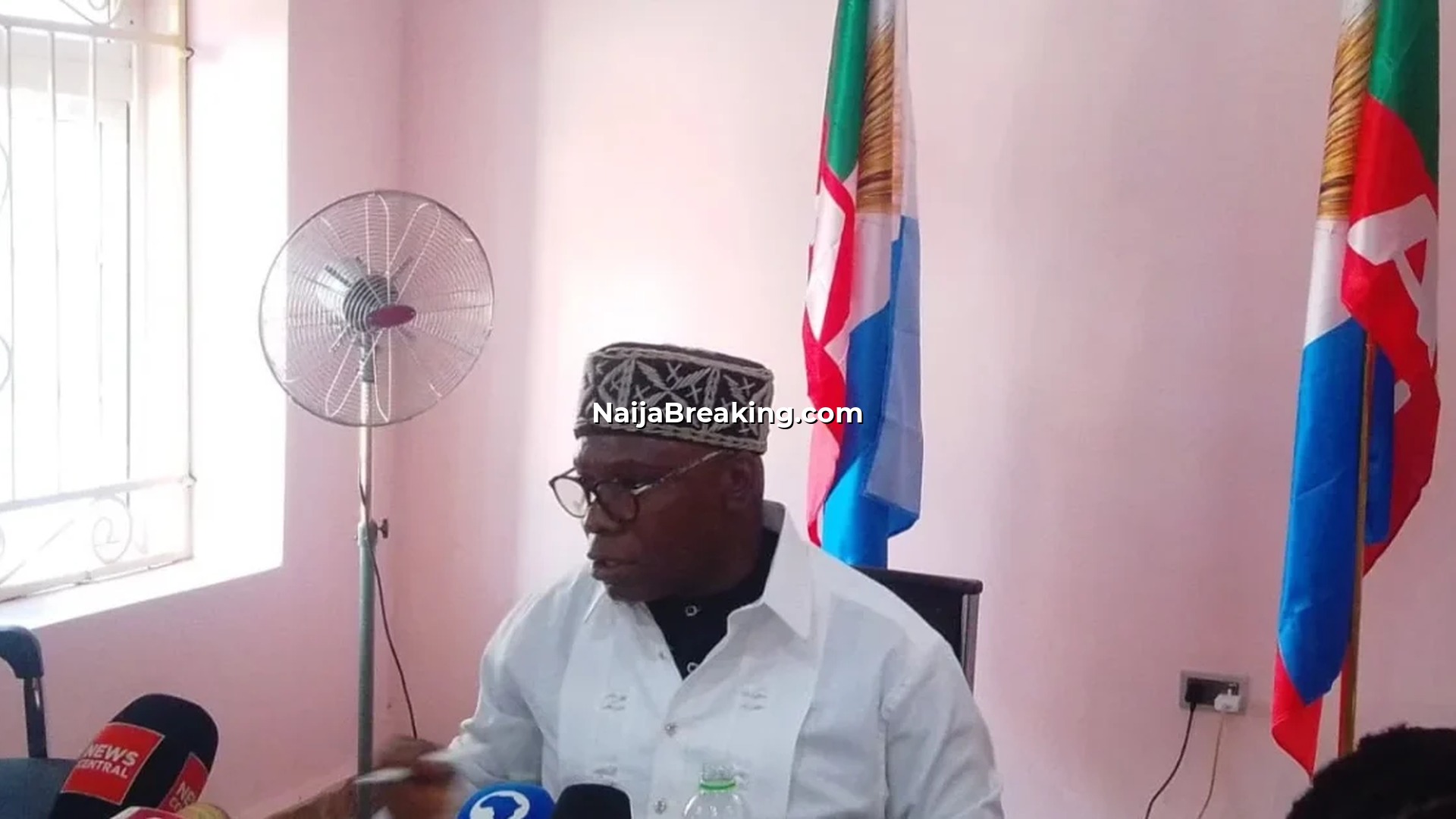
Senator Ali Ndume has reignited one of Nigeria’s most contentious national security debates by publicly advocating for the establishment of a US military base Borno in the strategically significant Mandara Mountains to combat the persistent and evolving Boko Haram insurgency. The former Senate Chief Whip, who represents Borno South Senatorial District, made this significant and controversial appeal during an appearance on Channels Television’s Politics Today programme, arguing passionately that a US military base Borno would serve as a strategic operational hub to monitor, coordinate, and eliminate terrorist strongholds across the entire North-East region of Nigeria. His proposal regarding a US military base Borno has sparked intense discussions among policymakers, security experts, international observers, and the general public about the potential benefits and serious drawbacks of allowing foreign military forces to establish permanent installations on Nigerian soil.
The proposal to establish a US military base Borno emerges at a critical juncture when Boko Haram and its various splinter factions continue to inflict devastating casualties on military personnel, civilian populations, and security forces across multiple states in the Northeast. According to multiple credible sources and reports from international monitoring organizations, the conflict has claimed an estimated 40,000 lives since the group’s violent insurgency began in 2009, with approximately 2 million people displaced from their homes and forced into internal displacement camps or refugee settlements in neighbouring countries. The humanitarian catastrophe accompanying this insurgency has created one of the world’s largest displacement crises, with families torn apart, communities destroyed, and entire regions rendered ungovernable by state authorities. Against this tragic backdrop, Senator Ndume’s call for establishing a US military base Borno represents an attempt to find new and innovative solutions to what has proven to be an intractable security challenge for the Nigerian government.
However, the proposal to site a US military base Borno raises profound and multifaceted questions about Nigerian national sovereignty, the historical effectiveness of foreign military interventions in asymmetric warfare situations, and whether external military solutions can genuinely address what remains fundamentally a complex domestic security challenge. The debate surrounding a potential US military base Borno therefore extends far beyond simple military strategy, touching upon fundamental questions about Nigeria’s independence, international relations, and the most effective pathways toward sustainable peace in the North-East region. This comprehensive analysis examines Senator Ndume’s US military base Borno proposal from multiple perspectives, considering both the potential strategic advantages and the significant sovereignty concerns such an arrangement would entail.
Background: The Evolution of Boko Haram and Nigeria’s Counter-Insurgency Struggle
Nigeria’s protracted battle against Boko Haram stretches back nearly two decades, representing the nation’s most significant domestic security challenge since the conclusion of the Nigerian Civil War in 1970. The insurgency began in 2009 when the militant Islamic sect launched violent uprisings against Nigerian government forces, police establishments, and international institutions they deemed symbols of Western imperialism and moral corruption. What initially appeared to be a localized religious extremism issue in Borno State has metastasized into a complex, multinational security crisis affecting Nigeria, Niger, Cameroon, and Chad, with thousands of fighters dispersed across vast territorial domains difficult for conventional military forces to patrol effectively.
The Nigerian military has deployed enormous resources, personnel, and firepower in attempts to suppress the insurgency, yet Boko Haram and its affiliated groups continue launching coordinated attacks on military installations, killing soldiers and capturing weapons. This persistent insurgency has prompted military commanders, political leaders, and security analysts to explore alternative approaches, including Senator Ndume’s controversial suggestion that hosting a US military base Borno could provide the specialized technical capabilities, intelligence gathering resources, and sustained operational capacity necessary to overcome a determined and adaptable adversary. Understanding the rationale behind such proposals requires examining both the limitations Nigeria has encountered in its counter-insurgency operations and the perceived advantages that international military partnerships might provide.
Senator Ndume’s Proposal: Strategic Arguments for a US Military Base Borno
Senator Ali Ndume’s advocacy for establishing a US military base Borno centers on several strategic arguments grounded in pragmatic military reasoning. First, he contends that a US military base Borno would provide access to American advanced surveillance technologies, reconnaissance capabilities, and intelligence-gathering systems that significantly exceed what the Nigerian military currently possesses. The United States maintains sophisticated satellite imagery systems, drone surveillance networks, and signals intelligence capabilities specifically designed to locate and monitor scattered insurgent groups operating across difficult terrain. Positioning these assets closer to Boko Haram operations through a formal US military base Borno installation would theoretically enable more rapid detection of terrorist movements, allowing Nigerian security forces to respond with greater speed and precision.
Second, Ndume argues that a US military base Borno would facilitate direct military coordination and operational planning between American personnel and Nigerian commanders, eliminating communication delays and bureaucratic friction that sometimes characterize international military cooperation. The presence of American military advisors and specialists permanently stationed at a dedicated US military base Borno would enable real-time consultation, joint planning sessions, and immediate tactical response to emerging threats. This continuous presence differs significantly from occasional visit-based cooperation or remote advisory arrangements, potentially creating more effective integrated command structures.
Third, proponents of a US military base Borno argue that American military personnel and equipment would contribute directly to combat operations, providing additional firepower, air support capabilities, and specialized forces training that could tip the balance in Nigeria’s favour. While American forces would presumably operate under strict constraints regarding direct combat involvement, their mere presence and availability as a rapid response option could serve as a powerful deterrent against large-scale Boko Haram attacks and would provide essential backup during critical tactical situations.
Sovereignty Concerns and International Law Implications
Despite the strategic arguments supporting a US military base Borno, the proposal confronts substantial objections rooted in Nigerian national sovereignty and international law principles. Many prominent Nigerian intellectuals, nationalist politicians, and civil rights activists have expressed deep concerns that allowing permanent establishment of a US military base Borno would constitute a form of neo-colonialism, effectively surrendering Nigerian control over portions of its territory to American military authority. Historically, such arrangements have been viewed throughout Africa as vestiges of colonial dominance and continue to provoke nationalist sentiment across the continent.
The presence of a US military base Borno would require Nigeria to negotiate a Status of Forces Agreement (SOFA) with the United States, establishing legal parameters governing American military operations, jurisdiction over American personnel, rules of engagement, and dispute resolution mechanisms. Such agreements typically grant significant legal exemptions to American service members and require host nations to provide substantial logistical support, security protection, and territorial access. Nigerian concerns center on whether such arrangements would genuinely serve Nigerian national interests or whether they would primarily advance American strategic objectives in Africa while constraining Nigeria’s ability to make independent military decisions.
Additionally, the existence of a US military base Borno could complicate Nigeria’s diplomatic relationships with other nations, particularly those with competing interests in Africa or historical grievances against American military presence. Russia, China, and other nations might perceive a US military base Borno as evidence of American hegemonic ambitions in Africa, potentially triggering counter-balancing responses that could destabilize the region further. Nigeria’s role as Africa’s largest economy and most influential regional power requires careful diplomatic navigation, and hosting a permanent American military installation could compromise the flexibility necessary for complex international negotiations.
Effectiveness Questions: Foreign Military Intervention in Asymmetric Conflict
Beyond sovereignty concerns, significant questions surround whether a US military base Borno would actually prove effective in countering Boko Haram. Historical analysis of foreign military interventions in asymmetric conflicts—whether in Afghanistan, Iraq, Somalia, or elsewhere—reveals patterns suggesting that technological superiority and conventional military might frequently prove insufficient against determined insurgent movements motivated by ideological conviction and deep knowledge of local terrain. Boko Haram’s resilience despite years of intensive military pressure reflects the group’s ability to adapt tactics, disperse forces across difficult geography, secure financial resources through criminal enterprises, and maintain recruitment pipelines through ideological appeal.
Establishing a US military base Borno would address some military-technical dimensions of the insurgency but would not necessarily resolve underlying political, economic, and social drivers fueling Boko Haram’s continued existence. The group recruits members from populations experiencing severe poverty, educational deprivation, political marginalization, and perceived injustices within Nigerian society. Without addressing these fundamental grievances through economic development, educational initiatives, governance reform, and inclusive political participation, military solutions—whether purely Nigerian or augmented by American forces—may only temporarily suppress symptoms while allowing root causes to fester.
Alternative Approaches to Counter-Insurgency
Security experts and development analysts increasingly advocate for comprehensive counter-insurgency strategies extending far beyond military operations. Such approaches would emphasize economic development initiatives in the North-East, educational programs counter-acting extremist ideology, job creation opportunities for youth populations vulnerable to recruitment, and improved governance demonstrating state commitment to citizen welfare. Community-based programs engaging local leaders, religious scholars, and grassroots organizations could prove more effective than external military solutions in building social resilience against insurgent messaging.
International cooperation need not necessarily require permanent military installations. Nigeria could strengthen relationships with the United States through enhanced training programs, equipment provision, intelligence sharing arrangements, and advisory missions without ceding territorial sovereignty. Such arrangements would provide many of the technical and operational benefits Ndume seeks while preserving Nigerian control over military decision-making and avoiding the political complications associated with hosting a US military base Borno.
Regional Implications and Stability Considerations
The proposal to establish a US military base Borno would carry significant implications for regional stability in West Africa and the broader Sahel region. Cameroon and Niger, which host American military installations and face similar insurgency threats, might view a Nigerian US military base Borno as competitive positioning or American preference for Nigeria as a regional partner. Conversely, such an installation could promote trilateral cooperation among the three nations in counter-insurgency operations, potentially creating more effective coordinated responses to Boko Haram and ISIS-affiliated groups operating across borders.
However, the presence of a US military base Borno might also attract increased attention from extremist groups seeking to target American military personnel and installations, potentially making northeastern Nigeria a more attractive operational theater for international jihadist organizations. This security concern complicates the calculus regarding whether such a base would enhance or diminish overall regional stability.
Conclusion: Weighing Benefits Against Sovereignty Costs
Senator Ndume’s proposal regarding a US military base Borno addresses genuine security challenges confronting Nigeria and reflects pragmatic military thinking about leveraging international partnerships. The strategic advantages associated with American surveillance capabilities, specialized forces, and technical expertise are substantial and merit serious consideration. However, these potential benefits must be weighed carefully against significant sovereignty concerns, historical sensitivities regarding foreign military presence in Africa, and uncertainty about whether military solutions—regardless of their sophistication—can ultimately resolve a complex insurgency rooted in political, economic, and social dysfunction.
Rather than pursuing the controversial path of establishing a US military base Borno, Nigeria might achieve its counter-insurgency objectives through enhanced international cooperation frameworks that preserve national sovereignty while accessing necessary technical and advisory support. Such approaches could include expanded training missions, improved intelligence sharing arrangements, equipment provision agreements, and joint operational planning without requiring permanent American military installations on Nigerian territory. The establishment of a US military base Borno represents one possible pathway, but alternative approaches may better serve Nigeria’s long-term interests while advancing counter-insurgency objectives. Ultimately, Nigerian policymakers must determine whether the potential military advantages associated with hosting a US military base Borno justify the political, diplomatic, and sovereignty costs such an arrangement would entail.