South Africa’s Xenophobia Law Enforcement Crackdown: Critical Lessons Nigeria Must Learn Now
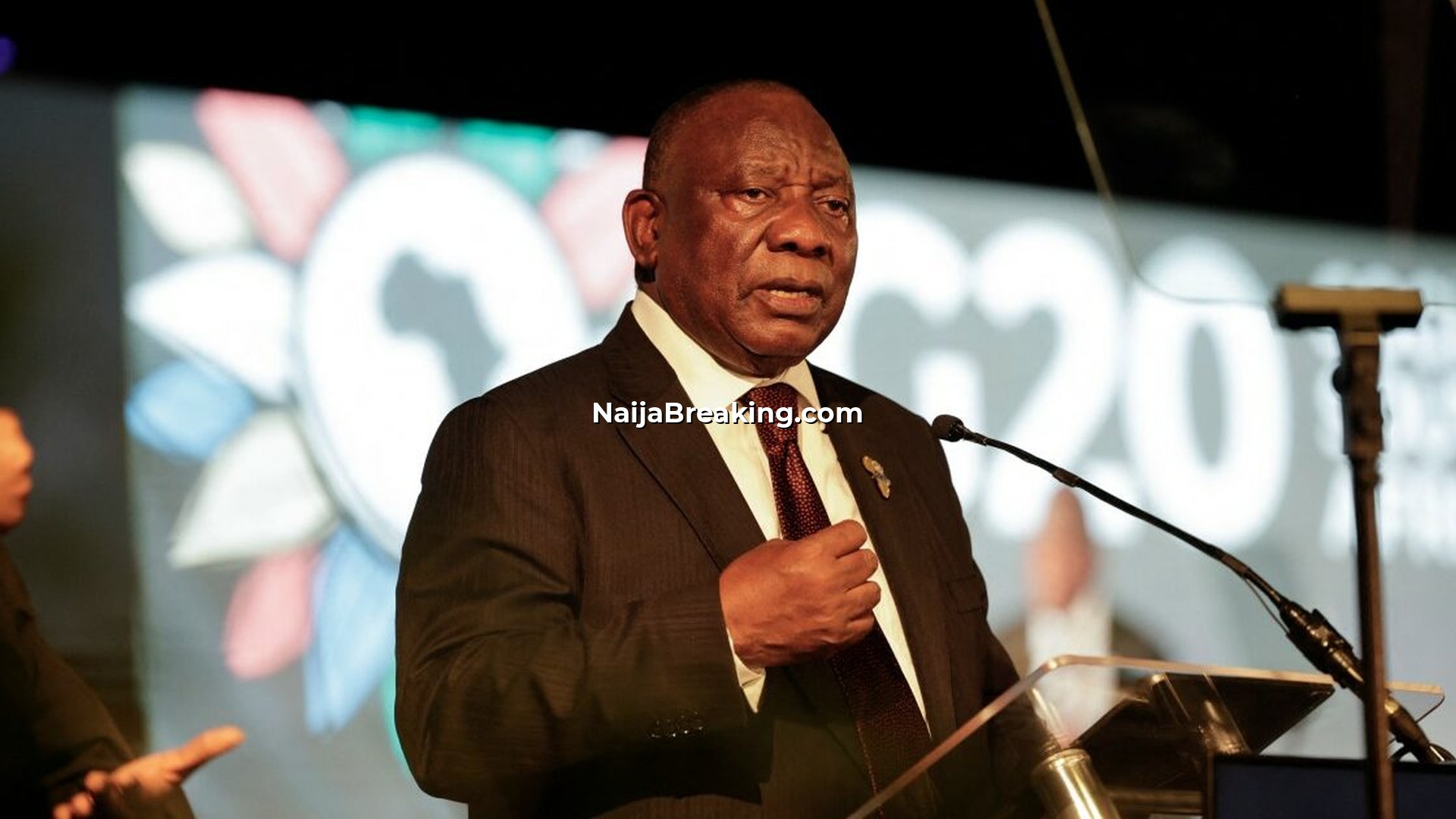
South African President Cyril Ramaphosa has condemned xenophobia with unprecedented force and outlined a comprehensive approach to lawful migration management through reformed xenophobia law enforcement mechanisms, emphasizing that only authorised agencies can enforce laws against foreign nationals. In a recent address to the nation, Ramaphosa stressed that violence, intimidation, misinformation, and xenophobia have no place in South Africa—a stark rebuke of the recurring waves of anti-immigrant sentiment that have plagued the nation for nearly two decades. This landmark development on xenophobia law enforcement carries profound implications not only for South Africa’s approximately 4 million documented foreign nationals but also for Nigeria, which sends one of the largest migrant populations to the Southern African country and faces similar xenophobic pressures domestically. The critical intersection of xenophobia and law enforcement sits at the heart of a regional crisis that threatens ECOWAS stability, economic integration, and the fundamental rights of millions of African citizens seeking better livelihoods across borders. Understanding how South Africa is attempting to reform its xenophobia law enforcement approach offers Nigeria valuable insights into protecting its citizens abroad while maintaining domestic order and regional cooperation.
Understanding South Africa’s Xenophobia Crisis and Law Enforcement Response
South Africa’s relationship with foreign nationals has been fraught with tension since the end of apartheid, when the country opened its borders to African migrants seeking economic opportunity in the continent’s most developed economy. Between 2000 and 2008, the country experienced waves of xenophobic violence, culminating in the May 2008 attacks that left over 60 people dead and displaced thousands of others. Though the organized violence subsided in subsequent years, xenophobic sentiment never disappeared—it merely simmered beneath the surface, periodically erupting into spontaneous attacks, shop looting, and systemic discrimination. More recently, South Africa witnessed renewed xenophobic violence in 2015, 2019, and continuing into the present decade, demonstrating that the problem remains stubbornly entrenched in the national psyche.
The challenge for South Africa’s xenophobia law enforcement authorities has been multifaceted and deeply complex. Traditional law enforcement agencies struggled to balance the imperative of protecting foreign nationals from mob violence while simultaneously managing public order concerns and addressing legitimate grievances about unemployment, service delivery, and inequality among South African citizens. Previous approaches to xenophobia law enforcement often proved inadequate, with police frequently accused of either inaction when foreign nationals faced violence or, conversely, of heavy-handed enforcement that appeared to target migrants disproportionately. President Ramaphosa’s new emphasis on xenophobia law enforcement reform seeks to transform this paradigm by establishing clear protocols, training law enforcement personnel to recognize and combat xenophobic violence, and creating accountability mechanisms for officials who fail in their duty to protect all residents regardless of national origin. This represents a significant shift in how South Africa conceptualizes and implements xenophobia law enforcement at the institutional level.
Nigerian nationals, along with Zimbabweans, Malawians, Congolese, and Somalis, have historically borne the brunt of South African xenophobia and inconsistent law enforcement responses. Nigerian entrepreneurs have faced particular scrutiny, often targeted for running successful informal businesses, operating spaza shops, or working in sectors South African citizens deemed beneath them. The xenophobia law enforcement apparatus has sometimes been weaponized against these communities, with immigration officials conducting aggressive raids on areas with high concentrations of foreign nationals, often without proper warrants or legal justification. Stories abound of Nigerian traders in Johannesburg, Durban, and Cape Town being harassed, robbed, and sometimes murdered, with law enforcement either slow to respond or unwilling to investigate thoroughly. This context makes President Ramaphosa’s commitment to reforming xenophobia law enforcement particularly significant, as it signals an attempt to realign police and security forces toward protecting rather than persecuting foreign nationals.
Nigeria’s Own Xenophobia Crisis: The Domestic Dimension
Nigeria itself has grappled with similar internal migration pressures and xenophobic undercurrents that increasingly demand sophisticated xenophobia law enforcement strategies. The country’s internal displacement crisis—driven by Boko Haram insurgency in the northeast, farmers-herders conflicts in the middle belt, and banditry in the northwest—has created millions of internally displaced persons (IDPs) competing for scarce resources in receiving communities. Cities like Lagos, Abuja, and Port Harcourt host millions of internal migrants from poorer regions, and local tensions over access to housing, employment, and public services frequently erupt along ethnic and regional lines. The Nigerian Police Force and other security agencies have struggled to implement consistent xenophobia law enforcement standards that protect vulnerable migrants while maintaining community cohesion.
Additionally, Nigeria has increasingly tightened immigration controls and restricted foreign workers, reflecting similar protectionist impulses seen across Africa. The country’s immigration service has implemented stricter work permit requirements and has deported numerous foreign nationals accused of competing unfairly with Nigerian workers. However, the framework for xenophobia law enforcement protecting internal migrants remains weak and inconsistently applied. Landlords in Lagos discriminate against northerners; merchants in Enugu discriminate against Igbos; security personnel in Kano discriminate against southerners—and the state’s xenophobia law enforcement capacity to address these interlocking forms of discrimination remains minimal. The irony is stark: Nigeria is simultaneously a source country (sending millions of nationals abroad) and a destination country (receiving migrants from West Africa and beyond), yet it lacks coherent, dignified approaches to xenophobia law enforcement that would protect vulnerable populations while maintaining order.
The xenophobia law enforcement challenge in Nigeria is further complicated by economic desperation. With unemployment rates among youth exceeding 35% in some regions, local populations view foreign migrants—whether international or internal—as economic competitors rather than fellow Africans seeking to improve their circumstances. When a Ghanaian trader operates a successful business in Lagos, or a Malian migrant finds work in Abuja, resentment builds among unemployed Nigerian youth. Police and security forces, themselves often underpaid and frustrated, sometimes share these xenophobic sentiments, making xenophobia law enforcement efforts counterproductive. Rather than protecting migrants from harassment and violence, law enforcement may participate in or tolerate such abuses. This systemic failure in xenophobia law enforcement has created an environment where foreign nationals fear engaging with police, where business transactions occur in the shadows of illegality, and where communities remain fractured along lines of origin and ethnicity.
South Africa’s Ramaphosa Administration: A New Model for Xenophobia Law Enforcement?
President Ramaphosa’s recent statements represent an unprecedented attempt to recalibrate South Africa’s entire approach to xenophobia law enforcement at the executive and institutional levels. Rather than treating xenophobia as merely a social problem or a manifestation of unemployment and inequality, Ramaphosa has explicitly criminalized xenophobic violence and designated it a priority for law enforcement action. His administration has signaled that xenophobia law enforcement will involve prosecuting perpetrators of xenophobic violence, investigating and disciplining law enforcement personnel who discriminate against or fail to protect foreign nationals, and implementing comprehensive training programs for security forces on migrant rights and protection protocols.
This approach to xenophobia law enforcement introduces several key innovations that Nigeria should study carefully. First, it establishes clear command-and-control structures within law enforcement organizations, with explicit accountability for xenophobia law enforcement outcomes. Police commanders who fail to investigate xenophobic crimes thoroughly, or whose units develop reputations for tolerating xenophobic violence, face performance reviews and potential removal. Second, it prioritizes victim protection and perpetrator prosecution, reversing the historical pattern where foreign nationals faced police scrutiny while attackers escaped accountability. Specialized xenophobia law enforcement units have been created in major metropolitan areas to respond rapidly to reports of violence or discrimination targeting foreign nationals. Third, it integrates xenophobia law enforcement into broader community policing and crime prevention strategies, recognizing that sustainable order requires building trust between police and migrant communities rather than maintaining separation and suspicion.
The Ramaphosa administration’s xenophobia law enforcement strategy also includes significant international dimensions. South Africa has engaged with ECOWAS, the African Union, and bilateral partners to develop joint protocols for protecting migrant workers, conducting investigations of cross-border crimes targeting foreign nationals, and sharing intelligence about xenophobic networks and hate groups. This represents a recognition that xenophobia law enforcement cannot succeed within national borders alone—it requires regional cooperation and international support. Nigeria, which chairs multiple regional security mechanisms and hosts significant populations of West African migrants, is particularly well-positioned to learn from and potentially amplify South Africa’s xenophobia law enforcement model across the ECOWAS region.
Specific Lessons for Nigeria’s Law Enforcement Institutions
Nigeria’s security architecture—encompassing the Nigerian Police Force, the Department of State Services (DSS), the military, and the Nigeria Immigration Service—must urgently adapt to implement more sophisticated xenophobia law enforcement protocols. The first crucial lesson from South Africa’s experience is that xenophobia law enforcement requires dedicated institutional capacity and resources. Nigeria cannot simply add xenophobia concerns to already-overburdened police units dealing with terrorism, armed robbery, and organized crime. Instead, the Nigeria Police Force should establish specialized xenophobia law enforcement divisions within its Criminal Investigation Department (CID), with personnel trained specifically in identifying, investigating, and prosecuting crimes motivated by xenophobic bias. These units should have clear performance metrics, regular reporting requirements, and accountability mechanisms to ensure they function effectively.
Second, Nigeria must urgently develop and implement comprehensive training programs on xenophobia law enforcement for all security personnel, from police constables to senior officers. This training should include modules on recognizing xenophobic discrimination, understanding the rights of foreign nationals under Nigerian and international law, de-escalation techniques for xenophobia-related conflicts, and trauma-informed victim support. The Nigeria Police Academy, the Nigerian Defence Academy, and training institutions for immigration and security personnel should integrate these xenophobia law enforcement modules into their curricula. Officers should receive regular refresher training and certification in xenophobia law enforcement competencies, with completion of such training becoming a prerequisite for promotion within security services.
Third, Nigeria must establish clear legal frameworks and protocols for xenophobia law enforcement that provide guidance to both security personnel and the general public about what constitutes xenophobic discrimination and what consequences perpetrators face. While Nigeria’s Constitution and various laws prohibit discrimination based on ethnicity, origin, and similar grounds, enforcement remains inconsistent and weak. The government should consider enacting a dedicated Anti-Xenophobia and Discrimination in Law Enforcement Act that provides specific definitions, establishes reporting mechanisms for xenophobia law enforcement failures, and creates civilian oversight bodies to review allegations of discriminatory law enforcement practices. Such legislation would signal serious commitment to reforming xenophobia law enforcement while providing clarity about standards expected of security personnel.
Economic Integration and Regional Xenophobia Law Enforcement Cooperation
Beyond institutional reforms, Nigeria must recognize that effective xenophobia law enforcement is inseparable from broader regional economic integration efforts. The ECOWAS Free Movement Protocol, which guarantees citizens of member states the right to reside, work, and establish businesses throughout the region, is theoretically powerful but practically undermined by persistent xenophobia law enforcement failures. When Nigerian traders in Ghana face harassment from local authorities, when Ghanaian workers in Nigeria encounter labor exploitation without recourse, when Ivorian migrants in Nigeria experience police abuse—the entire regional integration project suffers. South Africa’s xenophobia law enforcement reforms, if successful, could demonstrate that regional mobility and economic integration are compatible with security and order, fundamentally changing the discourse across Africa.
Nigeria should use South Africa’s experience to argue for a coordinated ECOWAS response to xenophobia law enforcement challenges. This could involve establishing a regional database of xenophobia-related crimes, facilitating cross-border investigations and prosecutions, developing joint training programs for xenophobia law enforcement personnel, and creating mechanisms for victims of xenophobic violence to seek justice across borders. The Economic Community of West African States Justice Court could potentially handle cases involving alleged xenophobic discrimination or violence targeting ECOWAS citizens, creating an additional layer of accountability for state actors who fail in their xenophobia law enforcement duties. Such mechanisms would require political will and resource commitment, but they would fundamentally transform the protection available to African migrants throughout the region.
Conclusion: From Rhetoric to Action on Xenophobia Law Enforcement
South Africa’s renewed commitment to combating xenophobia through reformed law enforcement mechanisms represents a critical moment for regional transformation. For Nigeria, which bears particular responsibility as a major source and destination country for African migrants, the lesson is unambiguous: xenophobia law enforcement reform cannot be postponed or treated as peripheral to core security concerns. Instead, it must become central to how Nigeria conceptualizes and executes its security mission. The Nigerian government should immediately convene a National Summit on Xenophobia and Law Enforcement, bringing together security officials, migrant advocacy organizations, international partners, and regional counterparts to develop a comprehensive National Xenophobia Law Enforcement Action Plan. This plan should establish clear timelines for institutional reforms, resource allocations, training programs, and accountability mechanisms. It should also include mechanisms for public reporting on xenophobia law enforcement outcomes, ensuring that progress can be monitored and maintained across electoral cycles and changes in leadership. By learning from South Africa’s experience and demonstrating commitment to reformed xenophobia law enforcement, Nigeria can position itself as a leader in regional integration, human rights protection, and enlightened security practice. The alternative—continued inconsistent and sometimes discriminatory xenophobia law enforcement—threatens not only the welfare of millions of African migrants but the very foundation of regional cooperation and continental integration that Africa desperately needs.