
Maryland Mall in Financial Storm: Inside Nigeria’s Iconic Shopping Crisis
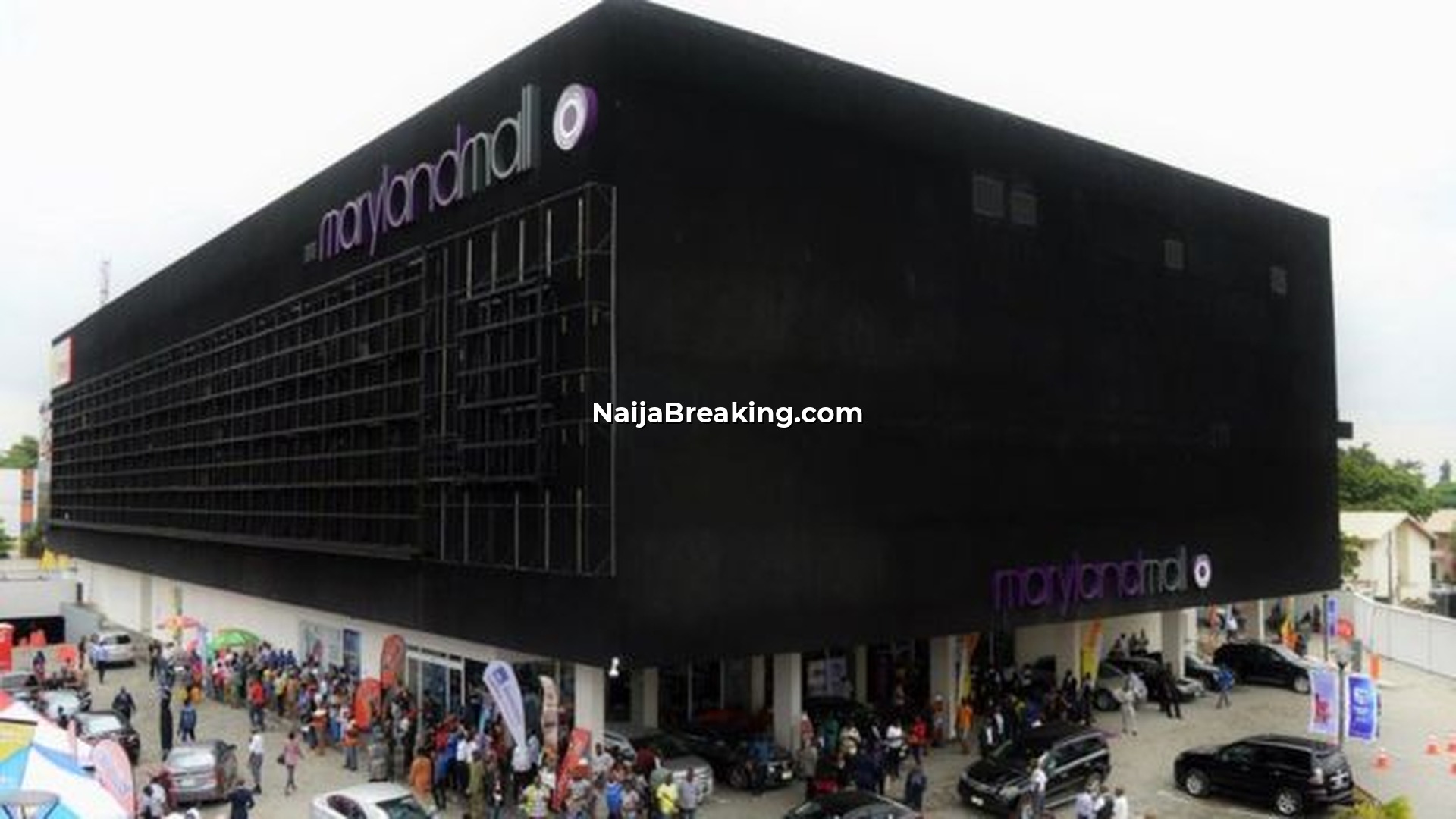
The Maryland Mall, once a gleaming symbol of commercial excellence in Lagos, currently finds itself navigating treacherous financial waters that have left industry observers questioning its future viability. Maryland Mall receivership represents one of Nigeria’s most prominent cases of a major commercial real estate asset being placed under external management due to mounting financial pressures and operational challenges. Every visit to this iconic establishment tells a story of gradual decline—a narrative that has increasingly captured the attention of business analysts, investors, and everyday Nigerians who remember when Maryland was the destination for premium shopping and entertainment. According to recent reports from Nairametrics, the situation has deteriorated to the point where receivership managers are actively seeking buyers through discreet yet urgent advertising campaigns in major national publications. This crisis did not emerge overnight; rather, it represents the culmination of years of mismanagement, macroeconomic headwinds, and structural challenges that have plagued Nigeria’s retail sector since the removal of fuel subsidies in 2016. Understanding what happened to Maryland Mall provides crucial insights into how Nigeria’s business environment punishes inefficiency and how forex volatility can devastate even seemingly stable enterprises. The story of Maryland Mall is, in many respects, a microcosm of broader challenges facing Nigerian retail and commercial real estate sectors.
Background
Maryland Shopping Mall, strategically located in the Mende area of Maryland, Lagos, emerged as one of West Africa’s premier shopping destinations when it was developed by its original owners, Purple Limited. The mall represented a significant investment in commercial real estate at a time when Lagos was experiencing rapid urbanisation and growing consumer demand for organised retail spaces. With its iconic LED billboard, reputed to be one of the largest advertising displays on the African continent, Maryland Mall became instantly recognisable across Lagos and beyond. The facility attracted premium retailers, restaurants, and entertainment venues, drawing consistent footfall from middle and upper-class consumers throughout Lagos and neighbouring states.
However, the structural foundation of Maryland Mall’s success began to crack following Nigeria’s abrupt removal of fuel subsidies in May 2016, an economic policy shift that triggered cascading effects throughout the entire business environment. The subsidy removal precipitated a sharp depreciation of the Nigerian Naira against major foreign currencies, particularly the United States Dollar. This forex volatility created a perfect storm for businesses like Purple Limited, which had financed their operations and expansion plans using foreign currency debt, likely secured from South African financial institutions commonly referred to colloquially in Nigerian business circles as “shylocks.” As the Naira weakened from approximately 197 to the Dollar in mid-2016 to significantly higher rates by 2017-2018, businesses suddenly found their foreign currency obligations ballooning dramatically when converted to Naira equivalents.
The receivership management arrangement that ultimately ensnared Maryland Mall was not an immediate consequence of the 2016 forex crisis but rather represented the culmination of several years of struggling to service foreign currency debt obligations. By the time Purple Limited defaulted on its periodic forex repayments, the company’s ability to generate sufficient Naira-denominated revenue from mall operations could no longer bridge the growing gap between local earnings and foreign currency obligations. This situation mirrors the experience of numerous Nigerian businesses that over-leveraged in foreign currency during periods of relative Naira stability, only to find themselves drowning in debt when currency markets shifted dramatically. According to financial analysts, the forex exposure that Purple Limited carried represented a systematic risk that was inadequately hedged or managed.
Key Details
The receivership arrangement for Maryland Mall represents a significant turning point in the mall’s operational history, marked by a series of decisions that have puzzled industry observers and concerned stakeholders. According to the Nairametrics report, the receivership managers took control of operations with the stated objective of running the facility efficiently to reduce liability exposure and eventually eliminate liabilities entirely through improved performance. However, the decisions made by these managers have contradicted this stated objective in several fundamental ways. Most notably, the receivership team shut down the large LED billboard—the mall’s most recognisable asset and historically one of its most significant revenue generators—effectively eliminating what financial analysts describe as a seven-figure annual revenue stream from a single asset.
Additionally, receivership management discontinued the collection of parking toll fees, another substantial revenue source that historically contributed meaningfully to the mall’s operational income. Parking tolls in premium shopping destinations across Lagos typically generate between N5 million to N15 million monthly depending on footfall and pricing structure, yet this revenue stream was simply abandoned. The combination of shutting down the LED board advertising services and ceasing parking collections represents an estimated annual revenue loss exceeding N100 million—a devastating blow to any facility attempting to service debt obligations and maintain operations. These decisions raise critical questions about the receivership managers’ strategic vision and financial competency, as deliberately eliminating major revenue streams contradicts the fundamental objective of debt reduction through operational efficiency.
The situation deteriorated further when an obscure but significant full-page advertisement appeared in a major national business newspaper, effectively announcing Maryland Mall’s availability for sale to interested parties. This advertisement employed marketing language designed to attract serious institutional investors, describing the mall as an “iconic” property with a world-class LED display capable of generating approximately 1,000 impressions per second. The sales pitch emphasized the property’s prime location, diversified customer base, strong foot traffic patterns, and capable management infrastructure—claims that appeared somewhat incongruous given the visible evidence of decline witnessed by recent visitors. The advertisement invited serious bidders to request an information memorandum containing comprehensive financial and operational details, after which a preferred bidder would be selected and the transaction completed. This move signalled that the receivership managers had effectively abandoned hopes of rehabilitation and had pivoted toward asset disposition as their primary strategy.
Impact and Analysis
The financial distress at Maryland Mall carries significant implications for Nigeria’s commercial real estate sector, retail landscape, and broader business environment perception. The mall’s decline from a premier destination to a receivership candidate demonstrates how quickly market confidence can evaporate when fundamental operational and financial challenges accumulate. Industry analysts note that the retail sector in Lagos, which collectively generates approximately N2.5 trillion in annual transactions according to various market surveys, remains vulnerable to the types of macroeconomic shocks that devastated Purple Limited. The Maryland Mall situation specifically illustrates how forex exposure in debt structures, inadequately hedged and poorly managed, can rapidly transform profitable enterprises into liability-laden operations incapable of servicing obligations.
From a real estate valuation perspective, the receivership and attempted asset sale have fundamentally altered market perception of the Maryland property. What was previously valued as a premium commercial asset generating reliable returns has now been reframed as a distressed property requiring rehabilitation investment. This perception shift typically results in significant valuation haircuts—industry sources suggest comparable properties in receivership situations typically sell at 30-50% discounts to their pre-distress valuations. The Maryland situation also raises concerns among financial institutions regarding their exposure to similar commercial real estate assets. Banks and non-bank lenders have become increasingly cautious about extending credit to retail and hospitality sectors following high-profile failures, which has effectively tightened credit availability for legitimate commercial property investments across Lagos.
Expert Perspectives
Industry experts and commercial real estate analysts have offered varying perspectives on the Maryland Mall situation and what it reveals about Nigeria’s business environment. Dr. Tunde Balogun, a commercial property specialist at the Lagos Business School, commented that “the Maryland situation represents a systemic failure in risk management and financial discipline. Companies that borrow in foreign currency without corresponding revenue streams denominated in that same currency are essentially betting on currency stability—a bet that frequently fails in emerging markets like Nigeria.” His assessment underscores the critical importance of currency matching in debt structures, a principle that appears to have been inadequately applied in Purple Limited’s financial planning.
The Central Bank of Nigeria (CBN), through its regulatory framework and policy pronouncements, has consistently warned financial institutions and borrowers about unhedged foreign currency exposure. CBN Governor statements on monetary policy have repeatedly emphasised that businesses must implement robust forex risk management strategies. Real estate investment trust managers interviewed anonymously by financial journalists noted that the Maryland situation has accelerated investor caution regarding large commercial real estate plays in Lagos. The consensus among financial professionals is that assets like Maryland Mall require continuous operational excellence and strong financial management to justify premium valuations, qualities that appear to have been lacking under previous ownership structures.
What This Means for Nigerians
For ordinary Nigerians, particularly Lagos residents and the wider consumer base that frequented Maryland Mall, the implications extend beyond financial metrics and into daily lived experience. The mall’s decline represents the loss of a social and commercial space where middle-class and upper-middle-class Nigerians congregated for shopping, dining, and entertainment—a function that contributes to quality of life and consumer choice diversity. The reduction in operational services at Maryland, including the elimination of the iconic LED billboard and parking services, translates directly to diminished consumer options and reduced convenience for shoppers accustomed to utilising the facility. For workers employed at the mall, whether directly by tenants or through service contractors, the receivership situation creates job uncertainty and potential income disruption.
The Maryland Mall situation also carries broader implications for Nigerian consumer confidence in commercial real estate investment and modern retail infrastructure. When iconic facilities that once represented the pinnacle of commercial development begin manifestly deteriorating, it sends negative signals about Nigeria’s investment climate and the sustainability of major commercial projects. For small business owners operating retail outlets within the mall, the receivership situation creates operational uncertainty regarding lease renewals, rent escalations, and facility maintenance standards. The attempted sale process, while potentially offering resolution, introduces additional uncertainty regarding future ownership, management philosophy, and operational standards under new proprietorship.
Investors considering commercial real estate or retail sector investments in Nigeria look to cases like Maryland Mall for lessons regarding risk management and operational resilience. The evident decline in the facility’s condition—documented by recent journalistic visits noting unkempt premises and inadequate service delivery—raises consumer perception concerns that could take years to reverse even with improved management. For the Nigerian public more broadly, the Maryland situation reinforces lessons about currency risk, the importance of financial prudence in business, and how macroeconomic policy shifts can rapidly transform commercial landscapes. The case has become a cautionary tale taught in Nigerian business schools regarding improper forex exposure management.
Conclusion and Outlook
The Maryland Mall receivership represents a cautionary narrative about the intersection of ambitious commercial development, inadequate financial risk management, and macroeconomic volatility in Nigeria’s business environment. From its emergence as a premier shopping destination to its current status as a receivership property seeking buyers, the mall’s trajectory encapsulates broader themes affecting Nigerian commerce. The decisions made by receivership managers—shutting down major revenue streams rather than optimising them—suggest a mindset of asset liquidation rather than operational rehabilitation, indicating that stakeholders have largely accepted that Maryland’s revival under current arrangements is impractical. Industry observers anticipate that the property will eventually be acquired by an investor or institutional buyer willing to undertake significant operational and possibly structural rehabilitation. Such revival would require committed capital, professional retail management expertise, and a strategic vision aligned with contemporary consumer preferences and Lagos’s evolving commercial landscape.
The path forward for Maryland Mall remains uncertain but likely involves new ownership with the financial capacity and operational expertise to revitalise the property. Whether the new ownership will successfully restore Maryland to its former glory or whether the facility will be repositioned for alternative commercial uses remains to be seen. What is certain is that the Maryland Mall situation has provided Nigeria’s business community with important lessons regarding currency risk management, the dangers of over-leverage in foreign currency, and the critical importance of maintaining operational excellence in competitive commercial real estate markets. As Lagos continues its rapid urbanisation and commercial expansion, Maryland Mall’s story serves as both warning and opportunity—a reminder that even iconic commercial assets require vigilant financial stewardship and strategic management to maintain their competitive position and stakeholder value. Share your thoughts in the comments below.


