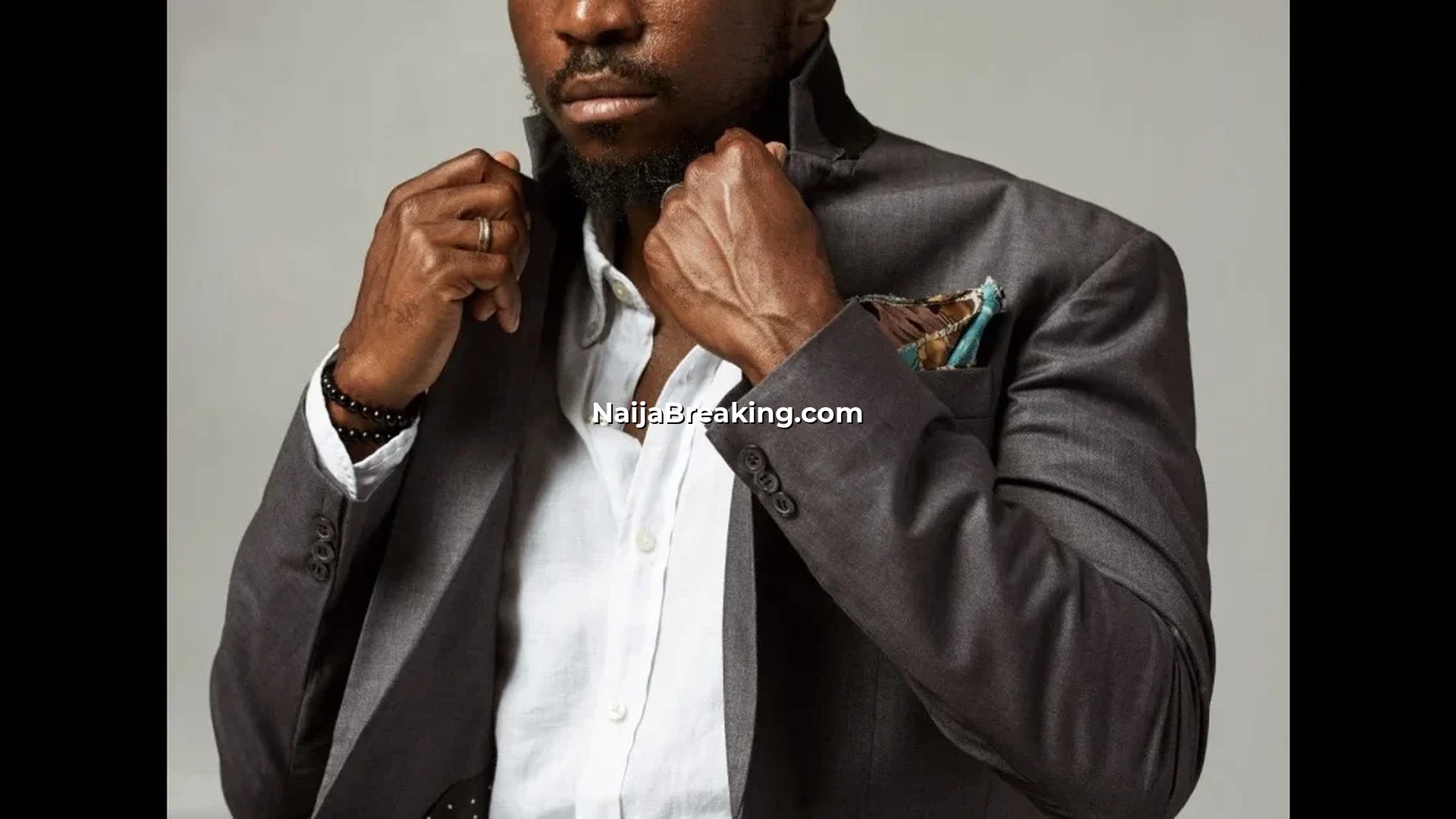
Timi Dakolo Debt Dispute: Inside the Cancelled UK Tour That Exposed Nigerian Artists’ International Challenges
The Timi Dakolo debt dispute with a United Kingdom-based promoter has escalated into a public showdown that reveals far more than a simple disagreement over £4,106. This clash between the Grammy-nominated Nigerian singer and UK promoter Otis Kubeyinje — known professionally as Baddest DJ Timmy — exposes systemic vulnerabilities in how Nigerian entertainers navigate international touring contracts, payment enforcement, and the murky intersection of entertainment law across borders. What started as a cancelled May 2026 UK tour covering cities like London, Manchester, Leeds, Birmingham, and Glasgow has transformed into a cautionary tale about contractual clarity, due diligence, and the power dynamics that favour promoters in the global music industry. For Nigerian musicians seeking to expand their international presence — a critical revenue stream as domestic concert revenues remain inconsistent — this dispute carries lessons that extend far beyond one artist’s legal troubles. The case also highlights a broader pattern: Nigerian entertainment contracts often lack the rigorous documentation and dispute resolution mechanisms that protect artists in more established music markets. As the entertainment sector becomes increasingly important to Nigeria’s non-oil GDP growth, understanding these conflicts becomes essential for policymakers, artists, and industry stakeholders. The way this dispute unfolds could set precedent for how Nigerian entertainers and their legal representatives handle international tour agreements going forward.
Background: The Evolving Landscape of Nigerian Music Tours Abroad
Nigerian musicians have increasingly pursued international touring as a revenue-generating strategy, particularly as live music consumption patterns shift globally and streaming revenues remain modest. Over the past decade, Nigerian artists like Burna Boy, Wizkid, and Rema have successfully monetized tours across Europe, North America, and other regions, establishing Nigeria as a significant force in global music markets. However, this growth has not been matched by corresponding improvements in contract standardization or dispute resolution frameworks. Most Nigerian artists operate through informal networks of promoters, managers, and booking agencies that vary significantly in professionalism and regulatory compliance. The UK, as a major hub for African diaspora communities and international touring, has become a preferred destination for Nigerian artists seeking to build fan bases and generate income. However, the combination of distance, different legal jurisdictions, currency exchange fluctuations, and the informal nature of many music industry relationships has created fertile ground for disputes. Between 2018 and 2023, Nigeria’s music industry reportedly contributed over ₦2.1 trillion to the national GDP, with live performances representing an increasing share of artist revenues. Yet, unlike established touring ecosystems in the United States or Europe, Nigeria lacks formalized mechanisms for enforcing contracts, protecting artist interests, or mediating disputes between artists and promoters across borders. The absence of strong professional organizations dedicated to touring logistics has meant that individual artists often negotiate with promoters who may lack insurance, proper licensing, or transparent accounting practices. This context frames the Dakolo situation not as an isolated incident but as symptomatic of broader structural challenges in Nigerian entertainment’s international operations.
Key Details: The Collapse of a High-Profile UK Tour
According to reporting from Punch Nigeria, the dispute centres on a proposed UK tour scheduled for May 2026 that would have spanned five major cities: Leeds, Manchester, Birmingham, Glasgow, and London. A performance agreement was signed between Timi Dakolo and Revolve Entertainment, the promoter’s company, which took on responsibility for securing venues, handling production logistics, arranging visas, booking flights and accommodation, managing transportation, and coordinating all technical requirements. Otis Kubeyinje, operating under the moniker Baddest DJ Timmy, initially raised the debt claim publicly on social media, alleging that Timi Dakolo had failed to settle £4,106 in expenses incurred during tour preparation. The promoter claimed these costs were incurred in good faith as part of pre-tour production work, including venue sourcing and logistical groundwork. In response, Dakolo’s legal team issued a formal statement denying the debt entirely and characterizing the allegations as false and defamatory. The singer’s representatives argued that the tour collapsed because Kubeyinje failed to meet critical contractual obligations, specifically regarding sound systems, lighting equipment, and other essential technical production requirements. Dakolo’s legal counsel maintained that the singer neither promoted the tour nor bore responsibility for any expenses, asserting that the promoter was in material breach of the agreement. The legal team demanded immediate retraction of social media claims, a public apology, and removal of all posts within seven days, threatening defamation and blackmail charges in both Nigeria and the UK if these demands were not met. Despite this formal legal warning, Kubeyinje continued escalating the dispute by releasing audio recordings he claimed captured members of Dakolo’s team acknowledging the debt and agreeing to payment — a tactical move that shifted the narrative from contractual argument to potential evidence of admission.
Impact and Analysis: What the Dispute Reveals About International Entertainment Contracts
This dispute illuminates critical weaknesses in how Nigerian artists approach international touring agreements. First, the fundamental disagreement about who bears responsibility for pre-production expenses suggests that the original performance agreement lacked clarity on cost allocation, payment timelines, and conditions under which either party could withdraw without financial penalty. In established music markets, comprehensive touring agreements explicitly define when costs become sunk and which party absorbs losses if tours are cancelled due to breach of contract. The absence of such specificity in this case indicates that Nigerian artists may be entering agreements with insufficient legal vetting or without representation familiar with international touring standards. Second, the public nature of both the accusation and the response reflects a troubling trend: when dispute resolution mechanisms fail, both parties resort to social media and public pressure rather than arbitration or litigation. This approach damages reputations, undermines professional relationships within the industry, and distracts from the actual contractual issues that should be resolved through proper legal channels. Third, the power dynamics here favour the promoter: once a tour is cancelled, the artist loses revenue and reputation damage, while the promoter can recover losses through claims and public disputes. Nigerian artists in international markets often lack the leverage that established acts with major label backing enjoy. Finally, this dispute raises questions about currency risk: the £4,106 figure (roughly ₦7-8 million at current exchange rates) represents significant money to mid-tier Nigerian artists, yet small enough to make international arbitration economically impractical. This creates a squeeze where disputes are too large to ignore but too costly to litigate properly across borders.
Expert Perspectives: What Industry Analysts Say About This Situation
Dr. Chibueze Okoro, an entertainment law specialist at the University of Lagos and legal consultant to several major Nigerian recording studios, believes the Dakolo case exemplifies a critical gap in Nigeria’s creative economy infrastructure. “What we’re seeing is a failure of contract standardization at the international level,” Okoro argues. “Nigerian artists are operating in a Wild West environment where promoters can make claims through social media, release private recordings without clear consent, and leverage public pressure rather than proper contractual mechanisms. If we’re serious about growing Nigeria’s music export revenue — which the CBN and Ministry of Information estimate could reach ₦5 trillion by 2030 — we need professional touring standards and proper dispute resolution frameworks.” Okoro further notes that audio recordings released by the promoter raise potential issues around consent and privacy law, adding another layer of complexity to the dispute.
Tunde Awotona, a Lagos-based entertainment manager who has coordinated tours for a dozen Nigerian artists internationally, offers a contrasting but complementary perspective. “Both parties appear to have failed here,” Awotona suggests. “The promoter should have had proper contingency planning and insurance to absorb pre-production losses if a tour didn’t materialize. But the artist’s team should also have been clearer about their withdrawal conditions and payment obligations. What’s missing is a middle ground — professional touring associations that set standards, require insurance, and provide mediation services before disputes spiral into public accusations.” Awotona points out that successful touring ecosystems in other African countries, such as South Africa and Kenya, have industry bodies that set minimal standards for promoter conduct and artist protection, something Nigeria’s nascent music industry has not yet developed at scale.
What This Means for Nigerians: Ground-Level Implications
For Nigerian music fans and aspiring musicians, the Dakolo dispute carries practical consequences. Artists considering UK or European tours may now demand more conservative contractual terms, potentially leading to fewer tour opportunities as promoters become wary of booking Nigerian acts without ironclad guarantees. This could reduce live music options for Nigerian diaspora communities abroad who rely on these tours for cultural connection and entertainment. For aspiring Nigerian musicians trying to build international careers, the case serves as a cautionary reminder: international touring is not simply about talent and fan engagement — it requires legal expertise, proper documentation, and understanding of cross-border payment and dispute mechanisms. A mid-tier Nigerian artist earning ₦5-10 million from a tour might lose that entire revenue stream to a legal dispute that could have been prevented through clearer initial agreements. For music industry workers — sound engineers, lighting technicians, and production crews — cancelled tours like this translate directly into lost income. When tours collapse mid-negotiation, these technical professionals often absorb costs or face payment delays. The broader implication is that Nigeria’s music export economy, which could employ thousands more people in production, management, and touring infrastructure, remains constrained by the absence of professional standards and enforcement mechanisms. Students studying entertainment management or law in Nigerian universities should pay close attention: this sector will need their expertise to build better systems. For music business entrepreneurs thinking of launching promotion or management companies, the lesson is clear: professional credentialing, insurance, and proper legal frameworks are no longer optional — they’re essential for credibility in international markets.
Editor’s Take: Why This Story Matters Beyond One Artist’s Fight
At NaijaBreaking, we believe this dispute encapsulates a critical moment for Nigeria’s creative economy. The country has talent, fan bases, and cultural products that compete globally — yet the business infrastructure supporting these sectors remains amateur in crucial ways. The Timi Dakolo case is not primarily about whether one artist owes one promoter £4,106. It’s about whether Nigeria can professionalize its entertainment export business or whether it will remain trapped in ad-hoc arrangements that favour well-connected promoters over artists. What troubles us most is the absence of any institutional response: there is no Nigerian entertainment industry body demanding contract standards, no regulator ensuring promoters meet minimum insurance requirements, and no formal dispute resolution mechanism available to Nigerian artists working internationally. This is not a problem unique to entertainment — it reflects Nigeria’s broader challenge of building institutional capacity in creative sectors. If Nigeria is serious about diversifying its economy away from oil, serious about positioning itself as Africa’s creative hub, and serious about providing sustainable income for millions of young Nigerians, then stories like this demand policy responses, not just legal battles. Where are the industry associations, the professional standards, the insurance products tailored to touring? Where is the focus from the Nigerian Copyright Commission, the National Film and Video Censors Board, or the Ministry of Information on building touring infrastructure? Until these institutions step up, Nigerian artists will continue operating as isolated contractors in international markets, vulnerable to exploitation and disputes that damage both their careers and Nigeria’s reputation.
What to Watch Next: Critical Developments to Monitor
Three key developments will determine how this dispute unfolds. First, watch whether Dakolo’s legal team actually pursues defamation and blackmail charges in the UK against Kubeyinje, or whether the threat remains merely a negotiation tactic. If charges are filed, it would represent a rare instance of a Nigerian artist aggressively defending their reputation internationally and could set precedent for how disputes are resolved going forward. Second, monitor whether audio recordings released by the promoter withstand legal scrutiny regarding consent and admissibility — this could determine the evidentiary strength of the promoter’s claim and influence settlement negotiations. Finally, observe whether any professional entertainment bodies or industry associations in Nigeria issue public guidance on touring standards, contract clauses, or dispute resolution mechanisms in response to this case. Such institutional responses would signal that Nigeria’s creative sector is moving toward professionalization. The key question now is: will this public dispute catalyse meaningful structural changes in how Nigerian artists approach international touring, or will it fade as simply another celebrity controversy?
Conclusion: A Wake-Up Call for Nigeria’s Entertainment Industry
The Timi Dakolo debt dispute represents far more than a contract disagreement between an artist and a promoter — it exposes fundamental gaps in how Nigeria’s booming creative sector handles international business operations. With the global music streaming market valued at over $13 billion annually and African artists capturing increasing market share, Nigeria cannot afford to leave touring infrastructure to chance and informal relationships. The singer’s cancelled UK tour, the disputed £4,106, and the escalating public accusations are symptoms of an industry lacking professional standards, dispute resolution mechanisms, and regulatory oversight. As Nigerian artists continue expanding internationally and contributing billions to national GDP, the need for formalized touring frameworks becomes urgent. This story should prompt the CBN, the Ministry of Information, and emerging industry bodies to prioritize entertainment export infrastructure as seriously as they approach oil, agriculture, or technology sectors. Without such investment, more talented Nigerian artists will face similar disputes, deterring international touring and leaving revenue on the table. Share your thoughts in the comments below — what do you think this means for Nigeria’s future in the global creative economy?