
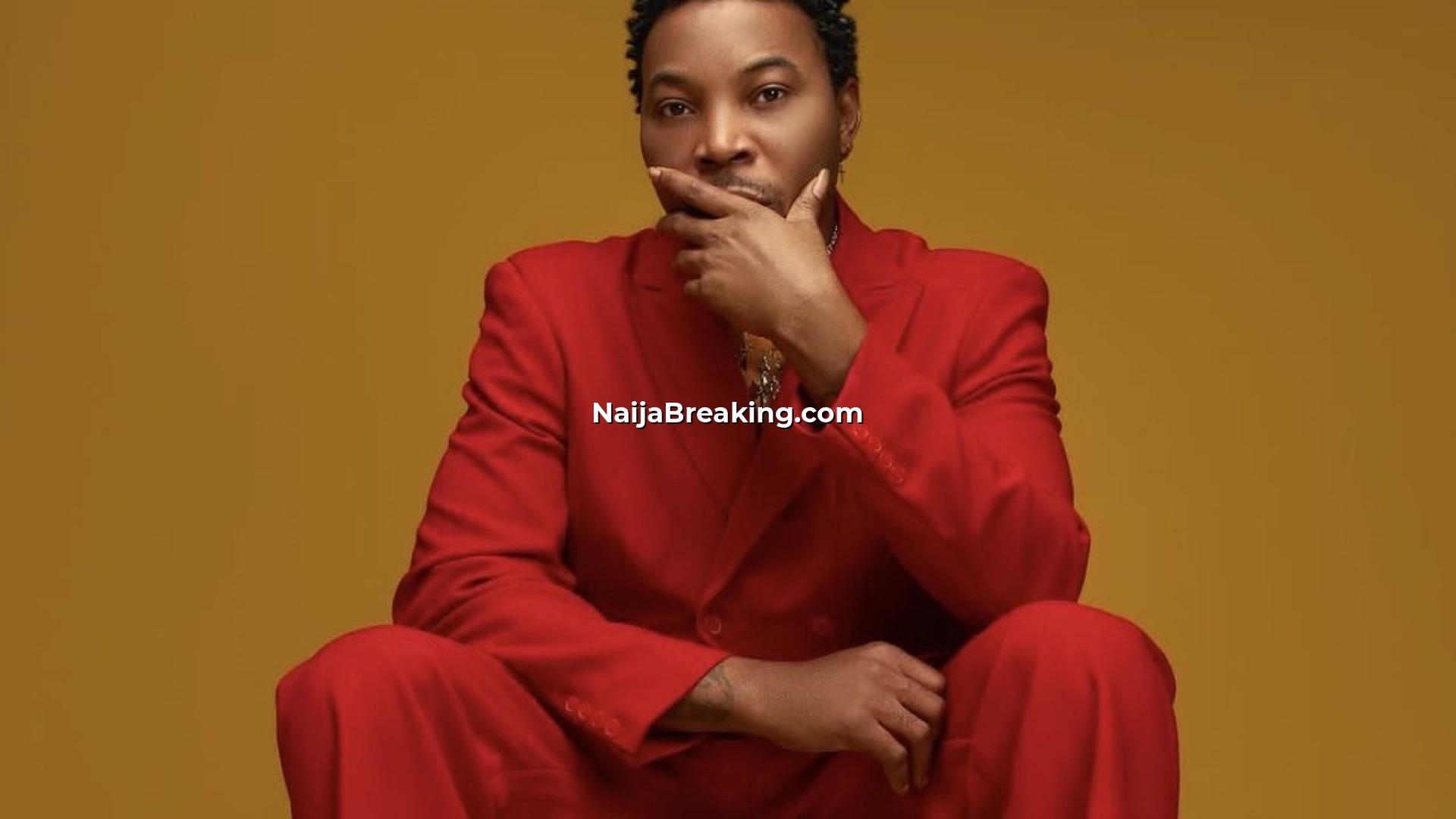
Solidstar’s “Money” Lyrics: How Nigerian Hip-Hop Reflects Economic Desperation and Wealth Obsession
Solidstar’s “Money” track is far more than a typical Nigerian hip-hop banger—it is a cultural mirror reflecting the anxieties, ambitions, and economic realities facing millions of young Nigerians. The Solidstar Money lyrics cycle through themes of financial desperation, international aspirations, and material excess, touching a nerve in a generation struggling against currency devaluation, unemployment, and the relentless pressure to succeed. Released in a period when Nigeria’s Naira has suffered unprecedented depreciation against the dollar, the song’s central refrain—”Show me where the money dey”—carries profound weight beyond its surface-level swagger. The track represents a broader cultural conversation about how young Nigerians perceive wealth, measure success, and navigate an economy that increasingly feels rigged against them. At NaijaBreaking, we believe this song deserves serious cultural and economic analysis, not dismissal as mere braggadocio. Understanding why “Money” resonates so powerfully in Lagos clubs, Abuja lounges, and across streaming platforms reveals uncomfortable truths about Nigeria’s current economic trajectory and the psychological toll it takes on young people.
Background
To understand the cultural significance of Solidstar’s “Money” lyrics, we must first examine the economic landscape that gave birth to this song. Nigeria’s entertainment industry has long served as a barometer of national mood and circumstance. In the 1990s and early 2000s, when oil revenues were relatively stable and the Naira held reasonable value, Nigerian hip-hop and afrobeats focused heavily on celebration, partying, and social commentary. Artists like 2Baba, Fela Kuti, and later D’Banj created music that, while touching on materialism, was balanced by cultural pride and social consciousness. However, beginning in 2015, Nigeria’s economic fundamentals shifted dramatically. The Central Bank of Nigeria’s (CBN) decision to float the Naira led to its collapse from approximately 197 per dollar to over 1,000 per dollar by 2023. This devaluation rippled through every sector of the economy, making imported goods unaffordable, reducing purchasing power, and pushing millions into poverty. The National Bureau of Statistics (NBS) reported that Nigeria’s unemployment rate reached 33% in 2023, with youth unemployment exceeding 42%. This context explains why contemporary Nigerian music has become increasingly fixated on money, international connections, and escape narratives. Young artists like Solidstar are not inventing this obsession—they are documenting the lived experience of their generation.
The evolution of money-focused themes in Nigerian music also reflects the influence of diaspora narratives and global hip-hop culture. Social media, particularly Instagram and TikTok, has created a parallel economy of perception where success is measured purely through visible wealth: foreign cars, designer brands, international travel. Many young Nigerians grow up consuming content from successful diaspora members and international artists, internalizing the message that staying in Nigeria while struggling financially is a personal failure rather than a systemic issue. This psychological weight manifests in songs like “Money,” where material acquisition becomes not just desire but existential necessity—a way to validate one’s worth and escape the stigma of poverty in a country where financial success is often equated with personal virtue.
Key Details
Solidstar’s “Money” track, produced by P-Bankz and featuring Nakamo, opens with a declarative statement that immediately establishes the song’s central preoccupation: “Show me where the money dey, Omo I got to get the money from my pocket first.” This opening is crucial because it reveals the paradox at the heart of the song—the artist acknowledges that accessing wealth requires already possessing resources, yet the desperation to obtain money overrides this logical contradiction. The full lyrics available on NotJustOk showcase a narrative arc that moves from personal financial struggle to boastful international connections. The repeated refrain “Oro owo ni mo fe ma gba bayi” (Yoruba for “Money is what I want to grab”) reinforces the singular focus throughout the track. What distinguishes this song from typical braggadocio tracks is the vulnerability embedded within the bravado—lines like “Ogbeni your story no dey sweet o, Talk another thing that one no funny” dismiss the non-material narratives that traditional society values (education, family, spirituality) in favor of pure financial gain.
The production and sonic landscape of “Money” deserves attention. The track employs high-energy beats, wire-wire percussion references, and call-and-response structures that make it immediately danceable and shareable on social platforms. The inclusion of references to geographically distant wealth centers—”Me I know bad guys in China, Balling guys in Malaysia”—demonstrates how Nigeria’s youth have internalized a globalized understanding of money and aspiration. According to recent data from the International Labour Organization (ILO), 41% of Nigerian youth between 15-24 are not in education, employment, or training (NEET), making songs like “Money” a form of escapist fantasy as well as cultural documentation. The song’s linguistic code-switching between English, Yoruba, and street slang appeals to multiple demographic groups while maintaining accessibility. Lines about designer fashion, substance references, and conspicuous consumption are not unique to Solidstar—they have become standard currency in contemporary Nigerian hip-hop, a reflection of how deeply materialism has penetrated youth culture.
Impact and Analysis
The broader impact of songs like “Money” extends well beyond entertainment. When hit tracks normalizing extreme wealth obsession dominate streaming charts and social media, they shape the aspirational landscape for millions of young Nigerians who lack alternative narratives of success. A 2023 study by the Centre for Research on Evaluation, Science and Technology found that 62% of Nigerian youth aged 18-35 identify wealth acquisition as their primary life goal, compared to only 18% who prioritize education or professional skill development. This psychological reorientation, accelerated and reinforced by popular music, has measurable consequences: increased migration pressure, reduced focus on long-term career building, and a growing vulnerability to financial fraud and illegal activities.
The song also reveals how economic desperation has fundamentally altered the relationship between Nigerian artists and their audience. Where previous generations of musicians used their platforms to critique inequality or inspire social change, contemporary artists often find commercial success by validating and amplifying the materialistic impulses of their listeners. This creates a feedback loop: audiences consume music that mirrors their financial anxieties, the validation encourages deeper engagement with wealth fantasies, and the resulting emotional satisfaction substitutes for actual economic mobility. The CBN’s inflation data shows that the cost of living for an average Nigerian household increased by 34.5% year-over-year as of November 2023, yet rather than producing music demanding systemic reform, the industry has largely pivoted to celebrating the winners in this rigged system. “Money” does not ask why the system distributes resources so unequally—it simply declares an intention to personally acquire as much as possible, regardless of consequences or ethics. This represents a significant cultural shift from the politically conscious hip-hop of earlier eras.
Expert Perspectives
Dr. Kunle Torimiro, a media studies scholar at the University of Lagos, offers critical perspective on the cultural phenomenon: “What we’re witnessing in songs like ‘Money’ is not merely entertainment—it’s a form of psychological coping mechanism. When the state fails to provide economic security, young people seek validation through material symbolism. The music industry has become a mirror that reflects back society’s trauma and desperation, but unfortunately, it rarely offers pathways to genuine transformation. The song’s genius lies in its brutal honesty about the lie young Nigerians are living: pretending wealth they don’t possess in order to gain social capital in an economy that offers them nothing legitimate.” Dr. Torimiro emphasizes that the song’s impact extends to how young Nigerians negotiate identity and self-worth in an era of economic collapse.
Conversely, Chinyere Adeyemi, a senior entertainment analyst at the Lagos Institute for Media and Culture, argues for a more nuanced reading: “We must avoid patronizing young artists and audiences by assuming they lack critical consciousness. Solidstar’s ‘Money’ can be read as social commentary rather than mere glorification. The protagonist is aware enough to acknowledge the contradictions in his pursuit—he needs money to get money, desires what he cannot access. This is not ignorance; it’s existential realism. Rather than condemning the message, we should ask why legitimate economic opportunities have become so scarce that talented young people see music and hustling as their only viable paths.” Adeyemi’s perspective reminds us that the song reflects systemic failure more than individual moral deficiency, and that judgment without understanding context can obscure the real issues driving such cultural productions.
What This Means for Nigerians
For the average Nigerian worker in Lagos or Kano, Solidstar’s “Money” track operates at multiple levels of meaning. First, it speaks directly to the lived experience of salary earners watching their purchasing power erode month by month. A junior banker earning ₦250,000 monthly in 2019 found that salary equivalent to approximately $1,300 at the time; by 2023, that same salary converts to roughly $300, a 77% loss in real value. Songs celebrating rapid wealth acquisition feel both aspirational and deeply depressing to people experiencing this kind of financial degradation. Second, for small business owners and traders, the song’s message about needing capital to generate capital resonates as literal truth. Many Nigerian entrepreneurs struggle to access credit from banks due to high interest rates and stringent collateral requirements; the FIRS (Federal Inland Revenue Service) has also intensified tax collection, further squeezing business margins. Solidstar’s narrative that “I got to get the money from my pocket first” mirrors the reality that most Nigerian entrepreneurs bootstrap their enterprises through personal savings because formal financing remains inaccessible.
For students and young job seekers, the song presents a troubling model of success that competes with education-based pathways. When entertainment and informal hustling are celebrated as routes to wealth while degree-holders struggle to find employment, the incentive structure for formal education weakens. This has real consequences: Nigeria’s tertiary education enrollment has plateaued despite population growth, according to UNESCO data, partly because young people increasingly question whether credentials translate to opportunity. Finally, the song’s celebration of international connections and “bad guys in China” appeals to the migration aspirations of millions seeking to escape Nigeria’s economic stagnation. The number of Nigerians obtaining visas for economic migration has increased 34% since 2020, according to immigration data, many driven by the same desperation that fuels the demand for songs like “Money.”
Editor’s Take
At NaijaBreaking, we believe that dismissing “Money” as mere braggadocio misses the profound story it tells about Nigeria’s current crisis. The song is not the problem—it is a symptom of systemic economic failure that the government and private sector have largely ignored. What troubles us is not that young Nigerians aspire to wealth, but that this aspiration has become so singular and disconnected from legitimate pathways that it generates desperation rather than motivation. The song also reveals the entertainment industry’s abdication of its historic role as a space for critical consciousness. Where are the hit tracks demanding that the CBN restore currency stability? Where is the music holding the NNPC accountable for failing to convert oil revenues into national prosperity? Instead, we get celebration of escapism and individual wealth acquisition divorced from collective progress. This is not a judgment of Solidstar as an artist—he is simply responding to market demand and documenting reality. Our critique is systemic: until Nigeria’s economy provides genuine opportunities for broad-based prosperity, we will continue producing and consuming music that mirrors only despair, escape, and individual survival.
What to Watch Next
Several developments will determine whether songs like “Money” remain cultural fixtures or evolve into something different. First, monitor the CBN’s monetary policy decisions over the next 18 months—any meaningful Naira stabilization could psychologically shift young Nigerians’ perception of possibility and potentially change the character of music being produced. Second, watch the implementation of the FIRS’s new tax compliance technologies and whether they help broaden the tax base, increasing government revenue for job creation and social programs. Third, observe whether the Entertainment industry develops any collective consciousness about its role in shaping youth aspirations, or whether profit motives continue to dominate. Fourth, track youth migration patterns—if emigration continues accelerating, expect the international wealth references in songs like “Money” to intensify. Finally, monitor the emergence of counter-narratives in music: are younger artists beginning to articulate alternative models of success and fulfillment? The key question now is whether Nigeria’s young people will continue accepting music that validates desperation, or whether they will begin demanding art that imagines genuine transformation.
Conclusion
Solidstar’s “Money” is a cultural artifact that transcends music—it is a document of Nigeria’s current economic and psychological state. The song’s obsessive focus on wealth acquisition, international connections, and material display reflects not personal failing but systemic failure, a generation that has been offered no reasonable pathway to dignity and security within their own country. This does not excuse the individualism embedded in the lyrics, nor does it absolve the entertainment industry of responsibility for the aspirational landscape it shapes. Rather, it demands that we read such songs as urgent messages about what Nigeria has become and what it risks becoming if fundamental economic reform does not occur. The tragedy of “Money” is that it documents desperation while offering no exit, validation without vision. Nigeria’s future depends not on condemning such art but on creating the economic conditions that would make it unnecessary—a flourishing economy where young talent pursues excellence rather than survival, and where aspiration connects to opportunity rather than escape fantasy.
Share your thoughts in the comments below—what do you think Solidstar’s “Money” reveals about where Nigeria is headed, and what kind of music do you want to hear from this generation?