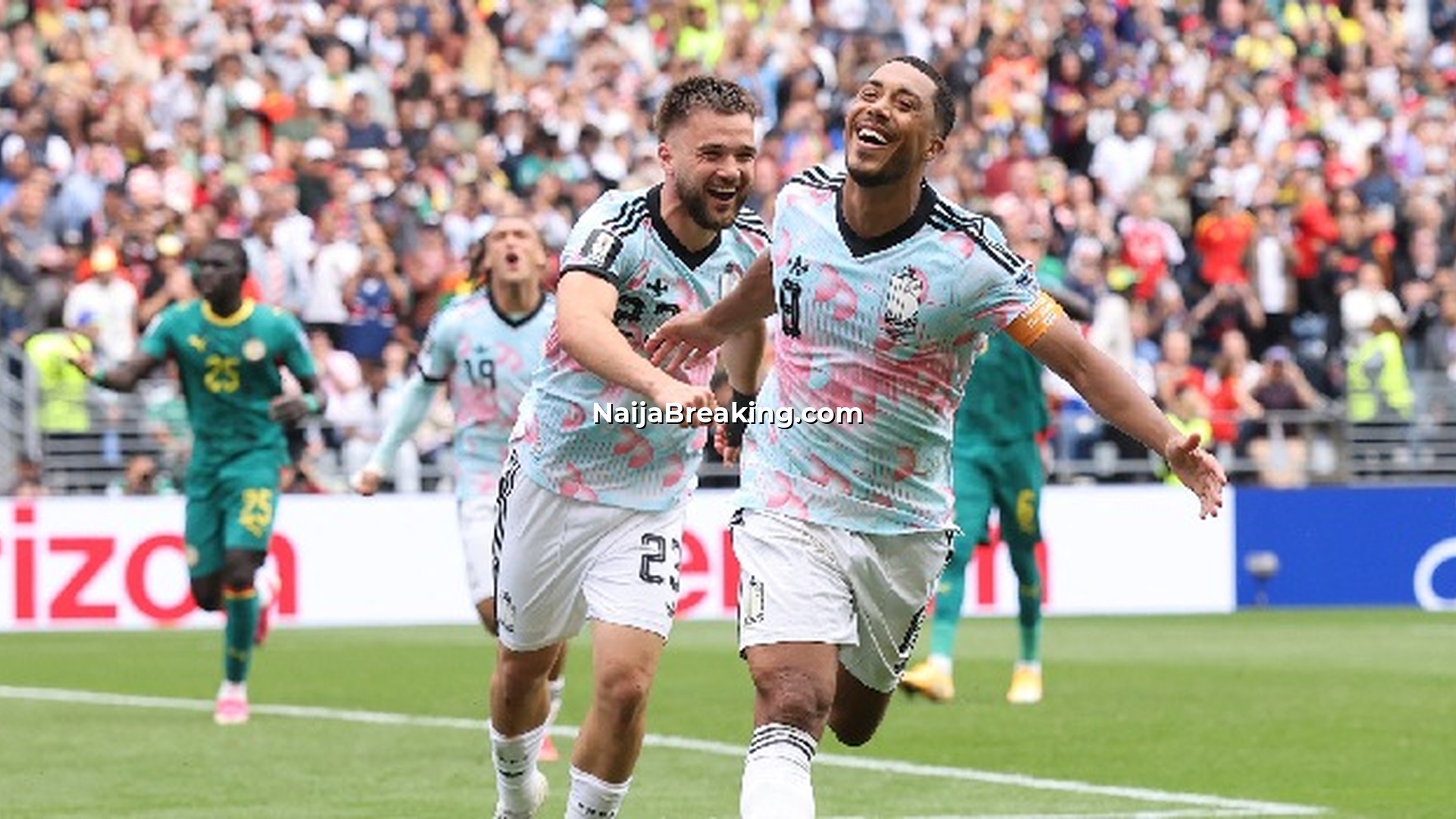
CAF Confirms Rangers, Rivers United for 2026/27 CAF Champions League Qualifiers
The Confederation of African Football has officially confirmed Nigeria’s representatives for the 2026/27 CAF Champions League qualifiers, with Enugu Rangers and Rivers United earning their spots in Africa’s premier club competition. This development marks a significant moment for Nigerian football, signalling confidence in domestic clubs at the continental stage even as the country grapples with mounting challenges in club management, infrastructure, and funding. The confirmation, released on CAF’s official website this week, positions both clubs for participation in preliminary rounds beginning in September 2026, providing a concrete target for their preparation and giving Nigerian football fans renewed hope after recent disappointing continental performances. What makes this announcement particularly important for Nigerian stakeholders is the two-slot system adopted by CAF, which guarantees Nigeria consistent representation in one of Africa’s most watched competitions. For Enugu Rangers and Rivers United, this qualification represents not just competitive opportunity but also financial and reputational stakes—foreign revenue, continental exposure, and the chance to establish themselves as serious African contenders. The timing is crucial: as Nigeria’s domestic leagues continue to struggle with funding and attendance, continental competition offers these clubs a lifeline to generate revenue and restore public interest in local football.
Background
Nigeria’s relationship with continental football competitions has been complicated in recent years. Once a powerhouse in African club football—with teams like Gor Mahia, Raja Casablanca, and even Nigerian sides regularly competing for the CAF Champions League trophy—the continent’s club football landscape has shifted dramatically. Nigeria’s clubs have not won the CAF Champions League since Gor Mahia and Raja Casablanca’s dominance in the late 1990s and early 2000s, with Nigerian representatives increasingly eliminated in early rounds. The decline reflects broader challenges: inadequate club financing through the Naira’s depreciation against foreign currencies, poor stadium infrastructure, and the exodus of talented players to Europe. The Nigerian Professional Football League (NPFL), once the heartbeat of African football, has struggled to attract consistent sponsorship and television rights deals comparable to those secured by leagues in Egypt, South Africa, or Morocco.
CAF’s restructuring of continental competitions in recent years—introducing more qualifying slots and a group stage format—was designed to increase participation and revenue for smaller federations, including Nigeria. This shift acknowledged a key reality: Nigerian clubs needed more pathways into Africa’s premier club tournament to sustain competitive relevance and generate the financial resources necessary for player retention and infrastructure improvement. The two-slot guarantee for Nigeria reflects the country’s historical significance in African football and its massive domestic market. Enugu Rangers, established in 1970, and Rivers United, a relatively younger club with rapid ascent in the NPFL, represent contrasting narratives within Nigerian football—tradition and legacy versus modern aspiration and ambition. This juxtaposition itself is instructive: Nigeria needs both the stability of historic clubs and the hunger of emerging ones.
Understanding CAF’s expanded format requires context about African football politics. Larger federations like Egypt, South Africa, Morocco, and Algeria have long complained about limited representation for their multiple competitive clubs. By expanding to a two-representative system for major nations, CAF aimed to balance inclusion with competitive depth. For Nigeria specifically, this structure acknowledges that the NPFL, despite its struggles, still produces clubs capable of competitive African football. The qualification system signals CAF’s commitment to maintaining Nigeria’s presence in continental competitions, even if our clubs have not consistently performed at championship levels in recent seasons.
Key Details
According to CAF’s official announcement, 24 clubs from 12 countries will enter the 2026/27 Champions League qualifiers, with each nation represented by two teams. The confirmed list includes powerhouse clubs across Africa: Algeria’s Mouloudia Alger and JS Saoura, Angola’s Petro Luanda and Wiliete, Côte d’Ivoire’s ASEC Mimosas and San Pedro, DR Congo’s TP Mazembe and Aigles, Egypt’s Zamalek and Pyramids, Mali’s Djoliba and Stade Malien, Morocco’s MAS Fes and Renaissance Berkane, South Africa’s Orlando Pirates and defending champions Mamelodi Sundowns, Sudan’s Al Hilal and Al Merrikh, Tanzania’s Young Africans and Simba, and Tunisia’s Club Africain and Esperance.
Nigeria’s representatives—Enugu Rangers and Rivers United—will compete in preliminary rounds alongside other two-slot nations. Additionally, 40 countries will have single representatives in the competition, including Ghana’s Medeama, Kenya’s Gor Mahia, Guinea’s Horoya, Rwanda’s APR, Uganda’s Vipers, Zambia’s Power Dynamos, and Zimbabwe’s Scotland. CAF noted that representatives from Equatorial Guinea, Guinea-Bissau, and Somalia remain unconfirmed pending completion of their domestic leagues, with current leaders being 15 de Agosto/Leones Vegetarianos, Canchungo, and Heegan respectively. The competition schedule is detailed: preliminary round one runs September 4-6 and September 11-13, 2026; preliminary round two occurs October 16-18 and October 23-25; and the group stage begins November 27-29, extending through January 15-17, 2027.
The confirmation represents the official capstone on a qualifying process that saw domestic NPFL champions and runners-up compete throughout the 2025-26 season. Enugu Rangers’ qualification likely comes through strong NPFL performance, while Rivers United’s inclusion underscores the competitive depth within Nigeria’s domestic competition. The two-team format differs from previous CAF structures, where fewer Nigerian clubs received continental opportunities. This expansion doubles Nigeria’s direct access to African club football’s highest stage, creating more competitive pathways and tournament opportunities than the nation has enjoyed in recent years.
Impact and Analysis
The 2026/27 Champions League qualifiers represent more than administrative confirmation—they signal economic and sporting opportunity amid persistent structural challenges in Nigerian club football. For Enugu Rangers and Rivers United, participation generates foreign exchange earnings through gate receipts and broadcasting rights, critical given Nigeria’s Naira depreciation that has crippled club budgets. A deep run in the competition could generate ₦100 million to ₦300 million in revenue, sufficient to stabilise player wages and facility maintenance for 12-18 months. Beyond immediate finances, continental competition attracts sponsorships: multinational brands pay premium rates to associate with African Champions League clubs, offering local sponsors visibility and cachet they cannot achieve in domestic-only competitions.
However, the qualification also exposes systemic weaknesses in Nigerian football management. Without significant investment in preparation, training facilities, and player acquisition, both clubs risk early elimination against experienced competitors like Mamelodi Sundowns or Raja Casablanca. The gap between NPFL standard and continental elite remains substantial—a reality that one or two matches will brutally demonstrate. This competitive deficit, in turn, risks further demoralising Nigerian football audiences if our representatives suffer heavy defeats. There is also the question of scheduling logistics: both clubs must balance NPFL commitments with continental travel, fixture congestion, and player recovery—a challenge that Egyptian, South African, and Moroccan competitors manage more effectively due to superior club infrastructure and league professionalism. The qualification is opportunity wrapped in risk.
Expert Perspectives
“This confirmation is excellent news for Nigerian football, but only if we approach it seriously,” says Dr. Oladele Okafor, a senior analyst at Lagos-based sports economics consultancy Performance Analytics. “CAF’s two-slot guarantee gives us stability, but Rangers and Rivers United must use this year to fundamentally upgrade their operations. Without investment in player quality, medical support, and coaching expertise, we’ll see our representatives knocked out in September, and that demoralises everyone from players to sponsors. The window between now and September 2026 is crucial for both clubs to identify target recruits and secure funding commitments.” Okafor emphasises that continental participation requires treating clubs as professional enterprises, not hobby projects—a mindset shift many NPFL operators have yet to embrace.
Conversely, Chinyere Adeyemi, head of sports governance at the Centre for Democracy and Development in Abuja, argues that even early elimination carries benefits. “The exposure itself matters tremendously. When Rivers United or Rangers play Mamelodi Sundowns or TP Mazembe, Nigerian footballers gain experience against elite African talent. Scouts from European clubs watch these matches. Young players develop faster through continental competition than they ever could in pure domestic matches. We should view this as a long-term developmental investment, not merely a short-term tournament. If we approach it with that mentality, qualification becomes a foundation-building exercise, not a make-or-break moment.” This perspective reframes the narrative from performance pressure to systematic development.
What This Means for Nigerians
For the average Nigerian football fan, CAF’s confirmation means more accessible continental football. NPFL followers who support Rangers or Rivers United can now track their teams’ progress on African stages throughout September 2026 and beyond. The matches will be televised by SuperSport and likely streamed through DSTV or other providers, requiring subscriptions that cost ₦3,000-₦8,000 monthly—expensive but more affordable than continental travel. Local betting companies like BetKing, Bet9ja, and Nairabet will offer odds on all matches, giving Nigerian bettors continental wagering opportunities and generating engagement beyond passive viewership.
For players in both clubs, qualification offers career acceleration. A standout performance against continental competition can attract contracts from richer African leagues (Egypt, South Africa, Morocco) or even European scouts monitoring the tournament. Young defenders, midfielders, or strikers who excel in preliminary or group-stage matches may find themselves targeted by more established clubs offering superior salaries and global exposure. Conversely, players currently earning ₦150,000-₦400,000 monthly in the NPFL could secure contracts worth ₦600,000-₦1.2 million monthly elsewhere—life-changing money for most Nigerians. This creates incentive structures that raise performance standards across both clubs.
For local businesses and surrounding communities, continental matches bring matchday revenue. Rangers’ Enugu base benefits from hotel bookings, restaurant traffic, and transportation demand when visiting supporters arrive. Rivers United’s Port Harcourt matches stimulate similar economic activity. While revenue volumes remain modest compared to European or Egyptian clubs, the multiplier effects are meaningful in local economies. Additionally, improved broadcast visibility could attract new NPFL sponsors, potentially injecting ₦2-5 billion into Nigerian club football annually if properly leveraged.
Editor’s Take
At NaijaBreaking, we see CAF’s confirmation as a challenge disguised as opportunity. Yes, Enugu Rangers and Rivers United deserve celebration for their qualification—it reflects competitive achievement within the NPFL. But let’s be blunt: Nigerian club football remains fragile, underfunded, and vulnerable. Two slots at CAF’s table do not compensate for the systematic neglect of domestic leagues by corporate Nigeria, government, and even football administrators. This qualification is a chance to correct course—to demonstrate that Nigerian clubs can be professionally managed, financially sustainable, and competitively credible at continental level. If we squander it through typical patterns of poor planning, player indiscipline, and financial mismanagement, we will have wasted an invaluable window. The question for Nigerian football is whether we can finally match ambition with execution.
What to Watch Next
Monitor these developments over the next 18 months: First, both clubs’ transfer activity between now and August 2026—will they recruit strategically to close the quality gap with continental rivals, or settle for marginal roster adjustments? Second, sponsorship announcements: genuine international or major Nigerian corporate backing for either club signals serious continental intent. Third, infrastructure upgrades: are Rangers and Rivers United improving training facilities, medical teams, and tactical coaching? Fourth, fixture scheduling for the 2026-27 NPFL season—how will clubs balance domestic league obligations with continental travel? Fifth, player performance in early-season NPFL matches as indicators of form heading into September qualifiers. The key question now is whether Nigerian football stakeholders will invest in making this opportunity count, or repeat familiar patterns of squandered continental chances.
Conclusion
CAF’s confirmation that Enugu Rangers and Rivers United will compete in the 2026/27 Champions League qualifiers represents the most concrete acknowledgment of Nigerian football’s continental relevance in over a decade. The two-slot allocation guarantees Nigeria consistent representation, ending years of precarious qualification races. Yet qualification alone is not success—execution is. Both clubs must use the next 18 months to upgrade their operational standards, attract quality players and coaching, and secure funding that transforms them from domestic champions into credible African competitors. This moment reveals both Nigeria’s football potential and our systemic weaknesses. Whether we address those weaknesses or merely celebrate qualification will determine whether 2026/27 becomes a turning point or another false dawn.
Share your thoughts in the comments below—what do you think it will take for Enugu Rangers or Rivers United to succeed on the continental stage? And which club do you believe is better positioned for a strong qualifying run?