Anthropic Mythos 5 AI Model Returns After Trump Negotiations: What Nigeria Needs to Know
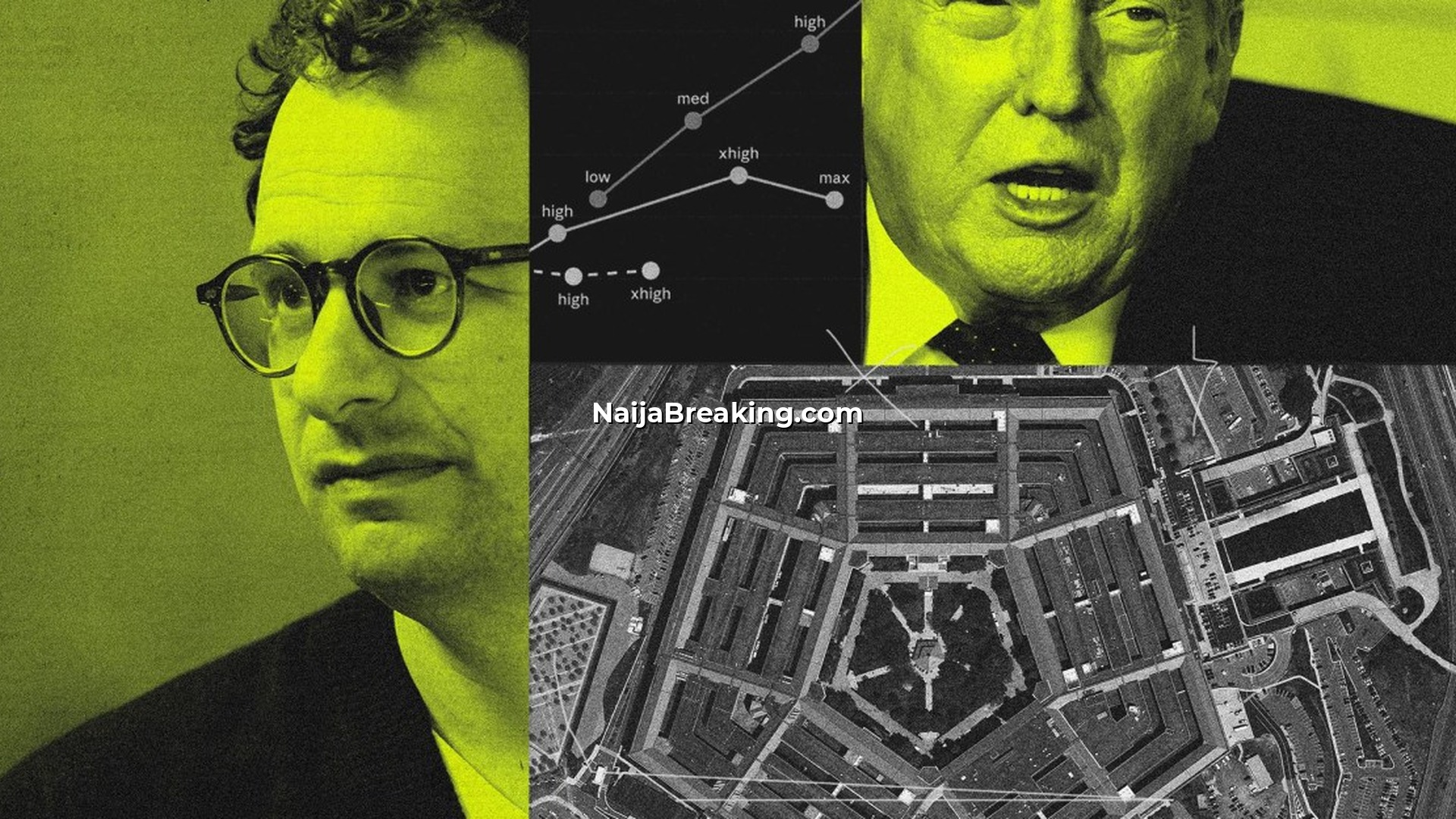
After a gruelling two-week negotiation with the Trump administration, Anthropic Mythos 5 AI model has finally returned to limited deployment, marking a critical turning point in how Western governments regulate advanced artificial intelligence systems. According to reporting from The Verge, the U.S. Commerce Department issued approval for select organisations to access the Anthropic Mythos 5 AI model, though the public-facing Fable 5 variant remains in regulatory limbo. For Nigeria and the broader African continent, this development involving the Anthropic Mythos 5 AI model carries profound implications that extend far beyond Silicon Valley boardrooms. As African nations race to position themselves in the global AI economy while managing domestic concerns about data security, algorithmic bias, and intellectual property protection, understanding how the world’s largest economy regulates cutting-edge AI systems becomes essential to crafting our own policy responses. The Anthropic Mythos 5 AI model approval sends a clear signal: AI development will increasingly happen within government-negotiated frameworks rather than in the unregulated market spaces many tech entrepreneurs once enjoyed.
Understanding the Anthropic Mythos 5 AI Model: A Comprehensive Overview
The Anthropic Mythos 5 AI model represents a significant leap forward in artificial intelligence capabilities, particularly in the domains of cybersecurity, advanced reasoning, and complex problem-solving. Unlike previous generations of large language models that prioritized broad conversational ability, the Anthropic Mythos 5 AI model was specifically designed to handle highly specialized technical tasks that require nuanced understanding of security protocols, system architecture, and threat detection mechanisms. This specialization is precisely what captured the attention of U.S. government regulators, who viewed the Anthropic Mythos 5 AI model’s capabilities as potentially having dual-use applications—meaning the same technology could theoretically be used for legitimate cybersecurity defense or for identifying vulnerabilities that could be exploited maliciously.
The development of the Anthropic Mythos 5 AI model comes at a moment when artificial intelligence has transitioned from academic curiosity to critical infrastructure. Banks, government agencies, healthcare systems, and telecommunications networks increasingly rely on AI-powered systems for their daily operations. The Anthropic Mythos 5 AI model’s advanced reasoning capabilities could theoretically help defend these systems against sophisticated cyberattacks—or, conversely, could be misused to identify and exploit vulnerabilities. This dual-use reality is why regulators felt compelled to negotiate with Anthropic rather than simply approving or banning the Anthropic Mythos 5 AI model outright.
What makes the Anthropic Mythos 5 AI model particularly significant compared to other advanced AI systems is its training methodology. Anthropic has long positioned itself as the “safety-first” AI company, incorporating extensive red-teaming, constitutional AI principles, and alignment research into the development of the Anthropic Mythos 5 AI model. These safety mechanisms are built into the model’s architecture rather than simply applied as filters afterward. However, even with these safeguards, government officials worried that the raw capability of the Anthropic Mythos 5 AI model could be adapted or fine-tuned in ways that circumvent the safety measures Anthropic had put in place.
Background: The Geopolitical Context of AI Regulation
The story of Anthropic’s Mythos 5 AI model cannot be separated from the broader geopolitical tension over AI dominance that has defined 2024 and beyond. Since the explosive release of ChatGPT in late 2022, governments worldwide—particularly the United States, European Union, and China—have scrambled to establish regulatory frameworks that balance innovation with national security concerns. The U.S., under the Trump administration’s return to office, has taken an explicitly nationalist approach to AI policy, viewing artificial intelligence capabilities as strategically equivalent to nuclear weapons or advanced semiconductor technology in terms of national security implications.
This nationalist approach to AI governance represents a fundamental shift in how powerful nations think about technological advantage. During the Cold War, technological superiority in nuclear weapons, aircraft, and missile systems was the primary axis of competition. Today, that competition has extended to artificial intelligence, with leading nations recognizing that AI capabilities could determine economic competitiveness, military effectiveness, and geopolitical influence for decades to come. The negotiations over the Anthropic Mythos 5 AI model should be understood within this larger strategic contest.
Anthropic, founded by former OpenAI researchers Dario and Daniela Amodei, emerged as one of the few AI companies willing to work collaboratively with government regulators rather than resist them. This cooperative stance became particularly relevant when the Anthropic Mythos 5 AI model became the subject of intense government scrutiny. The two-week negotiation period reflected deeper concerns within U.S. policymaking circles about whether advanced AI systems might be exported to hostile nations or used in ways that could compromise American technological superiority.
For Nigeria and Africa broadly, these developments carry historical echoes. During the Cold War, African nations found themselves caught between superpower competition over nuclear technology and military systems. Today, AI represents a new frontier where similar geopolitical dynamics are playing out, but with technologies that are far more accessible and distributable than nuclear weapons. A digital copy of the Anthropic Mythos 5 AI model could theoretically be transmitted across the globe in minutes, making export controls far more complicated to enforce than traditional military technology restrictions.
Why the Trump Administration Negotiated Over the Anthropic Mythos 5 AI Model
Understanding the Trump administration’s specific concerns regarding the Anthropic Mythos 5 AI model requires examining both the technical capabilities of the system and the policy priorities of the current U.S. government. The Trump administration has consistently emphasized national security, economic nationalism, and American technological supremacy as core policy objectives. These priorities inevitably extended to artificial intelligence policy, where officials recognized that uncontrolled development or distribution of advanced AI systems could undermine American interests.
The Anthropic Mythos 5 AI model’s cybersecurity capabilities were particularly concerning from a national security perspective. If a foreign adversary—whether China, Russia, Iran, or a non-state actor—obtained access to the Anthropic Mythos 5 AI model, they could potentially use it to identify vulnerabilities in American critical infrastructure systems. The possibility that the Anthropic Mythos 5 AI model could be reverse-engineered or adapted to attack rather than defend systems represented an unacceptable risk in the eyes of Trump administration officials.
The negotiations also reflected broader concerns about AI companies operating without sufficient government oversight. Silicon Valley has historically resisted government regulation, preferring self-regulation through industry standards and corporate ethics commitments. However, the Anthropic Mythos 5 AI model negotiations signaled that this era of relative tech autonomy was ending. The Trump administration was signaling that companies developing powerful AI systems would need to demonstrate compliance with national security requirements, not merely develop safety features and hope government officials would be satisfied.
Another critical factor in the negotiations was the question of transparency and inspectability. How could the U.S. government verify that the Anthropic Mythos 5 AI model was being used only for authorized purposes? If Anthropic deployed the Anthropic Mythos 5 AI model to select organizations, what mechanisms would ensure those organizations weren’t selling access to foreign competitors or using the system in prohibited ways? These practical questions about enforcement and verification likely occupied much of the two-week negotiation period.
Implications for Nigeria’s AI Policy Framework
Nigeria stands at a critical juncture in its relationship with advanced artificial intelligence technology. The country has positioned itself as a leading tech hub in Africa, with a thriving startup ecosystem, growing venture capital investment, and increasing international recognition for innovation in fintech, telecommunications, and digital services. However, Nigeria’s regulatory infrastructure for artificial intelligence remains underdeveloped compared to the U.S. and European Union. The negotiations over the Anthropic Mythos 5 AI model offer important lessons for how Nigeria should approach AI governance.
First, Nigeria should recognize that AI regulation is increasingly becoming a national security matter, not merely a consumer protection or business regulation issue. The Anthropic Mythos 5 AI model negotiations demonstrate that powerful nations are unwilling to leave advanced AI development entirely in private hands without government oversight. Nigeria’s National Information Technology Development Agency (NITDA) and other relevant government bodies need to develop capacity for understanding, evaluating, and regulating advanced AI systems.
Second, Nigeria should consider how to balance the desire to attract AI investment and talent with the need to protect national interests. Nigerian entrepreneurs and companies want access to cutting-edge AI tools and the freedom to innovate. However, if Nigeria completely relies on access to AI systems controlled by foreign governments and corporations, the country risks becoming technologically dependent in ways that could limit sovereignty and economic development. Nigeria should develop its own AI research capacity while also creating frameworks for responsible adoption of foreign AI systems.
Third, the Anthropic Mythos 5 AI model situation highlights the importance of Nigerian participation in international AI governance discussions. If Nigeria waits until AI systems are already widely deployed before developing regulatory frameworks, the country will be playing catch-up indefinitely. Instead, Nigeria should engage proactively in conversations at the African Union, United Nations, and other international forums about how to govern advanced AI systems in ways that respect the interests of developing nations.
The Broader African Context and AI Opportunity
The approval and limited deployment of the Anthropic Mythos 5 AI model after Trump administration negotiations occurs against a backdrop of Africa’s broader engagement with artificial intelligence technology. The continent faces a paradoxical situation: African nations possess vast amounts of data, growing technical talent, and significant problems that AI could help solve—from disease diagnosis to agricultural optimization to financial inclusion. Yet African nations often lack the regulatory frameworks, capital investment, and technical expertise to develop their own advanced AI systems or to ensure that AI systems developed elsewhere serve African interests.
The Anthropic Mythos 5 AI model case demonstrates that advanced AI capabilities are increasingly subject to geopolitical control. This creates both risks and opportunities for African nations. The risk is that Africa becomes a consumer of AI technology developed entirely according to the preferences and constraints imposed by wealthy nations. The opportunity is that African nations could collectively advocate for different approaches to AI governance—approaches that prioritize affordability, accessibility, and adaptation to African contexts.
Nigerian technologists and policymakers should pay particular attention to how the Anthropic Mythos 5 AI model is ultimately deployed and what restrictions are placed on its use. Will organizations in developing nations be able to access the system? Will there be restrictions on how it can be used? Understanding these details will reveal what kind of AI future global powers are creating for the rest of the world.
What Nigeria Should Do Now: Actionable Policy Recommendations
Based on the lessons from the Anthropic Mythos 5 AI model negotiations, Nigerian government, industry, and academic leaders should take several concrete actions. First, the government should establish an AI policy task force that brings together technical experts, government officials, business leaders, and civil society representatives. This task force should study international AI governance approaches and develop a framework that balances innovation with Nigeria’s national interests.
Second, Nigeria should invest in AI research and development capacity within universities and research institutions. Rather than relying entirely on foreign AI systems, Nigeria should develop local expertise that allows the country to understand, evaluate, and potentially modify AI systems for local use cases. This doesn’t mean Nigeria needs to build its own large language models (that would be prohibitively expensive), but Nigerian researchers should develop expertise in AI safety, alignment, and adaptation.
Third, Nigeria should ensure that data governance frameworks protect Nigerian data while allowing legitimate AI development and research. The Anthropic Mythos 5 AI model was trained on data from around the world, including African data. Nigeria should have policies that ensure Nigerian data is used responsibly and that Nigerians benefit from AI systems trained on Nigerian data.
Fourth, Nigeria should participate actively in African Union and international discussions about AI governance. If African nations remain silent while global AI rules are written, Africa will simply have to accept whatever framework wealthy nations establish. Active participation gives Nigeria and Africa a voice in shaping AI governance for the global south.
Conclusion: Positioning Nigeria for the AI Era
The return of the Anthropic Mythos 5 AI model after Trump administration negotiations marks an inflection point in how global AI governance will develop. The negotiations demonstrated that governments view advanced AI as sufficiently important to national security that they’re willing to engage in extended negotiations with private companies about deployment terms. This represents a new era of AI regulation where government oversight will be a permanent feature of the AI landscape.
For Nigeria, this development offers both challenges and opportunities. The challenge is that powerful nations may attempt to restrict Nigeria’s access to advanced AI systems, or may impose conditions on their use that don’t serve Nigerian interests. The opportunity is that Nigeria can learn from how other nations are approaching AI governance and develop frameworks that protect Nigerian interests while fostering innovation and development.
The Anthropic Mythos 5 AI model approval after Trump negotiations is ultimately a reminder that technological development doesn’t happen in a vacuum. Every technological system—whether it’s the Anthropic Mythos 5 AI model or any other advanced AI—is embedded in networks of power, politics, and national interest. Nigeria’s task is to understand these networks and position itself strategically within them, ensuring that Nigeria benefits from AI development rather than being left behind or exploited by it. By taking proactive steps now to develop AI governance capacity, invest in research, and engage in international discussions, Nigeria can shape the AI future rather than simply reacting to it.