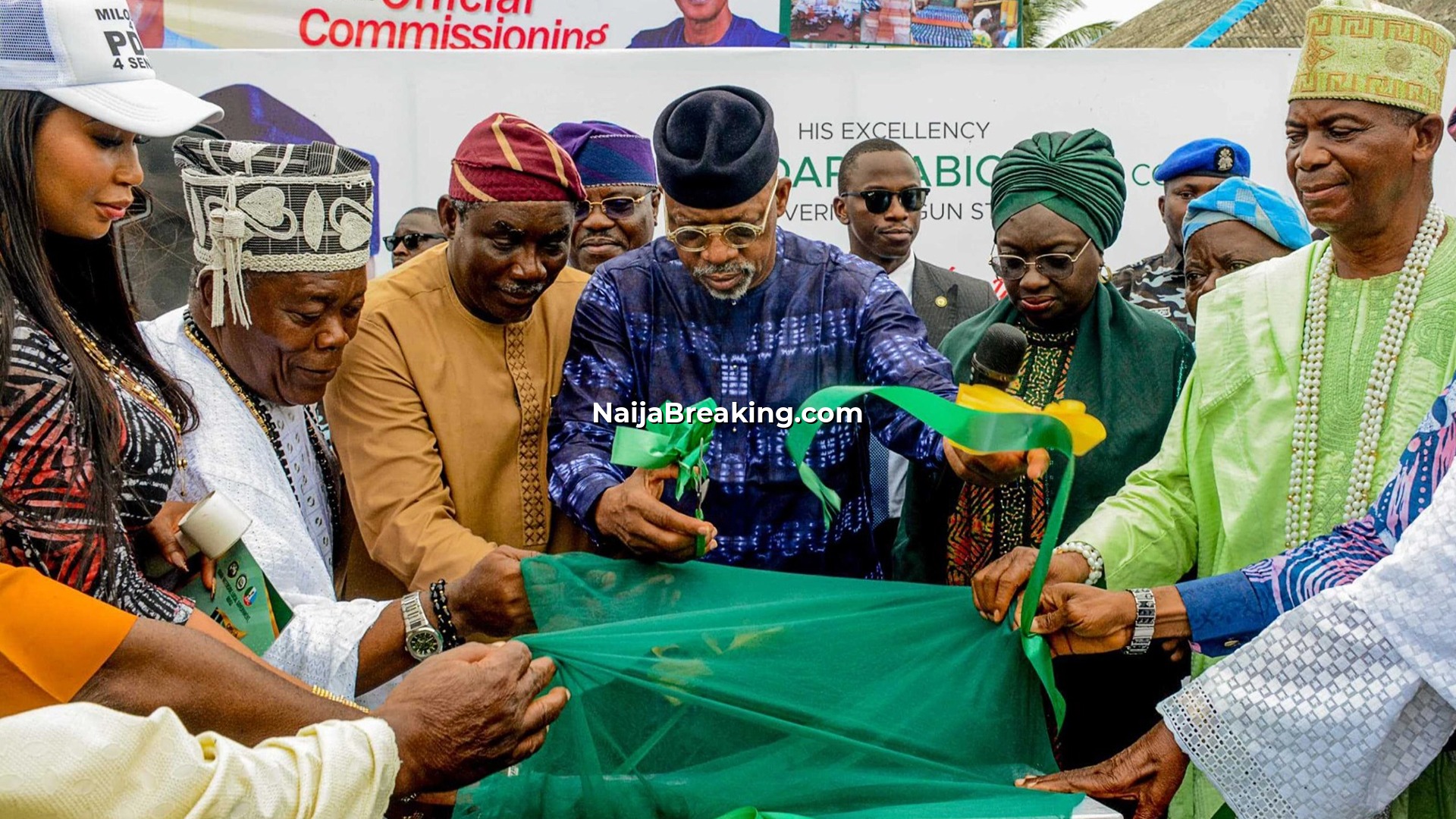
OKLNG Project Ogun Waterside: Governor Abiodun’s Revival Plan for Nigeria’s Gas Hub
In a landmark announcement that has sent ripples through Nigeria’s energy sector, Governor Dapo Abiodun has declared that the long-dormant Olokola Liquefied Natural Gas (OKLNG) project is positioned for revival, signalling a transformative economic shift for Ogun Waterside and the entire nation’s energy landscape. The OKLNG project Ogun Waterside initiative, which has remained largely stalled for nearly two decades, now receives renewed governmental backing and commitment from the Nigerian National Petroleum Company Limited (NNPC Ltd.), suggesting that this multi-billion-dollar venture may finally transition from blueprint to operational reality. The timing of this OKLNG project Ogun Waterside announcement is particularly significant given Nigeria’s current economic challenges: global oil prices remain unpredictable, the nation continues struggling to meet domestic energy demands, and international energy companies are increasingly turning their attention to alternative suppliers. A functioning liquefied natural gas facility within the OKLNG project Ogun Waterside framework could revolutionize Nigeria’s economic trajectory, generating tens of billions of dollars in export revenue, creating thousands of direct and indirect employment opportunities, and positioning the nation as a formidable competitor in the global LNG marketplace.
For Ogun Waterside residents and stakeholders, the OKLNG project Ogun Waterside revival represents the possibility of comprehensive industrial transformation—turning a relatively underdeveloped coastal region into a world-class energy hub comparable to facilities in Qatar, Australia, or the United States. For Nigeria’s broader economy, the OKLNG project Ogun Waterside presents a critical infrastructure investment that could stabilize government revenue, reduce foreign exchange pressures, and provide the financial resources necessary for investment in education, healthcare, and additional development projects. Beyond the immediate economic implications, the OKLNG project Ogun Waterside revival represents something rarer and perhaps more psychologically important: a major abandoned infrastructure project finally moving toward implementation. This pattern—massive projects conceived with fanfare, then abandoned due to various obstacles—has plagued Nigerian development efforts for decades, creating a national reputation for unrealized potential. If the OKLNG project Ogun Waterside succeeds, it could signal a fundamental shift in how Nigeria approaches long-term strategic infrastructure, inspiring confidence that other stalled projects might similarly move forward.
The Historical Context and Genesis of OKLNG Project Ogun Waterside
The origins of the OKLNG project Ogun Waterside trace back to the 1990s, an era when Nigeria’s policymakers and international energy analysts were awakening to the strategic value of the nation’s natural gas reserves. Nigeria possesses among the world’s largest proven natural gas reserves—approximately 187 trillion cubic feet—yet for decades these reserves remained largely underdeveloped compared to the nation’s crude oil sector. The OKLNG project Ogun Waterside was conceived as the solution to this paradox: a facility that would liquify Nigeria’s abundant natural gas, enabling export to premium markets in Europe, Asia, and North America where liquefied natural gas (LNG) commands significantly higher prices than crude oil on a per-unit basis. The project’s location in Ogun Waterside was strategically chosen for multiple compelling reasons. Geographically, Ogun Waterside’s coastal position provided direct access to deep-water ports and major international shipping lanes, eliminating expensive pipeline and transportation infrastructure that would be required in inland locations. Strategically, developing LNG capacity in the Ogun Waterside region would allow Nigeria to compete directly with established LNG producers like Qatar, Australia, and Indonesia, each of whom had captured substantial market share through earlier infrastructure investments.
During the initial planning phases for the OKLNG project Ogun Waterside, considerable technical research demonstrated that the region possessed ideal geographic and geological characteristics for LNG production and export. Feasibility studies conducted throughout the late 1990s and early 2000s confirmed that establishing the OKLNG project Ogun Waterside would be economically viable, with projected returns that would justify the initial capital investment and ongoing operational costs. International petroleum companies expressed serious interest in participating in the OKLNG project Ogun Waterside as joint venture partners, recognizing the commercial potential of Nigerian gas reserves. However, despite this genuine interest and the project’s sound fundamentals, the OKLNG project Ogun Waterside languished in various stages of planning and preliminary development, never quite reaching the point of construction commencement or full capital deployment. Multiple factors contributed to this stagnation: inconsistent governmental policy frameworks created uncertainty among international investors; financing challenges emerged as capital costs escalated; periodic political transitions in Nigeria led to shifting priorities; and the federal government’s overwhelming focus on crude oil extraction reduced attention to gas development initiatives like the OKLNG project Ogun Waterside.
The Lost Decades: Why OKLNG Project Ogun Waterside Stalled
Understanding why the OKLNG project Ogun Waterside stalled requires examining the complex intersection of political, economic, and market forces that have shaped Nigeria’s energy sector over the past two decades. During the 2000s, even as global LNG demand grew steadily and prices remained robust, the OKLNG project Ogun Waterside failed to progress beyond preliminary stages. One critical factor was the federal government’s historical dependence on crude oil revenue, which created a structural bias against investing in alternative energy infrastructure. Policymakers and bureaucrats were more comfortable with established oil extraction systems than with the relatively novel (for Nigeria) field of LNG production. Changing administrations sometimes meant changing priorities, and the OKLNG project Ogun Waterside—requiring sustained commitment across multiple election cycles—fell victim to this political discontinuity. International energy companies, meanwhile, faced their own challenges: capital requirements for establishing LNG facilities are enormous, typically ranging from $10 billion to $20 billion or more depending on capacity specifications. Securing project financing of this magnitude required agreement from multiple stakeholders—development banks, commercial lenders, host governments, and multinational corporations—and achieving consensus proved persistently difficult for the OKLNG project Ogun Waterside.
The global financial crisis of 2008-2009 substantially impacted interest in the OKLNG project Ogun Waterside, as access to capital tightened and investors reassessed major infrastructure commitments worldwide. In the years following the crisis, as Nigerian governments grappled with economic stabilization and revenue challenges caused by crude oil volatility, the OKLNG project Ogun Waterside remained deprioritized. More recent developments further complicated prospects for the OKLNG project Ogun Waterside: the shale gas revolution in the United States fundamentally altered global LNG dynamics by creating a new major supplier, which dampened prices and reduced the urgency for developing new LNG capacity. Additionally, the emergence of renewable energy and the global climate change movement created additional uncertainty regarding long-term demand for natural gas infrastructure. The COVID-19 pandemic of 2020-2021 delivered another blow, as global energy demand contracted, LNG prices plummeted, and investors grew even more cautious about committing capital to new projects. Throughout all these challenges, the OKLNG project Ogun Waterside remained on the drawing boards, a casualty of poor timing, inconsistent commitment, and unfavorable market conditions.
The Current Economic Imperative for OKLNG Project Ogun Waterside
Despite the obstacles that previously impeded the OKLNG project Ogun Waterside, compelling reasons now exist for accelerating its development. Nigeria’s economic situation has evolved significantly since the project’s inception, creating both urgent needs and renewed opportunities for the OKLNG project Ogun Waterside. The nation’s crude oil production has declined substantially due to aging infrastructure, theft, maintenance issues, and security challenges in the Niger Delta—factors that have reduced government revenue and foreign exchange earnings. Simultaneously, global energy markets have begun stabilizing and recovering from pandemic-related disruptions, with LNG demand once again increasing as economies reopen and industrial production accelerates. The geopolitical context has shifted as well: Russia’s invasion of Ukraine in 2022 disrupted European energy supplies, creating an urgent search for alternative LNG suppliers and dramatically increasing prices for liquefied natural gas. European nations previously dependent on Russian natural gas now desperately seek alternative sources, creating a seller’s market for LNG producers—exactly the conditions that would maximize returns from the OKLNG project Ogun Waterside.
From Nigeria’s perspective, reviving the OKLNG project Ogun Waterside addresses multiple critical national needs simultaneously. First, the OKLNG project Ogun Waterside would generate substantial government revenue through production sharing arrangements, corporate taxes, and licensing fees—revenue that could be deployed toward healthcare, education, and infrastructure in other sectors. Second, the OKLNG project Ogun Waterside would create thousands of jobs, both during construction and throughout the operational phase, addressing unemployment and providing income opportunities for Nigerian workers. Third, operating the OKLNG project Ogun Waterside would consume domestic natural gas supplies that might otherwise be flared (burned off) at oil production facilities, representing a waste of valuable resources. Fourth, establishing the OKLNG project Ogun Waterside would strengthen Nigeria’s energy security by diversifying revenue sources beyond crude oil, making the economy more resilient to petroleum price fluctuations. Fifth, the OKLNG project Ogun Waterside would position Nigeria competitively in global energy markets, enhancing the nation’s geopolitical influence and negotiating power. For Ogun State specifically, the OKLNG project Ogun Waterside would catalyze broader economic development, attracting downstream industries, improving infrastructure, and generating wealth that could be invested in state-level priorities.
Technical Requirements and Scope of OKLNG Project Ogun Waterside
Implementing the OKLNG project Ogun Waterside at commercial scale requires substantial technical infrastructure and expertise. The basic configuration of the OKLNG project Ogun Waterside would include several integrated components: gas collection infrastructure to gather natural gas from producing fields; processing facilities to purify and condition the gas; liquefaction units that cool the gas to approximately -162 degrees Celsius, transforming it from gaseous to liquid form; storage tanks to hold the liquefied natural gas awaiting export; and loading facilities to transfer LNG into specialized tanker vessels. The OKLNG project Ogun Waterside would likely incorporate modern liquefaction technology, potentially utilizing the latest efficiency improvements and modular construction approaches developed by international engineering firms. The location selected for the OKLNG project Ogun Waterside in the Ogun Waterside region would need to accommodate all these components while maintaining appropriate safety buffers and environmental protections. Construction of the OKLNG project Ogun Waterside would require years of continuous work, employing thousands of workers and involving massive procurement of equipment and materials.
Operating the OKLNG project Ogun Waterside would demand sophisticated management systems, trained technical personnel, and strict adherence to international safety and environmental standards. The facility would need to maintain continuous operations, processing natural gas and producing LNG for export on a 24/7 basis. The OKLNG project Ogun Waterside would require integration with gas production infrastructure in the Niger Delta, necessitating pipelines and transportation networks to bring raw natural gas to the liquefaction facility. Environmental management would be critical for the OKLNG project Ogun Waterside, requiring systems to monitor and minimize impacts on the marine environment, air quality, and terrestrial ecosystems in the Ogun Waterside region.
Environmental and Social Considerations for OKLNG Project Ogun Waterside
Any substantial industrial project in a coastal region generates legitimate environmental and social concerns, and the OKLNG project Ogun Waterside is no exception. Environmental stakeholders have raised important questions about potential impacts of the OKLNG project Ogun Waterside on marine ecosystems, water quality, and coastal habitats. The construction phase of the OKLNG project Ogun Waterside would involve dredging, pile-driving, and other activities that could disturb aquatic environments. The operational phase of the OKLNG project Ogun Waterside would involve processing operations, waste heat discharge, and periodic maintenance activities that must be carefully managed to minimize environmental damage. Responsible development of the OKLNG project Ogun Waterside would require comprehensive environmental impact assessments, robust monitoring systems, and genuine commitment to environmental protection standards that exceed minimum regulatory requirements.
Social considerations for the OKLNG project Ogun Waterside are equally important. Local communities in the Ogun Waterside region should benefit from the OKLNG project Ogun Waterside through employment opportunities, business contracts, and community development investments. The OKLNG project Ogun Waterside should be developed with genuine consultation with community stakeholders, ensuring that their voices are heard and their legitimate concerns are addressed. Historical patterns in Nigeria’s oil and gas sector have sometimes involved insufficient attention to community development and fair benefit-sharing, creating resentment and conflict. The OKLNG project Ogun Waterside must avoid repeating these mistakes by establishing transparent benefit-sharing arrangements and genuine partnerships with local stakeholders from the outset.
Conclusion: The Future of OKLNG Project Ogun Waterside and Nigeria’s Energy Sector
The OKLNG project Ogun Waterside represents both an enormous opportunity and a significant test for Nigeria’s capacity to execute major infrastructure projects. If successfully implemented, the OKLNG project Ogun Waterside could generate transformative economic benefits for Ogun State and Nigeria, while positioning the nation as a reliable LNG supplier in global markets. However, translating Governor Abiodun’s announcement into operational reality requires sustained political commitment, adequate financing, effective project management, and genuine partnership with international investors and technical experts. The OKLNG project Ogun Waterside must proceed with careful attention to environmental protection and community benefit-sharing, establishing standards that demonstrate Nigeria’s commitment to responsible resource development. Success with the OKLNG project Ogun Waterside could inspire confidence in other stalled infrastructure initiatives, creating positive momentum for Nigerian development more broadly. As global energy markets continue evolving and demand for natural gas remains robust, the time for advancing the OKLNG project Ogun Waterside is genuinely now—making Governor Abiodun’s announcement not merely symbolic, but potentially consequential for Nigeria’s economic future.