
FIFA World Cup Records African Stars: Okocha’s Legacy and Continental Excellence in Global Football
The FIFA World Cup has long served as the ultimate platform for footballers to inscribe their names into sporting immortality, and African stars have consistently left an indelible mark on the tournament’s historical record books. Understanding the FIFA World Cup records African stars have achieved provides crucial insight into how the continent’s players have shaped global football history. From Nigeria’s flamboyant Austin Okocha to Cameroon’s evergreen Roger Milla, the continent has produced players whose World Cup achievements transcend mere statistics—they represent the footballing ingenuity, resilience, and artistry that define African football at its highest level. These FIFA World Cup records African stars have set matter profoundly to Nigerian and African football fans because they serve as tangible proof that our continent’s players can compete at the highest echelon of global sport, inspire youth across Africa, and challenge the narrative that excellence in football belongs exclusively to Europe and South America. As we examine the FIFA World Cup records African stars continue to hold, we uncover not just numbers and dates, but stories of national pride, personal excellence, and the trajectory of African football’s evolution on the world stage. The accomplishments of these continental icons remain unmatched, and their legacies continue to inspire the next generation of African footballers dreaming of their own World Cup glory.
The Historical Context of African Stars in the FIFA World Cup
African football’s relationship with the FIFA World Cup has been a journey of gradual ascendance mixed with periodic frustration and unfulfilled potential. For decades, African nations struggled to establish consistent presence at the tournament, with limited qualification spots and the dominance of established football powers from Europe and South America creating significant barriers to entry. However, from the 1980s onwards, a shift began to occur. Nigeria, in particular, emerged as a continental powerhouse during this transformative period, producing technically gifted players who caught the attention of global audiences and demonstrated that African football could produce world-class talent. The Super Eagles’ qualification for the 1994 FIFA World Cup in the United States represented a watershed moment for Nigerian football—it was the nation’s first appearance at the tournament since 1978, and the team’s subsequent performance captivated sports fans across West Africa and beyond. This qualification came after years of development work at youth level and the emergence of a generation of players who had cut their teeth in European club football.
The 1994 World Cup squad, coached by Ernst Middendorp and featuring stars like Austin Okocha, striker Rasheed Yekini, and goalkeeper Peter Rufai, carried the hopes of a nation hungry for international sporting success during a period of significant domestic political and economic turbulence. Nigeria’s participation in that tournament was not merely a sporting event; it represented a moment of national pride and unity, with the entire country rallying behind the team as they faced established football powerhouses. Similarly, Cameroon had established itself as Africa’s most successful World Cup nation by the early 1990s, having reached the quarter-finals in 1990 with Roger Milla as a key figure in the team’s remarkable run. These achievements were not coincidental; they reflected decades of investment in grassroots football development, the emergence of better coaching structures, and the exposure of African players to competitive European leagues where they could hone their skills against elite competition. The records these players set became symbols of African footballing prowess during an era when the continent was still fighting against stereotypes and proving its capacity to produce world-class talent capable of competing against the established football superpowers.
Austin Okocha: The Wizard with a Thousand Skills
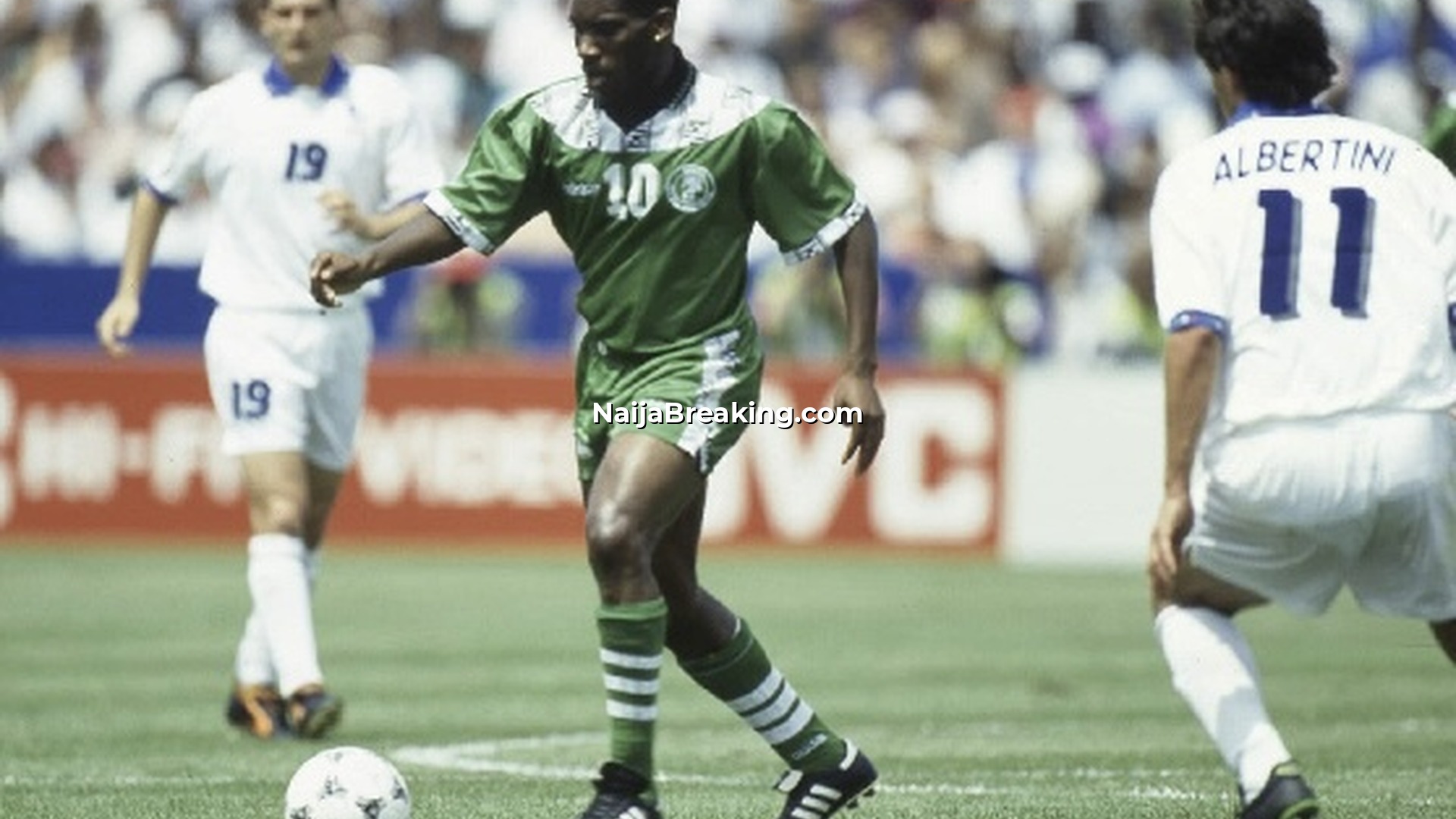
Austin Okocha’s FIFA World Cup records and performances remain among the most distinctive achievements in African football history. Known affectionately as “Jay-Jay” or “The African Pelé” by fans across the continent, Okocha represented the pinnacle of technical excellence that African stars could achieve on the world stage. His participation in the 1994 FIFA World Cup in the United States showcased his extraordinary ball control, creativity, and ability to perform under pressure against the world’s best defenders. During Nigeria’s group stage matches, Okocha demonstrated why he was considered one of Africa’s finest players, executing elaborate skills, precision passing, and moments of genuine footballing artistry that impressed neutral observers and football analysts worldwide. His performances contributed significantly to Nigeria’s impressive showing in that tournament, where the Super Eagles exceeded expectations by advancing from their group.
What makes Okocha’s FIFA World Cup records African stars reference point particularly significant is not just his technical ability, but his consistency at the highest level of international football. In an era before social media amplified every moment, Okocha’s World Cup performances reached global audiences through television broadcasts, and his playing style influenced how young African footballers approached the game. He demonstrated that African players could succeed through skill and creativity rather than relying solely on physicality, challenging the prevailing stereotypes about African football. Throughout his career, Okocha played for top European clubs including Paris Saint-Germain, where he became a fan favorite and accumulated vital experience that he brought to the Nigerian national team. His impact extended beyond the pitch; his flamboyant style, distinctive hairstyles, and confident demeanor made him a cultural icon who represented the vibrancy and creativity of African football during a transformative period for the sport on the continent.
Roger Milla: The Continental Evergreen and Record-Breaker
Roger Milla’s FIFA World Cup records stand as testament to longevity and sustained excellence at the highest level of international football. The Cameroonian striker achieved historic feats by becoming the oldest player to score in a FIFA World Cup match, a record that exemplifies his exceptional fitness levels and technical prowess that extended well into his late thirties and early forties. Milla’s career trajectory was remarkable—he achieved success at club level in France, starred for Cameroon throughout the 1980s and 1990s, and continued performing at the World Cup level when most players had long retired. His participation in the 1990 FIFA World Cup in Italy, where Cameroon reached the quarter-finals in a stunning run, showcased his ability to deliver under pressure and score crucial goals in important matches. The iconic image of Milla celebrating in front of the corner flag became one of the most recognizable moments in World Cup history, a celebration that brought joy to millions of African fans who saw themselves reflected in his exuberance.
What distinguishes Milla’s FIFA World Cup records among African stars is the way he transcended generational divides and continued proving his worth long after contemporaries had retired. His goal-scoring record at the tournament demonstrated that African strikers could compete with the world’s elite, and his performances helped establish Cameroon as a formidable World Cup nation. Beyond the statistics, Milla represented something profoundly important to African football—he showed that experience, intelligence, and positioning could offset any physical decline that comes with age. Young African players who studied Milla’s career learned valuable lessons about career longevity, professional dedication, and the importance of maintaining physical fitness and mental sharpness. His ability to remain effective despite the emergence of younger, faster competitors inspired a generation of African footballers to believe they could extend their careers at the highest level if they maintained professional discipline and continued improving their craft.
Other African Stars and Their World Cup Records
Beyond Okocha and Milla, numerous other African stars have established impressive FIFA World Cup records that deserve recognition and detailed analysis. Samuel Eto’o, the Cameroonian forward who became one of Africa’s greatest strikers, established himself as a scoring threat at World Cup level, demonstrating the evolution of African attacking football from previous generations. His ability to operate effectively in different tactical systems and play for various top European clubs showcased how African players were becoming more versatile and adaptable to different footballing philosophies. The records that Eto’o set in international football, while competing across multiple World Cup tournaments, proved that Cameroon could continue producing elite strikers capable of competing with the world’s best.
George Weah’s participation in World Cup football as Liberia’s most celebrated player represented another important chapter in African football history. Although Liberia’s limited success in World Cup qualification meant that Weah’s World Cup record was necessarily constrained by his nation’s circumstances, his achievement in winning the FIFA World Player of the Year award represented a significant milestone for African football. It proved that African players could achieve individual excellence recognition on the global stage, even when their national teams faced structural and developmental challenges. The records and achievements of players like Weah, alongside their contributions to European club football, helped elevate the profile of African footballers and demonstrated their capacity to excel across different contexts and competitive levels.
Didier Drogba’s FIFA World Cup records, achieved during Ivory Coast’s participation in successive tournaments, further demonstrated Africa’s capacity to produce elite forwards capable of performing at the highest level. Drogba’s physical presence, technical ability, and goal-scoring prowess made him a genuine threat in World Cup competitions, and his records contributed to the broader narrative of African football’s evolution and improvement over successive World Cup tournaments. The Ivorian striker’s ability to compete effectively against some of world football’s best defenders proved that African players had closed the gap with traditional powerhouses.
The Significance of These Records for African Football Development
The FIFA World Cup records African stars have established carry profound significance beyond their numerical values. These records serve as evidence of progress, markers of excellence that younger African players can aspire towards and attempt to surpass. When young Nigerians watch documentaries about Austin Okocha’s World Cup performances, or young Cameroonians study Roger Milla’s goal-scoring achievements, they are not simply learning football history—they are internalizing the belief that African players can achieve greatness on the world’s biggest football stage. This psychological impact cannot be quantified in traditional statistics, but its influence on African football development has been substantial and sustained.
The FIFA World Cup records African stars have created have also influenced how European clubs approach recruitment from the continent. Scouts who watched Okocha dazzle at the 1994 World Cup became more attuned to seeking out other Nigerian talents with similar technical gifts. Similarly, Milla’s performances encouraged investment in Cameroonian football development at club and national levels. These records created a virtuous cycle where international exposure led to increased recruitment opportunities, which in turn elevated the status of African football and created pathways for younger generations to follow their predecessors into European football.
Furthermore, the FIFA World Cup records African stars achieved during the 1990s and 2000s coincided with improving infrastructure, coaching education, and youth development programs across the continent. As more African players succeeded at World Cup level, national football associations became more willing to invest in professional coaching courses, training facilities, and systematic talent identification programs. The records set by Okocha, Milla, and their contemporaries provided proof of concept that justified these investments and encouraged stakeholders to commit additional resources to African football development.
The Evolution of African Football Since These Record-Setting Performances
Since the era when Austin Okocha and Roger Milla were setting their historic FIFA World Cup records, African football has continued evolving in meaningful ways. The number of African players competing in Europe’s top leagues has increased exponentially, with thousands of African professionals now plying their trade in England, Spain, Germany, Italy, and France. This increased presence has normalized African players in elite competitions and created a pipeline of talent that flows continuously from African clubs to European institutions. The FIFA World Cup records African stars established in previous decades have helped create the cultural and institutional conditions that made this expansion possible.
Contemporary African stars like Mohamed Salah, Sadio Mané, and N’Golo Kanté have benefited directly from the pathways created by their predecessors. These modern players grew up watching Okocha and other legends achieve success at World Cup level, and this knowledge shaped their ambitions and informed their career choices. When Salah joined Liverpool and became one of the Premier League’s most dominant players, he was building on foundations laid by players who had proven African footballers could succeed in elite European competitions. The FIFA World Cup records African stars continue to hold serve as historical touchstones that contextualize the achievements of contemporary players.
Challenges Facing African Nations in World Cup Competition
Despite the impressive individual FIFA World Cup records African stars have established, African nations collectively have struggled to achieve sustained success at the tournament level. Only Cameroon has managed to reach the quarter-finals stage, which speaks to the structural challenges that African football faces when competing against more established football powers. These challenges include limited financial resources compared to European and South American nations, weaker domestic leagues that cannot provide the same quality of competitive preparation, and historical disadvantages in infrastructure development that persist despite decades of progress.
The FIFA World Cup records African stars have achieved must be understood within this context—they represent remarkable individual achievements within a system that has systematically disadvantaged African nations in terms of resources, infrastructure, and institutional support. When Okocha achieved his records, Nigeria was a relatively developing nation with limited football infrastructure compared to established powers. That he succeeded despite these structural disadvantages makes his achievements even more remarkable and inspiring to future generations of African players.
Conclusion: The Lasting Legacy of African Excellence
The FIFA World Cup records African stars have established represent far more than statistical achievements—they embody the progress that African football has made and the potential that remains untapped. Austin Okocha’s extraordinary technical ability, Roger Milla’s remarkable longevity, and the accomplishments of other continental icons have created a legacy that continues inspiring young African footballers to pursue excellence. These records serve as proof that African players can achieve greatness on the world’s biggest football stage, that the continent produces talent capable of competing with established powers, and that African football has a bright future if investments in development continue.
As we look toward future World Cup tournaments, the FIFA World Cup records African stars have set provide a benchmark against which contemporary and future players will be measured. Young African footballers training in Nigeria, Cameroon, Ivory Coast, and across the continent carry the knowledge that their predecessors achieved remarkable things at World Cup level, and this knowledge shapes their ambitions and professional dedication. The FIFA World Cup records African stars have created remain vital chapters in global football history, chapters that will continue to inspire and influence African football for generations to come.


