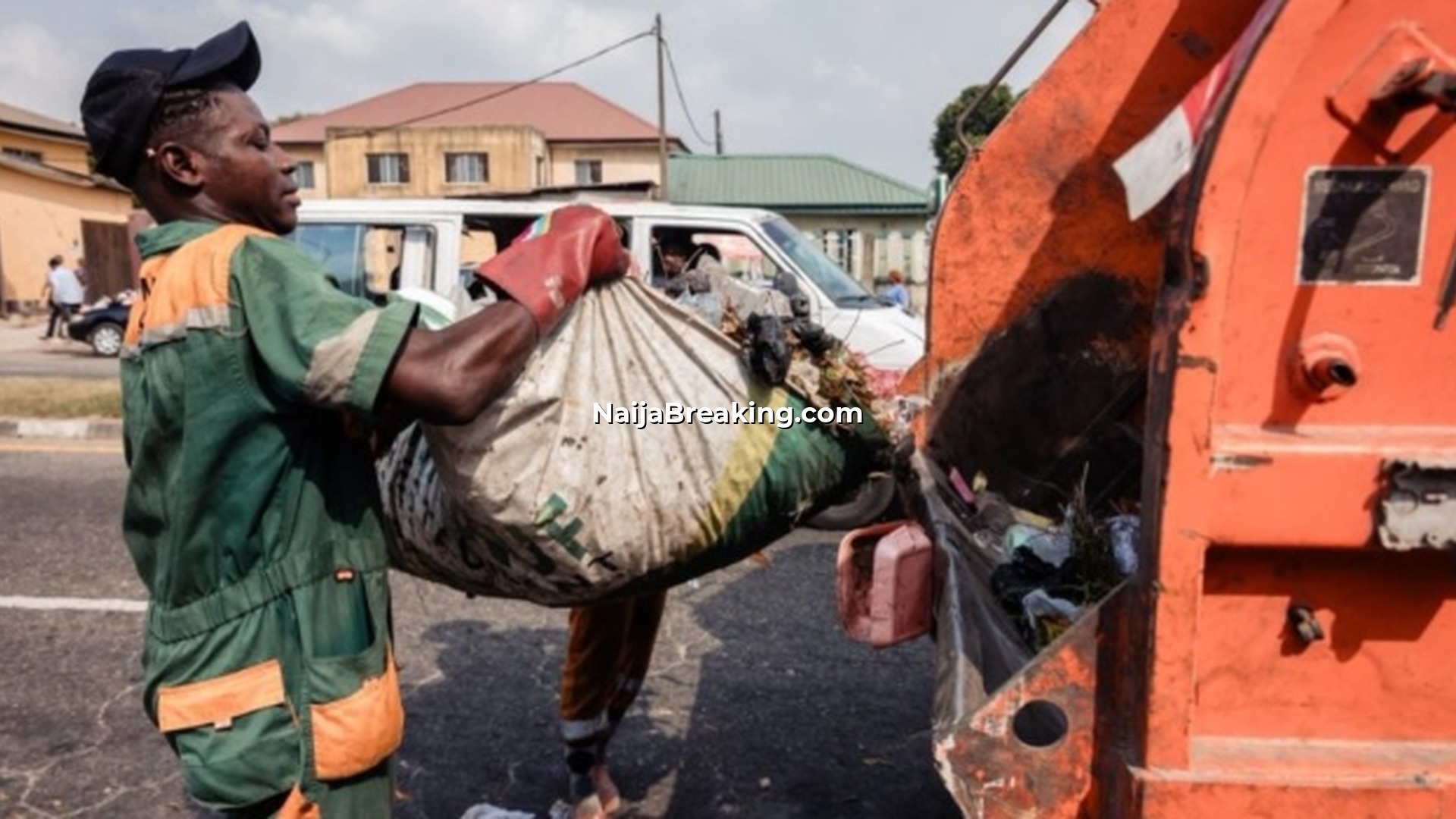

Ogun Court Conviction on Waste Disposal: A Step Toward Enforcing Environmental Laws in Nigeria
An Ogun State Magistrate Court has convicted and sentenced eight individuals to community service for indiscriminate waste disposal, marking a significant judicial effort to enforce environmental regulations in one of Nigeria’s most densely populated states. The conviction represents a rare and important example of waste disposal enforcement Nigeria taking place at the grassroots level, where judicial systems are often overwhelmed with criminal cases and environmental violations frequently go unpunished. On Friday, the Isabo-based court found all defendants guilty under the Public Health Law of Ogun State 2006 and the Ogun State Waste Management Authority (OGWAMA) Law 2020, two pieces of legislation that have long existed on paper but rarely translated into meaningful enforcement action. This ruling is particularly significant because it occurs amid a national crisis of urban sanitation, where most Nigerian cities—from Lagos to Abuja to Kano—struggle with mounting refuse heaps, overflowing landfills, and the associated public health disasters that follow. For a judicial system that often takes months to resolve cases and rarely prioritises environmental matters, this swift conviction sends a potentially important signal about the state government’s commitment to tackling one of Nigeria’s most visible and persistent urban management failures.
Background
Nigeria’s waste management crisis did not emerge overnight. For decades, rapid urbanisation coupled with weak institutional capacity and inconsistent enforcement has created a perfect storm of refuse accumulation across the country’s cities. The National Bureau of Statistics (NBS) estimated that Nigeria generates over 32 million tonnes of waste annually, yet only a fraction is properly managed through licensed disposal facilities. In Ogun State, which sits adjacent to Lagos and serves as home to numerous manufacturing facilities and a growing urban population, the challenge is particularly acute. Abeokuta, the state capital, has witnessed explosive growth in recent years, transforming from a manageable mid-sized city into a sprawling urban centre where traditional waste management infrastructure has been stretched to breaking point.
The broader policy framework for waste management in Nigeria includes the National Environmental Standards and Regulations Enforcement Agency (NESREA) Act 2007, which establishes federal environmental standards, and various state-level laws that give governors and local governments the responsibility for waste collection and disposal. However, enforcement has been notoriously weak. Most Nigerians dispose of refuse wherever convenient—along roadsides, in gutters, in waterways, and in open spaces—because collection systems are unreliable and penalties for illegal dumping are rarely applied. The indiscriminate dumping of waste creates breeding grounds for disease vectors, contaminates groundwater, reduces aesthetic quality of urban areas, and contributes to seasonal flooding when waste blocks drainage channels. In Lagos, images of waste mountains dominating residential areas have become almost normalised in public consciousness. Ogun State’s decision to prosecute these cases therefore represents a departure from the status quo, where environmental violations are treated as nuisances rather than crimes worthy of court time.
The creation of dedicated waste management authorities in states like Ogun, through OGWAMA’s establishment and formalisation of enforcement powers, reflects growing recognition that waste management cannot be left to market forces or goodwill alone. Yet many of these authorities have historically lacked adequate funding, staffing, and political backing to conduct meaningful enforcement. The fact that the Medical Officer of Health within OGWAMA was empowered to prosecute these cases suggests a deliberate institutional choice to weaponise existing legal structures and demonstrate zero-tolerance for illegal dumping. This represents a policy shift worth examining, as it could serve as a model for other states struggling with similar challenges.
Key Details
The Ogun State Magistrate Court sitting in Isabo, Abeokuta, convicted eight individuals after they were apprehended disposing of refuse on public roads during early morning hours. According to the source, the defendants were arrested between 6:15 a.m. and 8:05 a.m. on dates not specified in the judgment, while allegedly dumping refuse at three separate locations: Isale-Igbein, Car-Wash, and Abiola Way within the Abeokuta Magisterial District. The prosecution, led by Kehinde Ogunsola, the Medical Officer of Health at OGWAMA, presented evidence that the defendants’ actions violated two distinct legal instruments: the Public Health Law of Ogun State 2006 and Section 34(1) of the Ogun State Waste Management Authority Law 2020.
Justice A.K. Araba delivered the judgment, finding all eight defendants—Oyebanjo Abidemi, Aminat Adewusi, Aminat Olarewaju, Omolana Olusola, Abiola Moridiya, Olaogun Mary, Abiodun Aromokun, and Iwenya Sylvester—guilty on both counts. The defendants were sentenced to community service to be performed at the Isabo Magistrate Court premises, and their photographs were to be displayed on the court’s notice board during the period of service. This public shaming component is worth noting, as it introduces a reputational cost to environmental violation beyond the actual labour component of community service. The court issued a strong warning that any defendant found guilty of similar offences in future would face imprisonment without the option of a fine, effectively escalating the penalty structure for repeat offenders.
Ogunsola, in his prosecutorial statement to the court, argued that indiscriminate waste disposal produced offensive odours that constitute a public nuisance and encouraged the breeding of flies and other disease vectors. He highlighted the direct public health consequences: the spread of diseases such as cholera, dengue fever, and other water-borne illnesses that thrive in unsanitary conditions. Additionally, he noted that uncollected waste on roads posed risks of flooding during rainy seasons and accelerated environmental degradation. The Ogun State government’s Special Adviser and OGWAMA Managing Director, Farouk Akintunde, praised the judgment as a “proper interpretation” of the state’s waste management laws and suggested the ruling would strengthen ongoing efforts to curb illegal dumping. This statement indicates that the conviction was part of a broader government strategy rather than an isolated incident.
Impact and Analysis
This conviction carries symbolic and practical significance that extends beyond the eight individuals involved. At the symbolic level, it demonstrates that Nigeria’s judicial system can be mobilised to enforce environmental laws, challenging the widespread perception that such matters are beneath the dignity of courts already burdened with serious criminal cases. When magistrate courts begin treating waste disposal violations seriously, it signals a shift in societal priorities—a message that environmental crimes are not victimless or trivial. However, the practical impact remains limited unless this represents the beginning of sustained enforcement rather than an isolated exercise.
One critical question is whether Ogun State has the institutional capacity to replicate this enforcement at scale. Abeokuta generates thousands of tonnes of waste daily, and eight convictions address only a handful of individual dumpers. The real solution requires addressing systemic failures: inadequate waste collection services, insufficient disposal facilities, and low public awareness about proper waste management. If residents cannot access reliable collection services or affordable disposal options, individual prosecution becomes a form of environmental injustice that punishes the poorest citizens for engaging in a ubiquitous survival strategy. Lagos’s Waste Management Authority (LAWMA) has historically struggled with similar tensions, where enforcement against informal waste disposal generated backlash when formal alternatives were unavailable or unaffordable. The Ogun court ruling will only be truly effective if accompanied by parallel investments in waste infrastructure and public education.
The conviction also reveals potential tensions between environmental enforcement and the rule of law. The use of publicly displayed photographs as part of sentencing is an unconventional penalty in Nigeria’s criminal justice system and raises questions about whether such measures comply with constitutional protections against cruel or degrading punishment. While community service is generally considered a rehabilitative sentence, public humiliation adds a retributive dimension that may not be strictly necessary. These procedural questions will likely gain importance if environmental prosecutions become more common and potentially more controversial.
Expert Perspectives
Dr. Ade Oladele, an environmental law specialist and senior lecturer at the University of Ibadan’s Faculty of Law, observes that this conviction represents important progress in closing the enforcement gap that has plagued Nigeria’s environmental legal framework. “We have abundant legislation—NESREA Act, state waste management laws, public health ordinances—yet compliance rates remain abysmal because prosecutions are rare,” Dr. Oladele explained in conversation with NaijaBreaking. “When courts begin hearing and deciding environmental cases with the same seriousness they apply to commercial disputes, it changes the cost-benefit calculus for potential offenders. The Ogun ruling sends a message that environment is no longer a softer issue.” However, he cautioned that singular convictions must be sustained and systematised. “One conviction in Abeokuta will not solve Abeokuta’s waste crisis. What matters is whether this becomes a pattern—whether OGWAMA prosecutes ten cases next month, fifty next quarter. Without consistency, this remains a symbolic gesture rather than transformative enforcement.”
Chinyere Adeyemi, a policy researcher at the Centre for Development and Environmental Law in Lagos, takes a more cautious view, highlighting the equity concerns embedded in environmental enforcement. “We must ask who is being prosecuted and why,” Adeyemi noted. “Are these eight individuals primarily informal waste handlers—people without access to formal disposal options—or are they affluent individuals who simply chose to dump illegally? If enforcement disproportionately targets the poor while exempting commercial generators and industries, then we risk creating an unjust system where the powerless bear the burden of systemic failure.” She emphasised that complementary policies are essential: “Enforcement without investment in waste infrastructure is ultimately counterproductive. The Ogun government must simultaneously expand waste collection coverage, reduce collection costs, and establish accessible disposal facilities. Otherwise, you are simply criminalising poverty and environmental desperation.”
What This Means for Nigerians
For ordinary Nigerians navigating daily urban life, this conviction carries both promising and troubling implications. If environmental enforcement becomes consistent and fairly applied, it could gradually shift behaviour patterns—encouraging people to dispose of waste responsibly because consequences are now real rather than theoretical. A resident of Abeokuta or any other Nigerian city might think twice before dumping refuse along a roadside if they know prosecution is possible. This could contribute to marginal improvements in neighbourhood sanitation, reducing the daily exposure to heaps of rotting waste that characterise many urban Nigerian communities. Improved sanitation has cascading health benefits: fewer disease-bearing flies, reduced cholera and typhoid transmission, better drainage during rainy seasons, and overall enhanced quality of life in residential areas.
However, for many Nigerians—particularly those in informal settlements or low-income neighbourhoods—this ruling may translate into increased police harassment or unfair targeting. Waste disposal enforcement often becomes selective, with authorities cracking down on informal dumpers while tolerating illegal dumping by wealthy individuals or business interests. A small trader selling goods and disposing of packaging waste might face arrest while a manufacturing facility dumping industrial waste into a nearby stream operates with impunity. For working-class Nigerians and small business owners, stricter enforcement without corresponding improvements in affordable waste collection services simply increases their operational costs and frustrations. Young people seeking employment as waste handlers or informal recyclers might find their livelihoods threatened if enforcement prevents them from accessing waste streams. The concern is that this ruling, if not carefully implemented with equity in mind, could become another mechanism through which ordinary Nigerians bear the costs of systemic governance failures.
The ruling also highlights the critical importance of waste management as an urban service that directly impacts daily life. Many Nigerians spend hours each week managing household waste—storing it, watching it accumulate, and finding disposal options. Where formal collection exists, it is often irregular and unreliable. Where it doesn’t exist, households resort to illegal dumping as a practical necessity rather than a preference. For students and workers commuting through cities, uncollected waste contributes to flooding, blocked traffic, and disease risks. For small business owners—restaurants, shops, markets—waste disposal costs cut into already-thin margins. For environmental consciousness and civic pride, the normalisation of waste on streets and waterways creates a sense that public spaces are beyond collective care or control. This conviction, if part of a broader commitment to waste management, could gradually rebuild the sense that public spaces matter and deserve protection.
Editor’s Take
At NaijaBreaking, we see this conviction as a modest but meaningful signal that Nigeria’s judicial system can be mobilised beyond traditional criminal justice concerns to address what are fundamentally governance failures. What this story reveals is that enforcement mechanisms exist—they simply require political will and consistent application. Too often, environmental violations are treated as inevitable consequences of development or urbanisation, rather than crimes against public health that deserve prosecution. The Ogun court judgment suggests a different mindset: that indiscriminate waste disposal is not merely untidy but illegal and harmful, worthy of court time and sanctions. However, we are cautious about celebrating prematurely. One judgment does not represent systemic change. What matters now is whether Ogun State sustains this enforcement, extends it fairly across all socioeconomic groups, and couples it with genuine investment in waste infrastructure. Without that, this ruling remains a symbolic gesture that might even backfire if it becomes a tool for harassing the poor while the wealthy continue dumping illegally. Nigeria needs environmental enforcement, but it must be just environmental enforcement.
What to Watch Next
Several developments merit close monitoring in coming weeks and months. First, observe whether OGWAMA initiates additional prosecutions—how many waste disposal cases reach court in the next three months? This will indicate whether the Abeokuta convictions represent a strategic shift or an isolated incident. Second, watch the implementation of community service sentences: are the convicted individuals actually performing service, and is this visible to the public? If implementation falters, it undermines deterrent value. Third, monitor whether enforcement becomes selective—are prosecutions initiated against all socioeconomic groups, or primarily against informal dumpers? Fourth, track whether Ogun State makes concurrent investments in waste infrastructure: expanded collection routes, reduced collection fees, additional disposal facilities. Fifth, observe how other state governments respond—do they attempt similar prosecutions, or does Ogun remain an outlier? The key question now is whether this conviction catalyses systematic enforcement or remains a one-off gesture that fades from public memory as new crises dominate headlines.
Conclusion
The Ogun State court’s conviction of eight individuals for indiscriminate waste disposal represents a significant but fragile step toward enforcing environmental laws in Nigeria. It demonstrates that judicial mechanisms for environmental protection exist and can be activated, challenging the normalisation of waste crimes across Nigerian cities. However, enforcement without systemic investment in waste infrastructure risks becoming an instrument of injustice rather than environmental protection. Nigeria’s path forward requires coupling enforcement with genuine expansion of waste collection and disposal services, public education, and equitable application of penalties. Share your thoughts in the comments below—what do you think this means for Nigeria’s future? Will we see sustained environmental enforcement, or will this conviction fade as another isolated judicial act in a system overwhelmed by deeper governance failures?