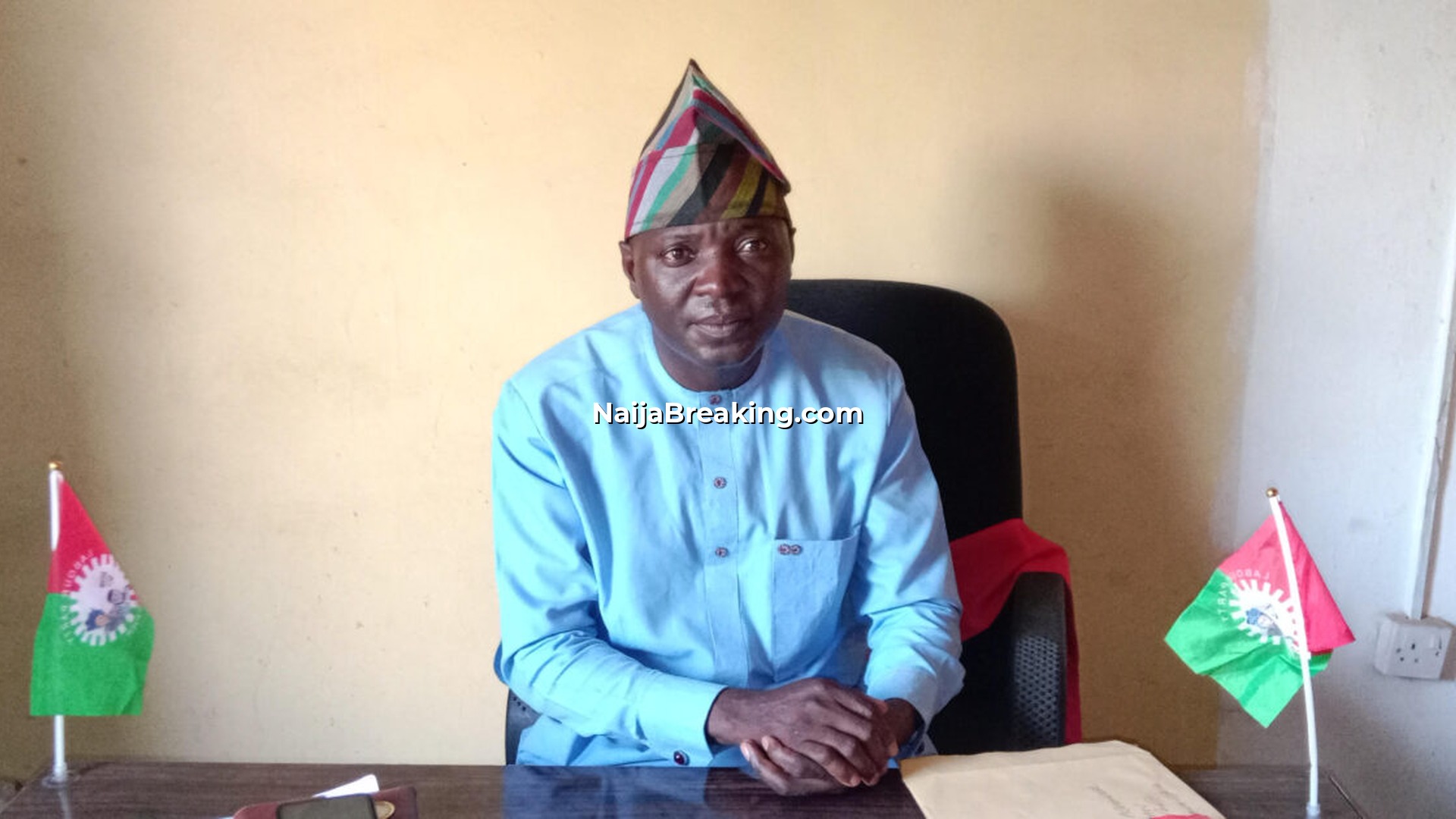
Labour Party Factional Crisis in Nasarawa: Factional Chair Claims Death Threats Over Party Primaries Dispute
Nigeria’s Labour Party continues to navigate a troubling Labour Party factional crisis that threatens to undermine the party’s institutional integrity and member safety across multiple states. The latest manifestation of this broader Labour Party factional crisis has emerged in Nasarawa State, where Alexander Ombugu, a factional chairman within the party, has raised alarming concerns about threats to his life stemming from disagreements over recent party primaries. This development adds another troubling chapter to Nigeria’s recurring pattern of internal party conflicts that frequently escalate into security concerns, putting individual party members and their families in genuine danger. The allegation by Ombugu—that he received warnings of imminent physical attacks and that his wife has become distressed by widespread rumours of violence directed at him—reflects a broader Labour Party factional crisis and dysfunction within Nigeria’s political parties that extends far beyond procedural disagreements. Such incidents underscore the urgent need for stronger internal party governance mechanisms and a commitment to democratic principles within party structures, yet they remain largely unaddressed by party leadership at national and state levels across the country.
Understanding the Labour Party Factional Crisis
The Labour Party’s trajectory in Nigerian politics has been marked by meteoric rise and internal turbulence in equal measure. Following the 2023 presidential election, during which LP presidential candidate Peter Obi garnered unprecedented youth support and secured third position with over 6.1 million votes nationwide, the party expanded its footprint across numerous states. However, this rapid growth exposed serious structural weaknesses in party administration, member conflict resolution mechanisms, and leadership accountability. The post-election period saw emerging factions within state chapters, particularly in states like Nasarawa, Rivers, Abia, and Lagos, where competing groups claimed legitimacy and sought control of party resources and nomination processes. This Labour Party factional crisis has become increasingly difficult to manage without proper institutional frameworks.
The Labour Party factional crisis reflects a systemic problem within Nigeria’s political parties more broadly. When political parties grow rapidly without establishing clear governance structures, constitutional enforcement mechanisms, and transparent dispute resolution processes, internal conflicts inevitably emerge. The Labour Party, despite its relative newness as a significant political force at the national level, has not been exempt from these pressures. Party leadership has struggled to balance the need for rapid organisational expansion with the requirement for institutional stability and member discipline. The Labour Party factional crisis in Nasarawa specifically highlights how individual state chapters can develop their own internal power struggles when national party headquarters fails to provide clear directives or enforce party constitutions consistently.
Nasarawa State, a North Central state crucial to national political calculations, became a flashpoint for these internal disputes. The state’s significance lies partly in its swing-state characteristics during elections and its role in Nigeria’s political realignment. The Labour Party’s emergence as a credible third force attracted diverse political actors, including former members of the All Progressives Congress (APC) and the People’s Democratic Party (PDP), each bringing their own organisational structures and expectations. This influx created natural tensions as different factions competed for influence, resources, and the right to determine candidate selection for various positions. The party’s national leadership has struggled to provide clear guidance or enforce consistent dispute resolution procedures, leaving state chapters vulnerable to personality-driven conflicts rather than principle-based disagreements. The Labour Party factional crisis has thus become a defining characteristic of the party’s operations in several states.
The Nasarawa Labour Party Factional Crisis: Context and Development
The recent primary elections in Nasarawa were supposed to provide an opportunity for the Labour Party to consolidate its position and demonstrate its commitment to transparent, inclusive candidate selection processes. Instead, the primaries became a battleground for competing factional interests, with multiple candidates claiming legitimacy and different groups within the party challenging the validity of election results. This Labour Party factional crisis in Nasarawa reflects broader patterns observed in other states where the LP has experienced rapid growth without corresponding institutional maturation. The primary elections, rather than serving as a unifying exercise that would strengthen party cohesion, instead deepened divisions and created resentment among party members who felt their preferred candidates were excluded through irregular processes.
Alexander Ombugu’s position as a factional chairman is itself indicative of the Labour Party factional crisis within Nasarawa’s state chapter. The existence of multiple chairmen claiming legitimacy within the same state party structure demonstrates the complete breakdown of internal party governance. In a properly functioning political party, there would be only one recognised state chairman, elected through transparent processes and upheld by party discipline. The fact that Ombugu operates as a “factional” chairman suggests that party members have split into competing groups, each with their own leadership structure and claim to represent the “true” Labour Party in the state. This fragmentation weakens the party’s collective bargaining power during elections and undermines its ability to present a unified message to voters.
The Labour Party factional crisis in Nasarawa has attracted attention because of its potential implications for the party’s electoral fortunes in the 2025 general elections and beyond. When a political party experiences significant internal divisions, its capacity to mobilise voters and present competitive candidates diminishes substantially. Factional conflicts also divert party resources away from constructive activities like voter mobilisation and policy development, instead channelling them into internal political struggles. The Nasarawa Labour Party factional crisis thus represents not merely an internal management problem but a strategic challenge that could affect the party’s viability as a political force in the state and potentially influence national party dynamics as well.
Death Threats and Security Concerns Within the Labour Party Factional Crisis
The allegations of death threats against Alexander Ombugu represent a serious escalation of the Labour Party factional crisis from mere political disagreement to personal security threats. According to Ombugu’s account, he has received communications indicating that his life is in danger, with specific warnings about imminent physical attacks. Such threats, whether genuine or exaggerated, reflect the dangerous intersection of political competition and resort to intimidation tactics that characterises Nigeria’s political environment. The psychological impact on Ombugu’s family, particularly his wife who has reportedly become distressed by these threats, demonstrates how Labour Party factional crisis-related violence extends beyond the individual target to affect family members and broader social circles.
The question of police protection, which Ombugu has reportedly sought, raises important issues about state security apparatus and the protection of political actors engaged in internal party disputes. Nigerian police forces are already stretched thin managing general law and order across the country, and they face particular challenges in addressing threats that occur within political party contexts where perpetrators may be difficult to identify and evidence is often circumstantial. The Labour Party factional crisis in Nasarawa thus creates practical security challenges that state institutions struggle to address effectively. Furthermore, the fact that threats allegedly arise from within the same political party—supposedly united by common ideological commitments—suggests a fundamental breakdown in party discipline and shared values.
Historically, Nigerian political parties have experienced violent escalations of internal disputes. The Labour Party factional crisis in Nasarawa, while serious, remains less severe than some historical examples where intra-party violence has resulted in deaths, injuries, and property destruction. However, the pattern of death threats and intimidation associated with the current Labour Party factional crisis should serve as a warning to party leadership that decisive intervention is needed to prevent further deterioration. Without clear consequences for members who resort to threats and intimidation, the Labour Party factional crisis could escalate into physical violence that threatens not only party members but also the broader electoral environment during election seasons.
Structural Failures Contributing to the Labour Party Factional Crisis
The persistence of the Labour Party factional crisis reflects fundamental structural failures within the party’s institutional framework. First, the Labour Party appears to lack clear, well-publicised procedures for resolving disputes between competing factional groups. When party constitutions are unclear or enforcement mechanisms are weak, members have little incentive to accept unfavourable decisions made by party leadership. Instead, they may establish parallel structures and claim legitimacy based on their interpretation of party rules. The Labour Party factional crisis in Nasarawa demonstrates what happens when this institutional vacuum exists: multiple individuals claim authority, and aggrieved members resort to intimidation rather than accepting party dispute resolution outcomes.
Second, the Labour Party factional crisis reflects inadequate party financing mechanisms. When party resources are limited or distributed unfairly, factional groups have motivation to challenge party leadership and establish alternative organisational structures in hopes of capturing a larger share of available resources. This financial dimension of the Labour Party factional crisis is often overlooked in discussions that focus primarily on personality conflicts or ideological differences. However, control over party resources—including funds for campaign activities, administrative operations, and member incentives—represents a significant material interest that drives factional competition. The party’s national leadership has not established transparent, equitable mechanisms for distributing state-level resources, creating incentives for factional conflict.
Third, the Labour Party factional crisis reflects weak party discipline mechanisms. Political parties maintain cohesion partly through consistent application of disciplinary measures against members who violate party rules or engage in actions contrary to party interests. The Labour Party’s apparent inability to enforce discipline—whether through suspensions, expulsions, or other sanctions—against individuals engaged in threatening behaviour or factional activities suggests that disciplinary mechanisms either do not exist or are applied inconsistently. A robust party discipline framework, applied transparently and fairly, could reduce the incidence of dangerous escalation associated with the Labour Party factional crisis.
The Broader Implications of Labour Party Factional Crisis for Nigerian Democracy
The Labour Party factional crisis in Nasarawa, while focused on a single state, carries implications that extend beyond Nasarawa’s boundaries. The Labour Party emerged as a significant political force in 2023 partly because voters, particularly young Nigerians, sought an alternative to the established APC and PDP. The party symbolised a break from traditional politics and offered hope for democratic renewal and institutional reform. However, the Labour Party factional crisis undermines this symbolic value and demonstrates that the party has not transcended the institutional weaknesses and internal conflicts that characterise established parties. If the Labour Party cannot manage its own internal affairs more effectively than the APC and PDP, what credible claim can it make to offering meaningful political change?
The Labour Party factional crisis also has implications for electoral competitiveness in Nigeria. For democratic elections to be genuinely competitive, political parties must be able to field strong candidates and mobilise supporters effectively. The Labour Party factional crisis reduces the party’s capacity to perform these essential functions. Furthermore, when political parties experience internal violence or serious conflict, the overall electoral environment becomes more polarised and potentially more dangerous. Voters become anxious about supporting a divided party that cannot manage its own affairs, and the party’s opponents gain ammunition for attacking party credibility. The Labour Party factional crisis thus creates a negative feedback loop: internal conflict weakens electoral performance, which reduces resources available to address internal conflict, which perpetuates division.
Potential Solutions to Resolve the Labour Party Factional Crisis
Resolving the Labour Party factional crisis in Nasarawa, and preventing similar crises in other states, requires decisive action by party leadership at both national and state levels. First, the party should commission an independent audit of its state chapter structures, identifying all groups claiming party affiliation and documenting how multiple factional structures emerged. This audit should be conducted transparently and its findings shared publicly to establish a factual basis for subsequent reconciliation efforts. Rather than pretending that only one legitimate faction exists, party leadership should acknowledge the Labour Party factional crisis explicitly and commit to resolving it through documented processes.
Second, the Labour Party should establish clear, published dispute resolution procedures that apply consistently across all state chapters. These procedures should include multiple stages: initial mediation, formal hearing before party disciplinary committees, appeal mechanisms, and clearly specified sanctions for violations. The existence of transparent procedures reduces incentive for factional conflict by providing all members with confidence that their grievances will receive fair consideration. The Labour Party factional crisis will be less likely to escalate into violence if all members understand that accepted alternatives to confrontation exist.
Third, the party should conduct new primary elections in Nasarawa and other affected states under international or domestic observer supervision. These elections should be organised transparently, with clear voter rolls, secure ballot procedures, and publicly observable vote counting. By demonstrating commitment to procedural legitimacy, the Labour Party can reduce claims that factional conflict is justified by irregular candidate selection processes. The Labour Party factional crisis partly reflects disagreement about whether previous primary procedures were fair; new, transparently conducted primaries could address this source of conflict.
Conclusion
The Labour Party factional crisis exemplified by the situation in Nasarawa State represents a critical challenge to the party’s long-term viability and to Nigerian democracy more broadly. The escalation from political disagreement to death threats demonstrates the dangers of allowing internal party conflicts to fester without intervention. The Labour Party has the institutional capacity to address this Labour Party factional crisis if leadership demonstrates sufficient political will. This requires acknowledging the crisis explicitly, establishing transparent governance mechanisms, and enforcing party discipline consistently. Without decisive action, the Labour Party factional crisis will likely expand, affecting electoral performance in multiple states and potentially deteriorating into physical violence. The stakes are high not only for the Labour Party’s future but for Nigeria’s broader democratic trajectory.