Xreal’s Smart Glasses Breakthrough: How Google’s Partner Finally Cracked the Code
The smart glasses industry has long represented one of Silicon Valley’s most ambitious yet frustrating endeavours, and smart glasses technology is finally reaching a turning point that industry leaders believe could reshape consumer computing forever. Chi Xu, the visionary founder and CEO of Xreal, has boldly declared that his company—a longtime strategic partner of Google—has finally mastered the notoriously tricky landscape of smart glasses manufacturing and software integration. According to reports from TechCrunch, Xu made these confidence-inspiring remarks during Google’s I/O conference in Mountain View, where he unveiled Xreal’s ambitious Project Aura initiative. This breakthrough comes after nearly two decades of industry losses, failed prototypes, and abandoned dreams. For Nigerian tech enthusiasts and entrepreneurs watching the global technology landscape, Xreal’s announcement signals that the era of wearable computing may finally be moving from science fiction into everyday reality. The implications for Nigeria’s emerging tech ecosystem could be substantial, particularly as African nations increasingly position themselves as innovation hubs.
Background
The smart glasses industry’s journey has been extraordinarily painful, marked by massive financial losses and technological dead ends that have littered Silicon Valley’s landscape since the early 2010s. Google’s initial Glass project, launched with tremendous fanfare in 2013, became a cautionary tale—despite considerable investment and media attention, the device was ultimately abandoned due to privacy concerns, bulky design, poor battery life, and a staggering lack of compelling use cases that justified its premium pricing. Major technology companies including Apple, Microsoft, and Meta have collectively invested tens of billions of dollars in augmented reality and smart glasses development, yet profitability has remained elusive across the entire sector. The fundamental challenge has persisted: manufacturers struggled to create devices that were lightweight enough for all-day wear, affordable enough for mass consumer adoption, and equipped with software that actually provided genuine utility rather than gimmicky features.
Chi Xu’s own company, Xreal, has been methodically addressing these pain points since its founding, establishing itself as Google’s preferred hardware partner for AR and XR applications. The company recognised early that the smart glasses market required a completely different approach than previous attempts—one that combined industrial design excellence with cutting-edge optical technology and sophisticated software integration. Previous iterations suffered from what industry analysts call “the chicken-and-egg problem”: manufacturers couldn’t justify creating compelling content for devices with minimal market penetration, while consumers wouldn’t purchase expensive devices lacking killer applications. Xreal’s strategic patience and focus on incremental improvements rather than revolutionary leaps have positioned it differently within the competitive landscape. The company has gradually built credibility through partnerships with Google and by delivering functional devices that solve specific professional and consumer problems, rather than attempting to create the mythical “universal computing device” that proved so elusive for earlier innovators.
Meta’s 2023 partnership with Ray-Ban represented a significant industry milestone that shifted perceptions about smart glasses viability. Unlike previous attempts at smart eyewear, the Ray-Ban collaboration actually achieved meaningful sales numbers, though it’s important to note that Meta’s Reality Labs division—the unit responsible for these glasses—continues operating at substantial financial losses. However, the market’s response demonstrated that consumers would purchase smart glasses if the form factor was acceptable, the features were genuinely useful, and the price point approached conventional eyewear costs. This validation from the consumer market emboldened other manufacturers and proved that the industry hadn’t fundamentally misunderstood consumer desires—it had simply failed to execute properly on the necessary components. Xreal seized this momentum to accelerate its own development roadmap.
Key Details
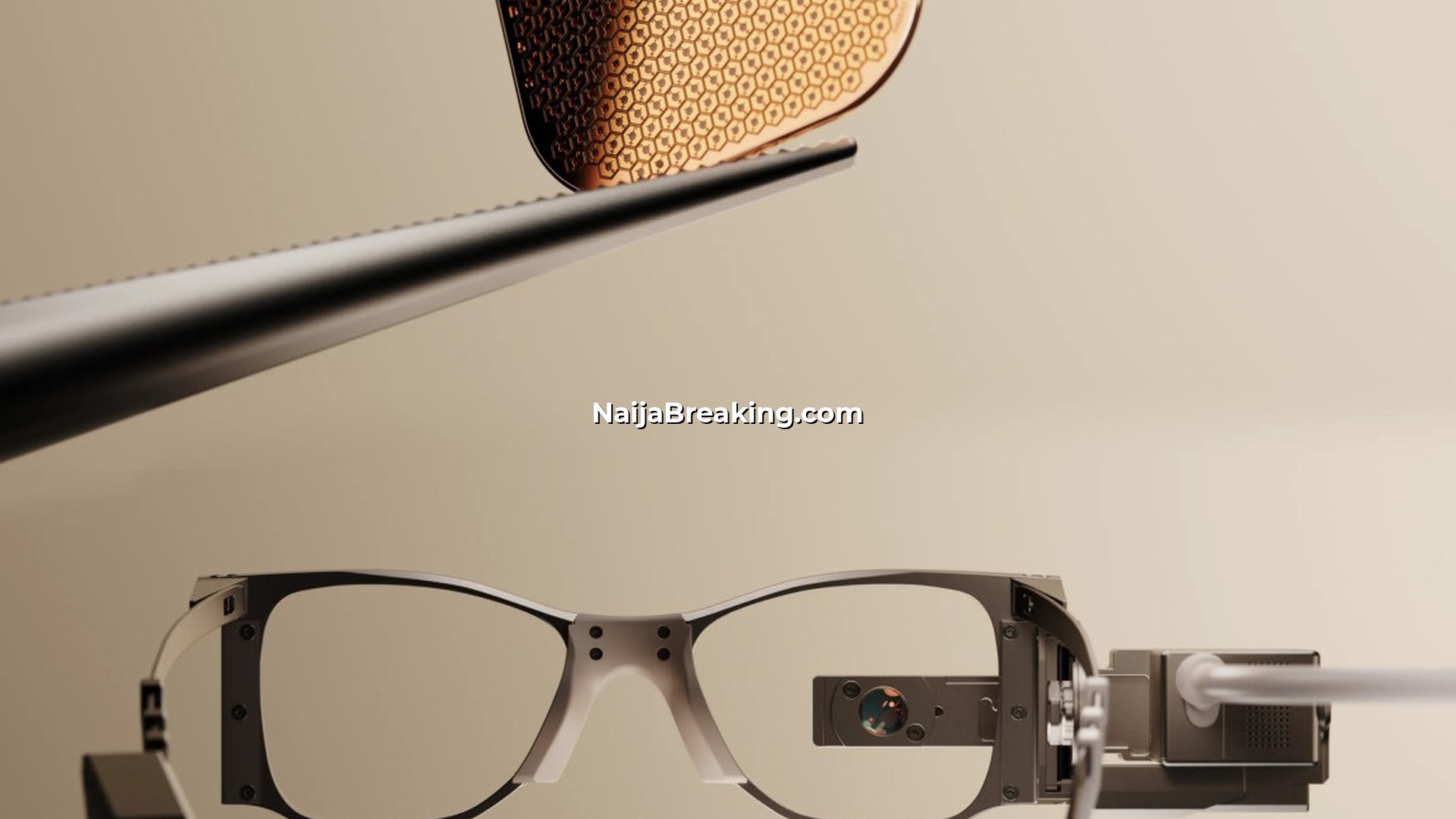
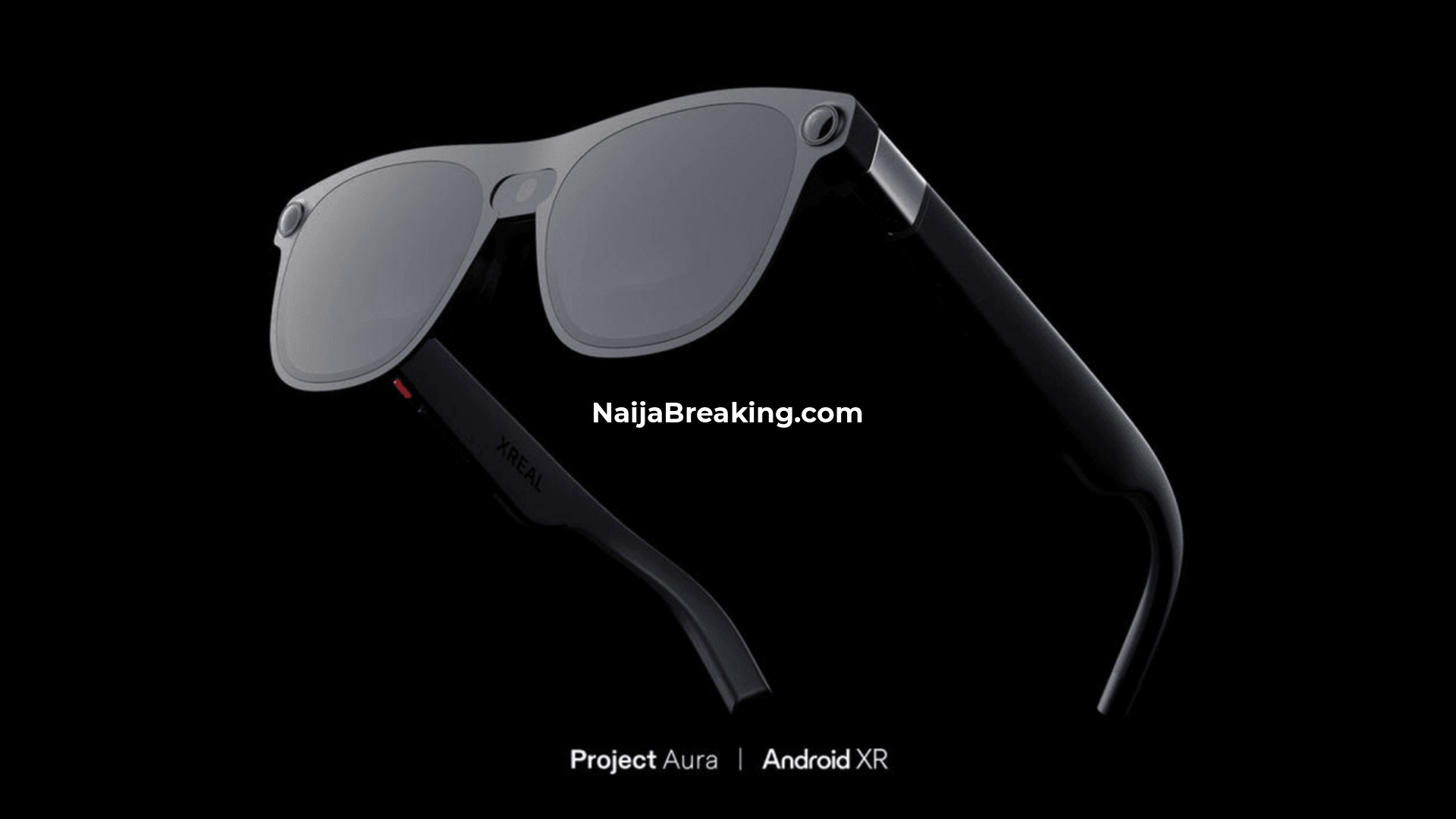
Xreal’s latest offering, Project Aura, represents the culmination of years of focused research and development aimed at creating smart glasses that people actually want to wear daily. Unlike bulky prototypes of the past, Aura employs wired smart glasses featuring advanced OLED displays that deliver crisp, vibrant visuals without sacrificing comfort or aesthetic appeal. The device addresses what Chi Xu identifies as the three essential requirements for successful smart glasses: fully matured hardware components, a robust and purpose-built operating system, and an intuitive user interface that makes the technology accessible to mainstream consumers. According to the TechCrunch coverage of Xu’s remarks at Google I/O, these three elements working in concert represent the fundamental breakthrough that separates Aura from previous failed attempts.
Xreal’s partnership with Google provides significant advantages in operating system development and integration, as Xreal can leverage Android’s flexible architecture and Google’s vast developer ecosystem to create applications specifically optimised for smart glasses interfaces. This contrasts sharply with earlier attempts by companies that tried to invent entirely new operating systems from scratch—a costly, time-consuming approach that left devices starved for quality applications. The OLED display technology represents a particularly important advancement, as previous smart glasses relied on dimmer, less colour-accurate display technologies that limited content quality and user experience. By incorporating OLED displays into a wired architecture, Xreal has managed to bypass some of the most stubborn technical limitations that plagued earlier generations—particularly battery life constraints and processing power limitations. The wired design, while potentially controversial, actually offers significant practical advantages: it distributes processing and power management to a companion device, allowing the glasses themselves to remain lightweight and comfortable for extended wear.
Industry insiders, including Xu, attribute the industry’s inflection point to convergence of multiple technological maturation curves happening simultaneously. Processing power available in compact form factors has increased exponentially, display technology has advanced dramatically, and battery technology—while still imperfect—has improved enough to support meaningful battery life in portable devices. Simultaneously, software development frameworks specifically designed for smart glasses interfaces have matured considerably, allowing developers to create applications that leverage spatial computing rather than simply shrinking smartphone interfaces. The market now includes proven demand from professional segments including enterprise workers, medical professionals, and industrial technicians who have shown willingness to adopt smart glasses for productivity gains. This professional demand creates a beachhead that allows manufacturers to scale production and refine consumer versions based on real-world feedback and proven use cases.
Impact and Analysis
The smart glasses industry’s transition from perpetual money-losing venture to potentially profitable business segment carries profound implications for the broader technology ecosystem and consumer computing paradigms. As Chi Xu explicitly stated, “Everybody’s losing money” in the smart glasses business, primarily because the technology proved far more complex and expensive to develop than early enthusiasts anticipated. The convergence of successful form factors, operating systems, and applications that Xreal has achieved suggests the industry may finally be approaching profitability—a critical milestone that typically precedes rapid adoption and market expansion. Global market analysts predict that if smart glasses achieve even modest mainstream adoption comparable to smartwatches, the total addressable market could exceed $50 billion annually within the next decade, making it one of the most lucrative consumer electronics categories.
Xreal’s success particularly vindicates the partnership model that the company has pursued with Google rather than attempting independent ecosystem creation. Google’s substantial resources, developer relationships, and commitment to augmented reality research have provided Xreal with competitive advantages that smaller competitors cannot match. The search giant’s integration of Xreal glasses into its broader product portfolio—potentially including Maps, Assistant, and camera technologies—creates network effects that multiply the value proposition of the hardware. This strategic relationship also provides Xreal with access to Google’s vast capital resources, enabling continued investment in research and development without the cash burn that has bankrupted or stalled competitors. Data from the consumer electronics market indicates that wearable devices with strong ecosystem support from established technology platforms achieve adoption rates three to five times higher than independent devices, suggesting that Xreal’s Google partnership confers substantial competitive advantages.
The implications for device manufacturers, software developers, and content creators are equally substantial. Success for Xreal’s smart glasses would validate the entire spatial computing paradigm and likely accelerate similar development efforts across the industry, including at Apple, Microsoft, and Meta. This virtuous cycle would expand the developer ecosystem, improve software quality, reduce average device costs through increased manufacturing scale, and ultimately create more compelling use cases that drive broader consumer adoption. The transition from loss-making experiments to profitable businesses would fundamentally reshape technology industry economics, potentially redirecting billions in venture capital and corporate R&D spending from failed approaches toward proven smart glasses architectures.
Expert Perspectives
Technology industry analysts have responded cautiously but increasingly optimistically to Xreal’s claims about achieving smart glasses viability, recognising that the company’s partnership with Google and the convergence of enabling technologies create circumstances fundamentally different from previous attempts. Wearable technology experts note that the critical difference between Xreal’s approach and previous failures lies in accepting realistic constraints rather than pursuing utopian visions of all-in-one devices that could replace smartphones entirely. Instead, Xreal positions smart glasses as complementary devices that excel at specific use cases—navigation, information display, hands-free communication, and professional applications—where smartphone interfaces prove suboptimal. This pragmatic positioning makes achieving profitability far more plausible than previous approaches attempting to create universal computing replacements.
Industry observers emphasise that Meta’s Ray-Ban partnership, while not yet profitable, has provided invaluable market data demonstrating genuine consumer demand for smart glasses that are socially acceptable and reasonably priced. This validation, combined with professional segment adoption in industrial and medical fields, creates a dual revenue stream strategy that previous manufacturers lacked. Enterprise adoption provides immediate revenue while consumer market development continues, reducing burn rates and extending runway for product improvement. Multiple technology analysts have noted that Xreal’s maturation of three critical components simultaneously—hardware, operating system, and user interface—represents a fundamental breakthrough that simply was not possible in earlier eras when competing technical limitations prevented optimisation of all three simultaneously.
What This Means for Nigerians
For Nigeria and the broader African tech ecosystem, Xreal’s potential breakthrough in smart glasses technology carries significant strategic implications that extend far beyond the global consumer electronics market. As Africa increasingly positions itself as a technology innovation destination, the success of spatial computing platforms like Xreal’s smart glasses could create entirely new categories of applications and business opportunities specifically tailored to African contexts and needs. Nigeria, with its burgeoning technology sector, substantial mobile-first population, and growing venture capital ecosystem, stands to benefit significantly if smart glasses technology matures into a mass-market category. The Nigerian tech community, which has demonstrated remarkable innovation in mobile money, fintech, and software development, could create localized applications and services designed specifically for smart glasses interfaces.
The practical implications for everyday Nigerians are particularly interesting when considering the country’s unique technology adoption patterns and infrastructure constraints. Nigeria’s population of over 220 million includes more than 100 million internet users who have leapfrogged traditional computing infrastructure to adopt mobile-first technologies directly. Smart glasses could extend this mobile-first paradigm further, providing hands-free access to information, communication, and services in contexts where smartphone interaction proves awkward or unsafe. For Nigerian professionals in fields like healthcare, education, and skilled trades, smart glasses could provide significant productivity improvements and access to remote expertise—imagine a Lagos surgeon performing complex operations with real-time consultation from international specialists, or a Kano technician receiving step-by-step guidance from master craftspeople worldwide. The technology could also revolutionise education delivery across Nigeria, enabling immersive learning experiences in resource-constrained schools.
Nigerian entrepreneurs and technology startups should particularly attend to Xreal’s achievement because it validates the spatial computing platform as a legitimate development target. As smart glasses technology matures and becomes more affordable, Nigerian developers could create applications addressing local problems—from agricultural technology and supply chain management to healthcare delivery and emergency services. The potential economic impact is substantial: smart glasses applications could unlock productivity improvements worth billions of naira annually across Nigeria’s economy. Additionally, as manufacturing and assembly gradually becomes economically viable for smart glasses components, Nigeria’s developing manufacturing sector could potentially capture value in this growing global supply chain, creating employment and export opportunities.
Conclusion and Outlook
Xreal’s declaration that smart glasses technology has finally reached an inflection point represents a watershed moment for consumer technology and wearable computing, ending nearly two decades of disappointment and massive financial losses that plagued the entire industry. Chi Xu’s confidence that his company has successfully combined mature hardware, robust operating systems, and intuitive user interfaces into a commercially viable product addresses the fundamental challenge that stumped previous manufacturers and investors. The convergence of enabling technologies, proven market demand from professional users, and successful consumer adoption of devices like Ray-Ban’s smart glasses has created circumstances fundamentally different from previous eras when individual technical limitations prevented overall system maturity. As Xreal and Google move forward with Project Aura and broader smart glasses commercialisation, the technology ecosystem—including Nigeria’s emerging tech sector—should prepare for the transformative impact of mainstream spatial computing adoption.
The coming years will be critical in determining whether Xreal’s optimism proves justified or whether smart glasses remain a niche category serving only professional applications. However, the convergence of factors supporting mainstream adoption appears stronger than ever before, suggesting that consumers will finally have access to genuinely useful, comfortable, and affordable smart glasses within the next three to five years. For Nigeria, this development represents an opportunity to participate in a new technological paradigm at an early stage, capturing value through applications development, entrepreneurial activity, and potentially manufacturing involvement. The smart glasses revolution, if it truly comes to pass, will reshape how humans interact with information and computing devices—and Nigeria’s vibrant technology community should position itself to benefit from this transformation. Share your thoughts in the comments below about how smart glasses technology could impact Nigerian society and your own daily life.