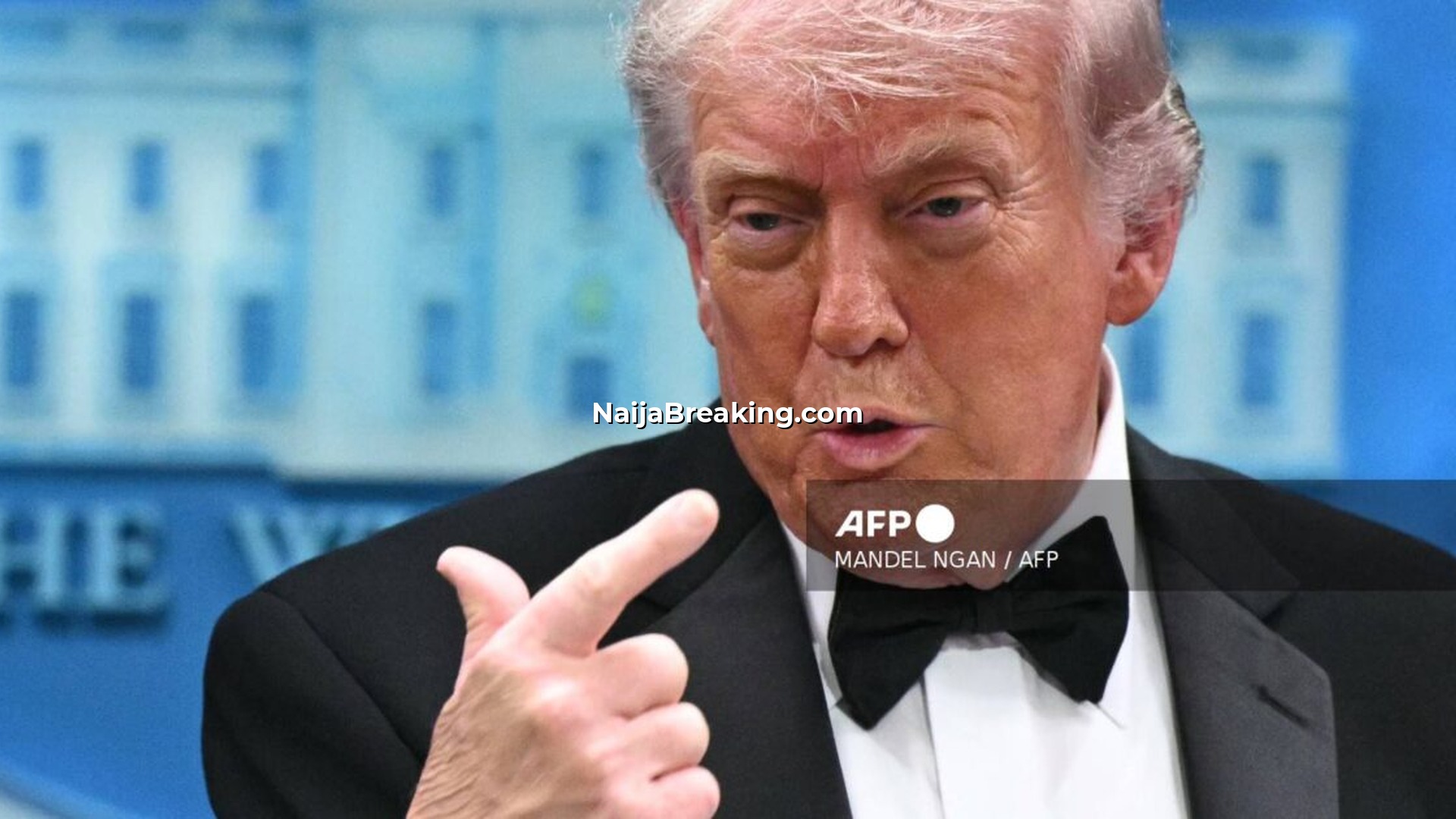
Trump Dismisses Taiwan Arms Sales Concerns Before Xi Meeting in Beijing
President Donald Trump has downplayed concerns over controversial United States arms sales to Taiwan ahead of his diplomatic visit to Beijing, stating he would discuss the contentious issue directly with Chinese President Xi Jinping during their meetings this week. Trump Taiwan arms sales remains one of the most critical geopolitical flashpoints in contemporary international relations, with profound implications for global stability and economic structures that affect nations far beyond the Asia-Pacific region. Trump’s casual dismissal of Beijing’s concerns, coupled with his confidence in his personal relationship with Xi Jinping, signals a potential shift in how Washington may approach one of the most sensitive diplomatic issues between the world’s two largest economies. According to Punch Nigeria, the US president stated he would bring along top American executives, including Tesla founder Elon Musk and Apple CEO Tim Cook, for the visit scheduled from Wednesday through Friday. This high-profile delegation underscores the commercial significance of the trip, with Trump emphasising his administration’s focus on ramping up bilateral trade relationships. For Nigerian observers of international affairs, understanding this US-China dynamic is essential, as disruptions in global trade flows directly impact Nigeria’s import-export sectors, manufacturing competitiveness, and foreign exchange earnings at the Central Bank of Nigeria (CBN).
Background
The Taiwan issue represents one of the most historically contentious matters in international diplomacy, with roots extending back to the Chinese Civil War of 1949 when the Nationalist government retreated to the island after communist forces took control of mainland China. For over seven decades, Taiwan has maintained a separate political system and governance structure, though Beijing continues to assert sovereignty claims over the island, viewing it as a breakaway province that must eventually be unified with the People’s Republic of China. The United States, through the Taiwan Relations Act of 1979, committed to providing Taiwan with defensive military equipment and support, establishing a framework that has persisted through multiple presidential administrations despite China’s consistent objections and diplomatic protests.
The arms sales issue gained particular prominence during previous administrations when multiple weapons packages worth billions of dollars were delivered to Taipei, including missile systems, fighter jets, and advanced surveillance equipment. China views these military transfers as direct interference in its internal affairs and a violation of the One China principle, which forms the cornerstone of Beijing’s foreign policy regarding the island. Statistics from the Stockholm International Peace Research Institute (SIPRI) reveal that between 2015 and 2023, the United States provided approximately $18 billion worth of military equipment to Taiwan, making America the primary external security guarantor for the island nation.
Trump’s previous administration (2017-2021) notably accelerated arms sales to Taiwan, approving multiple defence packages worth over $20 billion during his first term. His personal relationship with Xi Jinping, which he has repeatedly characterised as exceptionally strong and mutually respectful, suggests he may adopt a different negotiating approach compared to his predecessor. The backdrop of Russia’s invasion of Ukraine in 2022 has further complicated the calculus, as international observers debate whether Taiwan faces similar invasion risks and what deterrence mechanisms might prove most effective. Trump’s reference to Ukraine during his Monday press briefing indicates he views the Taiwan situation through a similar lens of potential military aggression, though his confidence in personal diplomatic relationships may lead to unconventional solutions.
Key Details
During a White House press briefing on Monday, President Trump acknowledged that Taiwan arms sales represent “one of the many things” he intends to discuss with President Xi during his Beijing visit. When directly asked whether the United States should continue selling weapons to Taiwan, Trump deliberately avoided providing a straightforward answer, instead pivoting to state: “I’m going to have that discussion with President Xi.” This calculated vagueness suggests Trump may be preserving negotiating flexibility, potentially willing to make concessions on the Taiwan arms question in exchange for trade concessions or other strategic advantages from China.
Trump articulated confidence in his relationship with Xi Jinping, suggesting that personal chemistry between leaders could prevent military conflict over Taiwan. “I think we’ll be fine. I have a very good relationship with President Xi. He knows I don’t want that to happen,” Trump told reporters, demonstrating his characteristic reliance on personal diplomacy rather than institutional frameworks or multilateral agreements. However, Trump also acknowledged a fundamental geographical reality—that the United States is “very, very far away” compared with China, implicitly recognising Beijing’s significant military advantages in any potential Taiwan scenario.
The White House delegation accompanying Trump includes high-profile business leaders such as Elon Musk and Apple CEO Tim Cook, signalling that commercial interests feature prominently in the diplomatic agenda. According to the source, China expressed hope that the visit would contribute to greater stability between the two economic superpowers. Taiwan’s Foreign Ministry responded by reaffirming its commitment to strengthening cooperation with the United States while building “effective deterrence capabilities” to maintain peace in the Taiwan Strait. Beijing’s Foreign Ministry spokesman Guo Jiakun reiterated China’s historical opposition to all forms of foreign military support for Taiwan, though the statement was notably measured in tone, suggesting willingness to engage constructively during the upcoming talks.
Impact and Analysis
Trump’s approach to the Taiwan arms sales issue carries significant implications for the stability of global financial markets and international trade systems that underpin the global economy. According to the World Trade Organization (WTO), the US-China trade relationship accounts for approximately $758 billion in annual bilateral commerce as of 2023, making any escalation in tensions between these nations a matter of profound concern for all trading partners, including Nigeria. The semiconductor industry, which relies heavily on Taiwan as a crucial manufacturing hub, generates over $600 billion annually, and any military conflict in the Taiwan Strait would immediately disrupt global supply chains affecting everything from automotive manufacturing to consumer electronics production.
For Nigeria specifically, disruptions in US-China trade relations create cascading effects through multiple economic channels. Nigeria’s Central Bank must carefully monitor foreign exchange movements, as tensions between Washington and Beijing typically trigger capital flight from emerging markets into safe-haven assets like US Treasury securities and gold, reducing liquidity available for developing nations. Additionally, China represents one of Nigeria’s most significant trading partners and investors, particularly in the oil and gas sector, with Chinese companies maintaining substantial operational presence across Nigeria’s energy landscape through entities like the China National Offshore Oil Corporation (CNOOC) and various construction contractors working on major infrastructure projects.
Trump’s willingness to negotiate on Taiwan arms sales could paradoxically create greater long-term instability if Beijing interprets reduced American security commitments as an opportunity to pursue military options. The 73 million residents of Taiwan would face increased vulnerability, potentially destabilising an entire region that handles approximately 60% of global semiconductor production, according to industry analysts. For Nigeria’s technology sector and digital economy ambitions, any disruption to semiconductor supply chains would severely impact the digital infrastructure projects prioritised by the Federal Government and private technology companies operating across the country.
Expert Perspectives
International relations experts have offered varied assessments of Trump’s negotiating posture regarding Taiwan and arms sales. Dr. Michael Chen, director of the Asia-Pacific Studies Institute at Georgetown University, notes that Trump’s emphasis on personal relationships with world leaders, whilst effective in certain contexts, may underestimate the structural constraints and nationalist pressures faced by Chinese leadership. “Xi Jinping cannot simply abandon Beijing’s long-standing position on Taiwan, regardless of his personal rapport with Trump, because Chinese domestic politics and the Communist Party’s legitimacy narrative are deeply invested in eventual reunification,” Chen explained in recent comments to foreign policy analysts.
Meanwhile, some observers suggest Trump’s willingness to discuss arms sales represents a pragmatic recognition that complete adherence to Taiwan’s security needs may prove incompatible with broader trade objectives and strategic competition with China over global influence. Dr. Sarah Williams, a specialist in US-China relations at the Brookings Institution, contends that Trump’s transactional approach to international relations could yield unexpected outcomes: “The question becomes whether Trump will trade away Taiwan’s defensive capabilities in exchange for trade concessions that primarily benefit American corporations and agricultural exporters, rather than considering broader strategic implications for American-led security arrangements in Asia.”
Nigerian policy analysts and international affairs commentators, including those at the Lagos Business School and the Centre for Development and International Relations, have urged the Nigerian Government and private sector stakeholders to monitor these developments carefully. The potential reshaping of US-China relations under Trump’s leadership could create both opportunities and risks for Nigerian engagement with both superpowers, requiring strategic clarity from Nigeria’s Ministry of Foreign Affairs and diplomatic corps regarding Nigeria’s own interests in maintaining stable global conditions.
What This Means for Nigerians
For ordinary Nigerians and the country’s business establishment, developments in US-China relations carry tangible, practical consequences that influence daily economic realities. If Trump’s negotiations with Xi Jinping result in reduced American security commitments to Taiwan, this could trigger significant capital reallocation in global markets, potentially affecting Nigerian equities traded on international exchanges and the valuations of Nigerian companies seeking foreign investment. The Nigerian Stock Exchange and the Central Bank of Nigeria carefully monitor international geopolitical tensions as early warning signals of potential disruptions to foreign exchange availability and investment flows.
The technology sector represents a particularly sensitive area for Nigerian concerns, given the country’s ambitious digital economy roadmap and initiatives to develop local tech infrastructure. Nigerian technology companies and digital startups often rely on imported semiconductors and hardware components sourced globally, with supply chain disruptions directly translating to increased production costs and reduced competitiveness. Furthermore, international technology companies operating in Nigeria—including Microsoft, Google, and various telecommunications firms—depend on stable global supply chains to service Nigerian markets effectively.
For Nigerian exporters and import-substitution industries, US-China trade dynamics influence global commodity prices and manufacturing competitiveness metrics. Nigeria’s non-oil export sector, which the Government of Nigeria seeks to develop as part of its diversification agenda away from petroleum dependence, faces competitive pressures from Chinese manufacturers and Vietnamese alternatives. Any shift in US-China trade relationships could reshape competitive dynamics in ways that either benefit or harm Nigerian producers depending on specific product categories and market segments.
Additionally, Nigerians should consider the broader implications for global stability and international law. If major powers like the United States begin negotiating away the security interests of smaller nations based on personal relationships between leaders rather than principled commitments, this sets concerning precedents for how developing nations like Nigeria might be treated in future negotiations. Nigerian policymakers and civil society organisations rightly emphasise that international relations should be governed by transparent institutional rules rather than personalised diplomacy, as this better protects the interests of smaller, less powerful nations.
Conclusion and Outlook
President Trump’s dismissal of Taiwan arms sales concerns ahead of his Beijing visit represents a critical juncture in US-China relations that will reverberate through global political and economic systems for years to come. His confidence in personal diplomatic chemistry with Xi Jinping, whilst reflecting his characteristic negotiating style, introduces significant uncertainty into an issue that directly affects millions of people and global supply chains supporting billions of economic activity. The decision whether to prioritise trade relationships and commercial gains over security commitments to Taiwan will define Trump’s second-term Asia-Pacific strategy and potentially reshape American credibility with regional allies.
For Nigeria and other emerging economies, these developments underscore the importance of closely monitoring great power competition and building diversified international partnerships that do not depend excessively on any single superpower. Nigeria’s strategic autonomy and economic resilience require continued engagement with both the United States and China whilst maintaining independent national interests and values. As global events continue evolving, Nigerian policymakers, business leaders, and citizens would be wise to prepare contingency plans for multiple scenarios regarding how US-China relations might develop, recognising that stability in these critical relationships affects Nigeria’s economic prospects, technology access, and position within the international system.
The coming weeks will reveal whether Trump’s negotiating approach yields productive dialogue with Xi Jinping or whether it creates new uncertainties and tensions that destabilise the international order that has generally favoured development for nations like Nigeria. Share your thoughts in the comments below about what you believe should be Nigeria’s strategic response to these shifting global dynamics.