Awujale Selection Embargo: Ruling House Demands Tinubu and Abiodun’s Urgent Intervention
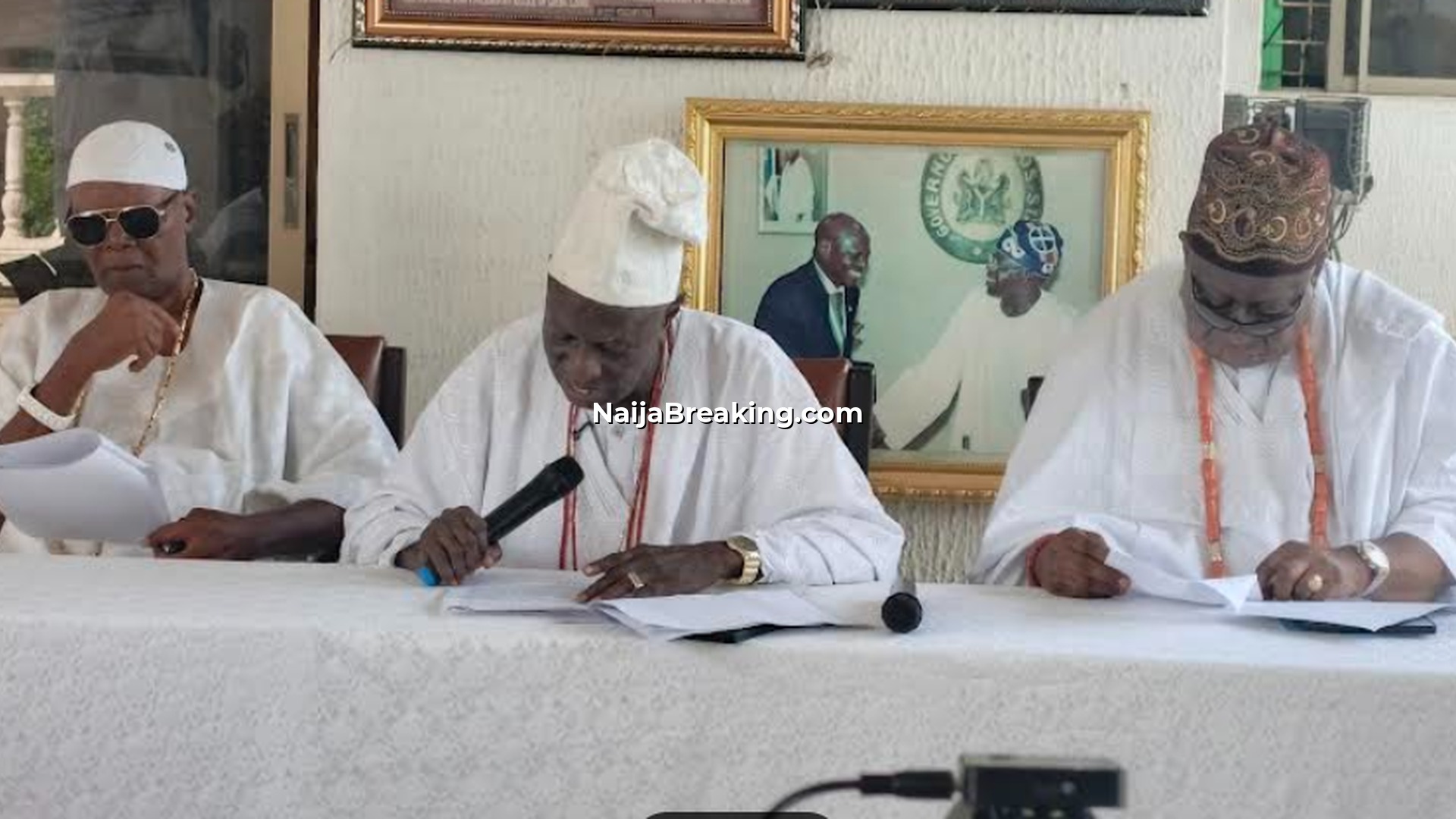
The Awujale selection embargo has become a growing concern for stakeholders in Ijebuland as the Fusengbuwa Ruling House intensifies pressure on President Bola Tinubu and Ogun State Governor Dapo Abiodun to lift the suspension plaguing the succession process. According to a statement issued on Sunday at the Ijebu Idowa residence of the ruling house chairman, the three-month moratorium has created unprecedented anxiety across Ijebuland, threatening to disrupt the centuries-old traditional institution that has guided the Ijebu people for generations. The ruling house leadership, comprising Chairman Abdulateef Owoyemi, Deputy Chairman Adedokun Ajidagba, and Vice Chairman Prof Fassy Yusuf, argues that the embargo lacks substantiation despite repeated invitations of members for questioning by security agencies. This development represents a critical moment in Nigerian traditional governance, where the intersection of constitutional authority, security concerns, and cultural preservation collides. The Awujale selection embargo has effectively halted preparations for the enthronement of a successor to the late Oba Sikiru Adetona, one of Nigeria’s most respected traditional rulers who passed away in December 2022. As tensions mount between the traditional institution and government authorities, the demand for presidential and gubernatorial intervention signals deepening concerns about the pace and transparency of the selection process. The situation reflects broader challenges in Nigeria’s traditional governance structures, where institutional procedures often face bureaucratic delays and political complications that can destabilise cultural institutions.
Background
The position of Awujale of Ijebuland stands as one of Nigeria’s most prominent traditional titles, commanding deep respect throughout Yorubaland and beyond. The late Oba Sikiru Adetona, who reigned for over five decades, was renowned for his wisdom, advocacy for education, and significant contributions to national development before his demise in December 2022. His death created a succession vacuum that triggered the activation of the traditional selection process, which has been guided by specific protocols established over centuries of Ijebu history. The Awujale selection process is traditionally overseen by the kingmakers, a council of titled chiefs responsible for ensuring that only candidates from the designated ruling houses meet the qualifications for the throne. In this instance, the Fusengbuwa Ruling House has been positioned as a primary contender for producing the next Awujale, a honour that comes with significant prestige and responsibility within the Ijebu community. The kingmakers, led by Dr Sunny Kuku, have been engaged in the preliminary stages of the selection process, which involves consultation with stakeholders, verification of candidates’ credentials, and ensuring compliance with traditional laws and contemporary constitutional requirements. However, the process has been complicated by allegations of impropriety that led the Ogun State Government to impose the three-month embargo in efforts to investigate claims of bribery and corruption within the selection framework. This suspension represents an unprecedented intervention in what has historically been a purely traditional matter, raising questions about the appropriate balance between government oversight and traditional autonomy in Nigerian cultural institutions.
Key Details
According to reports from Punch Nigeria, the Fusengbuwa Ruling House has formally addressed the prolonged suspension of the Awujale selection process, expressing frustration over the lack of concrete evidence against any members of the ruling house or kingmakers. Chairman Abdulateef Owoyemi stated during Sunday’s briefing that the embargo had persisted for over three months without substantiation of the allegations that prompted it. He emphasised that members of the ruling house had been repeatedly invited for questioning by the Nigerian Police Force and the Department of State Services, yet no incriminating evidence had been presented against any individual. “For more than three months now, the Ogun State Government has halted the Awujale selection process over petitions that have not been substantiated,” Owoyemi declared, underscoring the frustration permeating the Ijebu community. The ruling house chairman further noted that the kingmakers, particularly Dr Sunny Kuku and his council, remained ready to complete their statutory responsibility of selecting the next Awujale in accordance with traditional customs and contemporary legal requirements. Owoyemi appealed directly to President Tinubu and Governor Abiodun to intervene and facilitate the lifting of the suspension, arguing that the delay contradicts the principles of natural justice and due process. Deputy Chairman Adedokun Ajidagba added that the continued suspension had created anxiety across Ijebuland, with residents eager to see the emergence of a successor to the late Oba Adetona. The ruling house expressed willingness to submit to any transparent investigation but insisted that such inquiries should not be used to derail the entire selection process indefinitely. Vice Chairman Prof Fassy Yusuf emphasised that the selection procedure had been conducted according to established protocols without any deviation, and that the allegations appeared to be motivated by political considerations rather than genuine concerns about impropriety.
Impact and Analysis
The prolonged Awujale selection embargo carries significant implications for the stability and credibility of Nigeria’s traditional institution governance system, which remains integral to community cohesion and cultural identity in many parts of the country. The three-month suspension has created a vacuum in traditional leadership that extends beyond ceremonial functions, affecting decision-making on matters of cultural significance, land disputes, and community welfare that traditionally fall within the Awujale’s purview. According to data from the Ogun State Ministry of Culture and Tourism, the Awujale institution generates substantial economic value through cultural tourism and heritage preservation activities, with visitor numbers to Ijebu Ode cultural sites estimated at over 50,000 annually. The prolonged leadership vacuum threatens to disrupt these economic activities and diminish the cultural vibrancy that characterises the Ijebu people. Furthermore, the politicisation of the traditional selection process raises concerns about the principle of institutional autonomy, which experts argue is essential for maintaining the sanctity and independence of traditional governance structures. The situation reflects a broader pattern in Nigeria where government intervention in traditional affairs, though sometimes necessary for oversight purposes, can inadvertently undermine the legitimacy and operational efficiency of cultural institutions. Political analysts have noted that the handling of the Awujale selection embargo may set a precedent for how future traditional succession disputes are managed, potentially encouraging more frequent government interventions in matters traditionally left to communities. This trend could weaken the role of traditional rulers in contemporary Nigerian governance, particularly in states where governors increasingly assert control over succession processes. The economic and social costs of prolonged institutional vacancy include delayed resolution of customary matters, reduced cultural programming, and decreased community morale among Ijebu people who view the timely succession of their paramount ruler as essential to collective well-being.
Expert Perspectives
Traditional governance experts and constitutional scholars have offered varying perspectives on the Awujale selection embargo, with most emphasising the need for balance between government oversight and institutional autonomy. Professor Yusuf Bangura, a specialist in African traditional governance systems at the University of Lagos, argues that while governments have legitimate interests in ensuring transparency and preventing corruption in succession processes, indefinite suspensions without clear evidence can damage institutional credibility. “The balance between oversight and autonomy is delicate,” Prof Bangura noted in recent comments, “and prolonged suspensions without substantive findings tend to erode public confidence in both the traditional institution and the government regulatory framework.” Legal scholars have pointed out that the Nigerian Constitution recognises the autonomy of traditional institutions while granting state governors supervisory powers, creating an inherent tension that requires careful navigation. Chief Bode Olajide, a constitutional law expert and former lecturer at the Nigerian Law School, emphasised that any government intervention in traditional succession processes must be time-bound and evidence-based to maintain legitimacy. “When allegations are made, they should be investigated swiftly and transparently, with clear timelines for resolution,” Olajide stated, adding that indefinite embargoes without findings of wrongdoing essentially presume guilt rather than innocence. Former Ogun State Government officials, speaking anonymously due to political sensitivities, suggested that the embargo may have been imposed following specific complaints from rival candidates, but acknowledged that the prolonged suspension without closure has become counterproductive. Community leaders from Ijebuland have expressed support for the Fusengbuwa Ruling House’s call for intervention, with many arguing that the selection process should be allowed to proceed under established traditional protocols with government observers present to ensure transparency.
What This Means for Nigerians
The Awujale selection embargo carries broader implications for how Nigerians understand and engage with traditional governance structures, particularly in an era where cultural institutions face increasing pressure from modernisation and political interference. For residents of Ijebuland specifically, the prolonged vacuum in paramount rulership creates practical challenges in dispute resolution, cultural programming, and community representation in interactions with government authorities. Traditional rulers in Nigeria continue to play crucial roles in conflict resolution, land management, and cultural preservation, functions that cannot be adequately performed during leadership vacancies. The situation highlights the importance of establishing clear, time-bound procedures for government intervention in traditional succession processes, ensuring that legitimate oversight does not become a tool for political manipulation. For the broader Nigerian public, this case demonstrates the vulnerability of traditional institutions to bureaucratic delays and political complications, raising questions about how these vital cultural organisations can be protected while remaining accountable. Young Nigerians, particularly those interested in cultural preservation, may interpret the suspension as evidence of government disregard for traditional governance values, potentially accelerating the decline of respect for these institutions among younger generations. The case also has implications for property ownership and inheritance in Ijebuland, as certain matters typically requiring the Awujale’s authority may be delayed or complicated during the leadership vacuum. For business and tourism stakeholders in Ijebu Ode, the suspension directly affects cultural programming and heritage-based economic activities that depend on active traditional leadership. The situation underscores the need for Nigerians to engage in national conversations about how to balance institutional autonomy with contemporary governance standards, particularly regarding transparency in succession processes. Additionally, the Awujale case serves as a reminder that traditional institutions require specific legislative protections to prevent arbitrary government action while maintaining appropriate oversight mechanisms.
Conclusion and Outlook
The Awujale selection embargo represents a critical juncture in Nigeria’s ongoing effort to integrate traditional governance with contemporary constitutional frameworks and modern standards of accountability. The Fusengbuwa Ruling House’s appeal to President Tinubu and Governor Abiodun reflects legitimate concerns about the prolonged suspension of a process that, according to leadership claims, has proceeded without substantive evidence of wrongdoing. Moving forward, the resolution of this matter will likely establish important precedents for how future government interventions in traditional succession processes are managed across Nigeria. If the embargo is lifted, it should be accompanied by transparent documentation of findings and clear rationale for any conclusions, ensuring that all stakeholders understand the basis for government decision-making. Conversely, if investigations reveal substantive concerns, the government must articulate these clearly and provide the ruling house with specific opportunities to address them. The broader implication is that Nigeria’s traditional institutions, which remain culturally, socially, and economically significant to millions of citizens, require protective frameworks that prevent arbitrary interference while maintaining essential oversight. President Tinubu’s administration and Governor Abiodun’s government have the opportunity to demonstrate that democratic governance and traditional autonomy can coexist harmoniously in Nigeria. The resolution of the Awujale selection embargo will signal to other communities and traditional institutions whether their governance processes can proceed with reasonable government oversight or face indefinite suspensions without transparent justification. As Nigeria continues to navigate the relationship between modern governance and cultural institutions, the handling of this case will be closely observed by traditional rulers, constitutional scholars, and community leaders nationwide. The coming weeks and months will be critical in determining whether the selection process can resume and allow the Ijebu people to welcome their new paramount ruler with the dignity and solemnity that centuries of tradition demand.