DeepL Launches Voice Translation Feature for Real-Time Meetings and Conversations
DeepL, the artificial intelligence-powered translation company renowned for its exceptional text translation capabilities, has announced the launch of a comprehensive voice translation suite designed to revolutionize how people communicate across language barriers. This significant expansion marks a major milestone for the company, as it ventures beyond its traditional text-based translation services to offer real-time voice translation solutions that seamlessly integrate with popular meeting and communication platforms. The new voice translation technology promises to transform business communication, customer service, and international collaboration for organizations worldwide, and Nigerian companies are positioned to benefit tremendously from these innovations.
The Evolution from Text to Voice Translation
DeepL’s journey into voice translation represents a natural progression for the company, which has spent years perfecting its text translation algorithms. According to the company’s CEO Jarek Kutylowski, the decision to develop voice translation capabilities emerged from recognizing a critical gap in the market. “After spending so many years in text translation, voice was a natural step for us,” Kutylowski explained in an interview with TechCrunch. “We have come a long way when it comes to text translation and document translation. But we thought there wasn’t a great product for real-time voice translation.” This observation underscores how DeepL identified an opportunity to extend its expertise into an area where existing solutions were either inadequate or overly complicated.
The company’s evolution demonstrates the increasing importance of voice translation in our interconnected world. As businesses become more globalized and remote work becomes the norm, the ability to communicate seamlessly across languages in real-time has become essential. Nigerian businesses, in particular, are discovering the value of such tools as they expand their operations across Africa and internationally, breaking down language barriers that have traditionally limited growth and collaboration.
Addressing the Technical Challenges of Real-Time Voice Translation
Creating a robust voice translation system presents unique technical challenges that differ significantly from text translation. The primary hurdle is balancing latency—the delay between when someone speaks and when translated audio is played back—with maintaining translation accuracy. This delicate equilibrium is crucial because users expect translations to occur almost instantaneously, yet they also demand precision to avoid miscommunication that could have serious business consequences.
DeepL’s engineers have worked extensively to minimize latency without compromising the quality of translations. The technology must process audio input, convert it to text, translate that text accurately, and then synthesize natural-sounding speech output—all within seconds. This multi-step process requires sophisticated algorithms and substantial computational resources. The company has leveraged its years of experience in text translation to inform its voice translation models, essentially applying lessons learned from perfecting text-based machine translation to this new frontier.
The technical complexity extends beyond simple speed versus accuracy trade-offs. Voice translation must contend with accents, background noise, regional dialects, and speaking patterns that can vary dramatically. For Nigerian users, this means the technology must effectively handle Nigerian English accents and local speech patterns while translating to and from numerous African and international languages. DeepL’s commitment to addressing these challenges head-on demonstrates their serious investment in making voice translation truly functional for real-world scenarios.
Integration with Popular Meeting and Communication Platforms
One of the most exciting aspects of DeepL’s voice translation announcement is its tight integration with widely-used communication platforms. The company is releasing specialized add-ons for Zoom and Microsoft Teams—two applications that have become virtually indispensable for business communication globally, and increasingly so in Nigeria as remote work and virtual meetings grow more prevalent.
With these add-ons, meeting participants have two options for consuming translated content. First, listeners can hear real-time translation played back in their chosen language while other participants speak in their native languages. This approach maintains the natural flow of conversation while removing the language barrier. Second, users can follow real-time translated text displayed on screen, which can be particularly useful in noisy environments or for participants who prefer reading to listening.
It’s important to note that these features are currently in early access phase. DeepL is inviting organizations to join a waitlist to test the functionality, gather feedback, and refine the experience before full launch. This cautious rollout approach reflects the company’s understanding that voice translation is a feature where quality and reliability are paramount—users will abandon a tool that provides inaccurate or delayed translations, no matter how innovative the concept.
For Nigerian businesses, this integration means that distributed teams can collaborate more effectively across language lines. A company with employees spread across Nigeria, Ghana, Kenya, and South Africa, each operating in their native languages, could now conduct seamless meetings without the expense of professional interpreters or the time-consuming process of scheduled translation.
Mobile and Web-Based Conversation Features
Beyond meeting platform integrations, DeepL has also developed voice translation capabilities for mobile and web-based conversations. These features accommodate both in-person and remote interactions, providing flexibility for various communication scenarios. Users can employ voice translation on smartphones and web browsers, making the technology accessible to anyone with internet connectivity—a particularly important consideration for Africa, where mobile devices are often the primary means of internet access.
Voice Translation for Group Settings and Frontline Workers
DeepL’s voice translation suite also includes functionality specifically designed for group conversations in settings like training sessions, workshops, and team gatherings. Participants can join these group translation sessions through a QR code, simplifying the process of incorporating new participants and making the technology more accessible to users who might not be technically sophisticated.
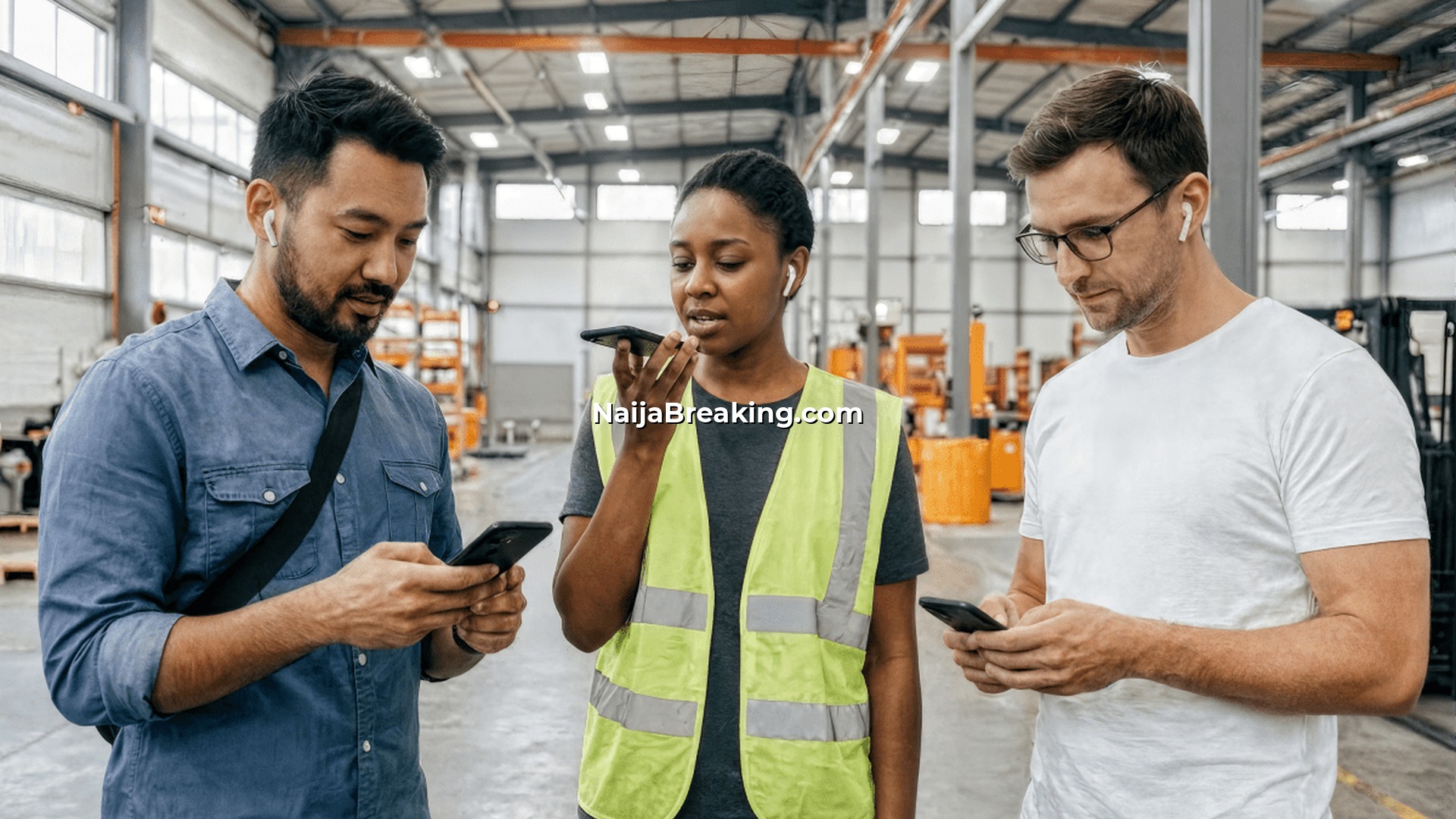
The inclusion of solutions for frontline workers demonstrates DeepL’s understanding of practical, real-world applications beyond corporate boardrooms. Frontline workers—including healthcare professionals, emergency responders, customer service representatives, and field technicians—often operate in multilingual environments where communication accuracy is critical. Voice translation could dramatically improve service quality and safety in these settings. In Nigeria’s rapidly growing healthcare and service sectors, this application could prove transformative.
Developer API and Customization Capabilities
Understanding that different industries and organizations have unique translation needs, DeepL is releasing an API that enables external developers and businesses to build customized applications on top of the company’s voice translation technology. This open approach to development could spark innovation in unexpected areas.
One particularly valuable use case is in call centers, where the ability to communicate with customers in their preferred languages significantly improves customer satisfaction and operational efficiency. A Nigerian bank’s customer service center, for example, could use DeepL’s API to automatically translate customer calls into multiple African languages, eliminating the need to hire multilingual staff across every language combination they serve.
Custom Vocabulary and Industry-Specific Terms
A standout feature of DeepL’s voice translation technology is its ability to learn and adapt to custom vocabulary. This means that the system can be trained to recognize and correctly translate industry-specific terminology, technical jargon, company names, and even personal names. For international organizations operating in Nigeria, this capability is invaluable. A pharmaceutical company could ensure that proprietary drug names and medical terminology are translated accurately. A technology firm could guarantee that product names and technical specifications remain consistent across languages.
This adaptive learning capability represents a significant advancement in machine translation, as generic translation tools often struggle with specialized vocabulary that falls outside their standard training data. By enabling customization, DeepL empowers organizations to deploy voice translation solutions that are genuinely effective for their specific contexts.
Implications for Customer Service and Business Operations
DeepL’s CEO highlighted an important observation: artificial intelligence is fundamentally reshaping what customer service will look like in the coming years. A translation layer in customer service operations enables companies to provide support in languages where qualified, bilingual staff are scarce and expensive to hire. For many Nigerian companies, this is transformative. Expanding customer service to support multiple African languages or international languages becomes economically feasible when you’re not constrained by the need to employ a native speaker for every language combination.
This economic advantage is particularly significant for startups and small-to-medium enterprises that want to expand their market reach but lack the resources to build large multilingual teams. Voice translation democratizes access to international business opportunities by removing one of the primary barriers to expansion—the cost and complexity of language support.
What This Means for Nigeria and Africa
DeepL’s voice translation technology arrives at a particularly opportune moment for Nigeria and the broader African continent. Africa is experiencing rapid digital transformation, with increasing numbers of businesses going digital and more professionals working in remote or hybrid arrangements. The continent’s linguistic diversity—with hundreds of languages spoken across 54 countries—makes translation technology particularly valuable.
Nigerian businesses can leverage voice translation to expand beyond local markets into pan-African opportunities without the traditional barriers of language. Educational institutions can facilitate international collaborations. Healthcare providers can serve patients from different linguistic backgrounds more effectively. The technology has the potential to accelerate economic development by making cross-border business more feasible and efficient.
However, the full potential of this technology will only be realized if it accurately handles African languages and accents. The early access period is a critical opportunity for African organizations to participate, test the technology with local languages, and provide feedback to ensure that DeepL’s voice translation works well for African users. (Original information sourced from TechCrunch)
The Future of Voice-Powered Communication
As artificial intelligence continues to advance, voice translation will likely become increasingly sophisticated and seamless. We can expect improvements in latency, better handling of background noise, more natural-sounding synthesized speech, and expanded language coverage. The competition in this space will also intensify, as other companies recognize the market opportunity and develop their own voice translation solutions.
For Nigerian organizations, staying informed about these developments and experimenting with emerging technologies will be crucial for maintaining competitive advantage. Companies that adopt voice translation early will gain efficiency benefits and market advantages over competitors still relying on manual translation or outdated technology.
Share your thoughts below: How do you think voice translation technology could impact your business or organization? What language combinations would be most valuable for your operations? Have you experienced challenges with multilingual communication that voice translation might address? We’d love to hear your perspective on this transformative technology.