
Global Markets Surge as Trump Signals New US-Iran Peace Talks
The international financial markets experienced a significant rally on Wednesday following promising developments in US-Iran peace talks negotiations. According to reports from Channel Television, stock markets around the world surged higher after US President Donald Trump announced that a second round of US-Iran peace talks could take place “over the next two days,” sparking renewed optimism among investors that a comprehensive deal might finally be within reach. This potential breakthrough has created a wave of positive sentiment across global equity markets, while crude oil prices extended their downward trajectory as traders bet on the reopening of crucial energy supply routes that have been severely disrupted by ongoing regional tensions.
The prospect of renewed US-Iran peace talks has fundamentally shifted market sentiment, as investors increasingly believe that a negotiated settlement could resolve the six-week conflict that has sent shockwaves through the world economy. The potential restoration of normal oil flows through the Strait of Hormuz—one of the world’s most critical energy chokepoints—has become a central focus for traders and policymakers alike. This development carries profound implications not only for global energy markets but also for developing economies like Nigeria, which relies heavily on stable international oil prices to fund government operations and attract foreign investment.
Trump’s Announcement Revives Hope for Diplomatic Resolution
During a phone interview with the New York Post while in Pakistan’s capital, Islamabad, President Trump provided fresh encouragement to market participants by indicating that constructive US-Iran peace talks could resume in the immediate future. “You should stay there, really, because something could be happening over the next two days, and we’re more inclined to go there,” Trump told a Post reporter, signaling genuine commitment to pursuing diplomatic channels despite the failure of previous negotiation rounds in Islamabad over the weekend.
The timing of Trump’s comments proved crucial in reinvigorating investor confidence. Senior Pakistani sources informed the Agence France-Presse (AFP) that their country was actively working to facilitate reconciliation between the two sides, with particular focus on extending the current two-week ceasefire arrangement that has been holding precariously since the initial outbreak of hostilities on February 28. Pakistan’s diplomatic efforts underscore the critical importance that major regional powers place on preventing a complete breakdown in US-Iran relations, which could have catastrophic consequences for global security and economic stability.
The failed negotiations in Islamabad, while disappointing to many observers, did not entirely close the door on future dialogue. Instead, they appeared to have clarified the positions of both parties and allowed negotiators to identify potential areas of compromise. Trump’s statement that a new round of talks could happen within the next 48 hours suggests that both Washington and Tehran may have quietly signaled their willingness to return to the negotiating table with fresh proposals and renewed determination to find common ground.
Stock Markets Worldwide Experience Significant Rally
The optimistic statements regarding potential US-Iran peace talks triggered a remarkable turnaround in global equity markets. All three major indexes on Wall Street rallied impressively, with the Nasdaq and S&P 500 climbing back well above pre-war levels and approaching record highs that seemed unattainable just days earlier when conflict appeared inevitable. The psychological impact of Trump’s comments cannot be overstated—investors who had been holding cash or defensive positions rushed back into equities, creating a surge in buying pressure that pushed prices higher across virtually all sectors.
The enthusiasm generated by developments in US-Iran peace talks quickly spread beyond American financial centers to Asian markets, which demonstrated particular strength on Wednesday. Seoul’s stock exchange emerged as the standout performer, with the Kospi index jumping approximately three percent and positioning itself just five percent below its all-time historical peak. This was particularly remarkable given that Seoul had been among the worst-performing markets during the initial outbreak of hostilities on February 28, making the reversal all the more dramatic.
Other major Asian financial centers also participated in the rally, including Tokyo, Hong Kong, Sydney, Taipei, Singapore, and Manila, all posting substantial gains. The breadth of the rally across different geographic regions and market segments underscores the universal relief felt by global investors at the possibility that the six-week conflict might finally be approaching resolution. For Nigerian investors and market participants, this international rally creates important opportunities and benchmarks for local investment decision-making.
Israel-Lebanon Negotiations Add to Positive Market Sentiment
Contributing further to the optimistic atmosphere pervading global financial markets on Wednesday was the announcement that Israel and Lebanon had agreed to launch direct negotiations. This development proved particularly significant because the Israeli-Lebanese tensions had been a major sticking point in maintaining the fragile ceasefire that had been negotiated between Washington and Tehran. The agreement to establish direct talks between these two parties offered hope that regional conflicts could be compartmentalized and potentially resolved through diplomatic rather than military means.
Traders responded enthusiastically to news of the Israel-Lebanon agreement, viewing it as a positive signal that the international community might be shifting toward resolving multiple overlapping regional disputes through negotiation rather than escalation. The willingness of both Israel and Lebanon to sit down for direct talks, even amid broader regional tensions, demonstrated that even adversaries could find motivation to pursue peaceful settlement when broader geopolitical circumstances created appropriate conditions.
The interconnectedness of regional conflicts means that progress on any single front—whether involving US-Iran peace talks or Israeli-Lebanese relations—can have cascading positive effects on investor sentiment. As traders became convinced that the cycle of violence might finally be breaking, they redirected capital into equity positions that had been battered during weeks of conflict uncertainty.
Oil Markets Extend Losses Amid Fresh Peace Hopes
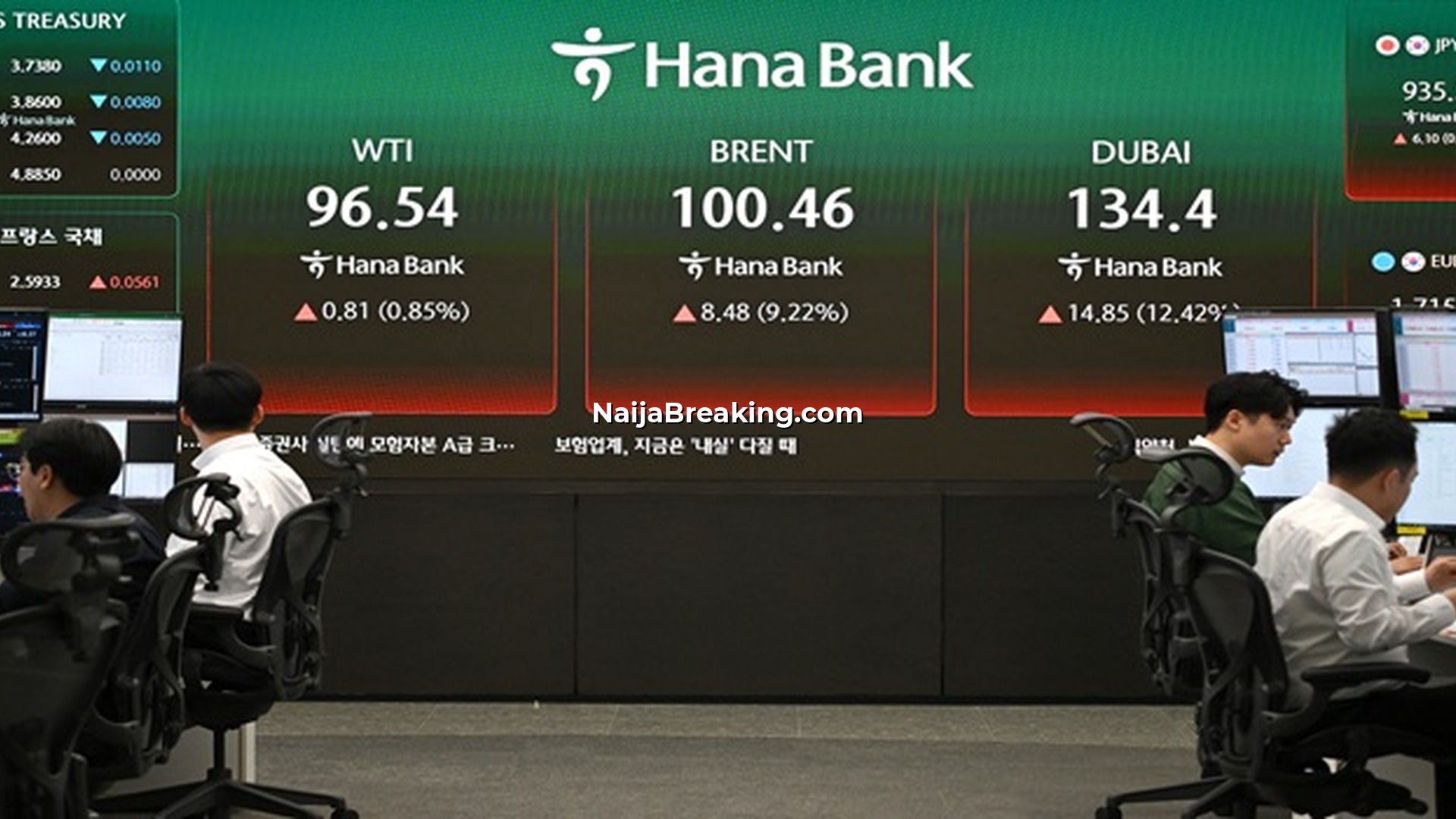
Crude oil prices declined further on Wednesday, extending a significant sell-off that had begun on Tuesday. West Texas Intermediate crude plummeted approximately eight percent, while Brent crude fell more than four percent as markets digested the implications of potential US-Iran peace talks for global energy supply. These substantial price declines reflected traders’ expectations that successful negotiations would eventually lead to the reopening of the Strait of Hormuz and the resumption of Iranian oil exports, which have been severely curtailed by the current conflict and international blockade.
The decline in oil prices, while potentially challenging for oil-producing nations like Nigeria in the near term, reflects the broader market belief that energy supplies will become more abundant and accessible once diplomatic resolution is achieved. Investors are positioning themselves for a world in which Middle Eastern energy flows more freely, reducing the scarcity premium that has driven oil prices higher throughout the conflict period.
The United States, despite continuing its blockade of Iranian ports following the failed negotiations in Islamabad, appears willing to consider lifting these restrictions if new US-Iran peace talks produce meaningful agreements. The blockade, implemented as pressure to bring Iran to the negotiating table, could theoretically be reversed quickly once both sides reach a framework agreement on key outstanding issues.
Implications for Nigerian Markets and Economy
For Nigeria, developments in international energy markets and global financial conditions carry enormous significance. As the continent’s largest economy and a major oil producer, Nigeria’s fiscal health, currency stability, and investment climate all depend substantially on global oil prices and international investor sentiment. The current rally in global markets and the decline in oil prices reflect a rebalancing of risk that could have complex implications for the Nigerian economy.
If US-Iran peace talks succeed in establishing a durable ceasefire and eventual settlement, global oil supplies will increase, which could put additional downward pressure on oil prices. This scenario presents both challenges and opportunities for Nigeria—lower oil revenues require fiscal discipline and economic diversification, but lower energy costs benefit consumers and non-oil businesses throughout the Nigerian economy.
The broader rally in global equity markets, meanwhile, creates a more favorable investment environment that could attract international capital flows into emerging markets, potentially benefiting Nigerian financial assets and corporate stocks.
Conclusion
The comments from President Trump regarding potential new US-Iran peace talks have fundamentally shifted market sentiment and investor expectations regarding the trajectory of the ongoing six-week regional conflict. Combined with news of Israeli-Lebanese negotiations and continued Pakistani diplomatic efforts, these developments have created a genuine sense that military solutions may be giving way to negotiated settlements. Global stock markets have responded with enthusiasm, reflecting relief and optimism about future economic growth prospects. Oil prices, conversely, have fallen as traders anticipate increased supply availability following successful negotiations.
Share your thoughts below about how you believe these developments in US-Iran peace talks will affect Nigerian markets and the broader African economy.
Source: Channel Television (channelstv.com)