Wike-Backed PDP Dismisses Suspension: Anyanwu Claims Disputed in Party Crisis
The Nyesom Wike-backed faction of the Peoples Democratic Party has launched a comprehensive and forceful rebuttal against recent reports regarding Senator Samuel Anyanwu’s suspension, firmly asserting that the Wike-backed PDP dismisses suspension claims and maintains that no valid suspension ever existed in the first place. According to statements issued by the PDP National Publicity Secretary, Jungudo Mohammed, acting under the leadership of Abdurahman Mohammed, the party’s position is unambiguously clear: the legal action initiated by Anyanwu does not stem from any disciplinary measure, and reports suggesting otherwise have been deliberately misrepresented to mislead the Nigerian public and distort the actual facts on the ground. This significant development represents yet another crucial chapter in the prolonged internal crisis that has plagued Nigeria’s opposition party since the 2023 general elections, when the party fragmented into competing factions with different power brokers, ideological positions, and visions for future leadership. The clarification from the Wike-backed faction is particularly significant because it directly contradicts earlier narratives that have dominated media coverage and political discourse across Nigeria’s extensive news landscape, creating confusion among party members and the general public about the true state of affairs within the PDP.
Understanding why the Wike-backed PDP dismisses suspension of Anyanwu requires a nuanced examination of the facts, the broader context of PDP’s internal struggles, the personalities involved, and what these divisions ultimately mean for Nigeria’s democratic process and the party’s viability as a credible opposition force heading into future electoral cycles. The dispute also raises important questions about party discipline, constitutional procedures, and the legitimacy of various party organs claiming to represent the authentic voice of the Peoples Democratic Party during this turbulent period of factional competition and institutional fragmentation.
Understanding the Background of Nigeria’s PDP Crisis
The Peoples Democratic Party’s internal crisis represents one of the most significant and consequential political developments in Nigeria since the 2023 presidential elections concluded, when the party suffered a devastating and humiliating defeat to the All Progressives Congress under the leadership of Bola Ahmed Tinubu. The roots of this multifaceted crisis trace back to deep disagreements over party leadership structures, presidential campaign strategy decisions, resource allocation, and the distribution of key positions within the party hierarchy and geographical zones. Following the election loss that disappointed millions of party supporters and stakeholders, several powerful figures within the PDP began to manoeuvre strategically for control and influence, ultimately leading to the emergence of distinct factions with competing visions for the party’s future direction, organisational structure, and leadership orientation moving forward.
Nyesom Wike, the current Minister of Federal Capital Territory and former two-term Governor of Rivers State, emerged as one of the most prominent and influential figures in these factional struggles, leveraging his considerable financial resources, extensive political influence across multiple states, and strategic connections to build a substantial power base within the party’s structures. Wike’s faction has maintained control over significant party machinery and has pursued aggressive legal strategies to legitimise its claim as the authentic PDP leadership. The competing faction, led by Tanimu Turaki (a Senior Advocate of Nigeria with decades of legal and political experience), has drawn substantial support from powerful Governors including Seyi Makinde of Oyo State and Bala Mohammed of Bauchi State, representing an alternative ideological and structural vision for the party’s comprehensive reorganisation and leadership renewal.
These two competing camps have essentially created what many experienced political analysts and constitutional law experts describe as a “parallel party structure,” with each maintaining its own national working committees, conducting its own meetings and conventions, issuing separate party directives, and pursuing competing legal strategies to establish legitimacy before Nigeria’s courts and electoral bodies. This bifurcation has created unprecedented confusion within the party ranks, making it difficult for ordinary party members to know which leadership structure to follow, which decisions are valid, and where genuine party authority actually resides at any given moment.
The Anyanwu Suspension: What Really Happened
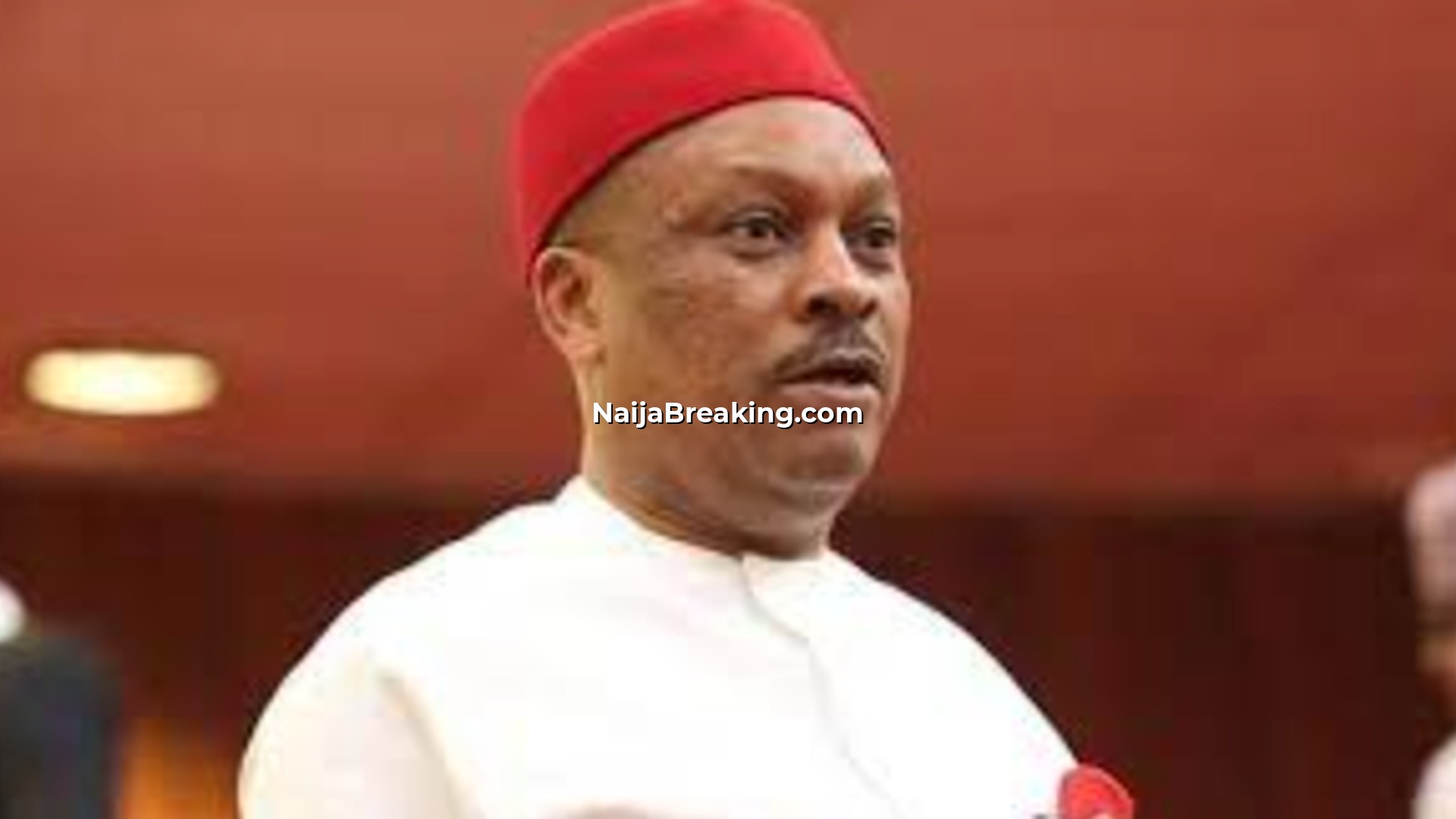
Senator Samuel Anyanwu, who represents Ebonyi North Senatorial District in the National Assembly, became entangled in this factional dispute, and his situation illuminates the confusing nature of party disciplinary processes during this fractious period. According to the Wike-backed PDP dismisses suspension narrative, Anyanwu was never validly suspended through any legitimate party process, contrary to claims made by the opposing faction. The Wike faction’s position is that Anyanwu’s legal actions against the party were not precipitated by any disciplinary action but rather stem from other grievances or political calculations that he determined necessary to pursue through the judicial system.
The distinction between these competing narratives is crucial because it determines the legal standing of any claims before the courts and affects how various stakeholders interpret the legitimacy of party actions. If the Wike-backed PDP dismisses suspension claims as invalid, this suggests that the faction disputes the very authority of whoever issued such a suspension notice, implying that the opposing faction lacks the constitutional legitimacy to conduct disciplinary proceedings. This technical legal point becomes vitally important in court proceedings, where judges must determine which party faction, if either, possesses valid authority to make binding decisions affecting party members’ status and rights.
The Wike-backed PDP dismisses suspension assertions made by the other faction, presenting documentary evidence and procedural arguments to support their contention that no valid suspension process was ever initiated or completed according to party constitution and established protocols. This position maintains that Anyanwu remains a valid party member in good standing, and any claims to the contrary represent illegitimate actions by an unauthorised party faction attempting to exercise powers it does not constitutionally possess.
Legal Arguments and Constitutional Framework
The legal dimensions of this dispute are extraordinarily complex, involving intricate questions about party constitutionalism, the proper interpretation of the PDP constitution, and the authority of various party organs to make binding decisions. When the Wike-backed PDP dismisses suspension claims, party spokespersons have referenced specific sections of the party constitution that they argue prohibit the suspension procedures allegedly followed by the competing faction. These arguments touch on fundamental questions about which party bodies can initiate discipline, what notice and hearing requirements must be satisfied, and what procedures must be followed to ensure that any suspension is constitutionally valid and legally enforceable.
Nigerian courts have become increasingly involved in PDP factional disputes, and judges have had to grapple with difficult questions about the extent to which courts should intervene in internal party matters versus respecting party autonomy and self-governance. The courts have generally indicated that while they will respect party autonomy in matters purely of internal organisation, they will intervene when fundamental rights are violated or when procedures grievously depart from the party constitution’s requirements. This balanced approach creates space for the Wike-backed faction to argue that suspension procedures allegedly used against Anyanwu violated constitutional requirements and therefore cannot stand.
The Wike faction’s legal team has apparently prepared detailed arguments demonstrating that proper procedures were not followed, that insufficient notice was provided, that Anyanwu was denied adequate opportunity to respond to allegations, or that the body claiming to suspend him lacked constitutional authority to do so. These procedural arguments can be just as compelling as substantive arguments about whether Anyanwu actually engaged in conduct warranting discipline, and courts often strike down disciplinary actions on purely procedural grounds without ever reaching the merits of the underlying allegations.
The Broader Political Implications
The Wike-backed PDP dismisses suspension narrative must be understood within the context of the broader political implications for Nigerian opposition politics and democratic development. The PDP’s fractionalisation represents a crisis for Nigeria’s democratic system because a strong, unified opposition party is essential for healthy democratic functioning and governmental accountability. When opposition parties fragment and become consumed with internal disputes, they lose effectiveness in their primary constitutional role of providing oversight and alternative vision to the governing party.
The various disputes, including those involving the Wike-backed PDP dismisses suspension controversies, suggest deeper structural and leadership problems within the party that extend far beyond any single individual’s situation. Party members throughout Nigeria are increasingly frustrated with the inability of party leadership to resolve these disputes through internal mechanisms, leading some members to pursue court intervention and media campaigns to advance their positions. This reliance on external dispute resolution mechanisms undermines party cohesion and party members’ confidence in party institutions.
Furthermore, when the Wike-backed PDP dismisses suspension claims and disputes the legitimacy of opposing faction actions, the broader question becomes: what mechanisms can actually resolve these disputes and restore party unity? Neither faction appears to possess sufficient dominance to simply impose its will on the other, yet neither seems willing to negotiate comprehensively toward genuine reconciliation. This impasse threatens to perpetuate the party’s dysfunction indefinitely unless senior party leaders and influential stakeholders intervene to facilitate genuine dialogue and conflict resolution.
Party Leadership’s Official Positions
Jungudo Mohammed, serving as the PDP National Publicity Secretary under the Wike faction, has issued multiple statements emphasising that the Wike-backed PDP dismisses suspension claims as baseless and procedurally invalid. Mohammed’s statements have been characterised by strong language defending the faction’s position and attacking the credibility of competing faction narratives. By maintaining that no valid suspension ever occurred, the Wike faction essentially argues that Anyanwu maintains full party membership rights and that any attempt to treat him as suspended party member constitutes an illegitimate infringement on his constitutional party rights.
The statements from the Wike faction’s publicity apparatus suggest that party officials believe this position can be substantiated through documentary evidence, procedural analysis, and constitutional interpretation. Party officials have indicated their willingness to present these arguments before courts if necessary and have expressed confidence that judicial review will vindicate their position that the Wike-backed PDP dismisses suspension through proper legal and constitutional analysis.
In contrast, the competing Turaki-led faction presumably maintains that Anyanwu was validly suspended through constitutionally proper procedures, and that the Wike faction is simply refusing to acknowledge the legitimacy of those procedures because they dispute the Turaki faction’s authority more broadly. This fundamental disagreement about which faction possesses legitimate party authority remains at the heart of virtually every substantive dispute between the factions.
Implications for Party Members and the Political System
For ordinary PDP members throughout Nigeria, the ongoing disputes—including controversies where the Wike-backed PDP dismisses suspension of various individuals—create significant practical and legal uncertainty. Party members cannot be entirely certain which party leadership to recognise, which party decisions are legally binding, or what their actual status is within the party at any given moment. This uncertainty undermines party morale and makes it difficult for the party to function effectively as a political organisation capable of challenging the ruling APC.
The situation also reflects poorly on Nigerian opposition politics more broadly, suggesting that opposition parties struggle with internal democracy and conflict resolution mechanisms. For Nigerian citizens concerned about democratic development and governmental accountability, the PDP’s dysfunction is troubling because it reduces the effectiveness of opposition scrutiny and alternative policy proposals during a period when many Nigerians believe such scrutiny is needed.
Looking forward, the PDP will need to address these fundamental structural and leadership problems to restore functionality and credibility. Whether the Wike-backed PDP dismisses suspension through valid legal arguments or whether courts ultimately side with the competing faction, the underlying reality is that the party’s fractionalisation serves no one’s interests except those of the ruling APC, which benefits from opposition weakness and disunity.
Conclusion: Resolving the Crisis
The dispute over Anyanwu’s suspension status, including the Wike-backed PDP dismisses suspension claims made by the faction’s spokespersons, represents merely one manifestation of the comprehensive crisis affecting Nigeria’s main opposition party. Resolving these disputes will require either clear judicial determination of which faction holds legitimate authority or, preferably, good-faith negotiations among party stakeholders leading to comprehensive reconciliation and party unity. Until such resolution occurs, the Wike-backed PDP dismisses suspension arguments will continue circulating in media and legal forums, further fragmenting the party and diminishing its capacity to serve as an effective opposition force in Nigerian politics. The PDP’s leadership at all levels must prioritise party unity and functional governance structures above narrow factional interests if the party hopes to restore its relevance and effectiveness in Nigeria’s political system.