
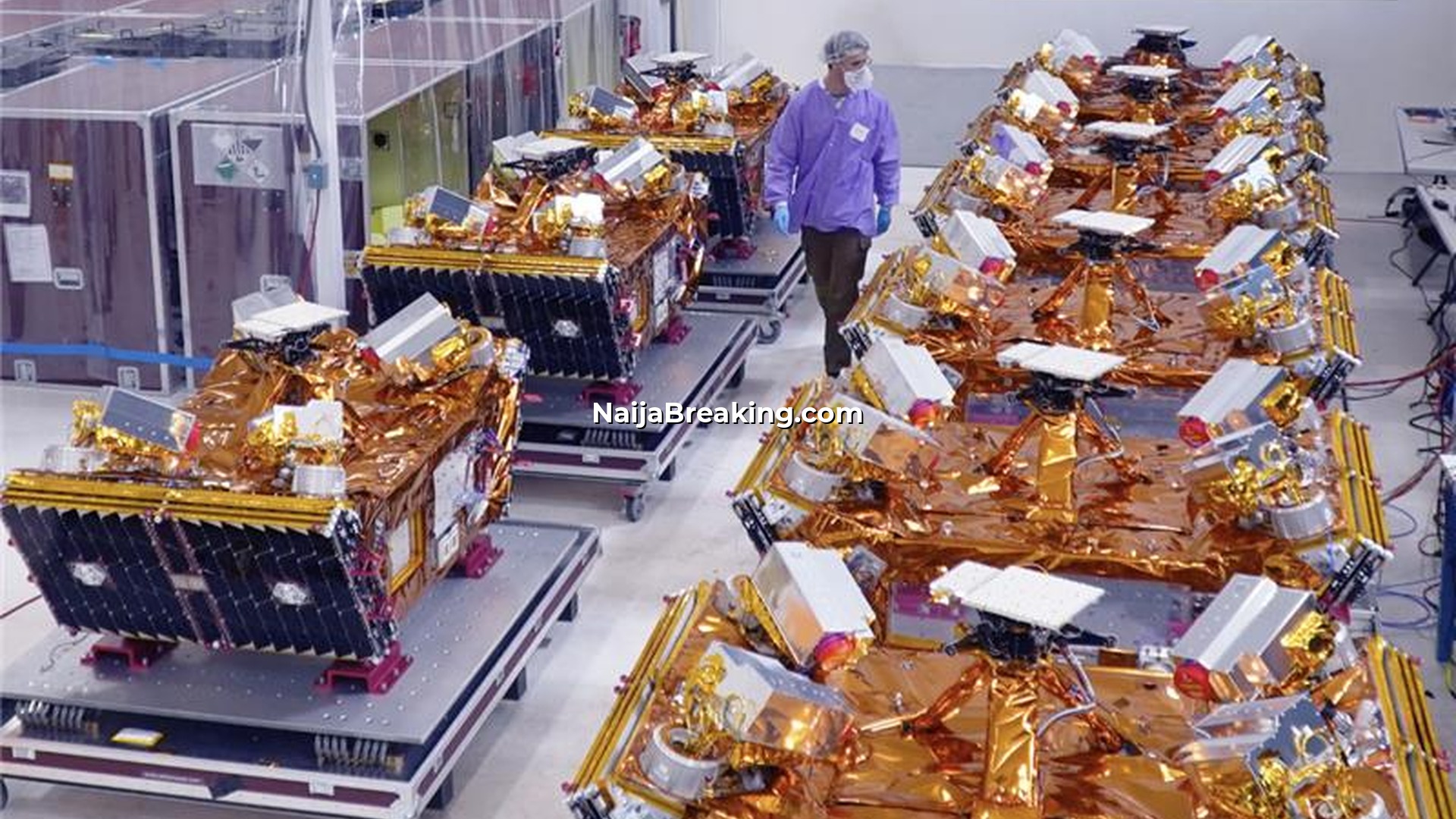
The race to establish computing power in space has reached a critical milestone. Canada-based Kepler Communications has successfully launched what is now recognized as the largest orbital compute cluster currently operational, marking a significant advancement in how we process and handle data from space. With approximately 40 Nvidia Orin edge processors distributed across 10 operational satellites linked by advanced laser communications technology, this orbital compute cluster represents a watershed moment for the commercial space industry.
This development comes at a time when the global technology landscape is increasingly focused on decentralizing computing infrastructure and bringing processing capabilities closer to where data is generated. For Nigerian tech enthusiasts and businesses looking to understand the future of cloud computing and data processing, the emergence of this orbital compute cluster offers compelling insights into where the industry is heading.
What Is an Orbital Compute Cluster and Why Does It Matter?
An orbital compute cluster is essentially a network of computing processors positioned in Earth’s orbit that work together to process data in real-time. Unlike traditional data centers located on the ground, an orbital compute cluster brings processing power directly to where satellites collect data, eliminating the need to transmit massive amounts of raw information back to Earth before analysis.
The significance of Kepler’s orbital compute cluster cannot be overstated. For years, experts and industry leaders have discussed the theoretical benefits of space-based computing, but the practical implementation has lagged behind. According to reports from TechCrunch, Kepler Communications has transformed this vision into operational reality, demonstrating that orbital compute clusters are no longer science fiction but tangible infrastructure that companies can leverage today.
The orbital compute cluster uses laser communications links to connect the 10 satellites carrying the Nvidia Orin edge processors. These laser links provide high-speed, reliable communication between satellites, enabling coordinated computing operations across the entire constellation. This technological approach represents a breakthrough in how we can efficiently process satellite data without relying entirely on ground-based infrastructure.
The Business Model Behind Orbital Computing
Kepler Communications doesn’t view itself primarily as a data center company, but rather as an infrastructure provider for space-based applications. CEO Mina Mitry explained to TechCrunch that the company’s vision is to provide a network services layer for other satellites in orbit, as well as for drones and aircraft operating below in Earth’s atmosphere.
This business model is proving attractive to clients. The company has already secured 18 customers who are integrating their applications and services with Kepler’s orbital compute cluster infrastructure. This demonstrates strong market demand for orbital computing capabilities, even in the early stages of commercial deployment.
The orbital compute cluster approach offers several distinct advantages over traditional ground-based data centers when dealing with space-generated data:
- Reduced latency: Processing happens in orbit rather than waiting for data transmission to Earth
- Bandwidth efficiency: Only processed results need to be transmitted, not raw satellite imagery or sensor data
- Real-time capabilities: Applications requiring immediate decision-making benefit greatly from orbital processing
- Cost reduction: Eliminating unnecessary data transmission reduces operational expenses
Sophia Space: Testing the Limits of Orbital Software
Kepler Communications announced its latest customer on Monday – Sophia Space, an innovative startup focused on developing passively-cooled space computers. This partnership represents a crucial milestone in proving the viability of the orbital compute cluster as a platform for sophisticated software operations.
Sophia Space is tackling one of the most critical challenges facing large-scale orbital computing: thermal management. Active cooling systems, which use moving parts and fluids to dissipate heat, are expensive, heavy, and unreliable in the harsh space environment. Sophia’s approach to passive cooling – using materials and design principles that dissipate heat without mechanical systems – could revolutionize how large orbital compute clusters scale in the future.
The partnership between Kepler and Sophia involves uploading Sophia’s proprietary operating system to one of Kepler’s satellites and attempting to launch and configure it across six GPUs distributed across two spacecraft. While this might seem routine in terrestrial data centers, this represents the first time such an operation will be attempted in orbit. The success of this undertaking will provide critical validation that complex software operations can function reliably in space environments.
Why This Matters for Nigeria and Africa
For Nigerian businesses and technologists, the development of orbital compute clusters has profound implications. Africa possesses vast amounts of satellite imagery and earth observation data, yet much of this data must be transmitted to distant data centers for processing. An operational orbital compute cluster accessible to African companies could transform how we handle earth observation data for agriculture, environmental monitoring, disaster response, and urban planning.
The orbital compute cluster model being pioneered by Kepler Communications could enable Nigerian and African tech startups to access computing infrastructure without massive upfront capital investments in ground-based data centers. Cloud computing has already transformed the technology landscape; orbital computing could represent the next evolution, making sophisticated data processing accessible to organizations regardless of their geographic location.
The Road Ahead: Timeline and Expectations
While Kepler has successfully deployed the largest orbital compute cluster currently in operation, industry experts note that we shouldn’t expect massive, space-based data centers equivalent to those envisioned by SpaceX or Amazon Blue Origin until the 2030s. The immediate and near-term business focus will be on processing data collected in orbit to enhance the capabilities of space-based sensors used by private companies and government agencies.
Sophia Space, for instance, plans its first satellite launch in late 2027. The company’s work with Kepler’s orbital compute cluster serves as a critical de-risking exercise, ensuring that its technology and software function properly in the space environment before committing to a full satellite deployment.
This phased approach makes sense from both technical and commercial perspectives. Each step builds upon previous achievements, proving concepts and building confidence among investors and customers that orbital computing is a viable, sustainable business model.
Current Capabilities and Limitations
It’s important to note that while Kepler’s orbital compute cluster represents a significant achievement, it’s still in relatively early stages of operation. The constellation includes 10 operational satellites carrying approximately 40 Nvidia Orin edge processors. While this is the largest such system currently operational, it’s modest compared to what ground-based data centers achieve routinely.
The Nvidia Orin processors are edge computing processors optimized for AI and machine learning tasks in distributed environments. They’re not designed for the massive computational workloads of large data centers, but rather for intelligent processing and decision-making at the edge of networks – which is precisely what orbital applications require.
The laser communications links connecting the satellites are particularly important. Unlike radio frequency communications, which are subject to interference and regulatory constraints, laser links provide secure, high-bandwidth connections between satellites. This technological infrastructure is essential for coordinating operations across the orbital compute cluster.
Industry Context and Future Outlook
The emergence of Kepler’s operational orbital compute cluster comes amid broader industry momentum toward decentralized computing architectures. Edge computing – the practice of processing data closer to where it’s generated rather than sending everything to distant centralized data centers – has become increasingly important as applications demand lower latency and higher responsiveness.
Orbital computing represents the ultimate expression of edge computing principles. By positioning computing resources directly where satellite data is collected, companies can achieve latency measured in milliseconds rather than the seconds or minutes required to transmit data to Earth and back.
The involvement of companies like Sophia Space, with expertise in thermal management and space-rated computing systems, suggests that the industry is moving beyond simple demonstrations toward genuine commercial infrastructure. As more companies develop specialized hardware and software for orbital environments, the ecosystem supporting orbital compute clusters will mature and expand.
For Nigerian technology professionals and entrepreneurs, this evolution presents opportunities to participate in emerging space technology industries. Whether through developing software applications for orbital platforms, providing services to space-based infrastructure operators, or building complementary technologies, the orbital computing revolution offers pathways for innovation and business development.
The largest orbital compute cluster currently in operation may seem like a technical achievement of interest mainly to space enthusiasts and engineers. However, it represents the beginning of a fundamental shift in how computing infrastructure will be organized and deployed globally. As this technology matures and becomes more accessible, the implications for businesses, governments, and individuals worldwide – including here in Nigeria – will become increasingly significant.
Source: TechCrunch – The Largest Orbital Compute Cluster Is Open for Business
Share your thoughts below – What aspects of orbital computing interest you most? How do you think this technology could benefit Nigeria and Africa? Leave your comments in the section below.