Kwara Abduction Crisis: 176 Missing, Insecurity Spiral Threatens Full Insurgency
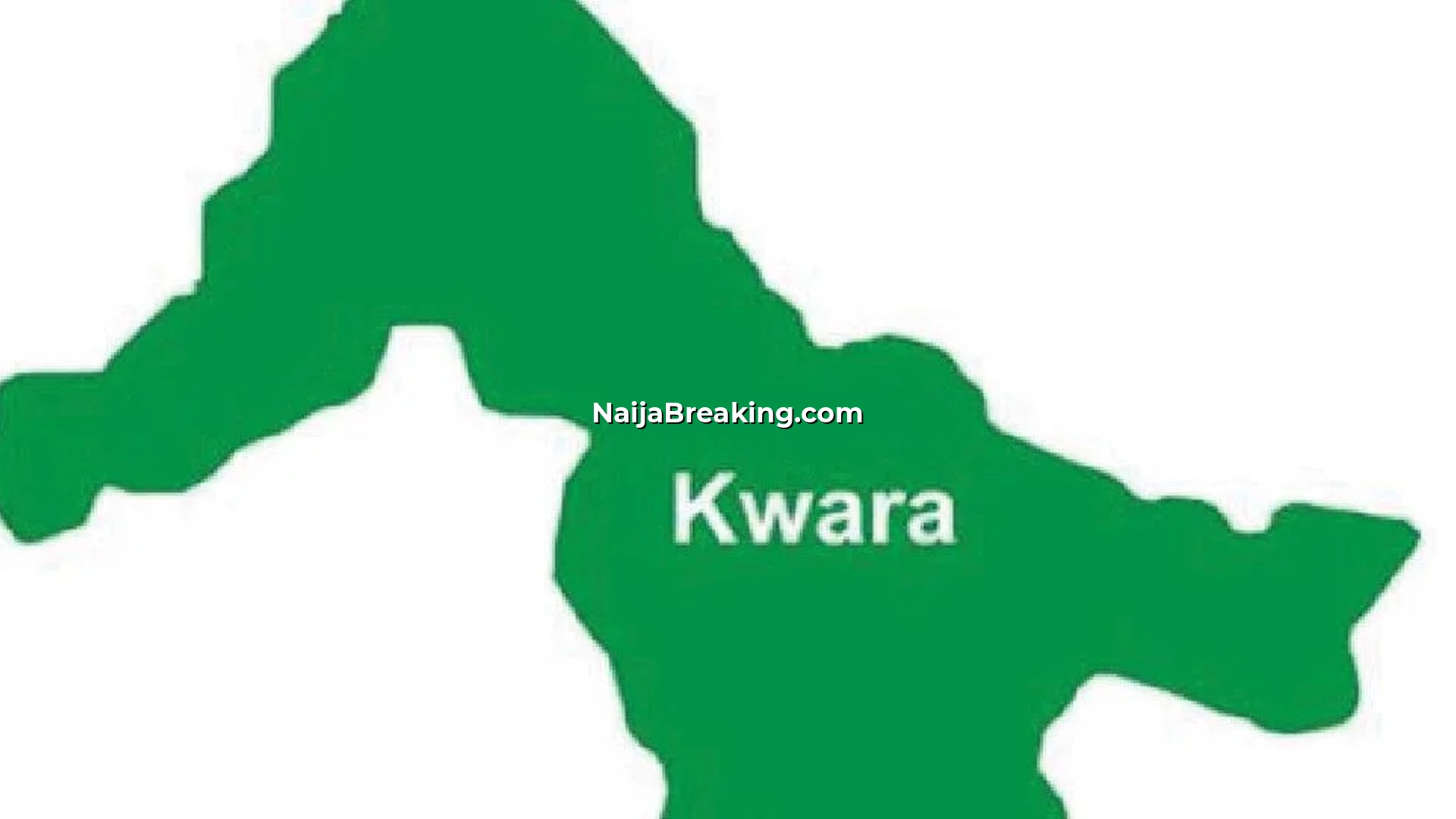
The abduction of 176 persons from Woro community in Kaiama Local Government Area of Kwara State represents far more than a single kidnapping incident—it signals a dangerous escalation in the Kwara abduction crisis that threatens to transform localised banditry into a full-scale insurgency. Two prominent civil society groups, the Kaiama Development Association (KDA) and the Batombu Unity and Development Initiative, have issued an urgent appeal to both the federal government and Kwara State authorities to rescue the hostages, warning that continued inaction could push the region into state collapse. The February 3 attack on Woro community, which occurred in one of Nigeria’s most vulnerable geopolitical zones, exposes critical gaps in the federal government’s security architecture and raises troubling questions about the capacity of Nigeria’s security agencies to protect citizens in remote, hard-to-reach communities. With more than 500 people reportedly killed in Kaiama and Baruten LGAs since the beginning of 2026 alone, thousands displaced, and multiple communities facing repeated terrorist attacks, the Kwara abduction crisis has become emblematic of Nigeria’s broader security failure. This story matters urgently to Nigerians because what unfolds in Kwara’s hinterland will directly influence national security policy, potentially forcing resource reallocation from other regions and affecting how government responds to similar crises across the country’s fragile zones.
Background
The Kaiama and Baruten Local Government Areas of Kwara State occupy a peculiar position in Nigeria’s security landscape—geographically vast, economically productive, yet chronically neglected by successive administrations. These two LGAs account for more than half of Kwara State’s landmass and historically served as agricultural powerhouses, yet they remain the only local government areas in the state without direct road access to Ilorin, the state capital. This infrastructural abandonment, spanning decades across multiple administrations, has created a governance vacuum that armed groups have deliberately exploited. The region’s vulnerability intensified during the nationwide insurgency wave that began around 2015, when Boko Haram’s expansion and the emergence of decentralised armed bandit networks shifted security threats beyond the traditional North-East theatre.
Kaiama and Baruten’s historical marginality in state politics cannot be separated from their current security plight. The communities, predominantly pastoral and agricultural, lie on Nigeria’s border with Niger Republic, making them natural transit points for cross-border smuggling, arms trafficking, and militant recruitment. The poor road infrastructure that isolates these communities—a direct result of political underinvestment—has simultaneously created a security nightmare: terrorists and armed bandits can launch attacks and vanish into surrounding forests before security personnel can respond, turning response times from minutes into hours. This infrastructure deficit reflects a deeper pattern of governmental neglect that has characterised Kwara’s relationship with both its federal and state authorities since the return to democracy in 1999.
The security deterioration in these LGAs mirrors broader patterns observed across Nigeria’s rural north, where weak state presence combines with porous borders, limited economic opportunity, and easy access to firearms to create ideal conditions for armed groups. Between 2020 and 2024, similar dynamics played out in Kaduna, Zamfara, and Kebbi States, where bandit networks initially focused on livestock rustling gradually evolved into terrorist organisations with ideological claims and territorial ambitions. The Kwara abduction crisis suggests that this evolution is now occurring in Kaiama and Baruten, warning that without immediate, decisive intervention from Abuja and Ilorin, these LGAs risk following the trajectory of Nigeria’s most destabilised zones.
Key Details
According to reporting from Punch Nigeria, the February 3 attack on Woro community in Kaiama LGA resulted in the abduction of 176 persons, whose whereabouts remain unknown. The Kaiama Development Association’s Abuja branch president, Alhaji Umar Gunu, presented the demand for rescue at a press conference in Abuja on Saturday, representing both the KDA and the Batombu Unity and Development Initiative. Gunu characterised the security situation in both Kaiama and Baruten LGAs as having reached “a critical stage,” with casualty figures staggering: more than 500 people killed since the beginning of 2026, thousands displaced from their homes, and several communities facing repeated waves of terrorist and bandit attacks.
The groups emphasised that the communities could no longer remain silent about their plight, with Gunu stating: “We have chosen to address you directly because our communities can no longer afford to remain silent and invisible. Today, however, we speak not only of neglect but of an unfolding humanitarian and security catastrophe that has devastated our communities.” The KDA and Batombu Initiative specifically highlighted the infrastructural deficit as a compounding factor in the security crisis. The poor road network connecting Kaiama and Baruten to Ilorin and federal highways has created what security analysts call an “operational advantage for armed groups”—the same roads that slow reinforcement and logistics for security personnel provide terrorists with clear escape routes into the extensive forest reserves bordering Niger Republic.
The groups’ decision to convene a press conference in Abuja rather than Ilorin or Kaiama itself signals their assessment that state-level authorities have proven inadequate to the crisis and that they must appeal directly to federal decision-makers. This institutional bypass reflects a broader loss of confidence in Kwara State’s security architecture and suggests that local leaders believe Alhaji Abdulrahman Abdulrazaq’s administration lacks either the capacity or political will to address a crisis that increasingly threatens the state’s territorial integrity. The humanitarian dimension of the crisis—thousands displaced, communities repeatedly attacked, 176 persons missing—suggests conditions that could spawn a refugee crisis affecting neighbouring Niger Republic and creating international pressure on Nigeria’s already-strained foreign policy.
Impact and Analysis
The Kwara abduction crisis reveals a systemic governance failure that extends beyond security into developmental policy, fiscal allocation, and institutional capacity. The fact that Kaiama and Baruten—representing more than 50 percent of Kwara State’s land area—remain without direct road access to the state capital after more than two decades of democratic governance suggests either profound incompetence or deliberate political marginalisation. When infrastructure is weaponised through neglect, security becomes impossible; armed groups gain operational advantages while legitimate security forces remain constrained by logistics that civilians should never have to accept. This pattern has become visible across Nigeria’s rural periphery, where underinvestment in infrastructure creates the precise conditions needed for insurgency to flourish.
The humanitarian toll—500 dead in two months, thousands displaced, 176 persons in captivity—exceeds many officially declared humanitarian emergencies in Nigeria. Yet the response from both the federal government and Kwara State has been insufficient to match the scale of the crisis. This suggests either a failure of information (federal authorities genuinely unaware of the scale) or a failure of priority (they know but have allocated resources elsewhere). Either scenario is damaging to Nigeria’s credibility. The displacement of thousands creates secondary crises: disrupted agricultural production in one of Nigeria’s productive belts, potential food insecurity spillover into neighbouring states, and brain drain as educated youth flee these communities. The 176 missing persons represent not just individual tragedy but a test of whether Nigeria’s security apparatus can deliver on its fundamental responsibility to protect citizens.
The warning that continued inaction could “degenerate into full-scale insurgency” carries analytical weight because it reflects observable patterns in how bandit networks evolve into ideologically-motivated insurgencies. Initial attacks focus on economic targets (livestock, people for ransom); if state security responses remain ineffective, these groups gradually attract ideological recruits, develop territorial control mechanisms, and establish revenue streams (protection rackets, taxation) that sustain long-term operations. Kaiama and Baruten, already showing these signs, are at the inflection point where prevention remains possible but the window is rapidly closing.
Expert Perspectives
Dr. Chukwuma Okoro, a Lagos-based security analyst specialising in rural insecurity dynamics, argues that the Kwara situation reflects a “governance-security nexus that Abuja has fundamentally misunderstood.” According to Dr. Okoro, “Kaiama and Baruten cannot be secured through kinetic operations alone while they remain essentially abandoned by the state. A community without roads, without educational investment, without economic opportunity becomes vulnerable to radicalisation. What we’re seeing is the foreseeable outcome of decades of neglect meeting organised criminal networks. The federal government must recognise that infrastructure investment is now a security imperative, not a luxury.”
Conversely, Dr. Amina Hassan, a policy researcher at the Abuja-based Institute for Development and Security Studies, emphasises the need for immediate tactical response alongside longer-term structural reform. “The 176 abductees are in immediate danger,” Dr. Hassan explains. “While we correctly identify infrastructure deficit as a root cause, we cannot allow that analysis to paralyse short-term rescue operations. The federal government should deploy enhanced intelligence assets, negotiate with mediators in border communities, and simultaneously commit to a five-year infrastructure and development plan for Kaiama and Baruten. Both urgent response and structural reform are required; neither alone is sufficient.”
What This Means for Nigerians
For ordinary Nigerians—whether traders in Lagos, workers in Abuja, or farmers in rural Kano—the Kwara abduction crisis carries profound but often invisible implications. First, it affects agricultural commodity prices and food security nationally. Kaiama and Baruten produce significant agricultural output; when terror disrupts farming calendars and displaces populations, national food production capacity shrinks, pushing prices upward at markets in Lagos, Abuja, and other cities. A trader buying tomatoes in Ikeja or maize in Kano may not realise that elevated prices connect directly to insecurity in Kwara’s hinterland.
Second, the crisis signals to Nigeria’s international creditors and investors that rural security remains unmanageable, potentially affecting the country’s borrowing costs and foreign direct investment appetite. When Nigeria appears unable to protect citizens in remote areas, rating agencies factor that into assessments, and multinational corporations recalculate their risk profiles. These abstract institutional changes eventually manifest as higher costs for Nigerian businesses importing capital goods or accessing international credit lines—costs that businesses pass to consumers.
Third, the crisis tests the legitimacy of Nigeria’s government itself. If citizens in Kaiama and Baruten conclude that the state cannot protect them, they may turn to alternative governance structures—local militias, warlords, or cross-border actors. This fragmentation of state authority, if it spreads, undermines the institutional coherence that allows any government to function. For Nigerians living in relatively secure urban areas, that may seem distant, but it fundamentally affects the social contract: if the government cannot protect its most vulnerable citizens, why should urban Nigerians pay taxes or comply with state authority?
Editor’s Take
At NaijaBreaking, we believe the Kwara abduction crisis represents a critical failure of Nigeria’s security establishment to learn from repeated patterns across the country. The fact that Kaiama and Baruten lack direct road access to the state capital in 2026 is not a security issue—it is a governance scandal that should trigger immediate investigations and accountability. What this story reveals is that infrastructure neglect in Nigeria is not mere bureaucratic incompetence; it is a direct pathway to insurgency. The federal government has treated rural insecurity as a military problem requiring military solutions, when the evidence from Kwara, Kaduna, and Zamfara clearly shows that it is fundamentally a governance and development problem requiring integrated responses. We believe Nigerians must demand that whoever succeeds in rescuing these 176 abductees immediately commit to transforming Kaiama and Baruten’s infrastructure, because without that, future abductions are inevitable.
What to Watch Next
Monitor these developments closely in the coming weeks. First, watch whether the federal government deploys enhanced security assets to Kaiama and Baruten or merely issues statements. Second, track any ransom negotiations or communication from the abductors—these reveal whether the group intends temporary criminality or territorial control. Third, observe whether Kwara State initiates any emergency infrastructure projects or continues business-as-usual governance. Fourth, watch for statements from neighbouring states like Niger about cross-border implications; if Niger raises alarm about Nigerian security deterioration, it signals international ramifications. Finally, monitor civil society pressure: if civic groups can maintain momentum around this crisis, they may force governmental response that would otherwise be delayed indefinitely. The key question now is: will Nigeria’s security establishment recognise that the road to Kaiama is as strategically important as the road to any military garrison?
Conclusion
The Kwara abduction crisis—176 missing persons, 500 dead in two months, thousands displaced—is not a routine security incident. It represents a warning that Nigeria’s rural governance architecture is collapsing, and that armed groups are exploiting the vacuum with increasing sophistication. The response from Kaiama Development Association and Batombu Unity Initiative, demanding both immediate rescue and long-term infrastructure investment, correctly identifies both urgent and structural dimensions of the crisis. Nigeria’s government must recognise that abandoning communities in infrastructure is abandoning them to insurgency, and that securing Kwara requires building roads as urgently as deploying soldiers. This story reveals something uncomfortable: that Nigeria’s security crisis is increasingly not a problem of militant ideology or international terrorism, but a problem of the Nigerian state’s unwillingness to govern fairly across its territory.
Share your thoughts in the comments below—what do you think this means for Nigeria’s future? Should the federal government prioritise infrastructure investment in conflict-prone rural areas, or focus resources on other regions? How can ordinary Nigerians in secure zones demand accountability from their government for protection failures thousands of kilometres away?